Bessho-Uehara Kanako, Yamagata Yoshiyuki, Takashi Tomonori, Makino Takashi, Yasui Hideshi, Yoshimura Atsushi, Ashikari Motoyuki
Bioscience and Biotechnology Center, Nagoya University, Furo-cho, Chikusa, Nagoya, Aichi 464-8601, Japan.
Graduate School of Life Sciences, Tohoku University, Aoba-ku, Sendai, Miyagi 980-8578, Japan.
Plants (Basel). 2021 Apr 8;10(4):725. doi: 10.3390/plants10040725.
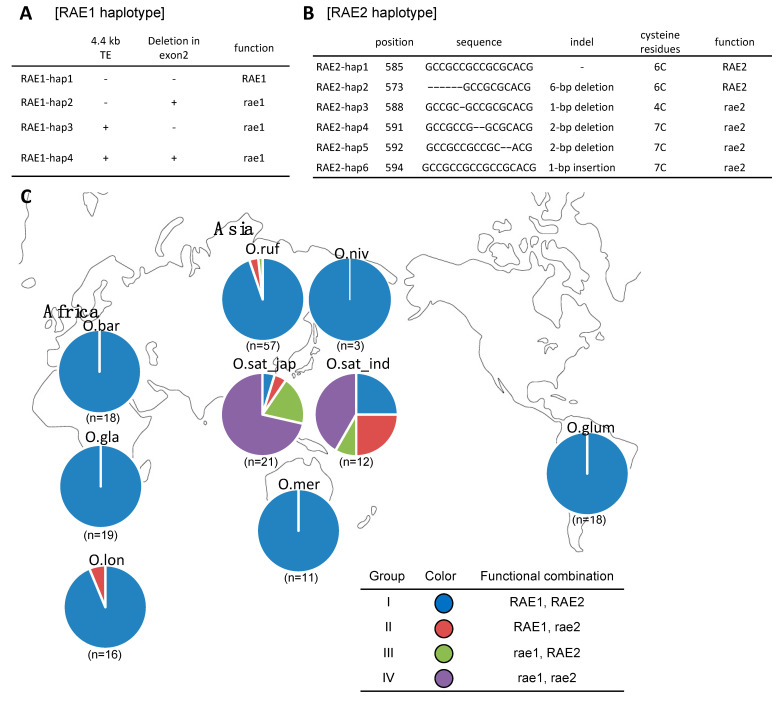
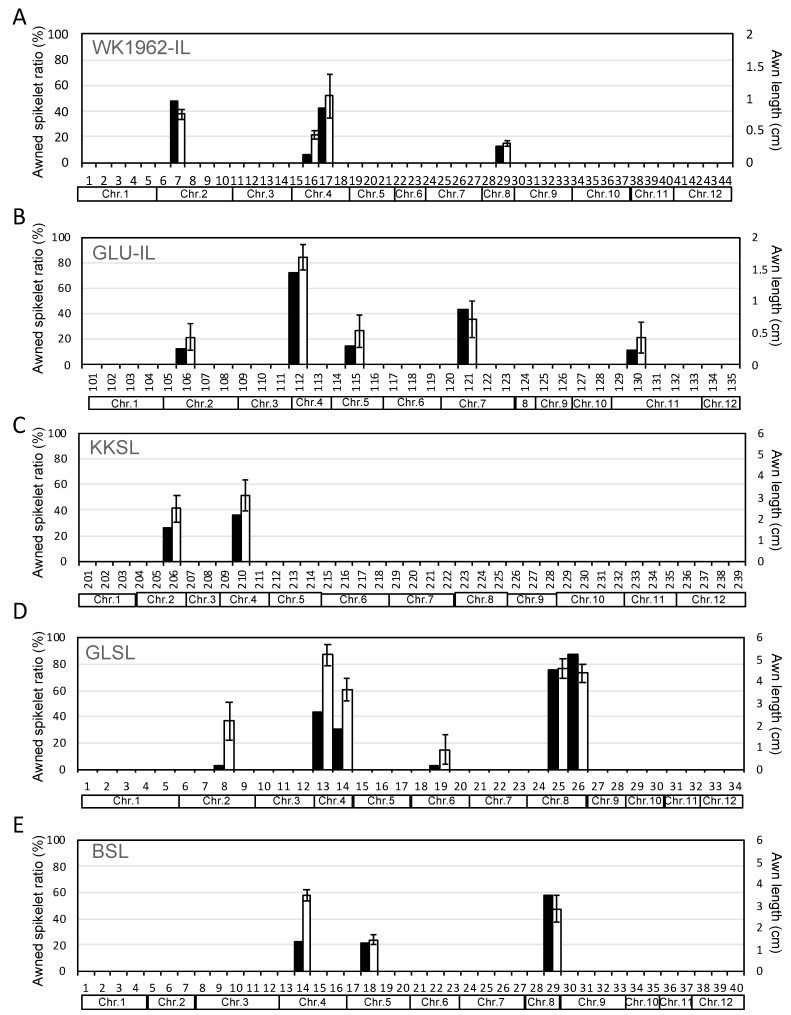
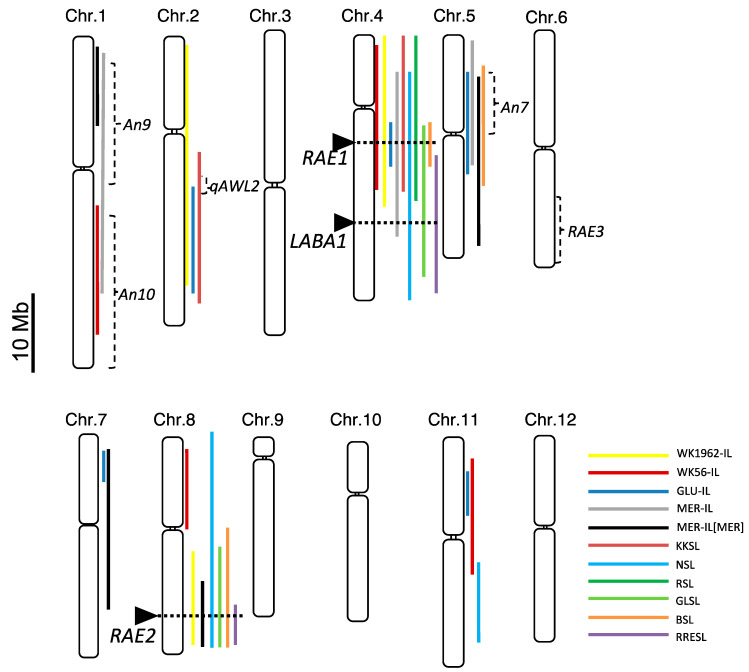
Wild rice species have long awns at their seed tips, but this trait has been lost through rice domestication. Awn loss mitigates harvest and seed storage; further, awnlessness increases the grain number and, subsequently, improves grain yield in Asian cultivated rice, highlighting the contribution of the loss of awn to modern rice agriculture. Therefore, identifying the genes regulating awn development would facilitate the elucidation of a part of the domestication process in rice and increase our understanding of the complex mechanism in awn morphogenesis. To identify the novel loci regulating awn development and understand the conservation of genes in other wild rice relatives belonging to the AA genome group, we analyzed the chromosome segment substitution lines (CSSL). In this study, we compared a number of CSSL sets derived by crossing wild rice species in the AA genome group with the cultivated species ssp. . Two loci on chromosomes 7 and 11 were newly discovered to be responsible for awn development. We also found wild relatives that were used as donor parents of the CSSLs carrying the functional alleles responsible for awn elongation, () and . To understand the conserveness of and in wild rice relatives, we analyzed and sequences of 175 accessions among diverse AA genome species retrieved from the sequence read archive (SRA) database. Comparative sequence analysis demonstrated that most wild rice AA genome species maintained functional and , whereas most Asian rice cultivars have lost either or both functions. In addition, some different loss-of-function alleles of and were found in Asian cultivated species. These findings suggest that different combinations of dysfunctional alleles of and were selected after the speciation of . , and that two-step loss of function in and contributed to awnlessness in Asian cultivated rice.
野生稻种在其种子尖端有长长的芒,但这一性状在水稻驯化过程中已经丧失。芒的丧失减轻了收获和种子储存的难度;此外,无芒增加了粒数,进而提高了亚洲栽培稻的产量,突出了芒的丧失对现代水稻农业的贡献。因此,鉴定调控芒发育的基因将有助于阐明水稻驯化过程的一部分,并增进我们对芒形态发生复杂机制的理解。为了鉴定调控芒发育的新位点,并了解属于AA基因组组的其他野生稻近缘种中基因的保守性,我们分析了染色体片段代换系(CSSL)。在本研究中,我们比较了通过将AA基因组组中的野生稻种与栽培种ssp.杂交得到的多个CSSL集。新发现位于7号和11号染色体上的两个位点负责芒的发育。我们还发现了作为携带负责芒伸长功能等位基因的CSSL供体亲本的野生近缘种,()和。为了了解和在野生稻近缘种中的保守性,我们分析了从序列读取存档(SRA)数据库中检索到的不同AA基因组物种的175份材料的和序列。比较序列分析表明,大多数野生稻AA基因组物种保留了功能正常的和,而大多数亚洲水稻品种已经丧失了其中一个或两个功能。此外,在亚洲栽培种中发现了和的一些不同的功能丧失等位基因。这些发现表明,在物种形成后,和功能失调等位基因的不同组合被选择。,并且和的两步功能丧失导致了亚洲栽培稻的无芒。