Rubio Bernadette, Fernandez Olivier, Cosson Patrick, Berton Thierry, Caballero Mélodie, Lion Roxane, Roux Fabrice, Bergelson Joy, Gibon Yves, Schurdi-Levraud Valérie
Université de Bordeaux, INRAE, Biologie du Fruit et Pathologie, UMR 1332, F-33140 Villenave d'Ornon, France.
CNRS, INRAE, Université de Toulouse, LIPM, F-31320 Castanet-Tolosan, France.
Metabolites. 2021 Apr 9;11(4):230. doi: 10.3390/metabo11040230.
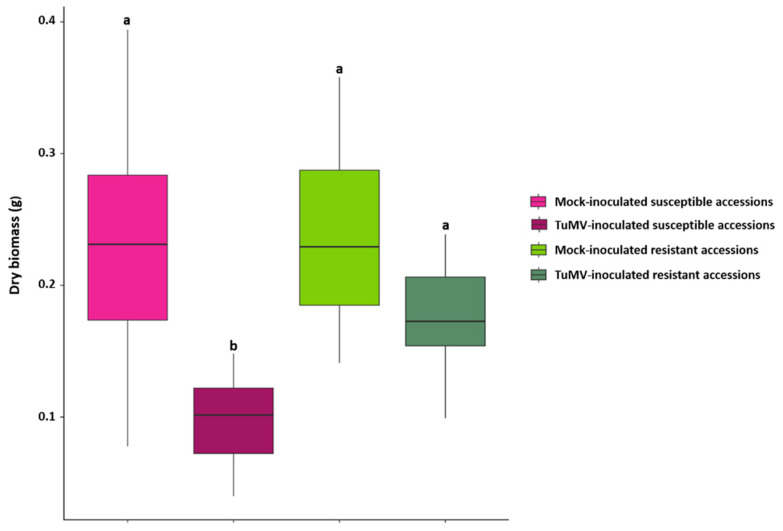
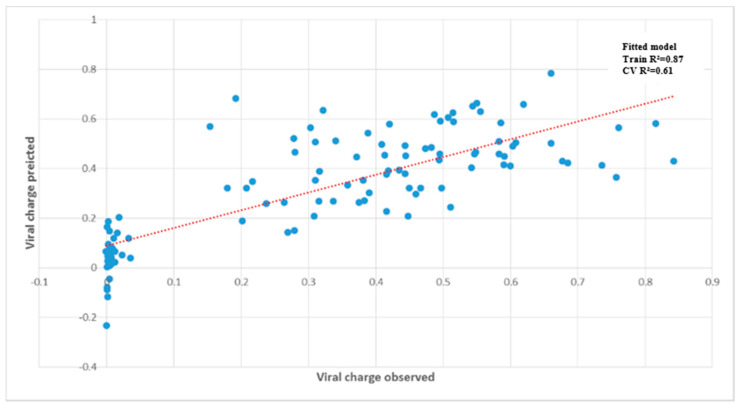
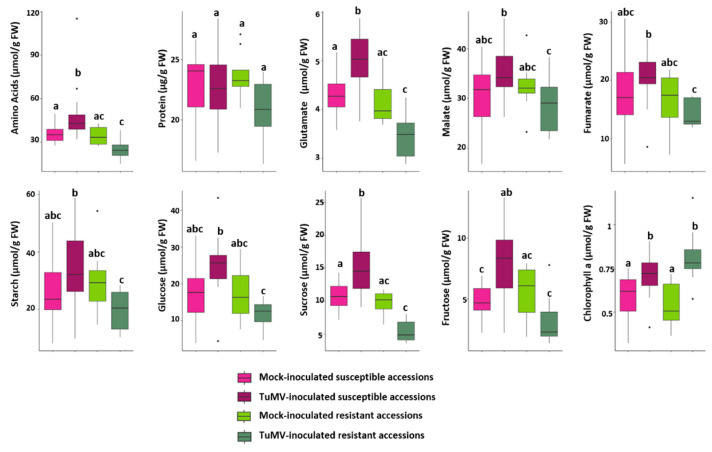
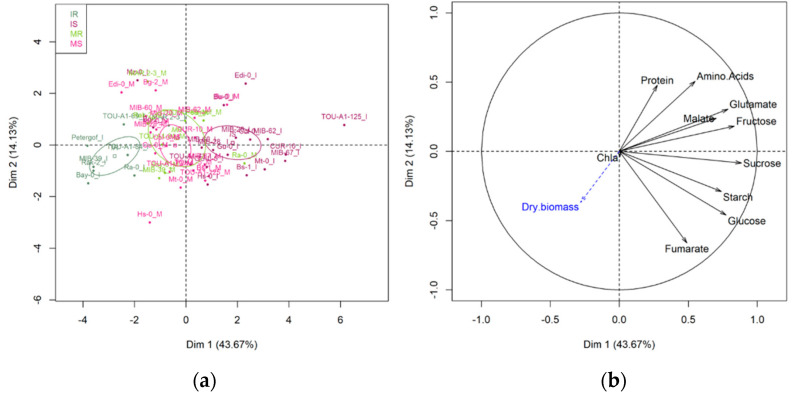
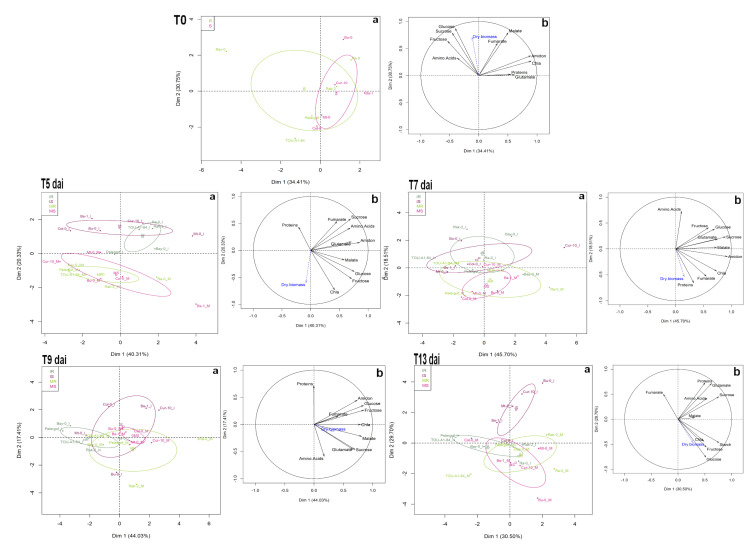
As obligatory parasites, plant viruses alter host cellular metabolism. There is a lack of information on the variability of virus-induced metabolic responses among genetically diverse plants in a natural context with daily changing conditions. To decipher the metabolic landscape of plant-virus interactions in a natural setting, twenty-six and ten accessions of were inoculated with (TuMV), in two field experiments over 2 years. The accessions were measured for viral accumulation, above-ground biomass, targeted and untargeted metabolic profiles. The phenotypes of the accessions ranged from susceptibility to resistance. Susceptible and resistant accessions were shown to have different metabolic routes after inoculation. Susceptible genotypes accumulate primary and secondary metabolites upon infection, at the cost of hindered growth. Twenty-one metabolic signatures significantly accumulated in resistant accessions whereas they maintained their growth as mock-inoculated plants without biomass penalty. Metabolic content was demonstrated to discriminate and be highly predictive of the susceptibility of inoculated . This study is the first to describe the metabolic landscape of plant-virus interactions in a natural setting and its predictive link to susceptibility. It provides new insights on plant-virus interactions. In this undomesticated species and in ecologically realistic conditions, growth and resistance are in a permanent conversation.
作为专性寄生物,植物病毒会改变宿主细胞的新陈代谢。在自然环境中,随着日常条件的变化,关于基因多样的植物中病毒诱导的代谢反应变异性的信息匮乏。为了解析自然环境中植物 - 病毒相互作用的代谢格局,在两年内进行的两个田间试验中,用芜菁花叶病毒(TuMV)接种了26份和10份[植物名称未给出]材料。对这些材料测定了病毒积累量、地上生物量、靶向和非靶向代谢谱。这些材料的表型从易感性到抗性不等。结果表明,接种后易感和抗性材料具有不同的代谢途径。易感基因型在感染后积累初级和次级代谢产物,但以生长受阻为代价。21种代谢特征在抗性材料中显著积累,而它们像 mock - 接种的植物一样保持生长,且没有生物量损失。代谢含量被证明能够区分并高度预测接种[植物名称未给出]的易感性。本研究首次描述了自然环境中植物 - 病毒相互作用的代谢格局及其与易感性的预测联系。它为植物 - 病毒相互作用提供了新的见解。在这种未驯化的物种和生态现实条件下,生长和抗性处于持续的相互关系中。