School of Biological Sciences, University of Adelaide, Adelaide 5005, Australia.
Int J Mol Sci. 2021 Apr 17;22(8):4163. doi: 10.3390/ijms22084163.
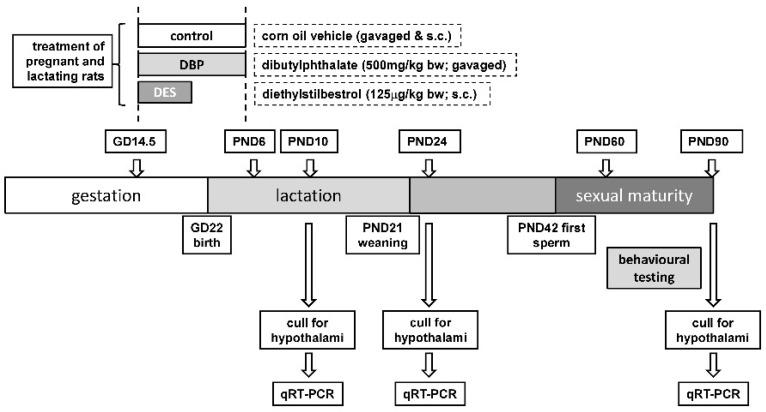
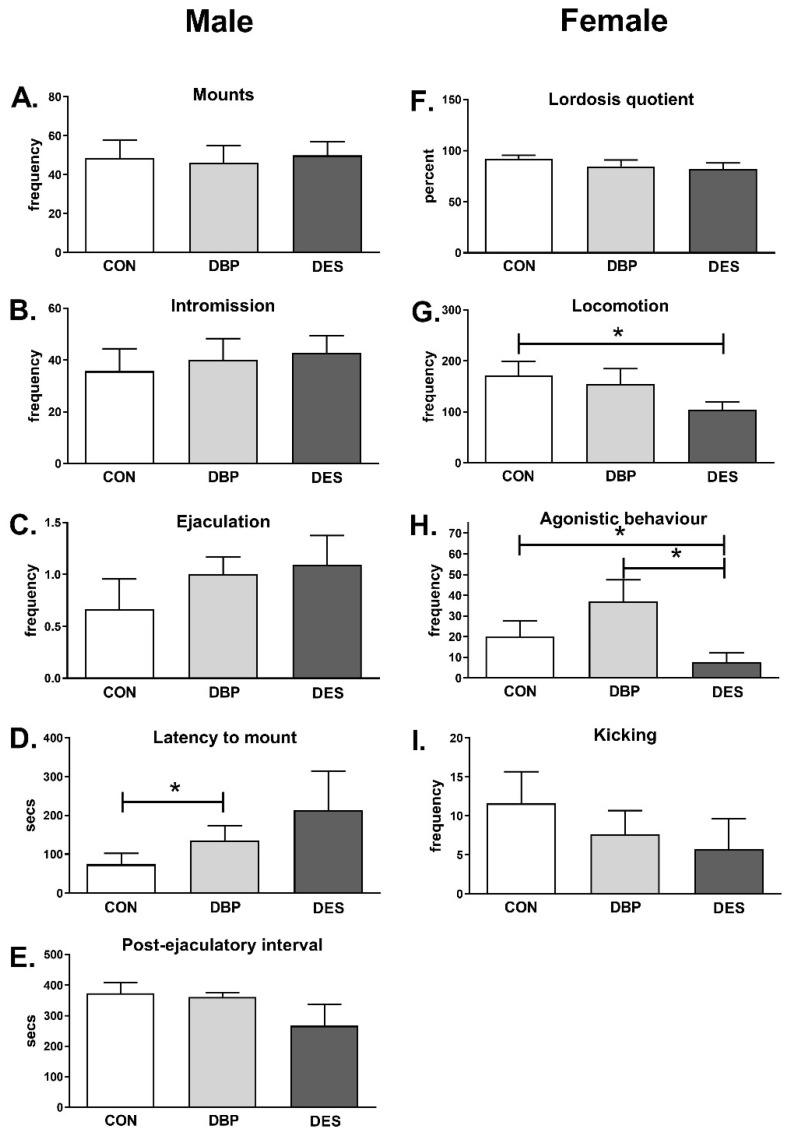
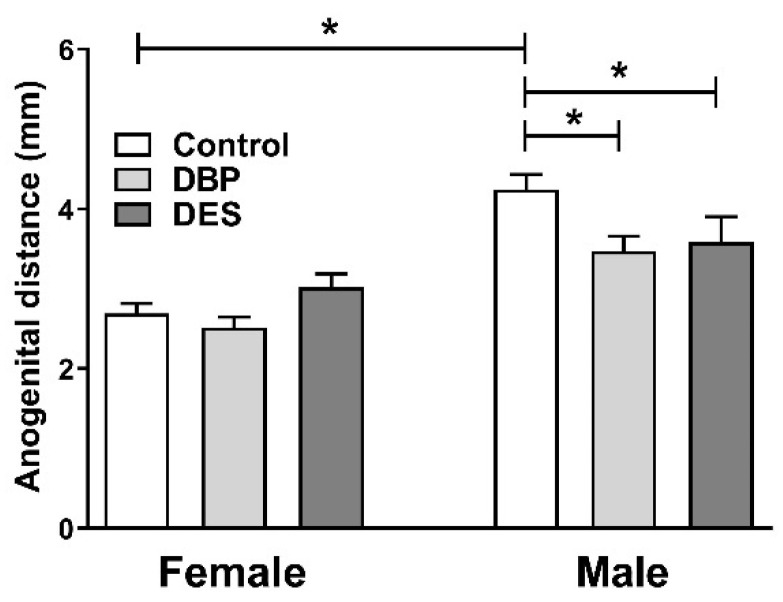
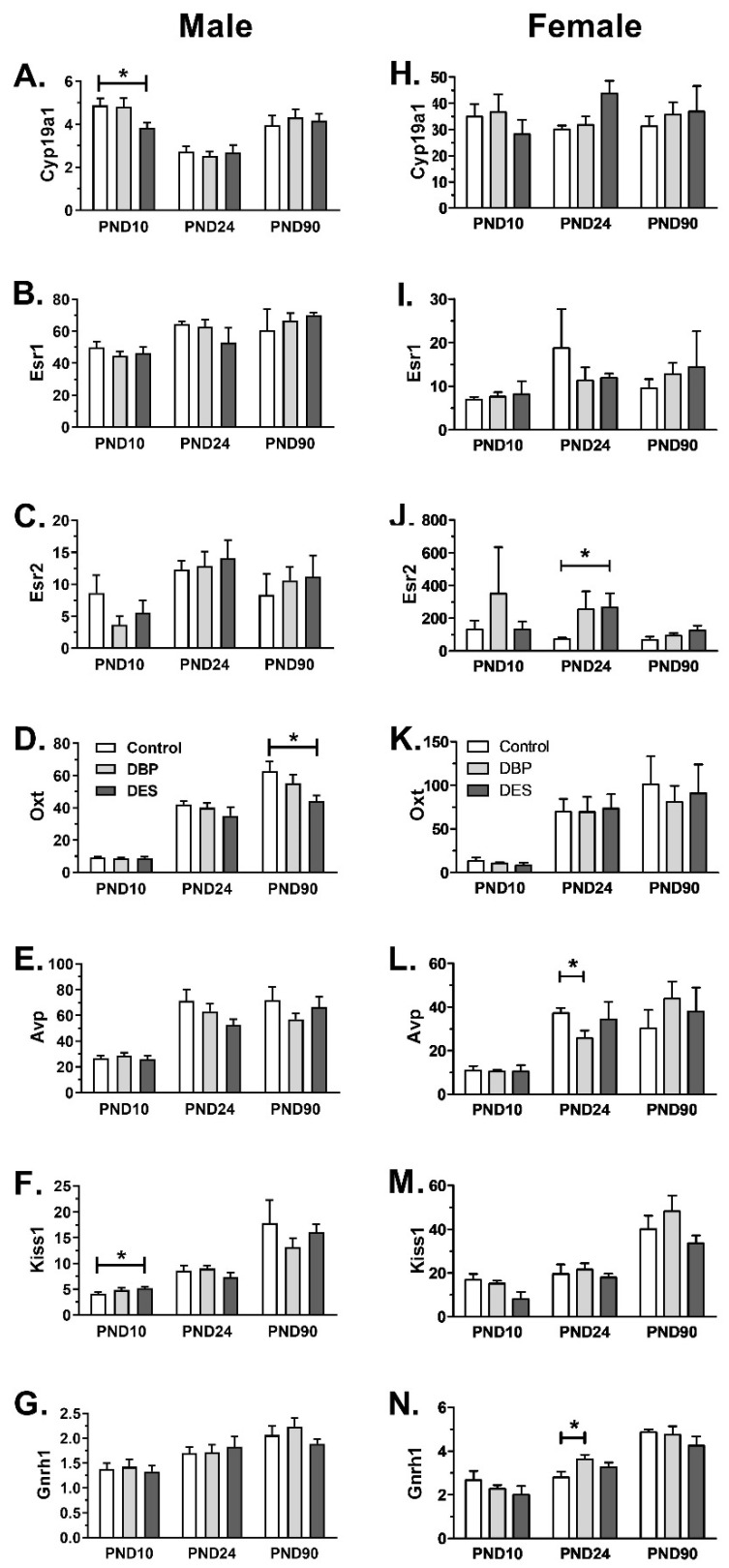
Xenobiotic exposure during pregnancy and lactation has been linked to perinatal changes in male reproductive outcomes and other endocrine parameters. This pilot study wished to assess whether brief maternal exposure of rats to xenobiotics dibutyl phthalate (DBP) or diethylstilbestrol (DES) might also cause long-term changes in hypothalamic gene expression or in reproductive behavior of the resulting offspring. Time-mated female Sprague Dawley rats were given either DBP (500 mg/kg body weight, every second day from GD14.5 to PND6), DES (125 µg/kg body weight at GD14.5 and GD16.5 only), or vehicle ( = 8-12 per group) and mild endocrine disruption was confirmed by monitoring postnatal anogenital distance. Hypothalamic RNA from male and female offspring at PND10, PND24 and PND90 was analyzed by qRT-PCR for expression of aromatase, oxytocin, vasopressin, ER-alpha, ER-beta, kisspeptin, and GnRH genes. Reproductive behavior was monitored in male and female offspring from PND60 to PND90. Particularly, DES treatment led to significant changes in hypothalamic gene expression, which for the oxytocin gene was still evident at PND90, as well as in sexual behavior. In conclusion, maternal xenobiotic exposure may not only alter endocrine systems in offspring but, by impacting on brain development at a critical time, can have long-term effects on male or female sexual behavior.
孕期和哺乳期接触外源性物质与围产期雄性生殖结果和其他内分泌参数的变化有关。本研究旨在评估母体短期接触邻苯二甲酸二丁酯(DBP)或己烯雌酚(DES)是否也会导致下丘脑基因表达或后代生殖行为的长期变化。将时间匹配的雌性 Sprague Dawley 大鼠用 DBP(500mg/kg 体重,从 GD14.5 到 PND6 每隔一天一次)、DES(仅在 GD14.5 和 GD16.5 时给予 125μg/kg 体重)或载体(每组 8-12 只)处理,通过监测产后肛门生殖器距离来确认轻度内分泌干扰。在 PND10、PND24 和 PND90 时,通过 qRT-PCR 分析雄性和雌性后代下丘脑的芳香化酶、催产素、血管加压素、ER-α、ER-β、kisspeptin 和 GnRH 基因的表达。从 PND60 到 PND90 监测雄性和雌性后代的生殖行为。特别是 DES 处理导致下丘脑基因表达发生显著变化,催产素基因在 PND90 时仍然明显,并且还影响性行为。总之,母体外源性物质暴露不仅会改变后代的内分泌系统,而且在关键时期对大脑发育的影响也会对雄性或雌性的性行为产生长期影响。