Schochlow Katharina, Weissner Melissa, Blachutzik Florian, Boeder Niklas F, Tröbs Monique, Lorenz Liv, Dijkstra Jouke, Münzel Thomas, Achenbach Stephan, Nef Holger, Gori Tommaso
Kardiologie 1, Zentrum für Kardiologie, Universitätsmedizin der Johannes Gutenberg-Universität Mainz, Langenbeckstraße 1, 55131 Mainz, Germany.
Med. Klinik 2, Universitätsklinikum Erlangen, Ulmenweg 18, 91054 Erlangen, Germany.
J Clin Med. 2021 Apr 19;10(8):1765. doi: 10.3390/jcm10081765.
The frequency, characteristics and clinical implications of Strut fractures (SFs) remain incompletely understood.
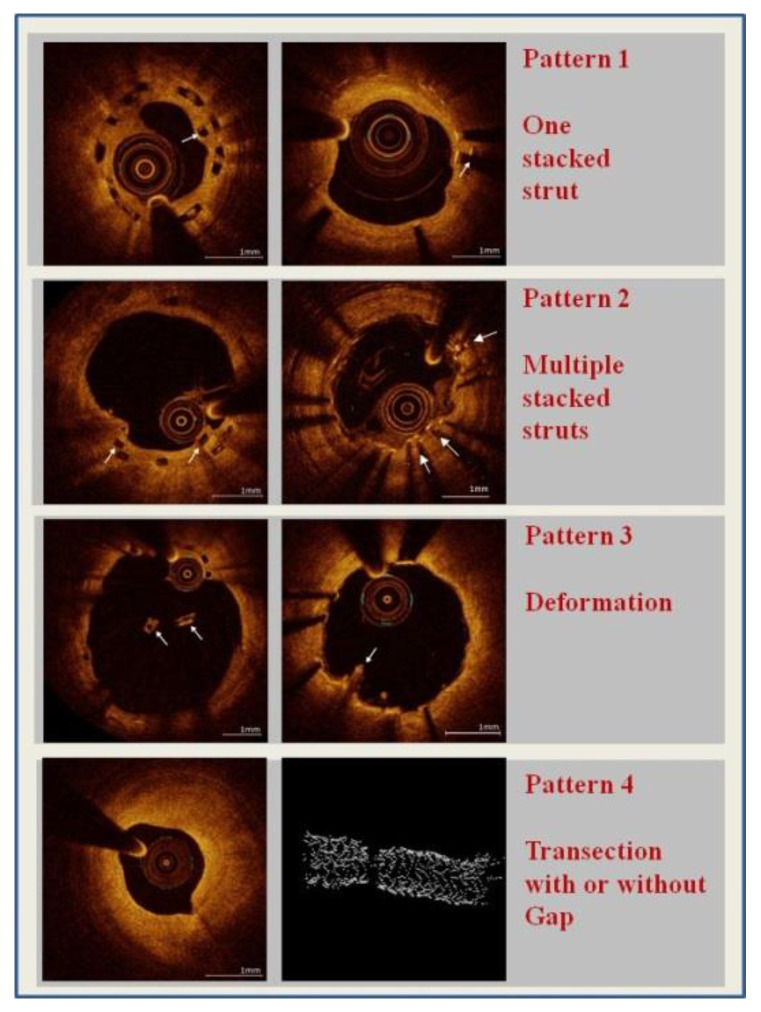
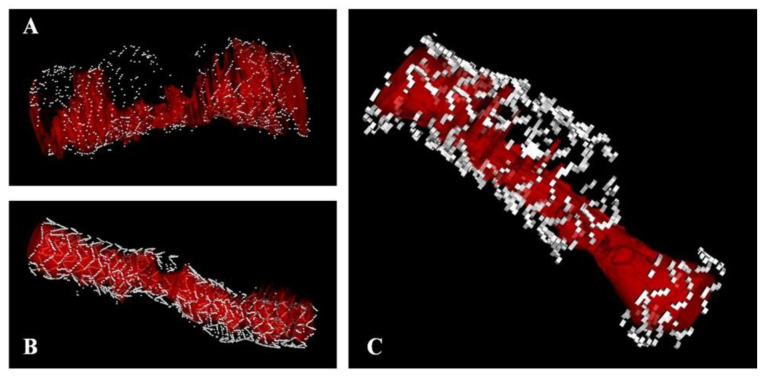
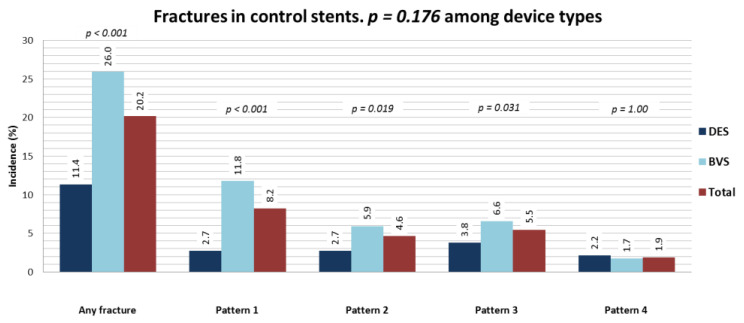
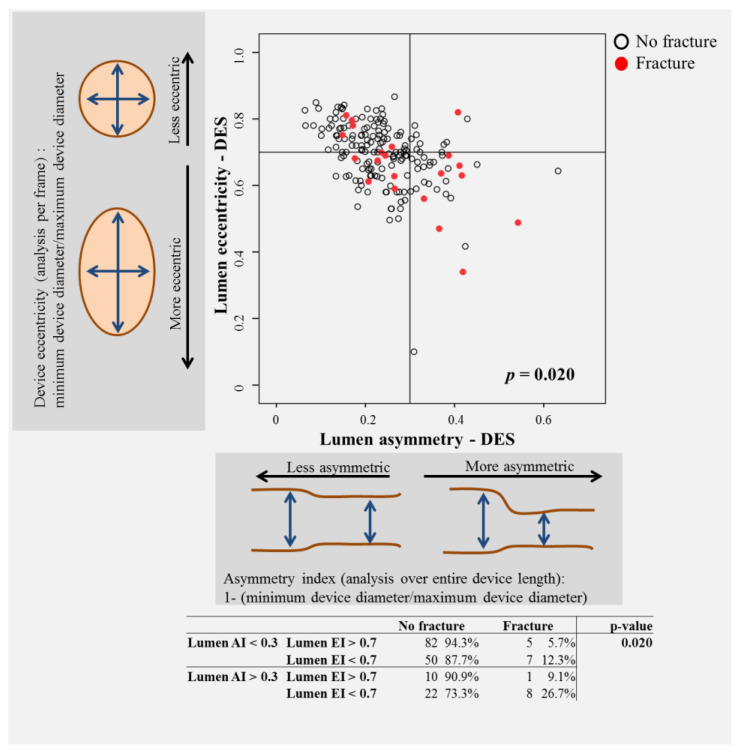
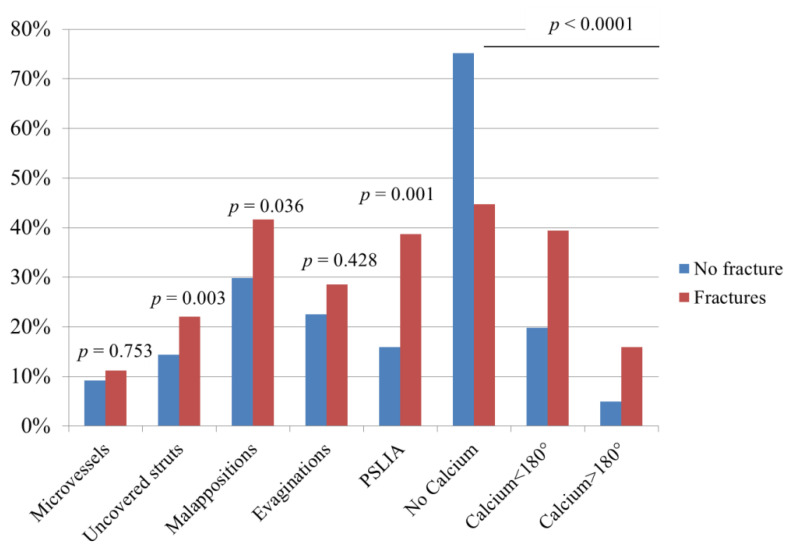
A total of 185 (160 patients) newer-generation drug-eluting stents (DES) were imaged. SFs were found in 21 DES (11.4%) and were classified in four patterns: one single stacked strut (41%); two or more stacked struts (23%); deformation without gap (27%); transection (9%). In multivariable analysis, calcific and bifurcation lesions were associated with SF in DES (OR: 3.5 [1.1-11] and 4.0 [2.2-7.2], < 0.05). Device eccentricity and asymmetry as well as optical coherence tomography (OCT) features of impaired strut healing were also associated with SF. The prevalence of fractures was similar in a set of 289 bioresorbable scaffolds (BRS). In a separate series of 20 device thromboses and 36 device restenoses, the prevalence of SF was higher (61.2% of DES and 66.7% of BRS, < 0.001 for both), with a higher frequency of complex SF patterns ( < 0.0001). In logistic regression analysis, fractures were a correlate of device complications ( < 0.0001, OR = 24.9 [5.6-111] for DES and OR = 6.0 [1.8-20] for BRS).
The prevalence of OCT-diagnosed SF was unexpectedly high in the setting of elective controls and it increased by about three-fold in the setting of device failure. Fractures were associated with increased lesion complexity and device asymmetry/eccentricity and were more frequent in the setting of device failure such as restenosis and thrombosis.
支架骨折(SFs)的发生率、特征及临床意义仍未完全明确。
共对185个(160例患者)新一代药物洗脱支架(DES)进行成像。发现21个DES存在SFs(11.4%),并分为四种类型:单个堆叠支架(41%);两个或更多堆叠支架(23%);无间隙变形(27%);横断(9%)。多变量分析显示,钙化病变和分叉病变与DES中的SF相关(比值比:3.5 [1.1 - 11]和4.0 [2.2 - 7.2],P < 0.05)。支架偏心和不对称以及支架愈合受损的光学相干断层扫描(OCT)特征也与SF相关。在一组289个生物可吸收支架(BRS)中,骨折发生率相似。在另一组20例器械血栓形成和36例器械再狭窄病例中,SF的发生率更高(DES为61.2%,BRS为66.7%,两者P均< 0.001),复杂SF类型的频率更高(P < 0.0001)。逻辑回归分析显示,骨折与器械并发症相关(P < 0.0001,DES的比值比 = 24.9 [5.6 - 111],BRS的比值比 = 6.0 [1.8 - 20])。
在择期对照情况下,经OCT诊断的SF发生率意外地高,在器械故障情况下增加了约三倍。骨折与病变复杂性增加、器械不对称/偏心相关,在再狭窄和血栓形成等器械故障情况下更常见。