
4-甲基-2,4-双(4-羟苯基)戊-1-烯,双酚A的一种主要活性代谢产物,通过JNK/AMPKα激活调节的内质网应激介导的凋亡途径引发胰腺β细胞死亡。
4-Methyl-2,4-bis(4-hydroxyphenyl)pent-1-ene, a Major Active Metabolite of Bisphenol A, Triggers Pancreatic β-Cell Death via a JNK/AMPKα Activation-Regulated Endoplasmic Reticulum Stress-Mediated Apoptotic Pathway.
作者信息
Huang Cheng-Chin, Yang Ching-Yao, Su Chin-Chuan, Fang Kai-Min, Yen Cheng-Chieh, Lin Ching-Ting, Liu Jui-Min, Lee Kuan-I, Chen Ya-Wen, Liu Shing-Hwa, Huang Chun-Fa
机构信息
Department of Emergency, Taichung Tzu Chi Hospital, Buddhist Tzu Chi Medical Foundation, Taichung 427, Taiwan.
Department of Surgery, National Taiwan University Hospital, Taipei 100, Taiwan.
出版信息
Int J Mol Sci. 2021 Apr 22;22(9):4379. doi: 10.3390/ijms22094379.
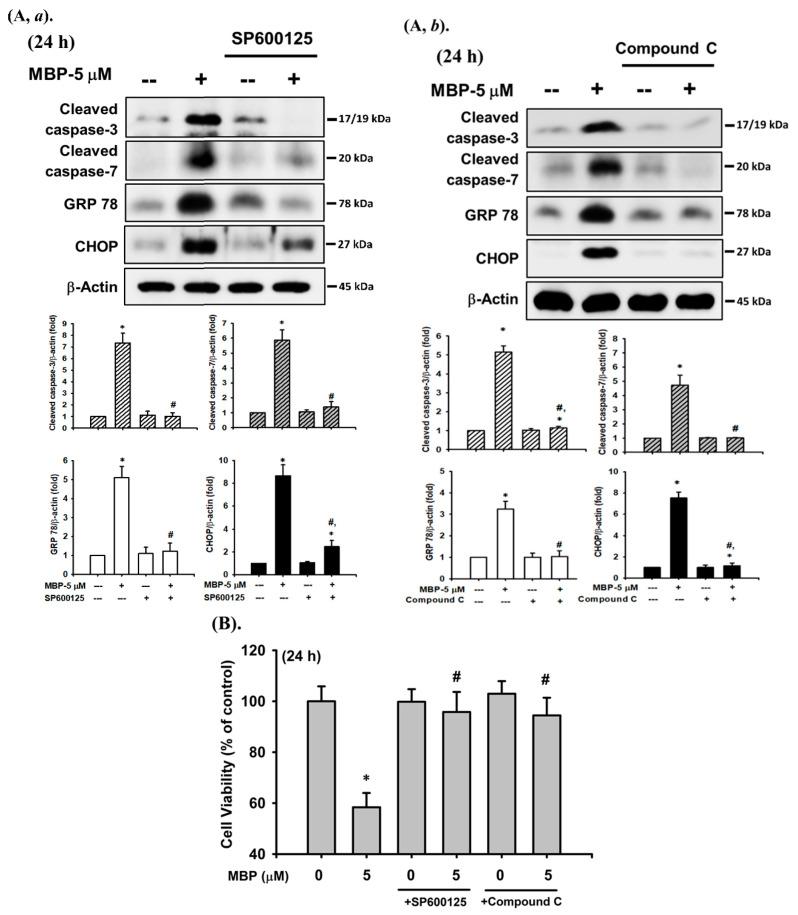
4-methyl-2,4-bis(4-hydroxyphenyl)pent-1-ene (MBP), a major active metabolite of bisphenol A (BPA), is generated in the mammalian liver. Some studies have suggested that MBP exerts greater toxicity than BPA. However, the mechanism underlying MBP-induced pancreatic β-cell cytotoxicity remains largely unclear. This study demonstrated the cytotoxicity of MBP in pancreatic β-cells and elucidated the cellular mechanism involved in MBP-induced β-cell death. Our results showed that MBP exposure significantly reduced cell viability, caused insulin secretion dysfunction, and induced apoptotic events including increased caspase-3 activity and the expression of active forms of caspase-3/-7/-9 and PARP protein. In addition, MBP triggered endoplasmic reticulum (ER) stress, as indicated by the upregulation of GRP 78, CHOP, and cleaved caspase-12 proteins. Pretreatment with 4-phenylbutyric acid (4-PBA; a pharmacological inhibitor of ER stress) markedly reversed MBP-induced ER stress and apoptosis-related signals. Furthermore, exposure to MBP significantly induced the protein phosphorylation of JNK and AMP-activated protein kinase (AMPK)α. Pretreatment of β-cells with pharmacological inhibitors for JNK (SP600125) and AMPK (compound C), respectively, effectively abrogated the MBP-induced apoptosis-related signals. Both JNK and AMPK inhibitors also suppressed the MBP-induced activation of JNK and AMPKα and of each other. In conclusion, these findings suggest that MBP exposure exerts cytotoxicity on β-cells via the interdependent activation of JNK and AMPKα, which regulates the downstream apoptotic signaling pathway.
4-甲基-2,4-双(4-羟基苯基)戊-1-烯(MBP)是双酚A(BPA)的一种主要活性代谢产物,在哺乳动物肝脏中产生。一些研究表明,MBP的毒性比BPA更大。然而,MBP诱导胰腺β细胞毒性的潜在机制仍不清楚。本研究证明了MBP对胰腺β细胞的细胞毒性,并阐明了MBP诱导β细胞死亡所涉及的细胞机制。我们的结果表明,暴露于MBP会显著降低细胞活力,导致胰岛素分泌功能障碍,并诱导凋亡事件,包括caspase-3活性增加以及caspase-3/-7/-9和PARP蛋白活性形式的表达。此外,MBP引发了内质网(ER)应激,这表现为GRP 78、CHOP和裂解的caspase-12蛋白的上调。用4-苯基丁酸(4-PBA;一种ER应激的药理学抑制剂)预处理可显著逆转MBP诱导的ER应激和凋亡相关信号。此外,暴露于MBP会显著诱导JNK和AMP激活的蛋白激酶(AMPK)α的蛋白磷酸化。分别用JNK(SP600125)和AMPK(化合物C)的药理学抑制剂预处理β细胞,可有效消除MBP诱导的凋亡相关信号。JNK和AMPK抑制剂均还抑制了MBP诱导的JNK和AMPKα的激活以及彼此的激活。总之,这些发现表明,暴露于MBP通过JNK和AMPKα的相互依赖激活对β细胞发挥细胞毒性作用,从而调节下游凋亡信号通路。


 Zotero 插件