Department of Community Mental Health Services, West London NHS Trust, London UB2 4SD, UK.
Division of Brain Sciences, Imperial College London, London SW7 2BX, UK.
Int J Environ Res Public Health. 2021 Apr 22;18(9):4457. doi: 10.3390/ijerph18094457.
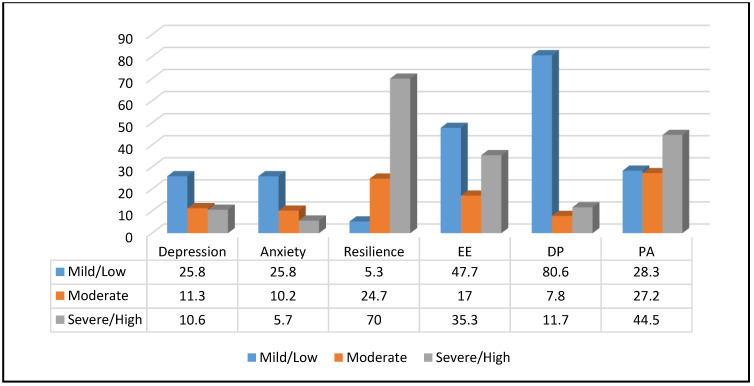
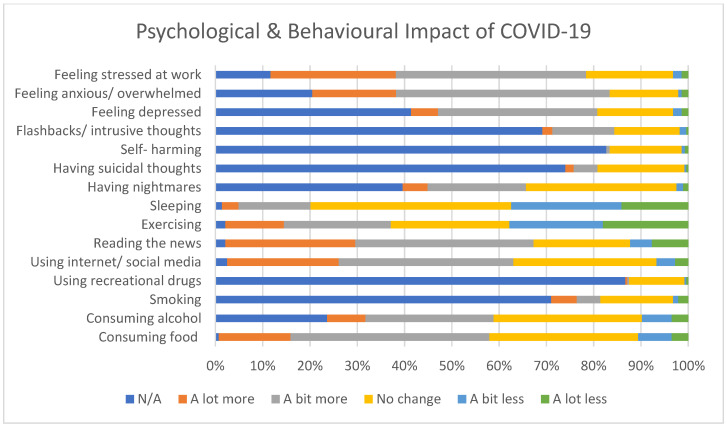
The burden of the COVID-19 pandemic on health systems and the physical and mental health of healthcare workers (HCWs) has been substantial. This cross-sectional study aims to assess the effects of COVID-19 on the psychological wellbeing of mental health workers who provide care to a vulnerable patient population that have been particularly affected during this crisis. A total of 387 HCWs from across a large urban mental health service completed a self-administered questionnaire consisting of socio-demographic, lifestyle and work-based information and validated psychometric scales. Depression and anxiety were measured using the Patient Health Questionnaire (PHQ-9) and the Generalized Anxiety Disorder Scale (GAD-7), respectively; sleep problems with the Athens Insomnia Scale (AIS); burnout with the Maslach Burnout Inventory (MBI); and resilience with the Resilience Scale-14 (RS-14). Multivariable logistic regression analysis was performed to determine potential mediating factors. Prevalence of burnout was notable, with 52% recording moderate/severe in Emotional Exhaustion, 19.5% moderate/severe in Depersonalisation, and 55.5% low/moderate Personal Accomplishment. Over half of all respondents (52%) experienced sleep problems; the presence of depressive symptoms was a significant predictor of insomnia. An increase in potentially harmful lifestyle changes, such as smoking, alcohol consumption and overeating was also observed. However, high Resilience was reported by 70% of the samples and the importance of this is highlighted. Female gender was associated with increased levels of depression and emotional exhaustion while those with a history of mental health conditions were most at risk of affective symptoms, insomnia, and burnout. Overall, our study revealed considerable levels of psychological distress and maladaptive coping strategies but also resilience and satisfaction with organizational support provided. Findings can inform tailored interventions in order to mitigate vulnerability and prevent long-term psychological sequelae.
COVID-19 大流行对卫生系统以及医疗保健工作者(HCWs)的身心健康造成了巨大负担。本横断面研究旨在评估 COVID-19 对为弱势群体提供护理的心理健康工作者心理健康的影响,这些工作者在这场危机中受到了特别影响。来自一家大型城市心理健康服务机构的 387 名 HCWs 完成了一份自我管理问卷,其中包括社会人口统计学、生活方式和工作相关信息以及经过验证的心理计量学量表。使用患者健康问卷(PHQ-9)和广泛性焦虑症量表(GAD-7)分别测量抑郁和焦虑;使用雅典失眠量表(AIS)测量睡眠问题;使用 Maslach 倦怠量表(MBI)测量倦怠;使用韧性量表-14(RS-14)测量韧性。进行多变量逻辑回归分析以确定潜在的中介因素。倦怠的患病率显著,52%的人记录到情绪耗竭中度/重度,19.5%的人记录到去人性化中度/重度,55.5%的人记录到个人成就感低/中度。超过一半的受访者(52%)经历睡眠问题;抑郁症状的存在是失眠的一个显著预测因素。还观察到潜在有害的生活方式改变的增加,例如吸烟、饮酒和暴饮暴食。然而,70%的样本报告了较高的韧性,这一点很重要。女性性别与抑郁和情绪耗竭水平升高有关,而有精神健康病史的人则最容易出现情感症状、失眠和倦怠。总体而言,我们的研究揭示了相当程度的心理困扰和适应不良的应对策略,但也揭示了韧性和对组织支持的满意度。研究结果可以为量身定制的干预措施提供信息,以减轻脆弱性并防止长期的心理后果。