Biological and Chemical Research Centre, Faculty of Chemistry, University of Warsaw, 02093 Warsaw, Poland.
Structural Bioinformatics Group, Institute for Physiology, Charité-University Medicine Berlin, 10115 Berlin, Germany.
Molecules. 2021 Apr 23;26(9):2456. doi: 10.3390/molecules26092456.
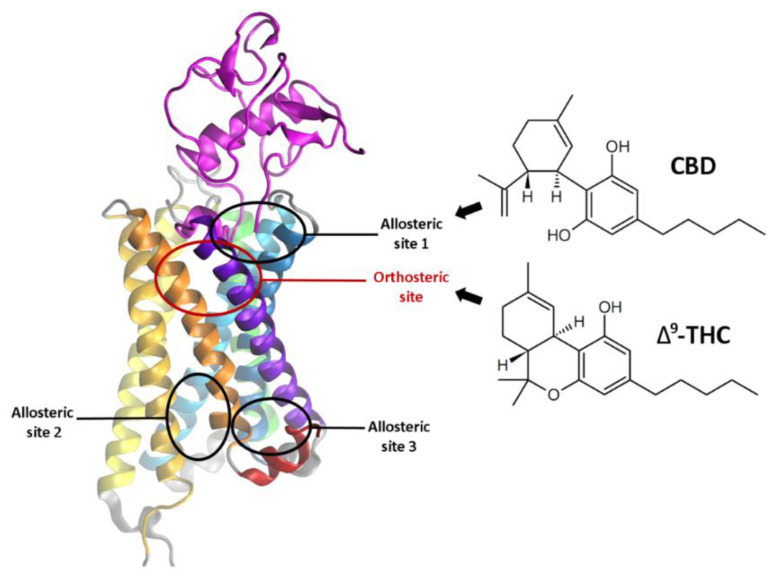
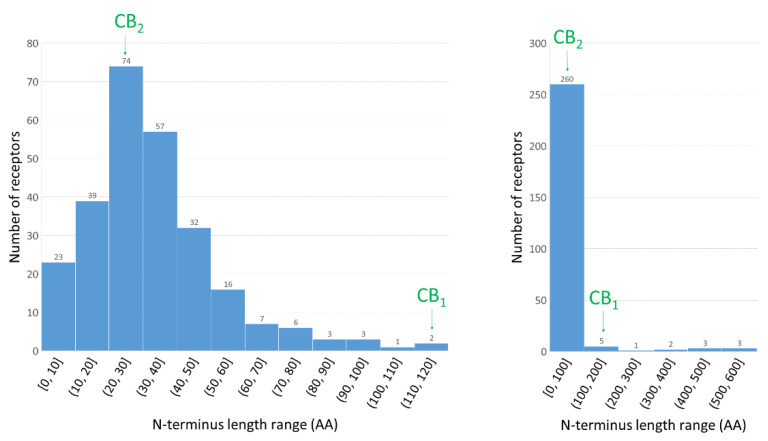
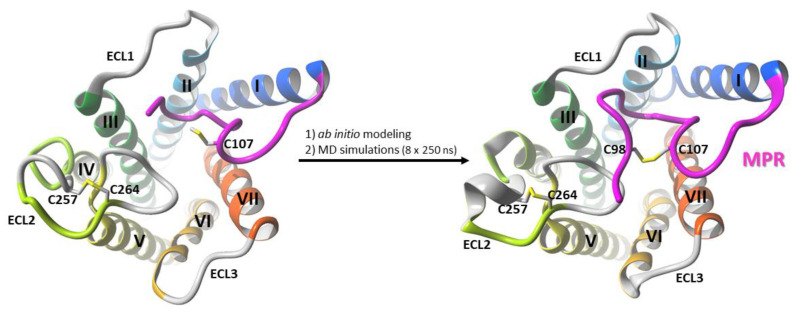
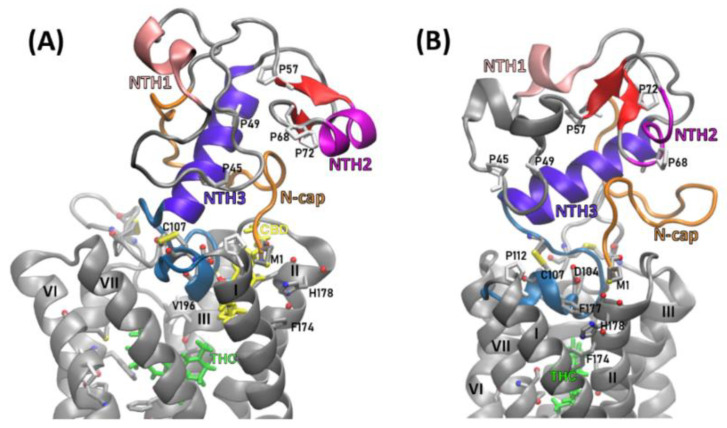
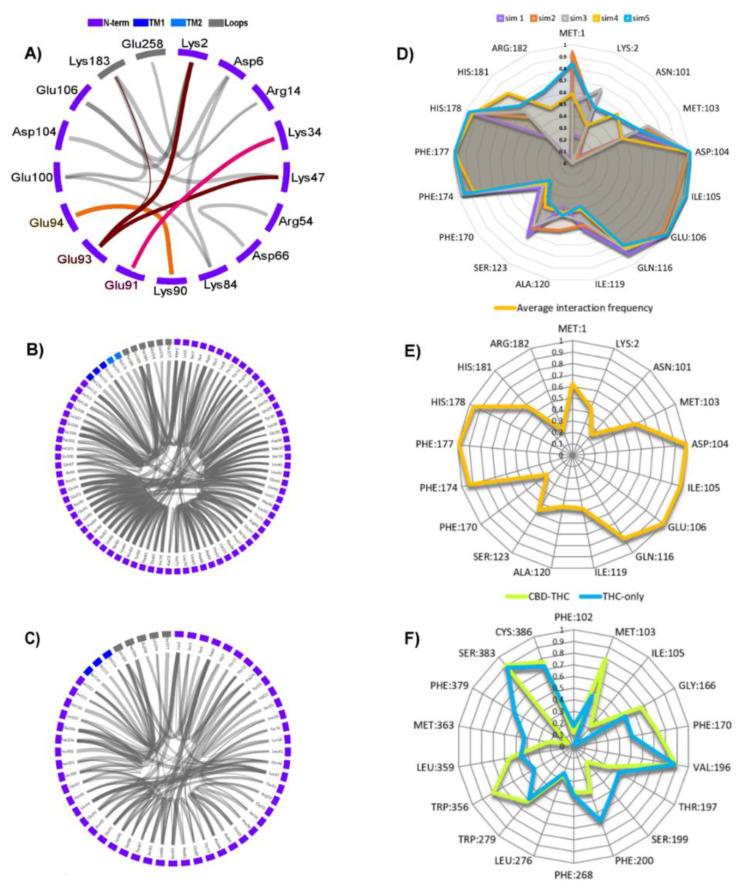
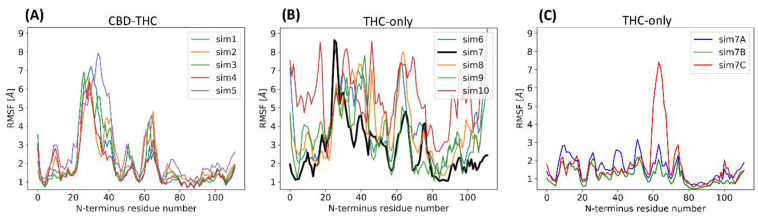
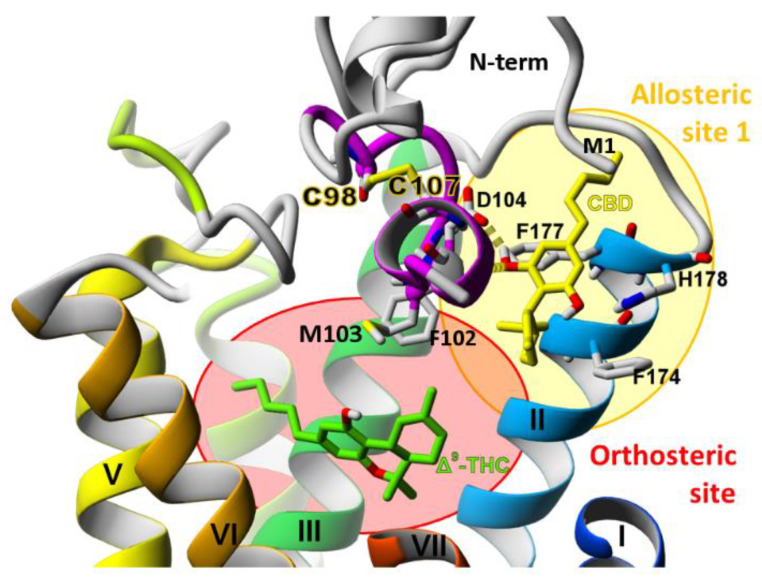
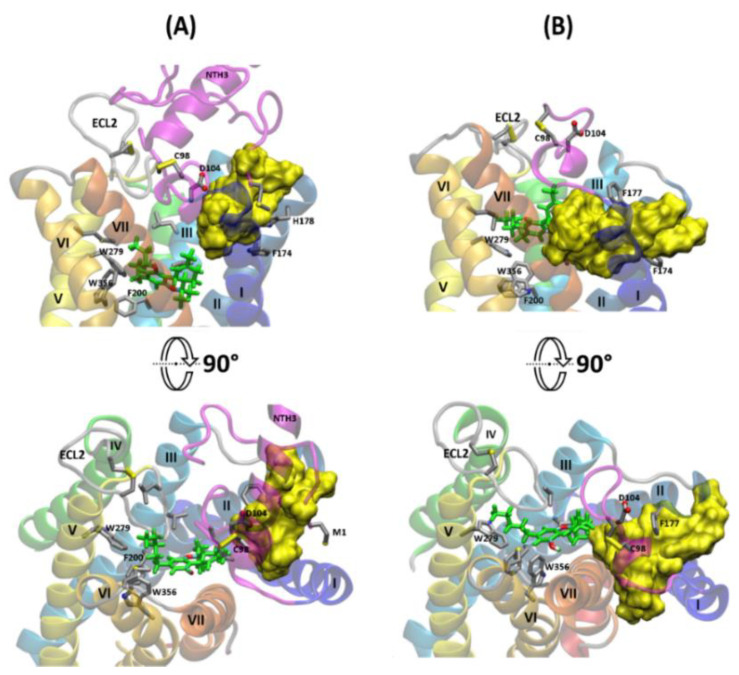
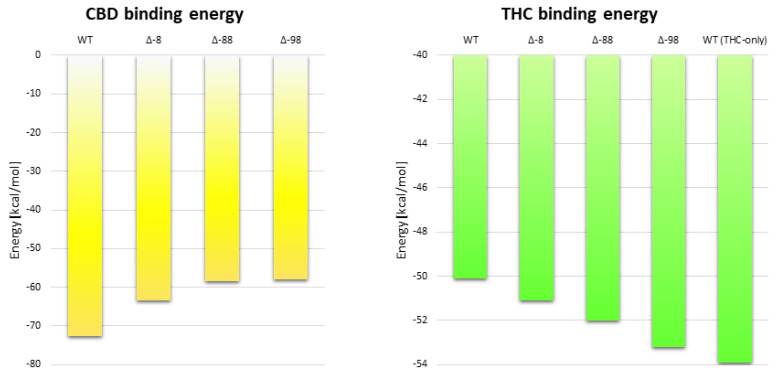
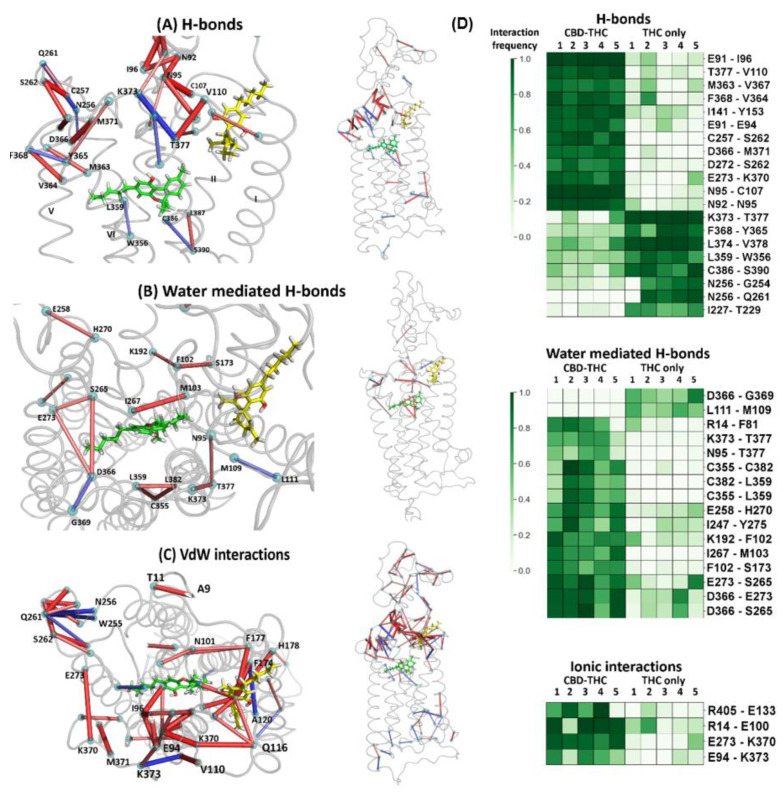
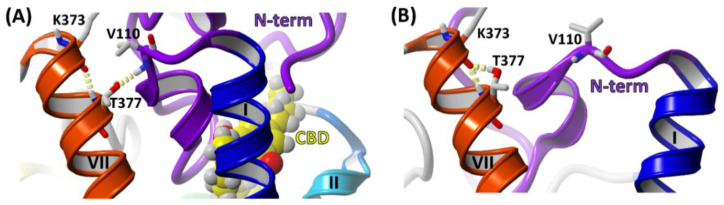
The CB cannabinoid receptor (CBR) contains one of the longest N termini among class A G protein-coupled receptors. Mutagenesis studies suggest that the allosteric binding site of cannabidiol (CBD) involves residues from the N terminal domain. In order to study the allosteric binding of CBD to CBR we modeled the whole N-terminus of this receptor using the replica exchange molecular dynamics with solute tempering (REST2) approach. Then, the obtained structures of CBR with the N terminus were used for ligand docking. A natural cannabinoid receptor agonist, Δ-THC, was docked to the orthosteric site and a negative allosteric modulator, CBD, to the allosteric site positioned between extracellular ends of helices TM1 and TM2. The molecular dynamics simulations were then performed for CBR with ligands: (i) CBD together with THC, and (ii) THC-only. Analyses of the differences in the residue-residue interaction patterns between those two cases allowed us to elucidate the allosteric network responsible for the modulation of the CBR by CBD. In addition, we identified the changes in the orthosteric binding mode of Δ-THC, as well as the changes in its binding energy, caused by the CBD allosteric binding. We have also found that the presence of a complete N-terminal domain is essential for a stable binding of CBD in the allosteric site of CBR as well as for the allosteric-orthosteric coupling mechanism.
大麻素 CB1 受体(CBR)的 N 端是 A 类 G 蛋白偶联受体中最长的之一。突变研究表明,大麻二酚(CBD)的变构结合位点涉及 N 端结构域的残基。为了研究 CBD 与 CBR 的变构结合,我们使用溶剂调温的复制交换分子动力学(REST2)方法对该受体的整个 N 端进行建模。然后,使用获得的具有 N 端的 CBR 结构进行配体对接。将天然大麻素受体激动剂 Δ-THC 对接至正构结合位点,将负变构调节剂 CBD 对接至位于 TM1 和 TM2 胞外环之间的变构结合位点。然后对具有配体的 CBR 进行分子动力学模拟:(i)CBD 与 THC 一起,和(ii)仅 THC。分析两种情况下残基-残基相互作用模式的差异,使我们能够阐明 CBD 调节 CBR 的变构网络。此外,我们确定了 CBD 变构结合引起的 Δ-THC 正构结合模式的变化,以及其结合能的变化。我们还发现,完整的 N 端结构域的存在对于 CBD 在 CBR 的变构结合位点中的稳定结合以及变构-正构偶联机制是必不可少的。