Parmar Bhaval, Verma Urja, Khaire Kashmira, Danes Dhanush, Balakrishnan Suresh
Department of Zoology, Faculty of Science, The Maharaja Sayajirao University of Baroda, Gujarat 390002, India.
J Dev Biol. 2021 Apr 23;9(2):16. doi: 10.3390/jdb9020016.
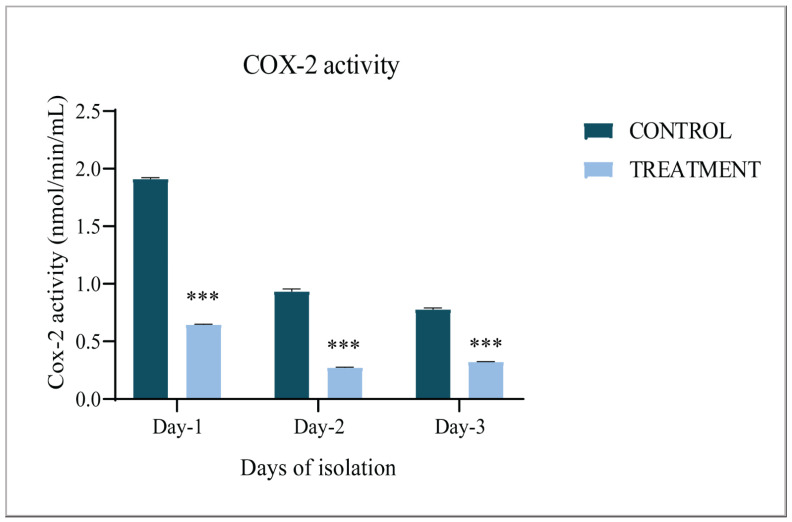
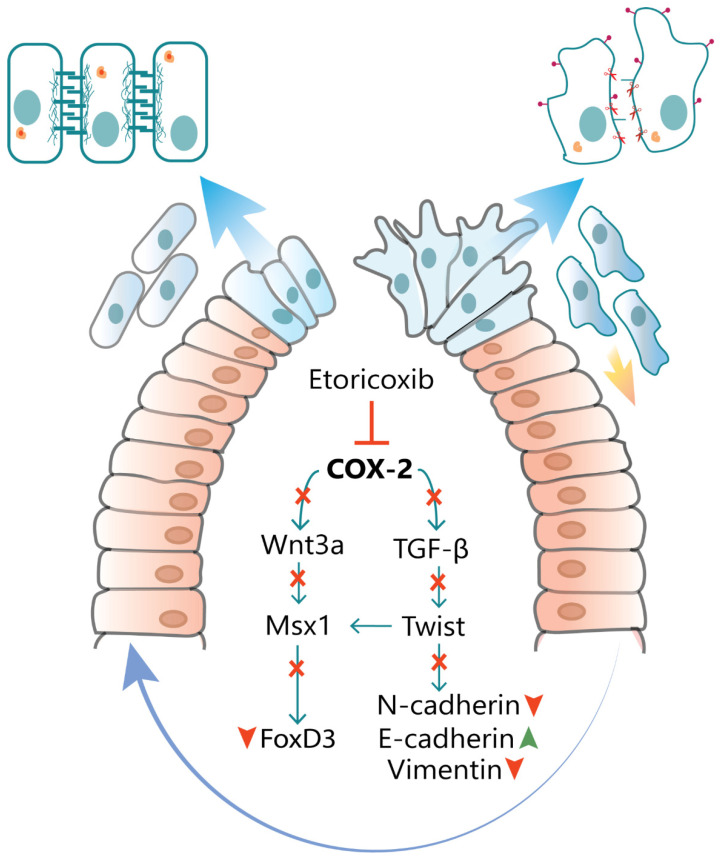
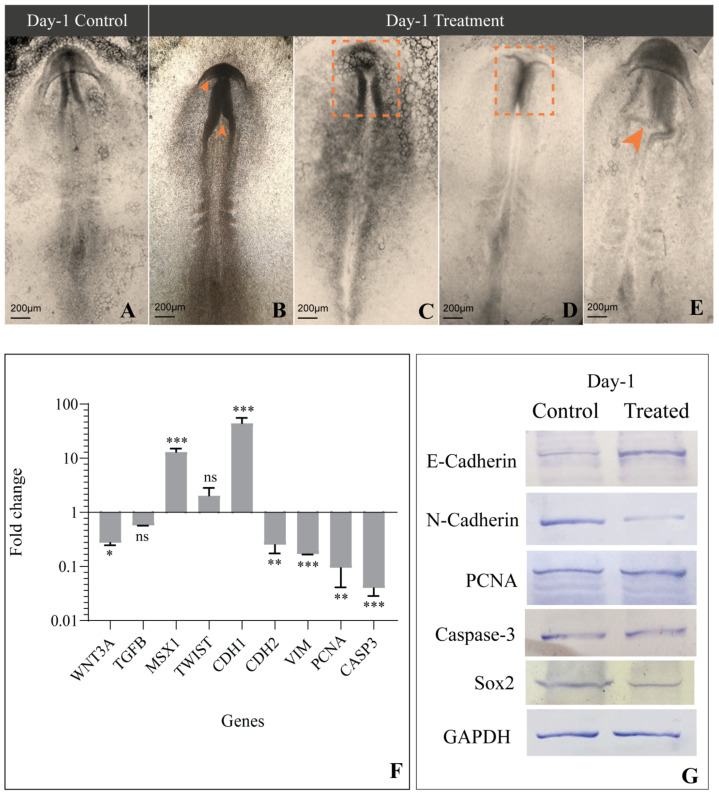
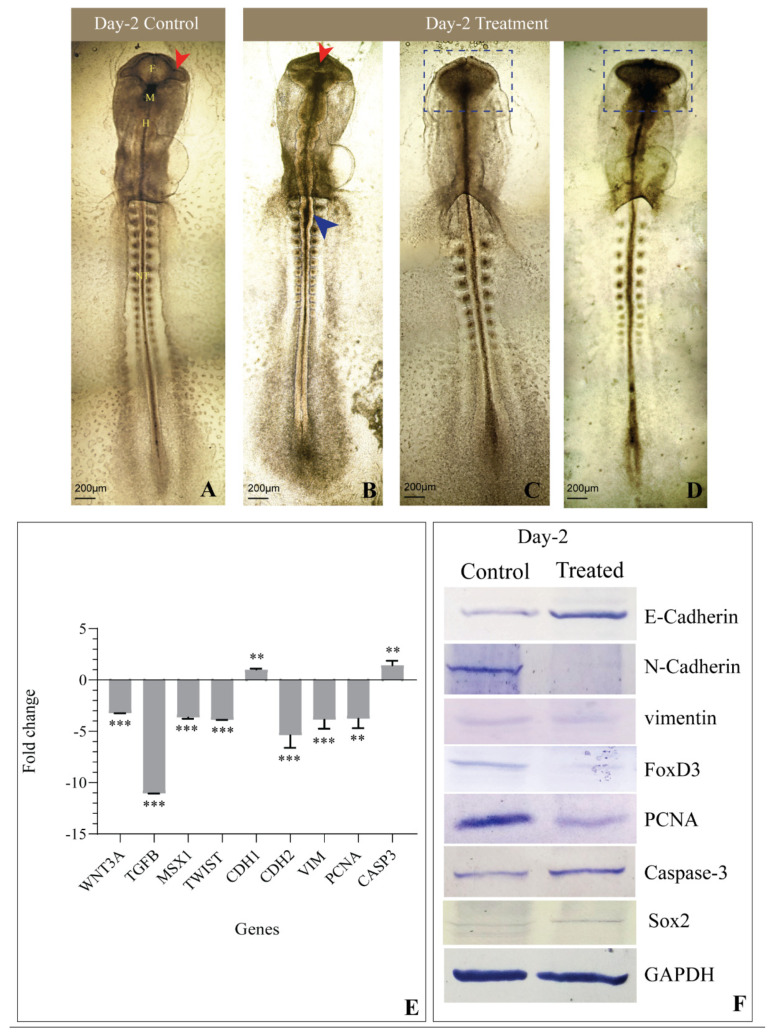
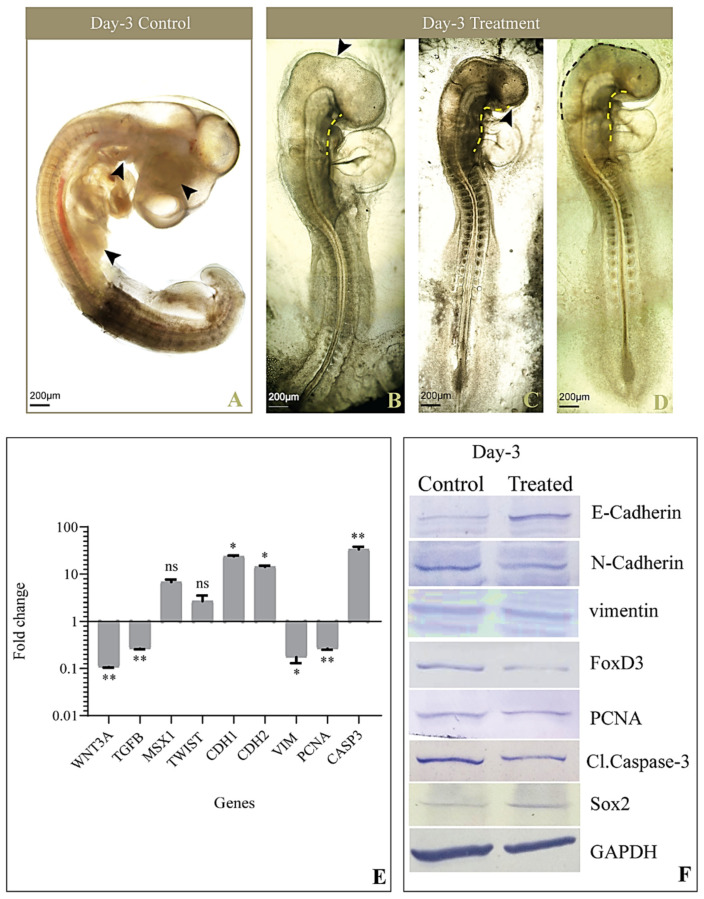
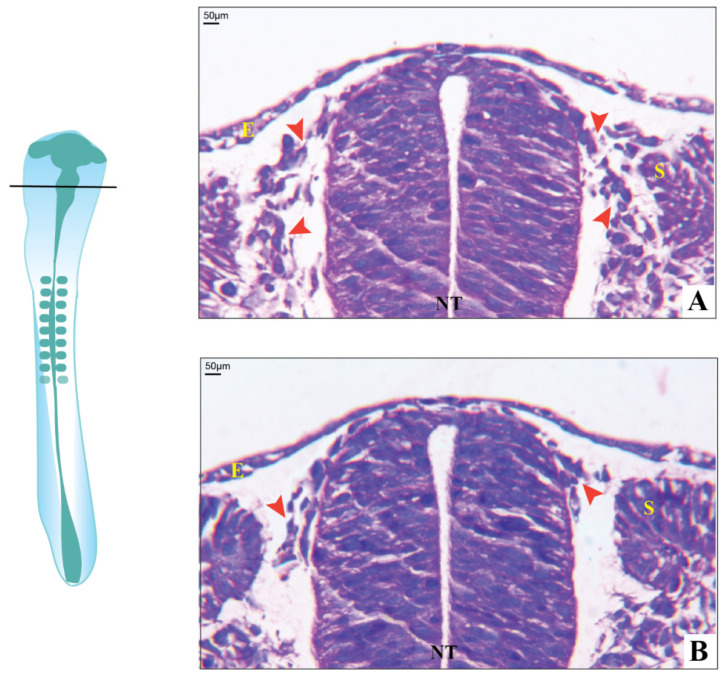
A recent study from our lab revealed that the inhibition of cyclooxygenase-2 (COX-2) exclusively reduces the level of PGE (Prostaglandin E) among prostanoids and hampers the normal development of several structures, strikingly the cranial vault, in chick embryos. In order to unearth the mechanism behind the deviant development of cranial features, the expression pattern of various factors that are known to influence cranial neural crest cell (CNCC) migration was checked in chick embryos after inhibiting COX-2 activity using etoricoxib. The compromised level of cell adhesion molecules and their upstream regulators, namely CDH1 (E-cadherin), CDH2 (N-cadherin), MSX1 (Msh homeobox 1), and TGF-β (Transforming growth factor beta), observed in the etoricoxib-treated embryos indicate that COX-2, through its downstream effector PGE, regulates the expression of these factors perhaps to aid the migration of CNCCs. The histological features and levels of FoxD3 (Forkhead box D3), as well as PCNA (Proliferating cell nuclear antigen), further consolidate the role of COX-2 in the migration and survival of CNCCs in developing embryos. The results of the current study indicate that COX-2 plays a pivotal role in orchestrating craniofacial structures perhaps by modulating CNCC proliferation and migration during the embryonic development of chicks.
我们实验室最近的一项研究表明,抑制环氧化酶-2(COX-2)仅能降低前列腺素类物质中前列腺素E(PGE)的水平,并阻碍鸡胚中几个结构的正常发育,尤其是颅顶。为了揭示颅面部特征异常发育背后的机制,在使用依托考昔抑制COX-2活性后,检测了鸡胚中已知影响颅神经嵴细胞(CNCC)迁移的各种因子的表达模式。在依托考昔处理的胚胎中观察到细胞粘附分子及其上游调节因子,即CDH1(E-钙粘蛋白)、CDH2(N-钙粘蛋白)、MSX1(Msh同源盒1)和TGF-β(转化生长因子β)的水平受损,这表明COX-2可能通过其下游效应物PGE调节这些因子的表达,以帮助CNCC迁移。FoxD3(叉头框D3)以及PCNA(增殖细胞核抗原)的组织学特征和水平,进一步证实了COX-2在发育中胚胎的CNCC迁移和存活中的作用。当前研究结果表明,COX-2可能通过在鸡胚胚胎发育过程中调节CNCC增殖和迁移,在协调颅面部结构形成中起关键作用。