Department of Technology and Food Evaluation, Institute of Food Sciences, Warsaw University of Life Sciences, 159c Nowoursynowska St., 02-776 Warsaw, Poland.
Department of Food Engineering and Process Management, Institute of Food Sciences, Warsaw University of Life Sciences, 159c Nowoursynowska St., 02-776 Warsaw, Poland.
Molecules. 2021 Apr 25;26(9):2502. doi: 10.3390/molecules26092502.
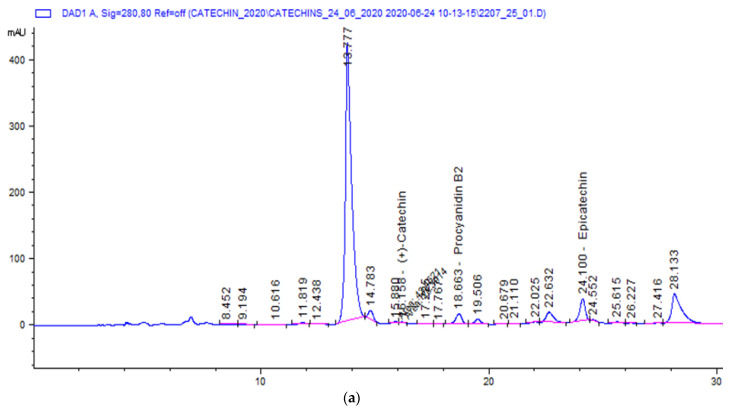
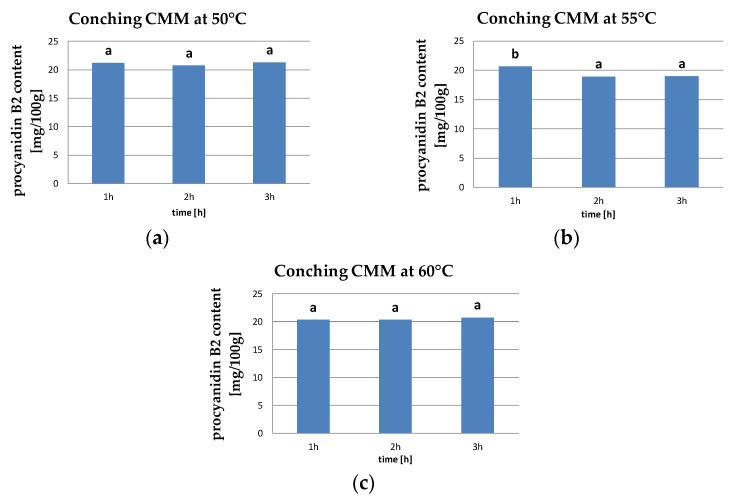
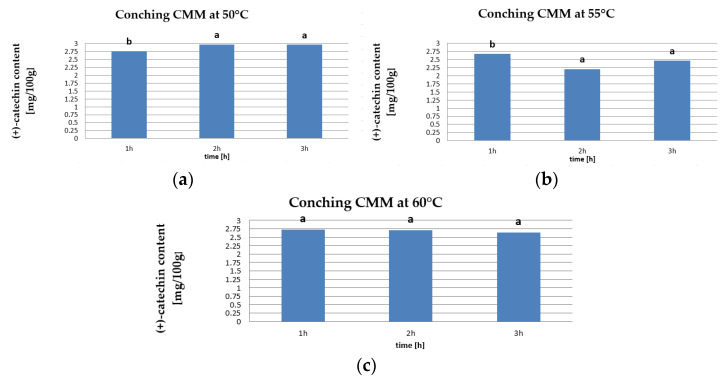
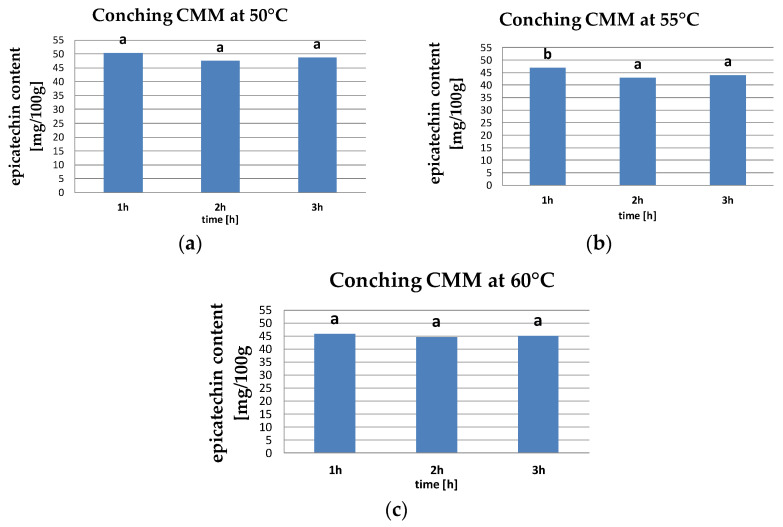
The content of polyphenols in chocolate depends on many factors related to the properties of raw material and manufacturing parameters. The trend toward developing chocolates made from unroasted cocoa beans encourages research in this area. In addition, modern customers attach great importance to how the food they consume benefits their bodies. One such benefit that consumers value is the preservation of natural antioxidant compounds in food products (e.g., polyphenols). Therefore, in our study we attempted to determine the relationship between variable parameters at the conching stage (i.e., temperature and time of) and the content of dominant polyphenols (i.e.,catechins, epicatechins, and procyanidin B2) in chocolate milk mass (CMM) obtained from unroasted cocoa beans. Increasing the conching temperature from 50 to 60 °C decreased the content of three basic flavan-3-ols. The highest number of these compounds was determined when the process was carried out at 50 °C. However, the time that caused the least degradation of these compounds differed. For catechin, it was 2 h; for epicatechin it was 1 h; and for procyanidin it was 3 h. The influence of both the temperature and conching time on the rheological properties of chocolate milk mass was demonstrated. At 50 °C, the viscosity and the yield stress of the conched mass showed its highest value.
巧克力中多酚的含量取决于许多与原材料性质和制造参数相关的因素。开发未烘焙可可豆巧克力的趋势促使人们对这一领域进行研究。此外,现代消费者非常重视他们所消费的食物对身体的益处。消费者重视的一个好处是保留食品中的天然抗氧化化合物(例如多酚)。因此,在我们的研究中,我们试图确定在精炼阶段(即温度和时间)的变量参数与从未烘焙可可豆获得的巧克力牛奶质量(CMM)中主要多酚(即儿茶素、表儿茶素和原花青素 B2)含量之间的关系。将精炼温度从 50°C 升高到 60°C 会降低三种基本黄烷-3-醇的含量。当在 50°C 下进行时,确定了这些化合物的最高数量。但是,引起这些化合物降解最少的时间不同。对于儿茶素,为 2 小时;对于表儿茶素,为 1 小时;对于原花青素,为 3 小时。证明了温度和精炼时间对巧克力牛奶质量流变性能的影响。在 50°C 时,精炼后的物料的粘度和屈服应力显示出最高值。