Catalano Antonella, Adlesic Mojca, Kaltenbacher Thorsten, Klar Rhena F U, Albers Joachim, Seidel Philipp, Brandt Laura P, Hejhal Tomas, Busenhart Philipp, Röhner Niklas, Zodel Kyra, Fritsch Kornelia, Wild Peter J, Duyster Justus, Fritsch Ralph, Brummer Tilman, Frew Ian J
Department of Internal Medicine I, Hematology, Oncology and Stem Cell Transplantation, Medical Center-University of Freiburg, Faculty of Medicine, University of Freiburg, 79106 Freiburg, Germany.
Institute of Physiology, University of Zurich, 8057 Zurich, Switzerland.
Cancers (Basel). 2021 Apr 13;13(8):1852. doi: 10.3390/cancers13081852.
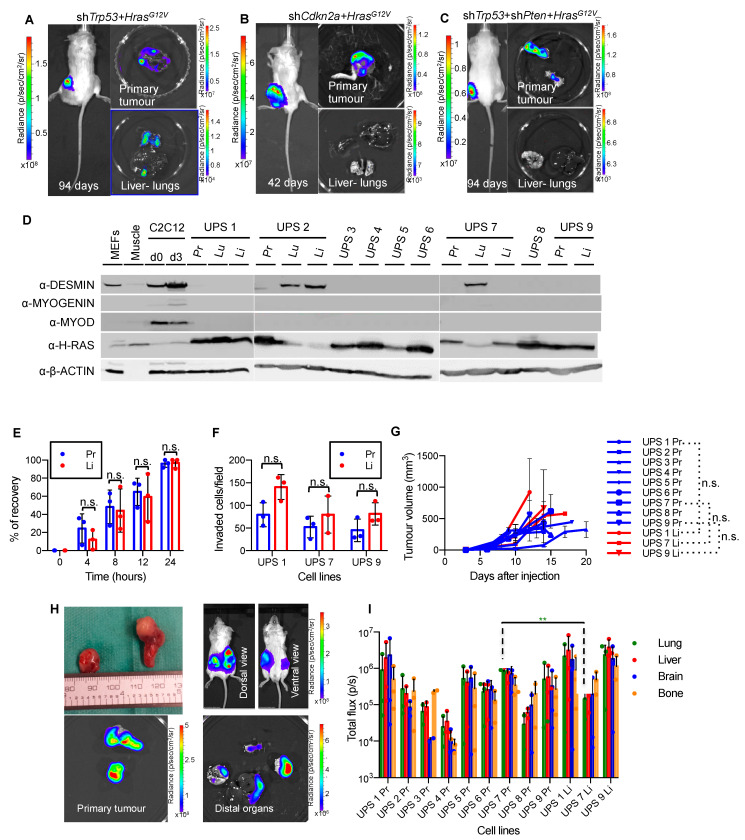
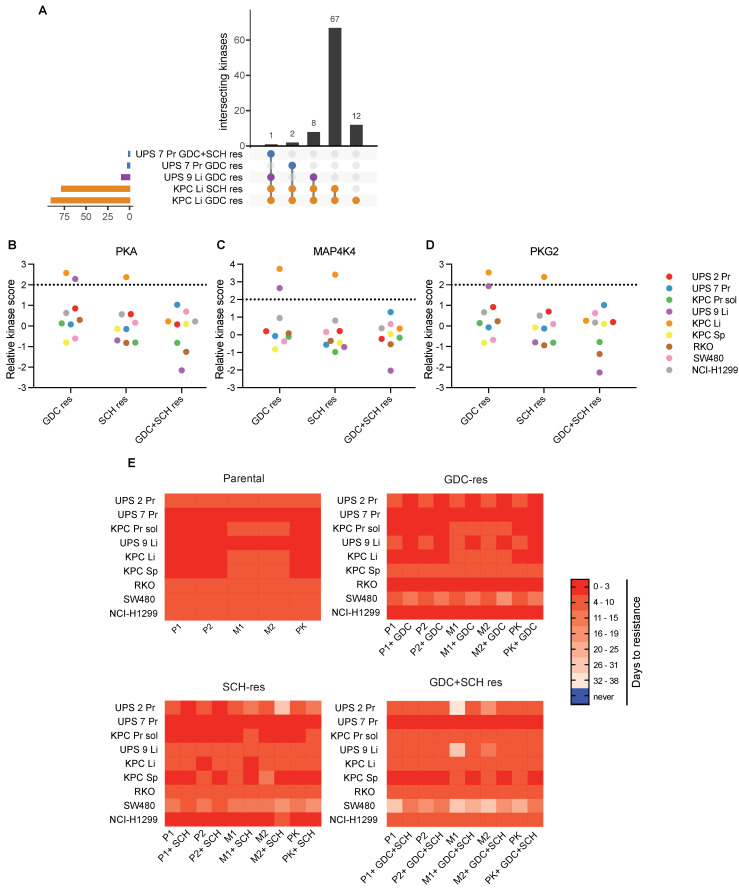
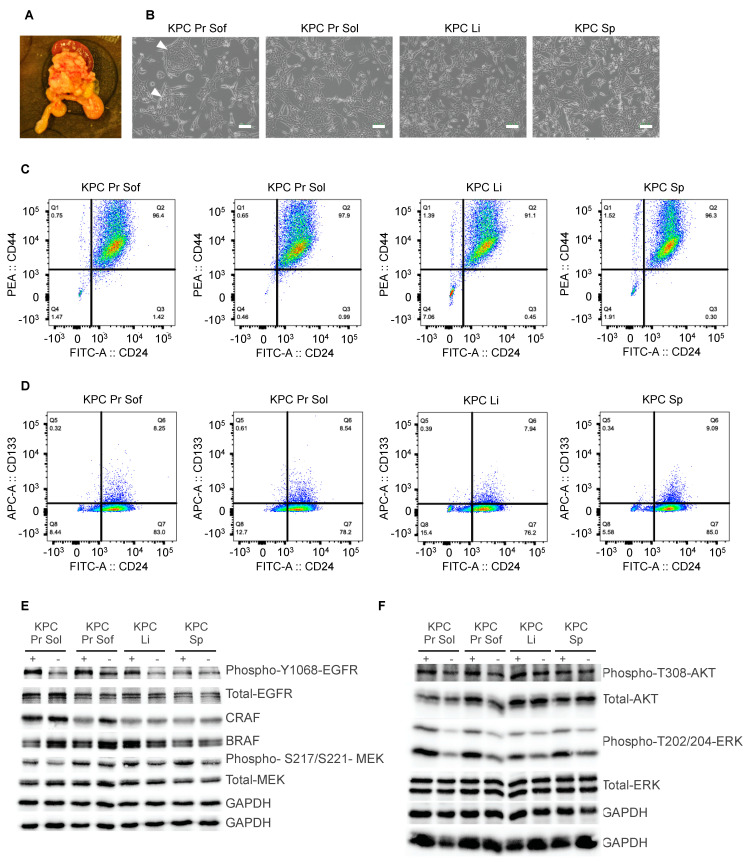
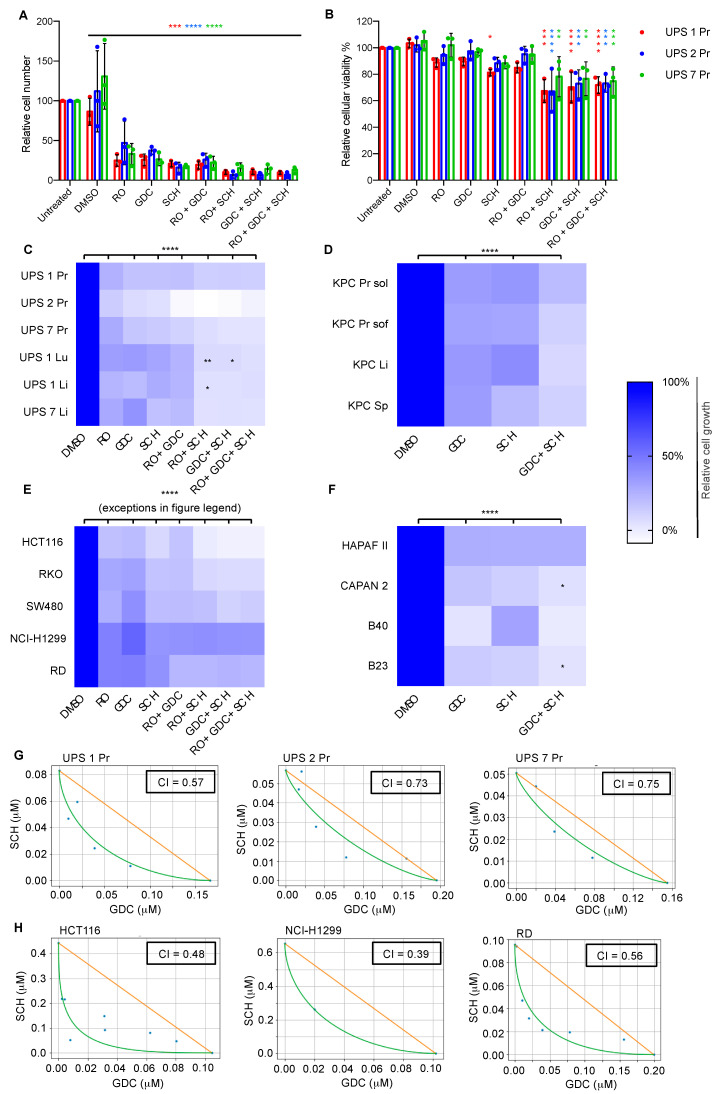
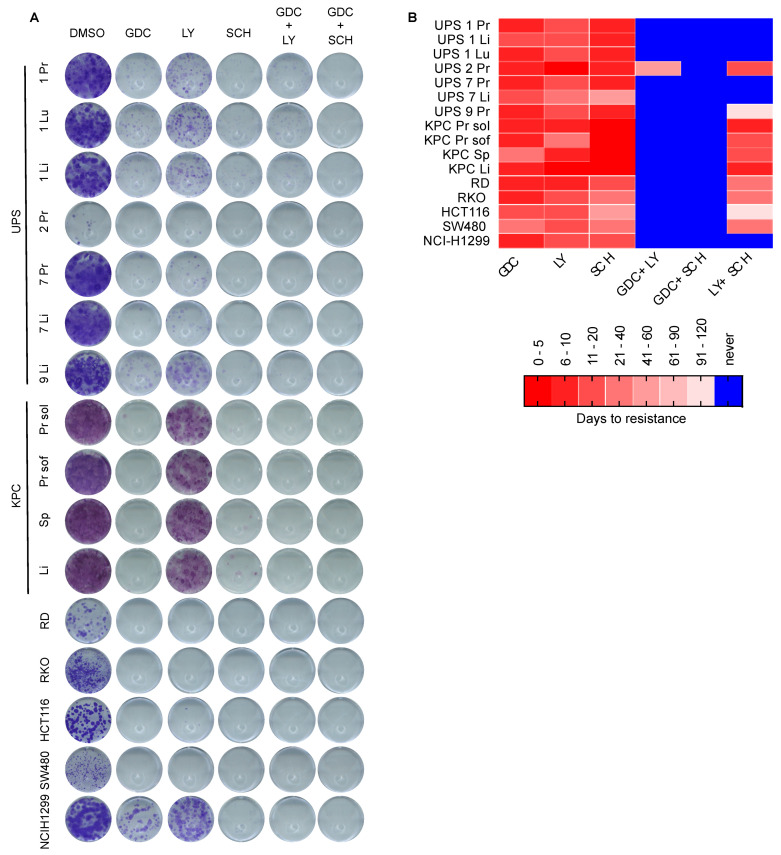
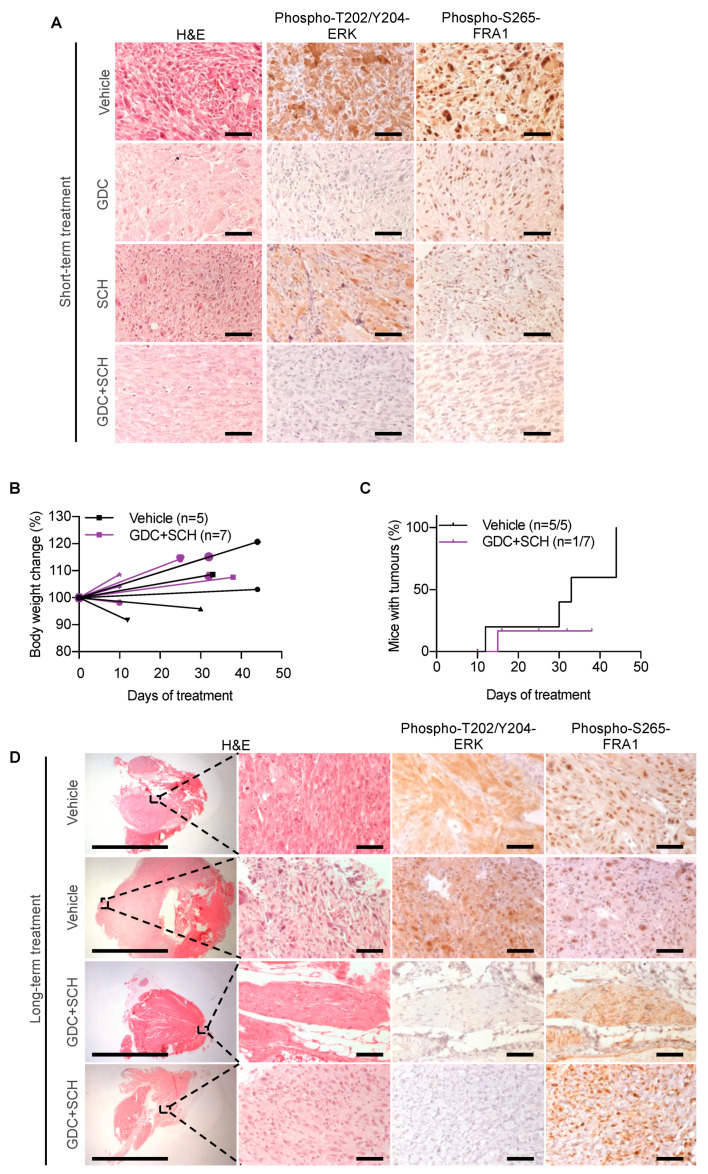
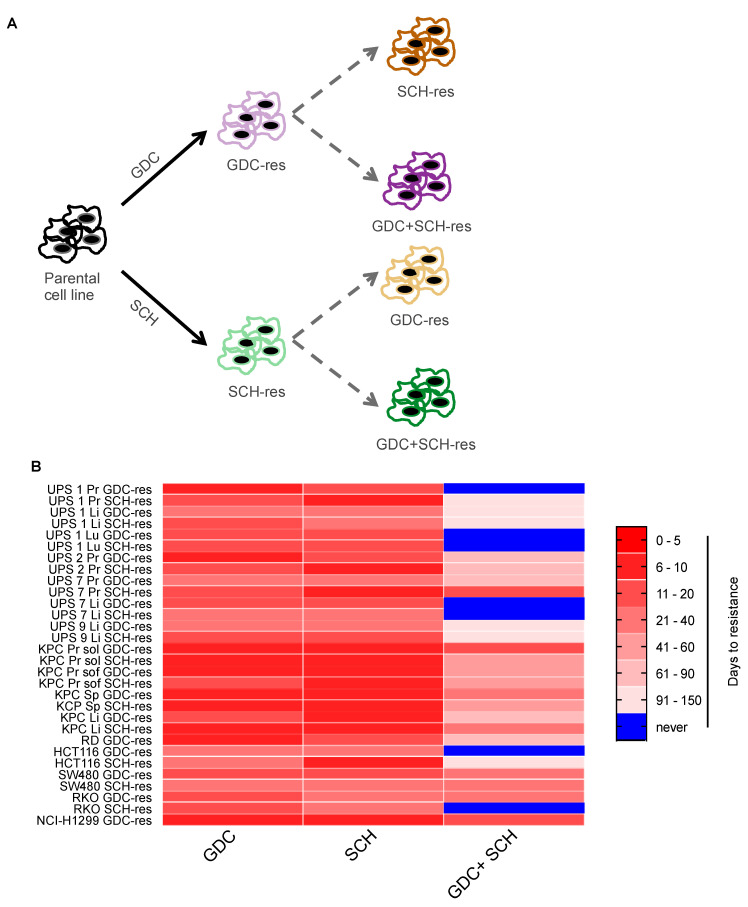
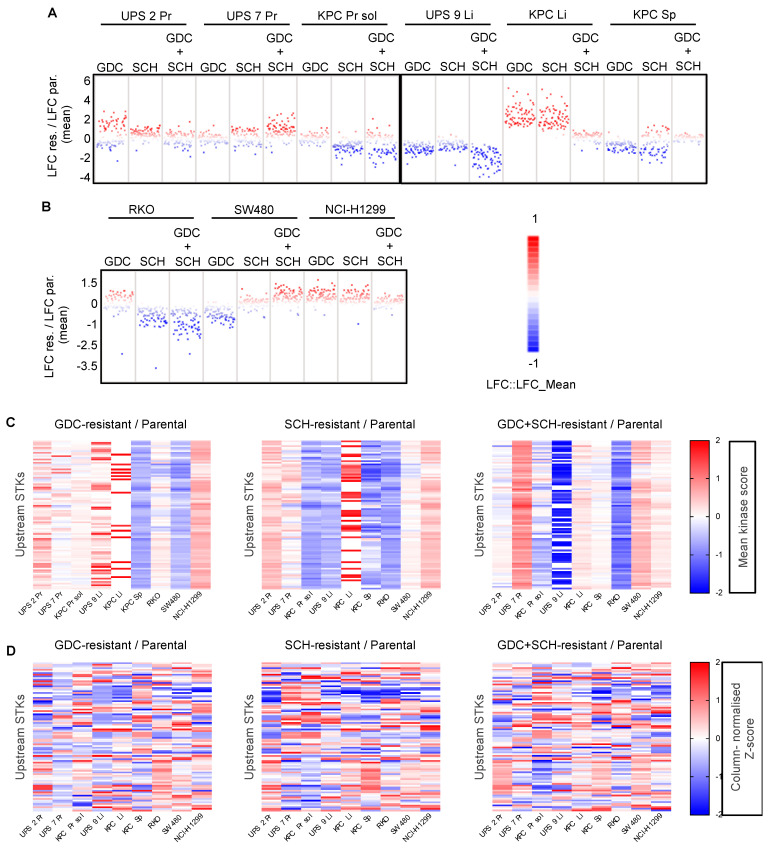
Oncogenic mutations in family genes arise frequently in metastatic human cancers. Here we developed new mouse and cellular models of oncogenic Hras-driven undifferentiated pleomorphic sarcoma metastasis and of Kras-driven pancreatic ductal adenocarcinoma metastasis. Through analyses of these cells and of human oncogenic KRAS-, NRAS- and BRAF-driven cancer cell lines we identified that resistance to single MEK inhibitor and ERK inhibitor treatments arise rapidly but combination therapy completely blocks the emergence of resistance. The prior evolution of resistance to either single agent frequently leads to resistance to dual treatment. Dual MEK inhibitor plus ERK inhibitor therapy shows anti-tumor efficacy in an -driven autochthonous sarcoma model but features of drug resistance in vivo were also evident. Array-based kinome activity profiling revealed an absence of common patterns of signaling rewiring in single or double MEK and ERK inhibitor resistant cells, showing that the development of resistance to downstream signaling inhibition in oncogenic RAS-driven tumors represents a heterogeneous process. Nonetheless, in some single and double MEK and ERK inhibitor resistant cell lines we identified newly acquired drug sensitivities. These may represent additional therapeutic targets in oncogenic RAS-driven tumors and provide general proof-of-principle that therapeutic vulnerabilities of drug resistant cells can be identified.
家族基因中的致癌突变在转移性人类癌症中频繁出现。在此,我们构建了新的小鼠和细胞模型,分别用于研究致癌性Hras驱动的未分化多形性肉瘤转移以及Kras驱动的胰腺导管腺癌转移。通过对这些细胞以及人类致癌性KRAS、NRAS和BRAF驱动的癌细胞系进行分析,我们发现对单一MEK抑制剂和ERK抑制剂治疗的耐药性迅速出现,但联合治疗可完全阻止耐药性的产生。先前对单一药物产生的耐药性进化常常导致对双重治疗产生耐药性。双重MEK抑制剂加ERK抑制剂治疗在Hras驱动的原位肉瘤模型中显示出抗肿瘤疗效,但体内耐药性特征也很明显。基于阵列的激酶组活性分析表明,在对单一或双重MEK和ERK抑制剂耐药的细胞中不存在常见的信号重排模式,这表明致癌性RAS驱动的肿瘤对下游信号抑制产生耐药性的过程是一个异质性过程。尽管如此,在一些对单一和双重MEK和ERK抑制剂耐药的细胞系中,我们发现了新获得的药物敏感性。这些可能代表致癌性RAS驱动肿瘤中的额外治疗靶点,并提供了一个普遍的原理证明,即可以识别耐药细胞的治疗脆弱性。