Morales Jessica Y, Young-Stubbs Cassandra M, Shimoura Caroline G, Kem William R, Uteshev Victor V, Mathis Keisa W
Department of Physiology and Anatomy, University of North Texas (UNT) Health Science Center, Fort Worth, TX, United States.
Department of Pharmacology and Therapeutics, University of Florida, Gainesville, FL, United States.
Front Med (Lausanne). 2021 Apr 13;8:642960. doi: 10.3389/fmed.2021.642960. eCollection 2021.
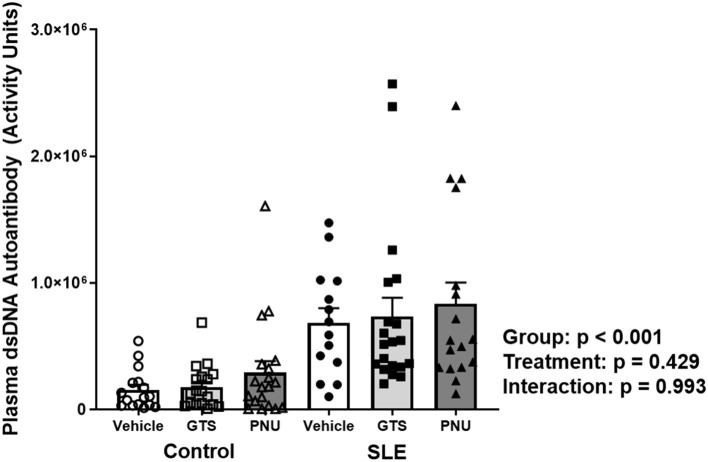
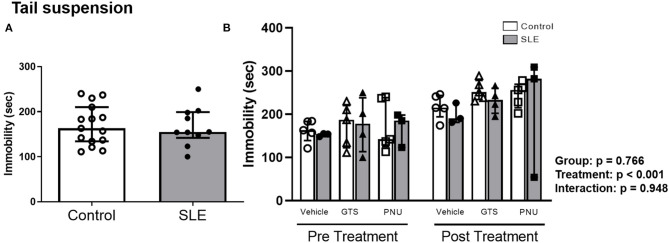
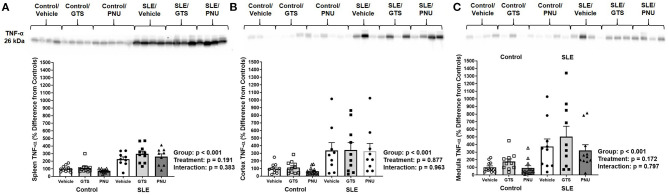
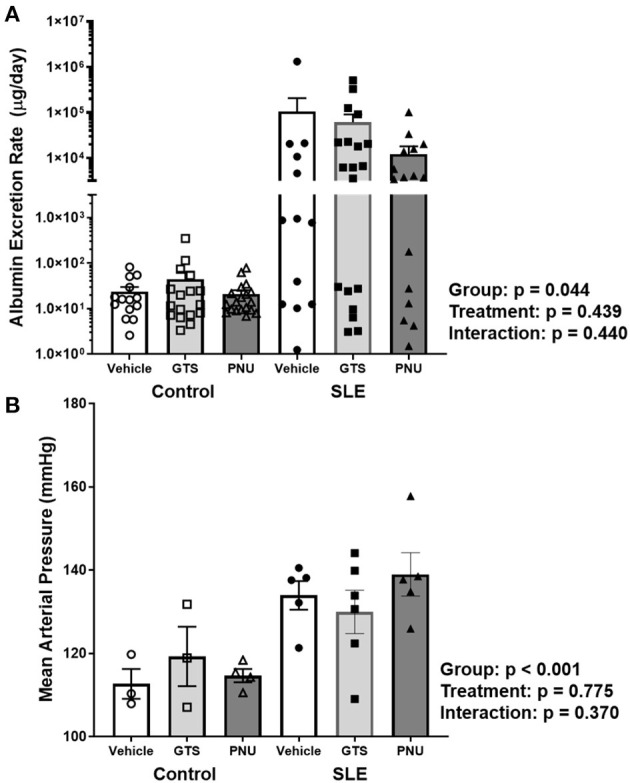
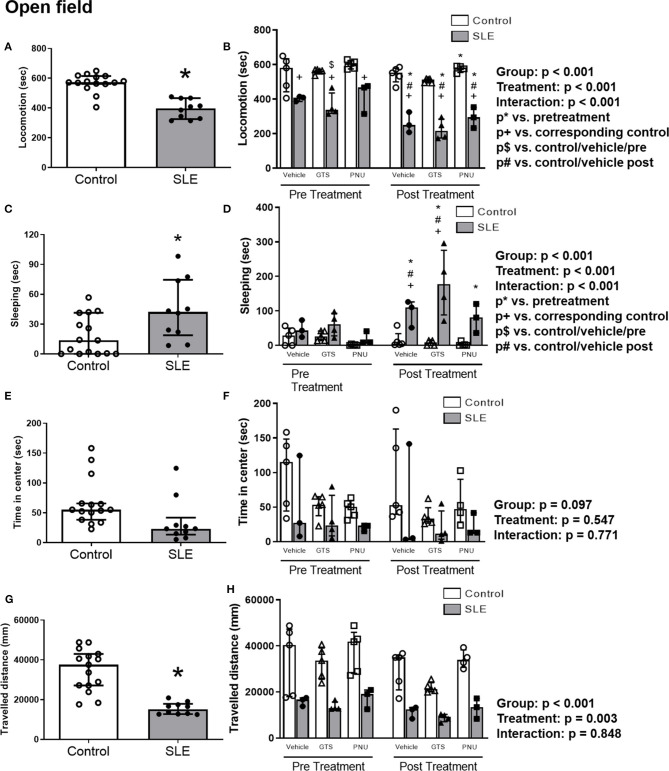
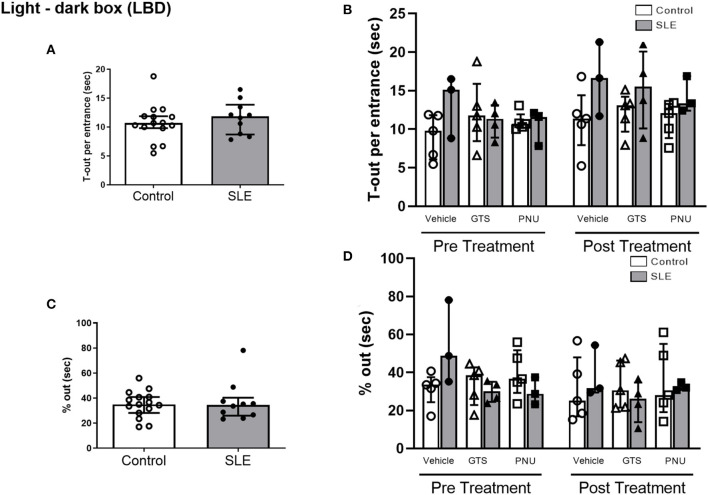
There is a critical need for safe treatment options to control inflammation in patients with systemic lupus erythematosus (SLE) since the inflammation contributes to morbidity and mortality in advanced disease. Endogenous neuroimmune mechanisms like the cholinergic anti-inflammatory pathway can be targeted to modulate inflammation, but the ability to manipulate such pathways and reduce inflammation and end organ damage has not been fully explored in SLE. Positive allosteric modulators (PAM) are pharmacological agents that inhibit desensitization of the nicotinic acetylcholine receptor (α7-nAChR), the main anti-inflammatory feature within the cholinergic anti-inflammatory pathway, and may augment α7-dependent cholinergic tone to generate therapeutic benefits in SLE. In the current study, we hypothesize that activating the cholinergic anti-inflammatory pathway at the level of the α7-nAChR with systemic administration of a partial agonist, GTS-21, and a PAM, PNU-120596, would reduce inflammation, eliminating the associated end organ damage in a mouse model of SLE with advanced disease. Further, we hypothesize that systemic α7 ligands will have central effects and improve behavioral deficits in SLE mice. Female control () and SLE mice () were administered GTS-21 or PNU-120596 subcutaneously via minipumps for 2 weeks. We found that the increased plasma dsDNA autoantibodies, splenic and renal inflammation, renal injury and hypertension usually observed in SLE mice with advanced disease at 35 weeks of age were not altered by GTS-21 or PNU-120596. The anxiety-like behavior presented in SLE mice was also not improved by GTS-21 or PNU-120596. Although no significant beneficial effects of α7 ligands were observed in SLE mice at this advanced stage, we predict that targeting this receptor earlier in the pathogenesis of the disease may prove to be efficacious and should be addressed in future studies.
由于炎症会导致系统性红斑狼疮(SLE)晚期患者的发病和死亡,因此迫切需要安全的治疗方案来控制炎症。内源性神经免疫机制,如胆碱能抗炎途径,可以作为调节炎症的靶点,但在SLE中,操纵这些途径以减少炎症和终末器官损伤的能力尚未得到充分探索。正变构调节剂(PAM)是一种药物,可抑制烟碱型乙酰胆碱受体(α7-nAChR)的脱敏,这是胆碱能抗炎途径中的主要抗炎特性,可能增强α7依赖性胆碱能张力,从而在SLE中产生治疗效果。在本研究中,我们假设通过全身给予部分激动剂GTS-21和PAM PNU-120596,在α7-nAChR水平激活胆碱能抗炎途径,将减少炎症,消除晚期SLE小鼠模型中相关的终末器官损伤。此外,我们假设全身给予α7配体将产生中枢效应,并改善SLE小鼠的行为缺陷。通过微型泵皮下给予雌性对照小鼠()和SLE小鼠()GTS-21或PNU-120596,持续2周。我们发现,在35周龄的晚期SLE小鼠中通常观察到的血浆双链DNA自身抗体增加、脾脏和肾脏炎症、肾损伤和高血压,并未因GTS-21或PNU-120596而改变。GTS-21或PNU-120596也未改善SLE小鼠出现的焦虑样行为。尽管在这个晚期阶段,未在SLE小鼠中观察到α7配体的显著有益作用,但我们预测,在疾病发病机制的早期靶向该受体可能被证明是有效的,应在未来的研究中加以探讨。