Pennino Francesco Paolo, Murakami Masanao, Zollo Massimo, Robertson Erle S
Department of Otorhinolaryngology-Head and Neck Surgery, Perelman School of Medicine, Tumor Virology Program, Abramson Cancer Center, University of Pennsylvania, Philadelphia, PA, USA.
Health Sciences Department of Medical Laboratory Science, Kochi Gakuen University, Nankoku, Kochi, Japan.
Oncogenesis. 2021 Apr 30;10(4):34. doi: 10.1038/s41389-021-00326-x.
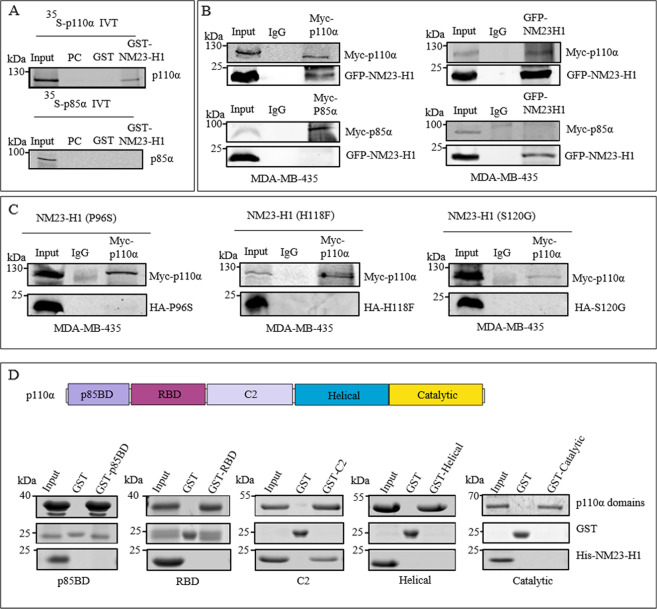
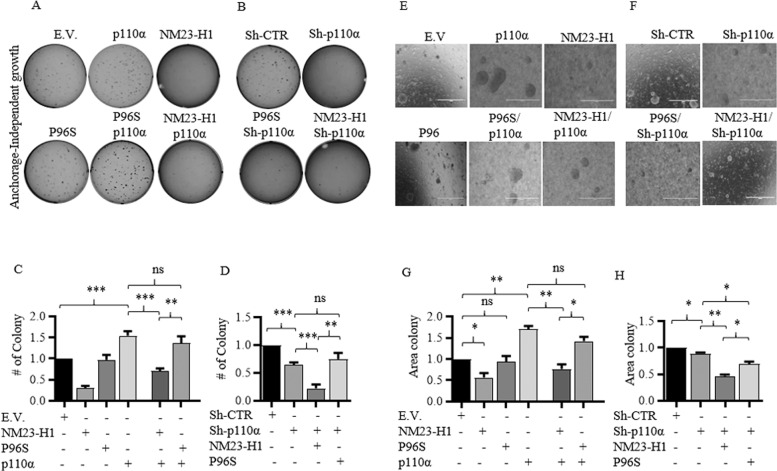
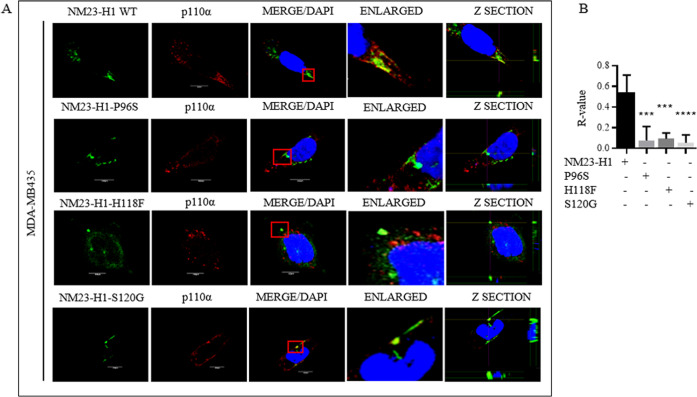
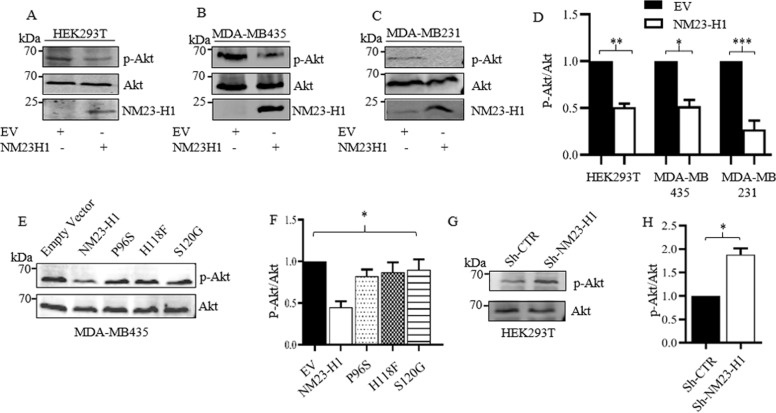
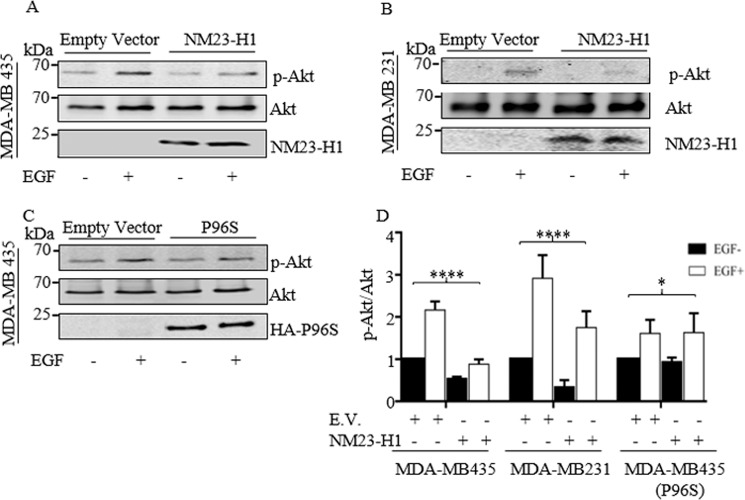
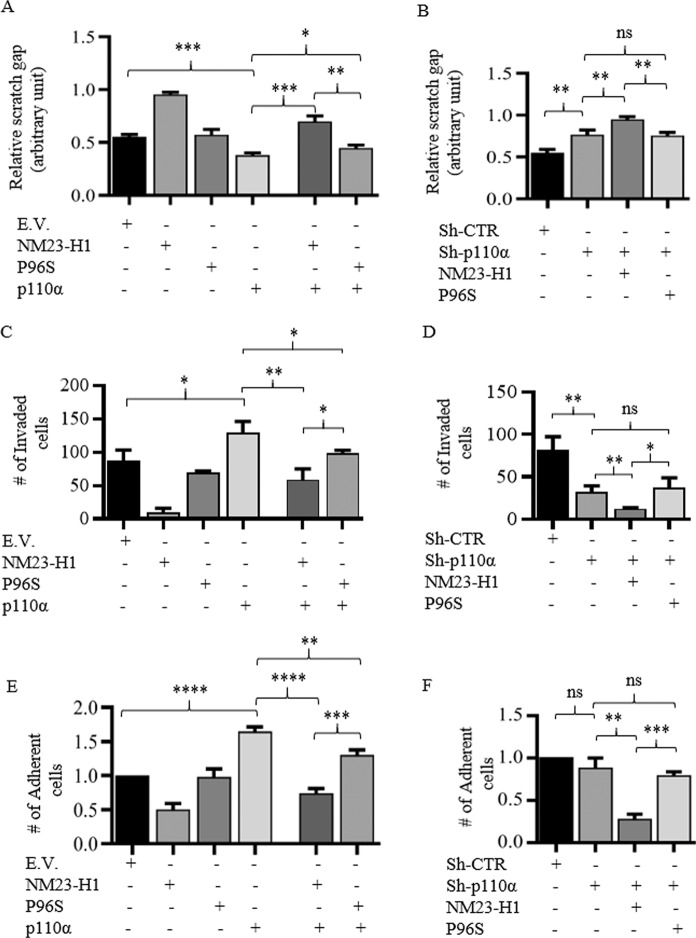
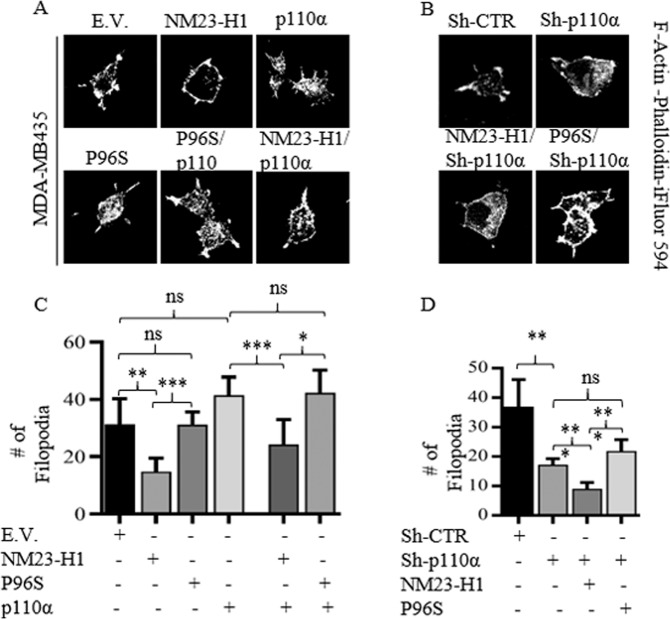
The PI3K pathway is one of the most deregulated pathways in cancer, which is predominantly due to gain of function mutations or altered expression of the PI3KCA gene. This is codified by what is seen for the class I PI3K catalytic subunit p110α, a common feature of many cancers. The metastasis suppressor protein NM23-H1 (NME1), whose ability to suppress the metastasis activities of different tumors has been widely described and was previously reported to alter phosphatidylinositol signaling. Here, we show interaction of NM23-H1 with the p110α subunit and the functional consequence of this interaction. This interaction is predominantly localized at the plasma membrane with some signals seen in the cytoplasmic compartment. Analysis of NM23-H1 levels showed a negative correlation between NM23-H1 expression and Akt phosphorylation, the key marker of PI3K pathway activation. Investigating the functional consequence of this interaction using cell motility and clonogenicity assays showed that expression of NM23-H1 reversed the enhanced migration, invasion, adhesion, and filopodia structure formation in cells expressing the p110α catalytic subunit. A similar trend was seen in anchorage-independent assays. Notably, differential analyses using NM23-H1 mutants which lacked the enzymatic and metastasis suppressor activity, showed no detectable interaction between p110α and the NM23-H1 mutant proteins P96S, H118F, and S120G, as well as no dysregulation of the PI3K-AKT axis.
PI3K信号通路是癌症中失调最为严重的信号通路之一,这主要归因于PI3KCA基因的功能获得性突变或表达改变。这一点在I类PI3K催化亚基p110α中得到了体现,这是许多癌症的一个共同特征。转移抑制蛋白NM23-H1(NME1),其抑制不同肿瘤转移活性的能力已被广泛描述,并且先前有报道称其可改变磷脂酰肌醇信号传导。在此,我们展示了NM23-H1与p110α亚基的相互作用以及这种相互作用的功能后果。这种相互作用主要定位于质膜,在细胞质区室中也可见一些信号。对NM23-H1水平的分析表明,NM23-H1表达与Akt磷酸化之间呈负相关,Akt磷酸化是PI3K信号通路激活的关键标志物。使用细胞运动性和克隆形成试验研究这种相互作用的功能后果表明,NM23-H1的表达逆转了表达p110α催化亚基的细胞中增强的迁移、侵袭、黏附以及丝状伪足结构形成。在非锚定依赖性试验中也观察到了类似的趋势。值得注意的是,使用缺乏酶活性和转移抑制活性的NM23-H1突变体进行的差异分析表明,p110α与NM23-H1突变蛋白P96S、H118F和S120G之间未检测到相互作用,并且PI3K-AKT轴也未出现失调。