Department of Molecular Biology, Max Planck Institute for Biophysical Chemistry, Göttingen, Germany.
Bioanalytical Mass Spectrometry Group, Department of Cellular Biochemistry, Max Planck Institute for Biophysical Chemistry, Göttingen, Germany; Bioanalytics Research Group, Institute for Clinical Chemistry, University Medical Center, Göttingen, Germany.
J Biol Chem. 2021 Jan-Jun;296:100734. doi: 10.1016/j.jbc.2021.100734. Epub 2021 Apr 30.
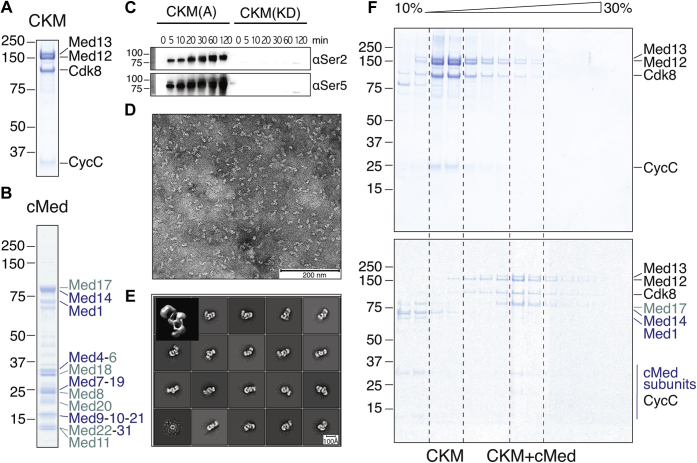
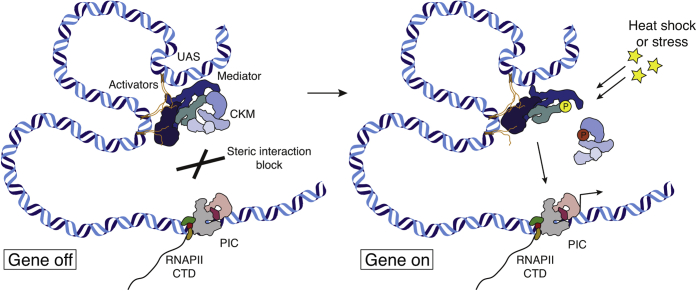
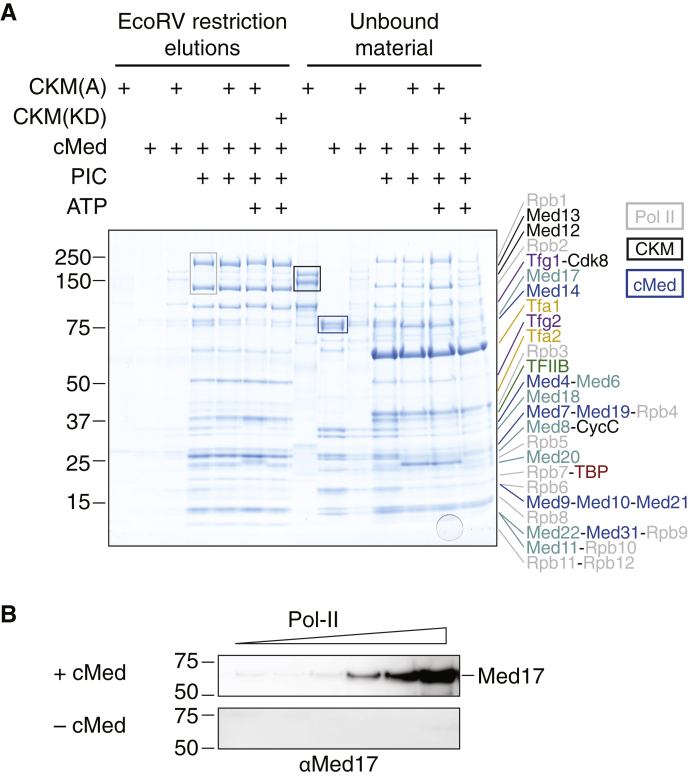
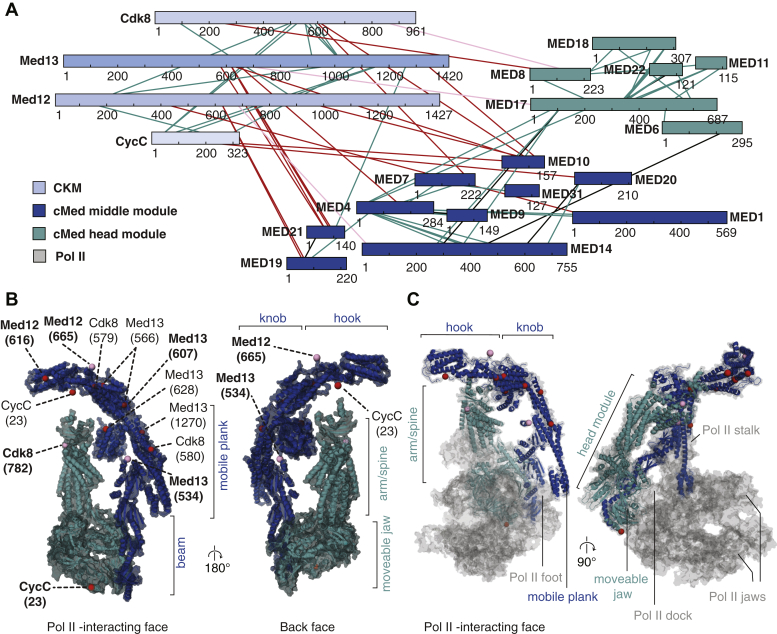
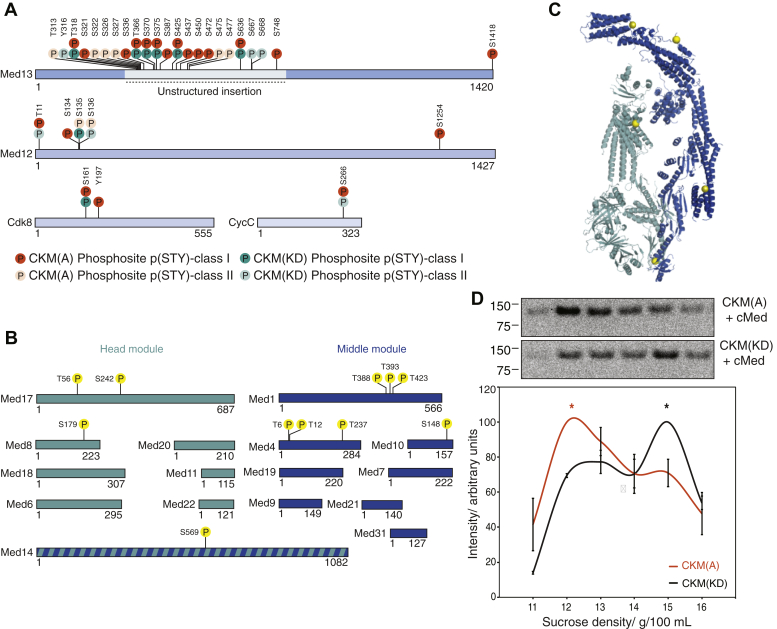
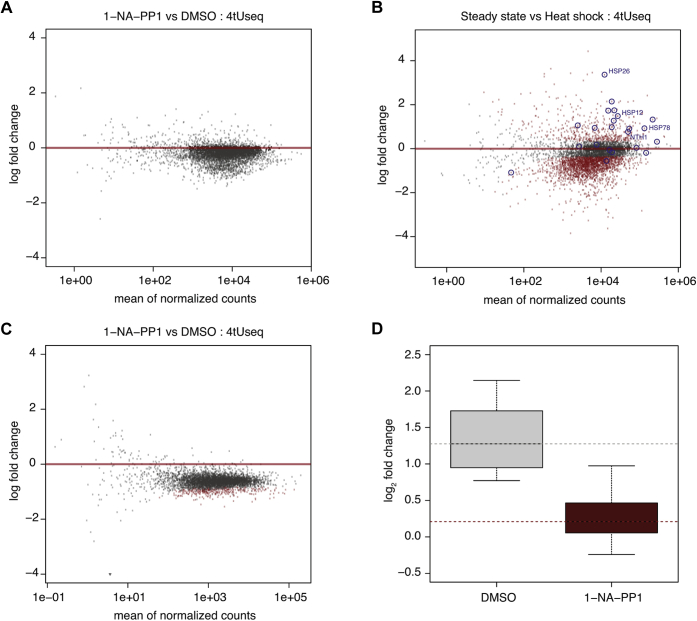
The Cdk8 kinase module (CKM) is a dissociable part of the coactivator complex mediator, which regulates gene transcription by RNA polymerase II. The CKM has both negative and positive functions in gene transcription that remain poorly understood at the mechanistic level. In order to reconstitute the role of the CKM in transcription initiation, we prepared recombinant CKM from the yeast Saccharomyces cerevisiae. We showed that CKM bound to the core mediator (cMed) complex, sterically inhibiting cMed from binding to the polymerase II preinitiation complex (PIC) in vitro. We further showed that the Cdk8 kinase activity of the CKM weakened CKM-cMed interaction, thereby facilitating dissociation of the CKM and enabling mediator to bind the PIC in order to stimulate transcription initiation. Finally, we report that the kinase activity of Cdk8 is required for gene activation during the stressful condition of heat shock in vivo but not under steady-state growth conditions. Based on these results, we propose a model in which the CKM negatively regulates mediator function at upstream-activating sequences by preventing mediator binding to the PIC at the gene promoter. However, during gene activation in response to stress, the Cdk8 kinase activity of the CKM may release mediator and allow its binding to the PIC, thereby accounting for the positive function of CKM. This may impart improved adaptability to stress by allowing a rapid transcriptional response to environmental changes, and we speculate that a similar mechanism in metazoans may allow the precise timing of developmental transcription programs.
CDK8 激酶模块(CKM)是辅激活复合物中介体的可分离部分,通过 RNA 聚合酶 II 调节基因转录。CKM 在基因转录中具有正负两种功能,但在机制水平上仍知之甚少。为了重建 CKM 在转录起始中的作用,我们从酵母酿酒酵母中制备了重组 CKM。我们表明 CKM 与核心中介体(cMed)复合物结合,在体外从空间上抑制 cMed 与聚合酶 II 起始前复合物(PIC)结合。我们进一步表明,CKM 的 Cdk8 激酶活性削弱了 CKM-cMed 相互作用,从而促进 CKM 的解离,并使中介体能够与 PIC 结合以刺激转录起始。最后,我们报告在体内热休克应激条件下,而不是在稳定生长条件下,Cdk8 的激酶活性对于基因激活是必需的。基于这些结果,我们提出了一个模型,即 CKM 通过阻止中介体与基因启动子处的 PIC 结合,负调控中介体在启动子上游激活序列中的功能。然而,在响应应激而激活基因时,CKM 的 Cdk8 激酶活性可能会释放中介体并允许其与 PIC 结合,从而解释 CKM 的正功能。这可能通过允许对环境变化的快速转录反应来提高对压力的适应性,我们推测后生动物中的类似机制可能允许发育转录程序的精确定时。