Xu Liying, Ge Feng, Hu Yan, Yu Ying, Guo Kefang, Miao Changhong
Department of Anesthesiology, Zhongshan Hospital Fudan University, Shanghai, China.
Front Pharmacol. 2021 Apr 16;12:646307. doi: 10.3389/fphar.2021.646307. eCollection 2021.
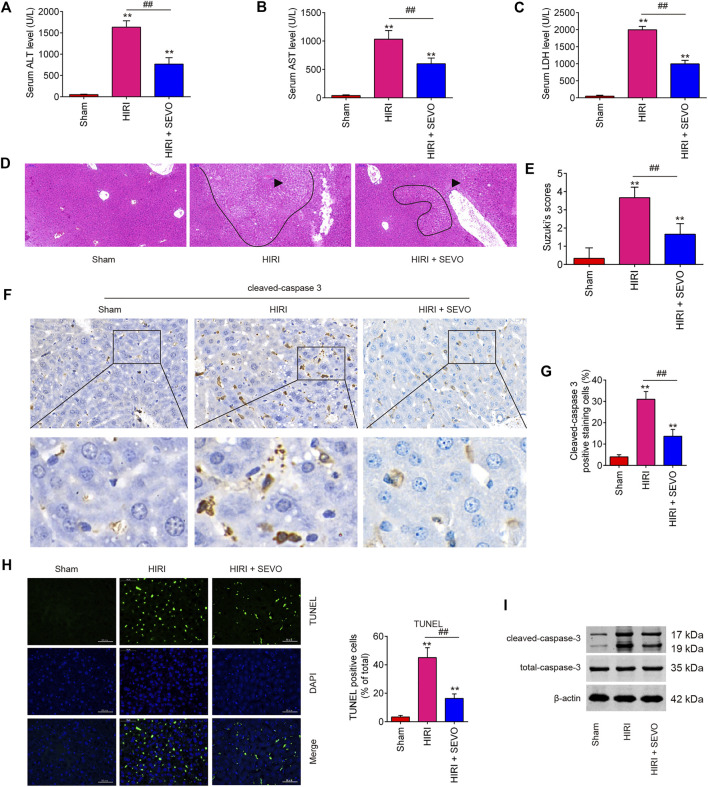
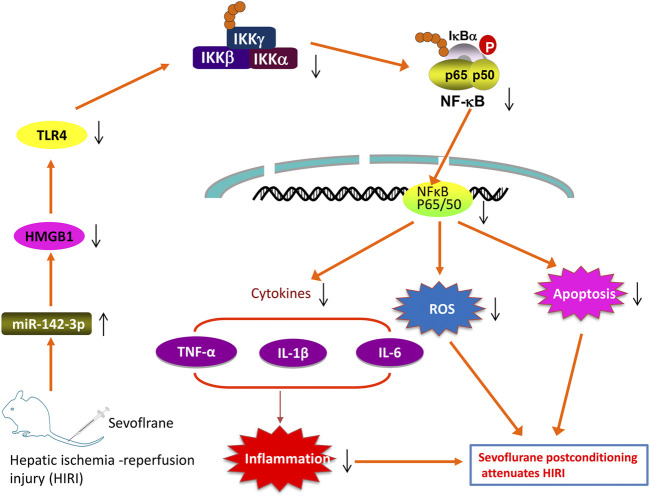
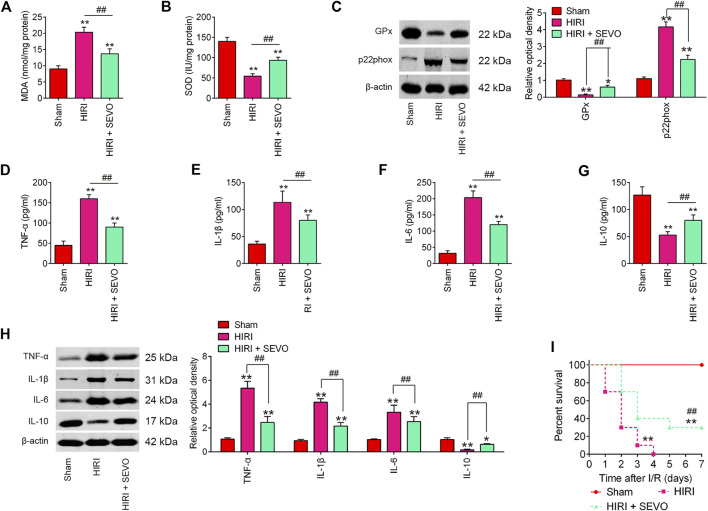
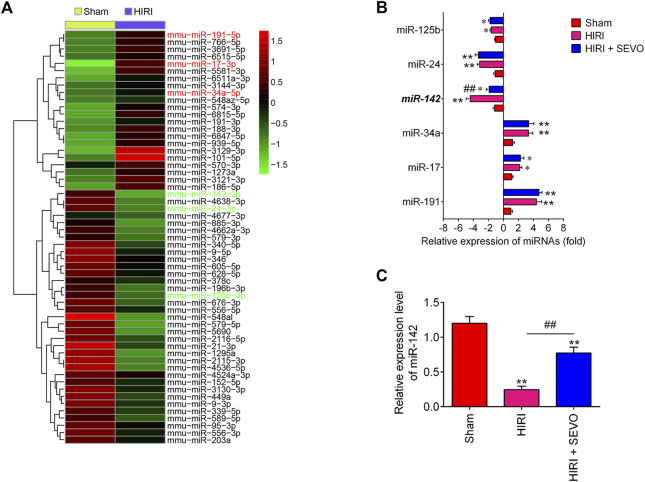
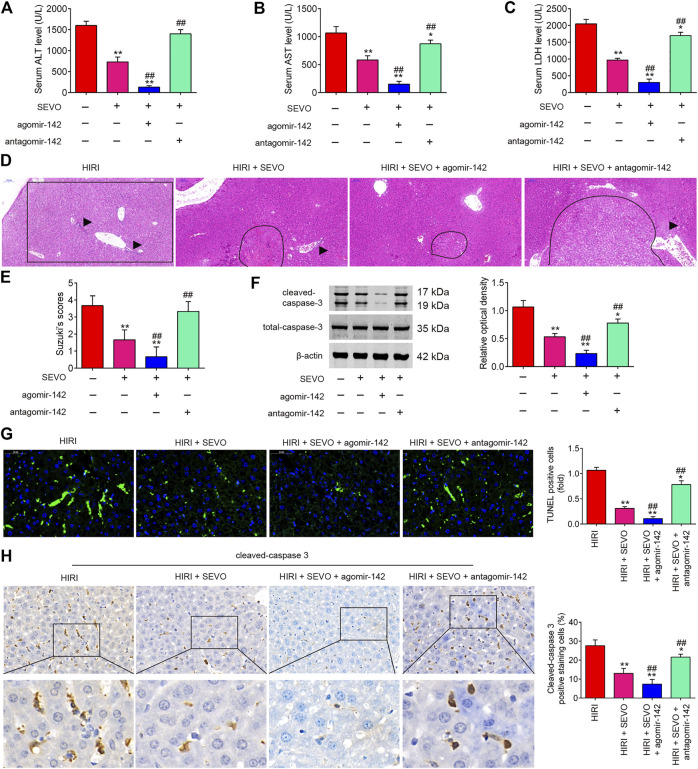
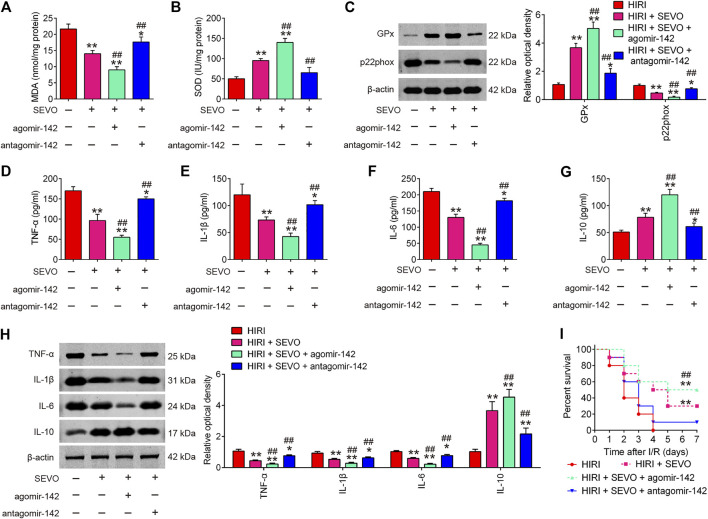
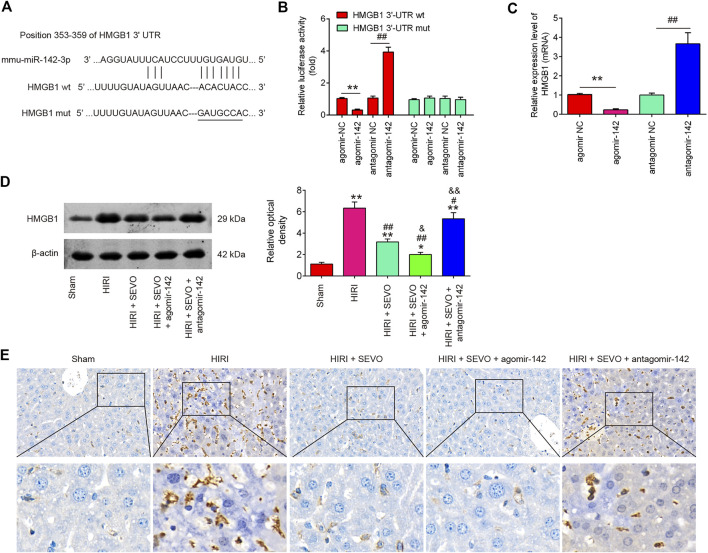
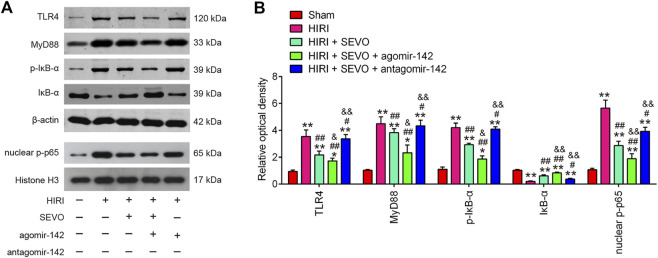
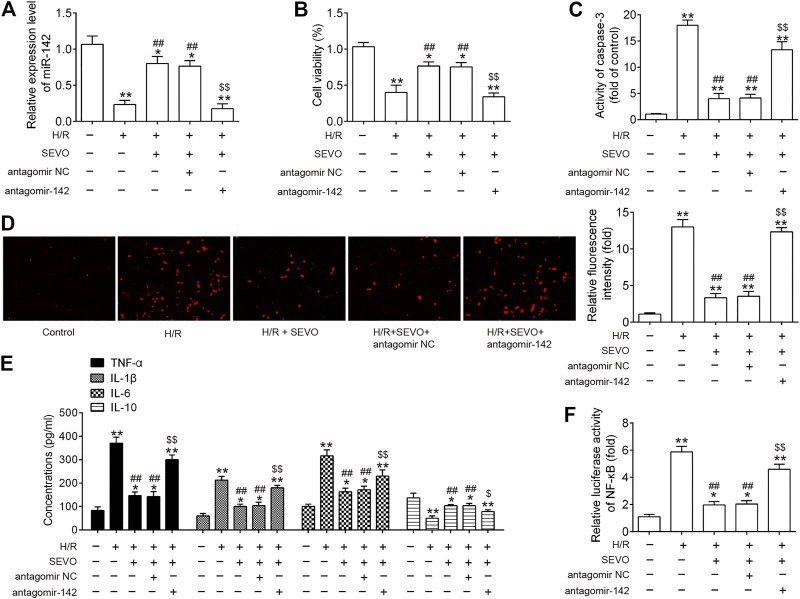
Preconditioning of sevoflurane (Sevo) has been demonstrated to protect the liver from ischemia/reperfusion (I/R) injury. However, it is unknown whether it has hepatoprotective when given at the onset of reperfusion (postconditioning), a protocol with more clinical impact. The present study aimed to explore the hepatoprotective effects of Sevo postconditioning against hepatic IR injury and and the possible mechanisms. Using a mouse model of hepatic I/R, Sevo postconditioning significantly improved hepatic injury after reperfusion, as demonstrated by reduced AST, ALT, and LDH serum levels and reduced histologic damage in liver tissues. Furthermore, Sevo postconditioning could suppress the apoptosis, inhibit oxidative stress and inflammatory response in liver tissue of HIRI mice, as well as improve the survival rate of HIRI mice. Through analyzing GSE72314 from the gene expression omnibus (GEO) database, it was demonstrated that microRNA (miR)-142 is downregulated by HIRI, which was reversed by Sevo treatment. Further investigation showed that agomiR-142 injection could enhance the hepatoprotective effects of Sevo postconditioning on I/R injury, while antagomiR-142 reversed these effects in mice. Notably, high mobility group box 1 (HMGB1), an important inflammatory factor, was directly targeted by miR-142 in hepatic cells, and we further found that Sevo could inhibit the expression of HMGB1 through up-regulating miR-142 expression in HIRI mice model. In addition, we found that I/R injury induced the activation of TLR4/NF-κB inflammatory pathway was partially suppressed by Sevo postconditioning, and miR-142 mediated the regulatory role of Sevo postconditioning. In line with the results, Sevo treatment improved the cell viability, inhibited cell apoptosis, oxidative stress and inflammatory response HIRI model, while these effects were reversed by antagomiR-142 transfection. Collectively, our findings demonstrated that Sevo postconditioning counteracts the downregulation of miR-142 provoked by I/R, in turn decreased the expression of HMGB1, blocking TLR4/NF-κB pathway activation, thus improving hepatic I/R injury. Our data suggest that Sevo may be a valuable alternative anaesthetic agent in liver transplantation and major liver surgeries.
七氟醚(Sevo)预处理已被证明可保护肝脏免受缺血/再灌注(I/R)损伤。然而,在再灌注开始时给予七氟醚(后处理)是否具有肝脏保护作用尚不清楚,这是一个更具临床意义的方案。本研究旨在探讨七氟醚后处理对肝脏I/R损伤的肝脏保护作用及其可能机制。使用肝脏I/R小鼠模型,七氟醚后处理显著改善了再灌注后的肝脏损伤,血清AST、ALT和LDH水平降低以及肝组织组织学损伤减轻证明了这一点。此外,七氟醚后处理可抑制HIRI小鼠肝组织中的细胞凋亡、氧化应激和炎症反应,并提高HIRI小鼠的存活率。通过分析基因表达综合数据库(GEO)中的GSE72314,证明微小RNA(miR)-142在HIRI作用下表达下调,而七氟醚处理可使其逆转。进一步研究表明,注射agomiR-142可增强七氟醚后处理对I/R损伤的肝脏保护作用,而antagomiR-142可逆转小鼠中的这些作用。值得注意的是,重要炎症因子高迁移率族蛋白B1(HMGB1)在肝细胞中是miR-142的直接靶点,我们进一步发现七氟醚可通过上调HIRI小鼠模型中miR-142的表达来抑制HMGB1的表达。此外,我们发现I/R损伤诱导的TLR4/NF-κB炎症通路激活被七氟醚后处理部分抑制,且miR-142介导了七氟醚后处理的调节作用。与结果一致,七氟醚处理提高了HIRI模型中的细胞活力,抑制了细胞凋亡、氧化应激和炎症反应,而antagomiR-142转染可逆转这些作用。总体而言,我们的研究结果表明,七氟醚后处理可抵消I/R引起的miR-142下调,进而降低HMGB1的表达,阻断TLR4/NF-κB通路激活,从而改善肝脏I/R损伤。我们的数据表明,七氟醚可能是肝移植和大型肝脏手术中有价值的替代麻醉剂。