DiCarlo Gabriella E, Mabry Samuel J, Cao Xixi, McMillan Clara, Woynaroski Tiffany G, Harrison Fiona E, Reddy India A, Matthies Heinrich J G, Flynn Charles R, Wallace Mark T, Wu Hui, Galli Aurelio
Vanderbilt Brain Institute, Vanderbilt University Medical Center, Nashville, TN, United States.
Department of Hearing and Speech Sciences, Vanderbilt University Medical Center, Nashville, TN, United States.
Front Psychiatry. 2021 Apr 15;12:655451. doi: 10.3389/fpsyt.2021.655451. eCollection 2021.
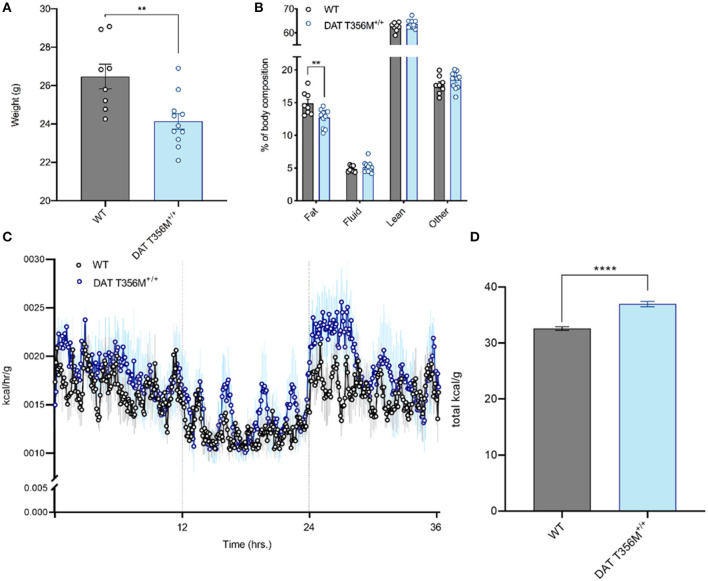
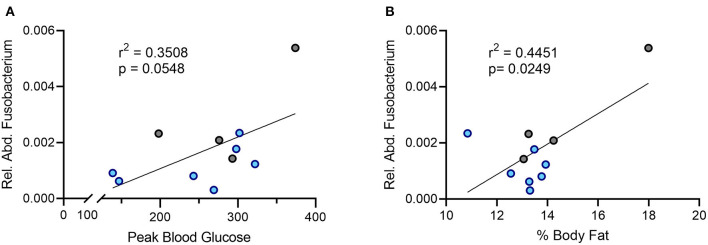
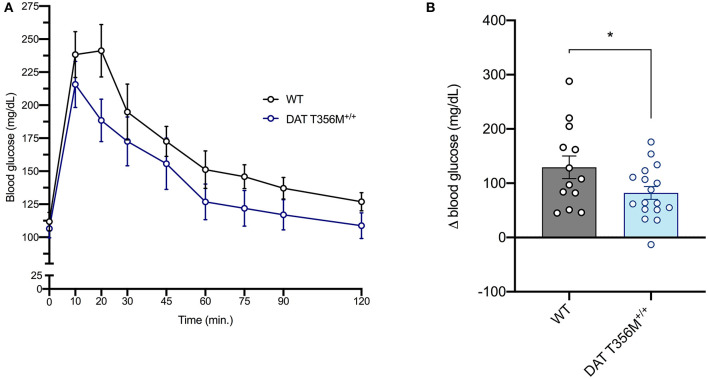
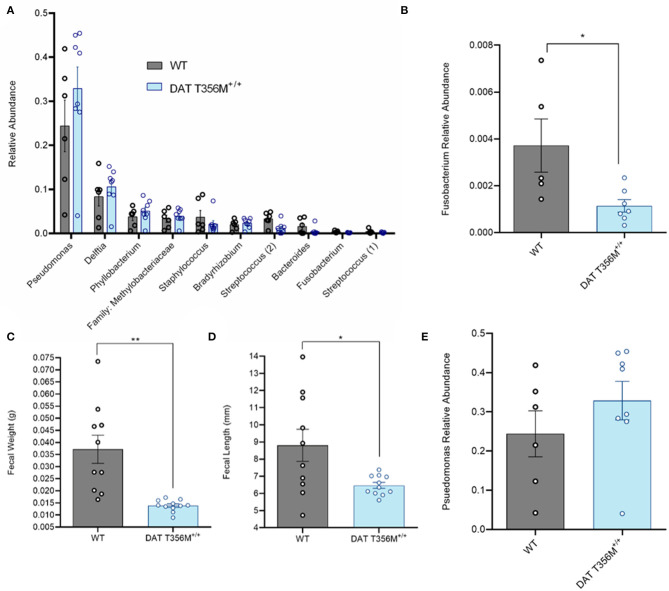
Altered dopamine (DA) signaling has been associated with autism spectrum disorder (ASD), a neurodevelopmental condition estimated to impact 1 in 54 children in the United States. There is growing evidence for alterations in both gastrointestinal function and oral microbiome composition in ASD. Recent work suggests that rare variants of the SLC6A3 gene encoding the DA transporter (DAT) identified in individuals with ASD result in structural and functional changes to the DAT. One such recently identified mutation is a threonine to methionine substitution at position 356 of the DAT (DAT T356M). The DAT T356M variant is associated with ASD-like phenotypes in mice homozygous for the mutation (DAT T356M), including social deficits, hyperactivity, and impaired DA signaling. Here, we determine the impact of this altered DA signaling as it relates to altered oral microbiota, and metabolic and gastrointestinal dysfunction. In the DAT T356M mouse, we determine the oral microbiota composition, metabolic function, and gastrointestinal (GI) function. We examined oral microbiota by 16S RNA sequencing. We measured metabolic function by examining glucose tolerance and we probed gastrointestinal parameters by measuring fecal dimensions and weight. In the DAT T356M mouse, we evaluate how altered DA signaling relates to metabolic dysfunction and altered oral microbiota. We demonstrate that male DAT T356M mice weigh less (Wild type (WT) = 26.48 ± 0.6405 g, DAT T356M = 24.14 ± 0.4083 g) and have decreased body fat (WT = 14.89 ± 0.6206%, DAT T356M = 12.72 ± 0.4160%). These mice display improved glucose handling (WT = 32.60 ± 0.3298 kcal/g, DAT T356M = 36.97 ± 0.4910 kcal/g), and an altered oral microbiota. We found a significant decrease in abundance. The abundance of was associated with improved glucose handling and decreased body fat. Our findings provide new insights into how DAT dysfunction may alter gastrointestinal function, composition of the oral microbiota, and metabolism. Our data suggest that impaired DA signaling in ASD is associated with a number of metabolic and gastrointestinal changes which are common in individuals with ASD.
多巴胺(DA)信号改变与自闭症谱系障碍(ASD)有关,据估计,这种神经发育疾病在美国每54名儿童中就有1人受影响。越来越多的证据表明,ASD患者的胃肠功能和口腔微生物群组成均发生了改变。最近的研究表明,在ASD患者中发现的编码DA转运体(DAT)的SLC6A3基因的罕见变异会导致DAT的结构和功能发生变化。最近发现的一种此类突变是DAT第356位的苏氨酸被甲硫氨酸取代(DAT T356M)。DAT T356M变异与该突变纯合子小鼠(DAT T356M)的ASD样表型有关,包括社交缺陷、多动和DA信号受损。在这里,我们确定这种改变的DA信号与口腔微生物群改变、代谢和胃肠功能障碍之间的关系。在DAT T356M小鼠中,我们确定口腔微生物群组成、代谢功能和胃肠(GI)功能。我们通过16S RNA测序检查口腔微生物群。我们通过检查葡萄糖耐量来测量代谢功能,并通过测量粪便尺寸和重量来探究胃肠参数。在DAT T356M小鼠中,我们评估改变的DA信号与代谢功能障碍和口腔微生物群改变之间的关系。我们证明,雄性DAT T356M小鼠体重较轻(野生型(WT)=26.48±0.6405克,DAT T356M=24.14±0.4083克),体脂减少(WT=14.89±0.6206%,DAT T356M=12.72±0.4l60%)。这些小鼠表现出更好的葡萄糖处理能力(WT=32.60±0.3298千卡/克,DAT T356M=36.97±0.4910千卡/克),以及口腔微生物群的改变。我们发现丰度显著降低。 的丰度与改善的葡萄糖处理能力和降低的体脂有关。我们的研究结果为DAT功能障碍如何改变胃肠功能、口腔微生物群组成和代谢提供了新的见解。我们的数据表明,ASD中受损的DA信号与一些代谢和胃肠变化有关,这些变化在ASD患者中很常见。