Cheng Jin, Duan Xiaoning, Fu Xin, Jiang Yanfang, Yang Peng, Cao Chenxi, Li Qi, Zhang Jiying, Hu Xiaoqing, Zhang Xin, Ao Yingfang
Beijing Key Laboratory of Sports Injuries, Department of Sports Medicine, Institute of Sports Medicine of Peking University, Peking University Third Hospital, Beijing, China.
Front Cell Dev Biol. 2021 Apr 16;9:638382. doi: 10.3389/fcell.2021.638382. eCollection 2021.
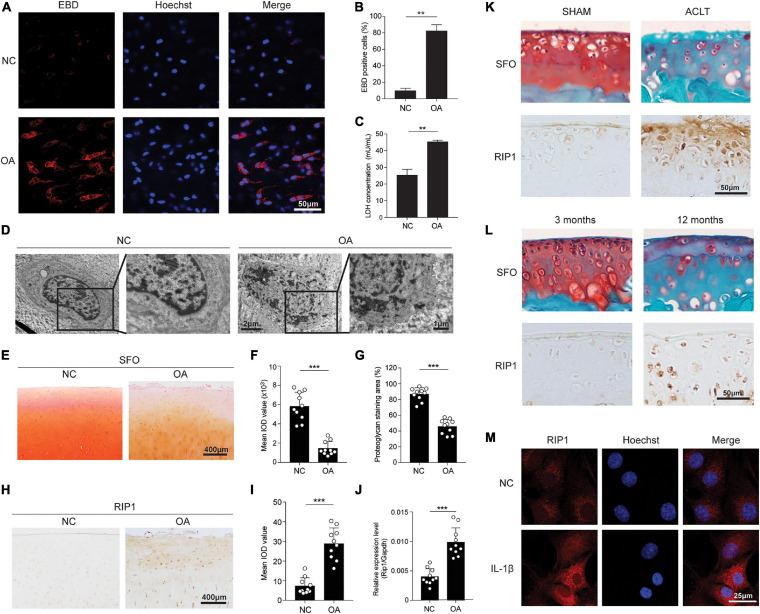
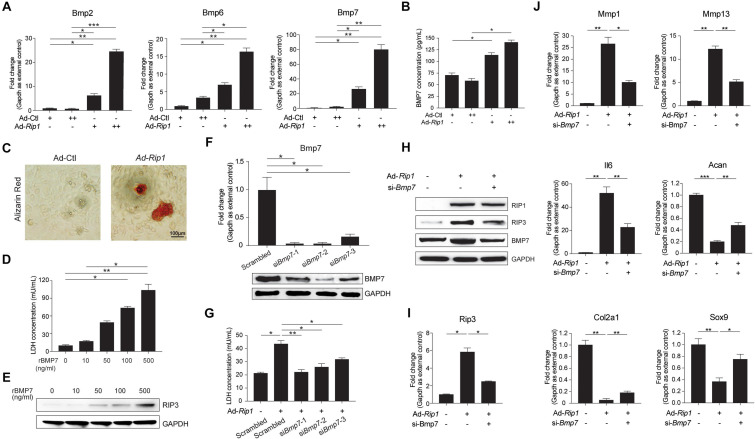
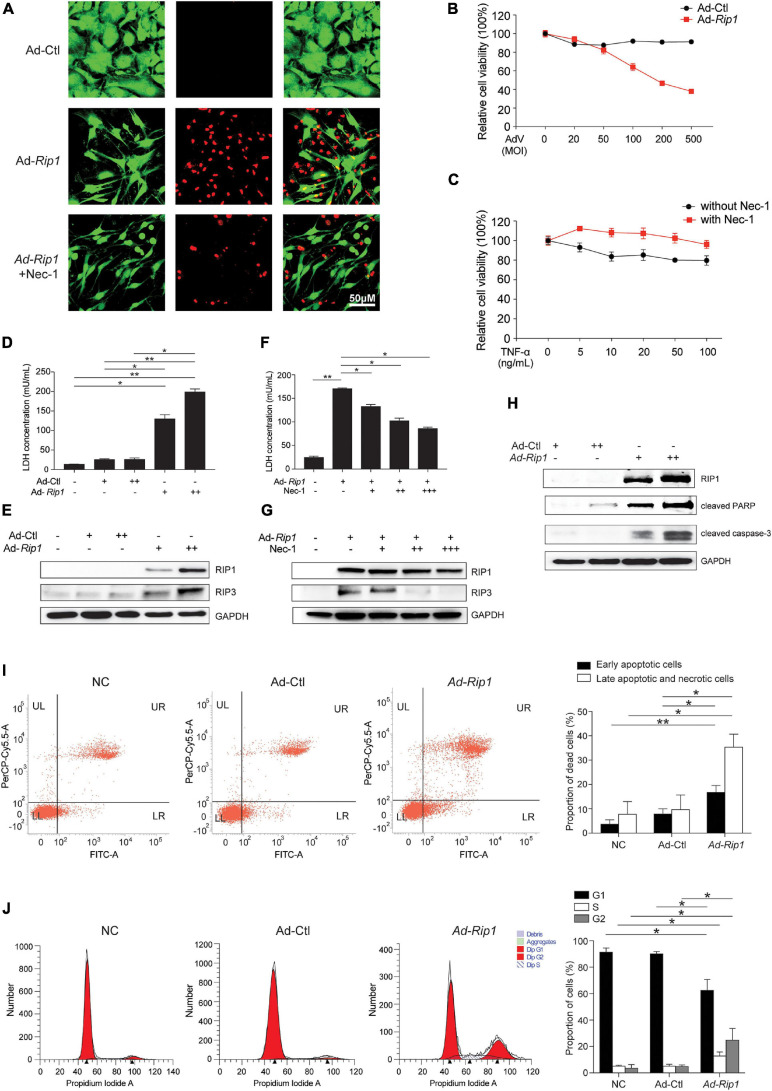
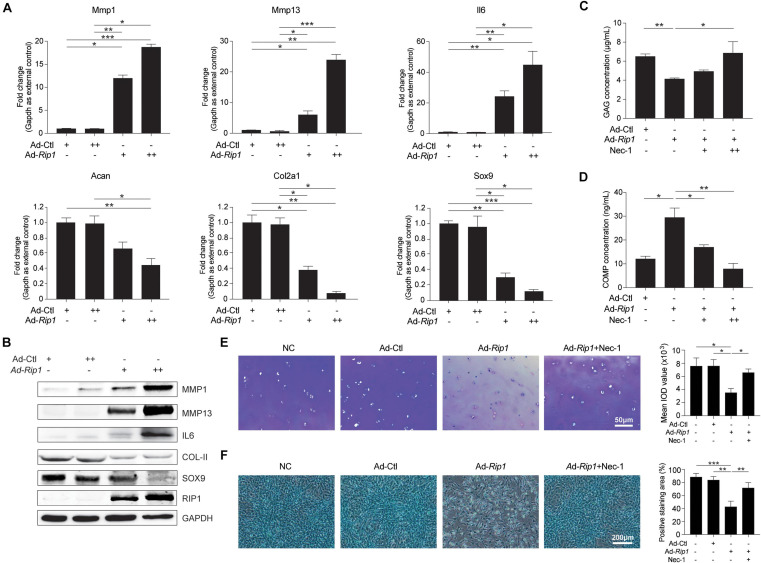
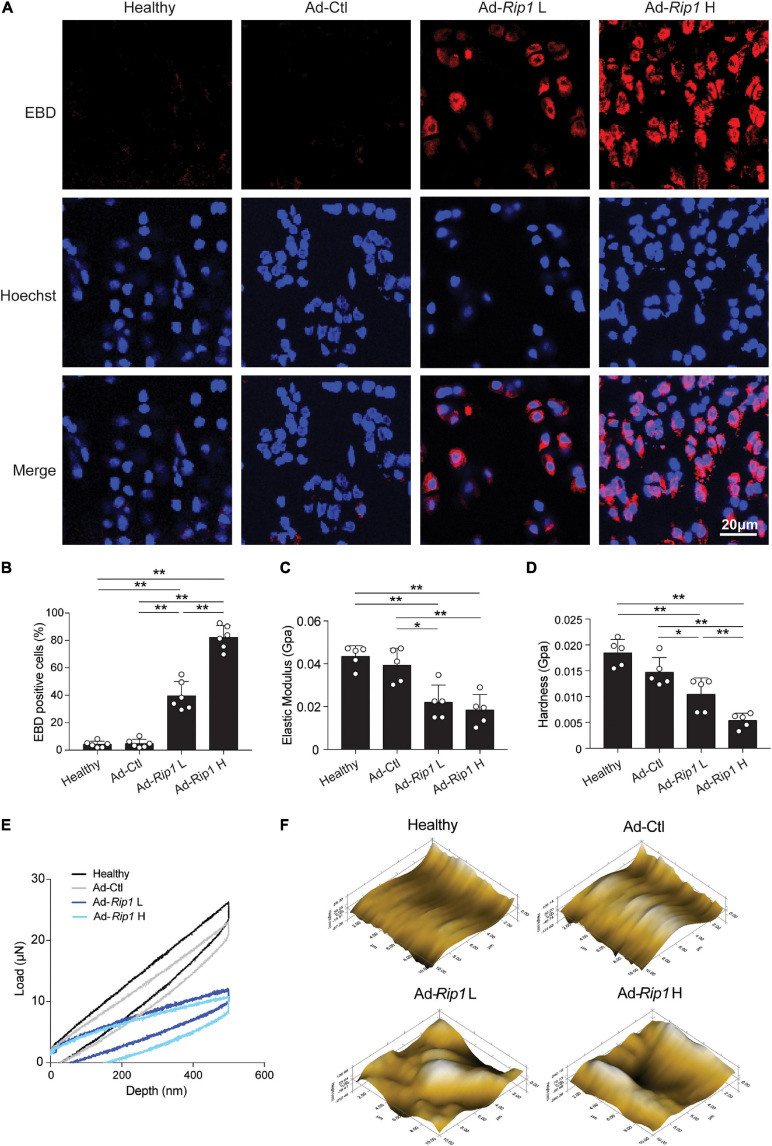
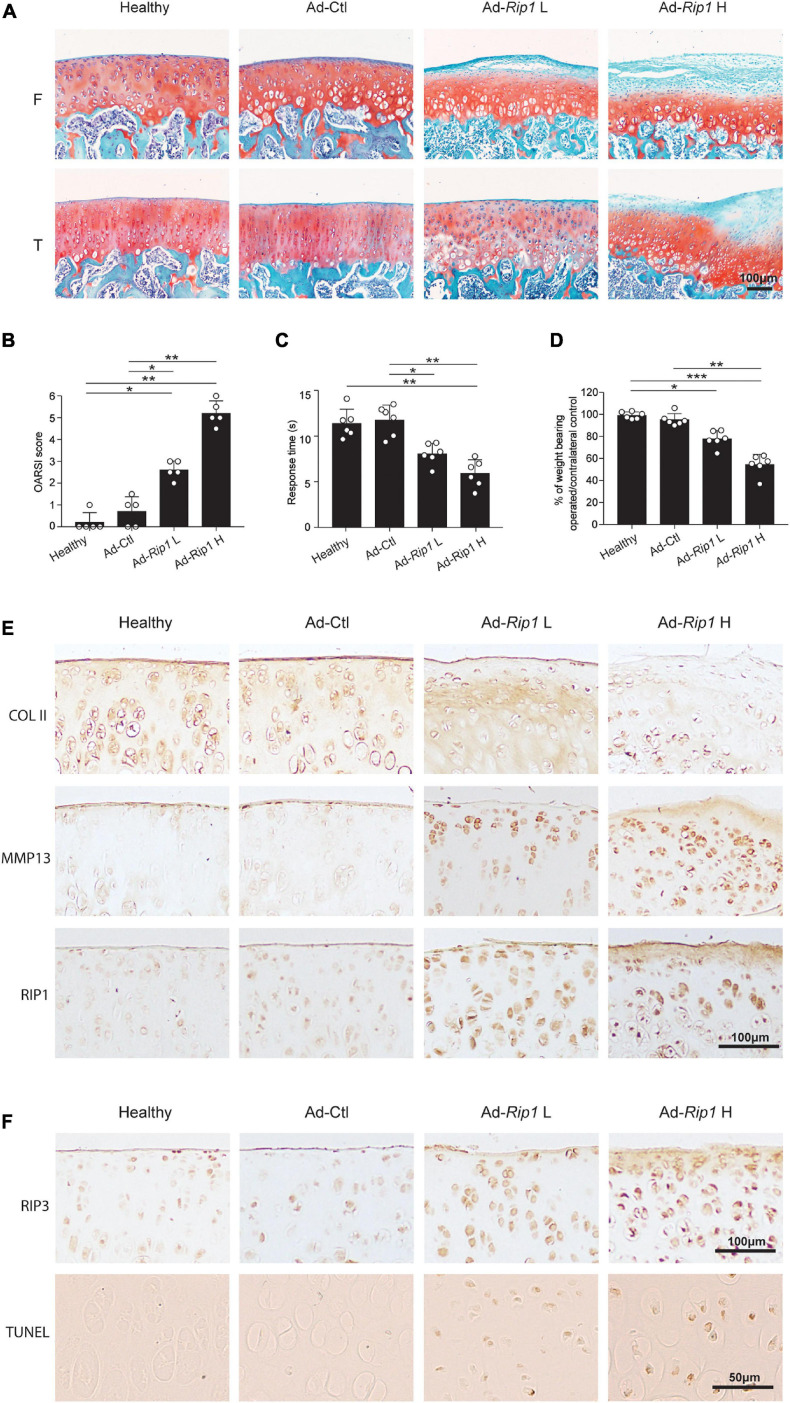
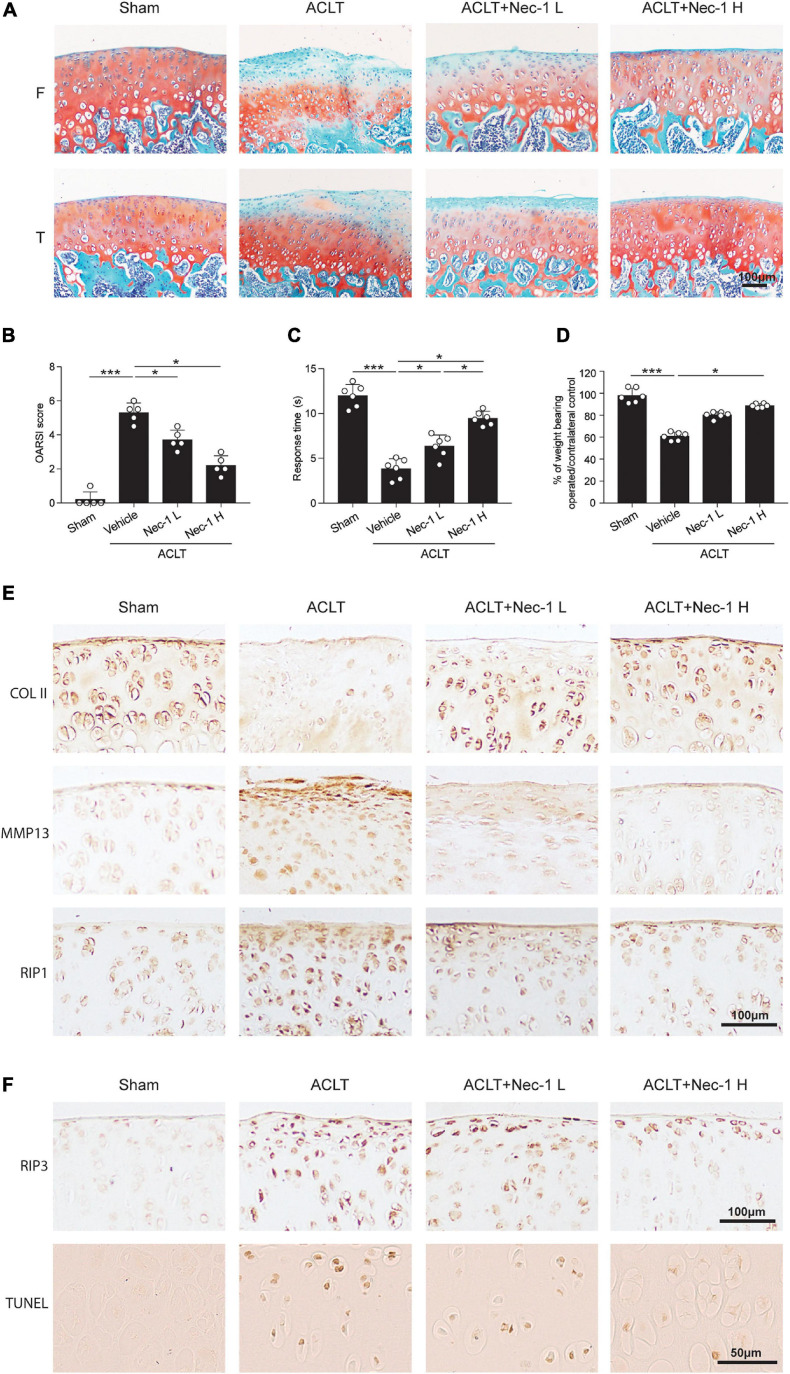
Osteoarthritis (OA) is a highly prevalent and debilitating joint disorder that characterized by progressive destruction of articular cartilage. There is no effective disease-modifying therapy for the condition due to limited understanding of the molecular mechanisms on cartilage maintenance and destruction. Receptor-interacting protein kinase 1 (RIP1)-mediated necroptosis plays a vital role in various diseases, but the involvement of RIP1 in OA pathogenesis remains largely unknown. Here we show that typical necrotic cell morphology is observed within human OA cartilage samples , and that RIP1 is significantly upregulated in cartilage from both OA patients and experimental OA rat models. Intra-articular RIP1 overexpression is sufficient to induce structural and functional defects of cartilage in rats, highlighting the crucial role of RIP1 during OA onset and progression by mediating chondrocyte necroptosis and disrupting extracellular matrix (ECM) metabolism homeostasis. Inhibition of RIP1 activity by its inhibitor necrostatin-1 protects the rats from trauma-induced cartilage degradation as well as limb pain. More importantly, we identify bone morphogenetic protein 7 (BMP7) as a novel downstream target that mediates RIP1-induced chondrocyte necroptosis and OA manifestations, thereby representing a non-canonical regulation mode of necroptosis. Our study supports a model whereby the activation of RIP1-BMP7 functional axis promotes chondrocyte necroptosis and subsequent OA pathogenesis, thus providing a new therapeutic target for OA.
骨关节炎(OA)是一种高度普遍且使人衰弱的关节疾病,其特征是关节软骨进行性破坏。由于对软骨维持和破坏的分子机制了解有限,目前尚无有效的疾病缓解疗法。受体相互作用蛋白激酶1(RIP1)介导的坏死性凋亡在多种疾病中起重要作用,但RIP1在OA发病机制中的作用仍 largely未知。在这里,我们显示在人类OA软骨样本中观察到典型的坏死细胞形态,并且在OA患者和实验性OA大鼠模型的软骨中RIP1均显著上调。关节内RIP1过表达足以诱导大鼠软骨的结构和功能缺陷,突出了RIP1在OA发生和发展过程中通过介导软骨细胞坏死性凋亡和破坏细胞外基质(ECM)代谢稳态的关键作用。其抑制剂坏死素-1对RIP1活性的抑制可保护大鼠免受创伤诱导的软骨降解以及肢体疼痛。更重要的是,我们确定骨形态发生蛋白7(BMP7)是介导RIP1诱导的软骨细胞坏死性凋亡和OA表现的新下游靶点,从而代表了坏死性凋亡的一种非经典调节模式。我们的研究支持一种模型,即RIP1-BMP7功能轴的激活促进软骨细胞坏死性凋亡和随后的OA发病机制,从而为OA提供了新的治疗靶点。