Lear Benjamin A, Lear Christopher A, Davidson Joanne O, Sae-Jiw Jialin, Lloyd Johanna M, Gunn Alistair J, Bennet Laura
The Fetal Physiology and Neuroscience Group, Department of Physiology, The University of Auckland, Auckland 1142, New Zealand.
Brain Commun. 2021 Mar 9;3(2):fcab024. doi: 10.1093/braincomms/fcab024. eCollection 2021.
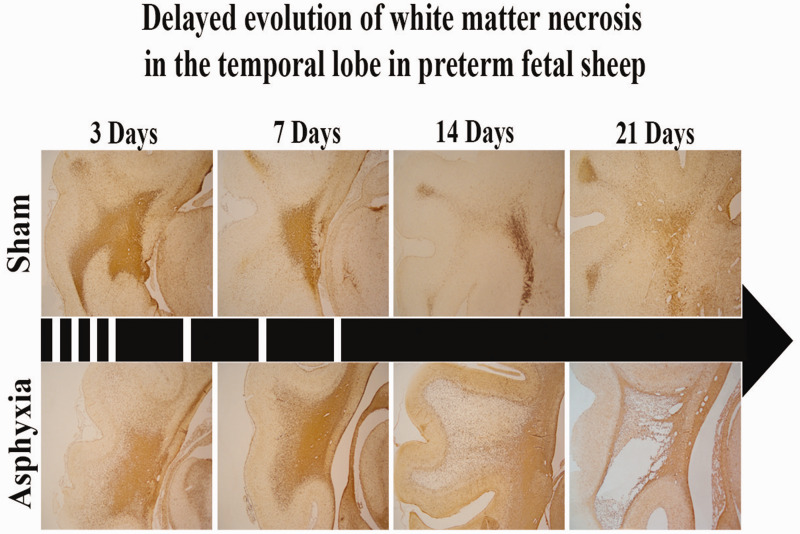
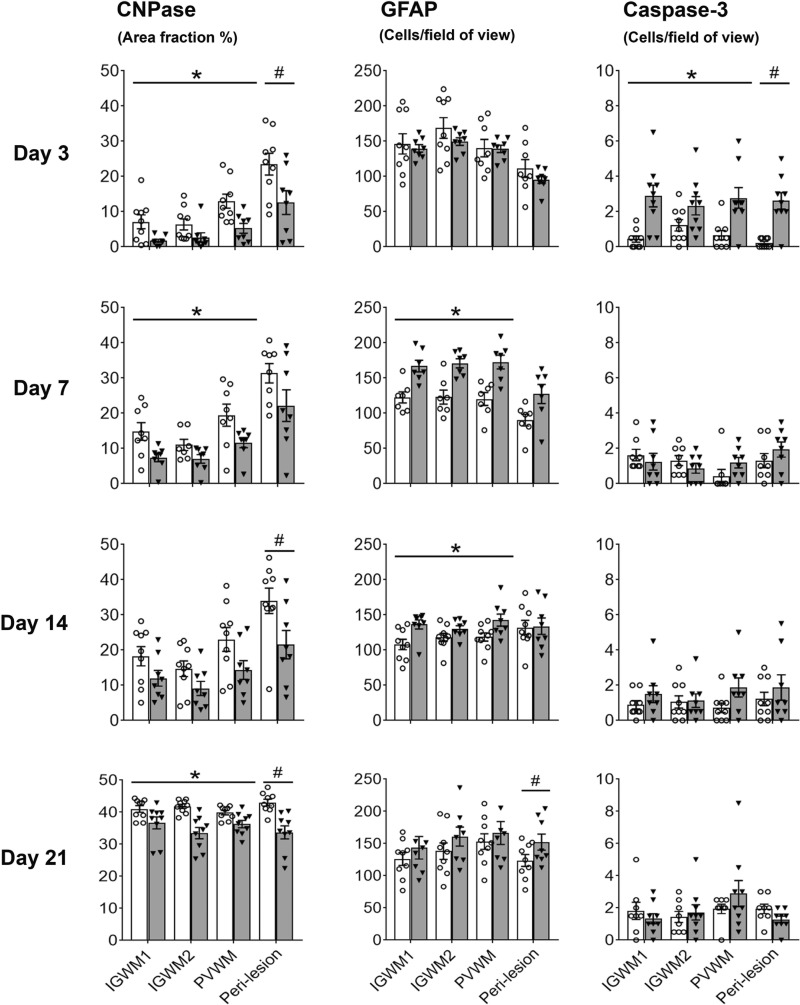
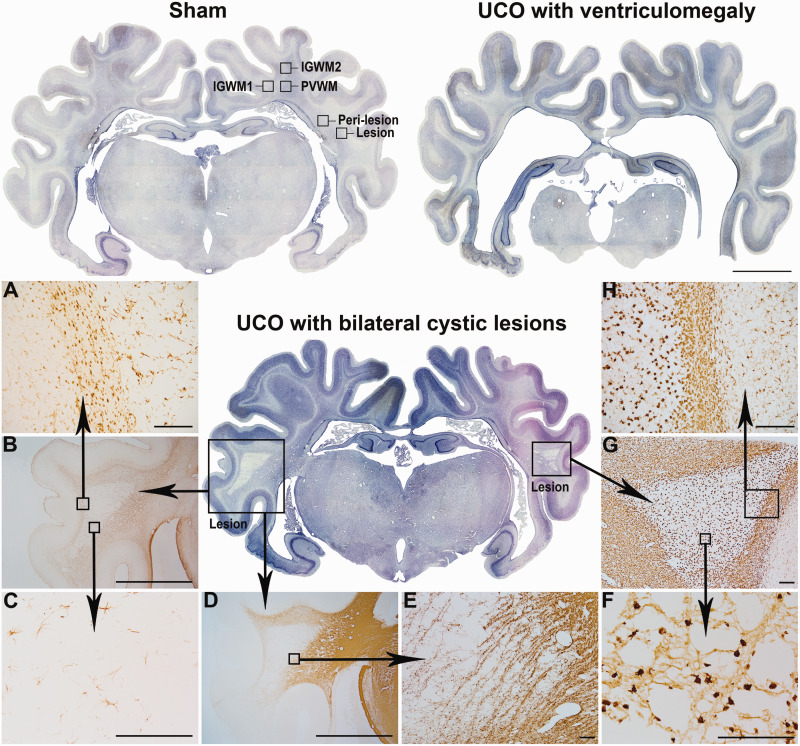
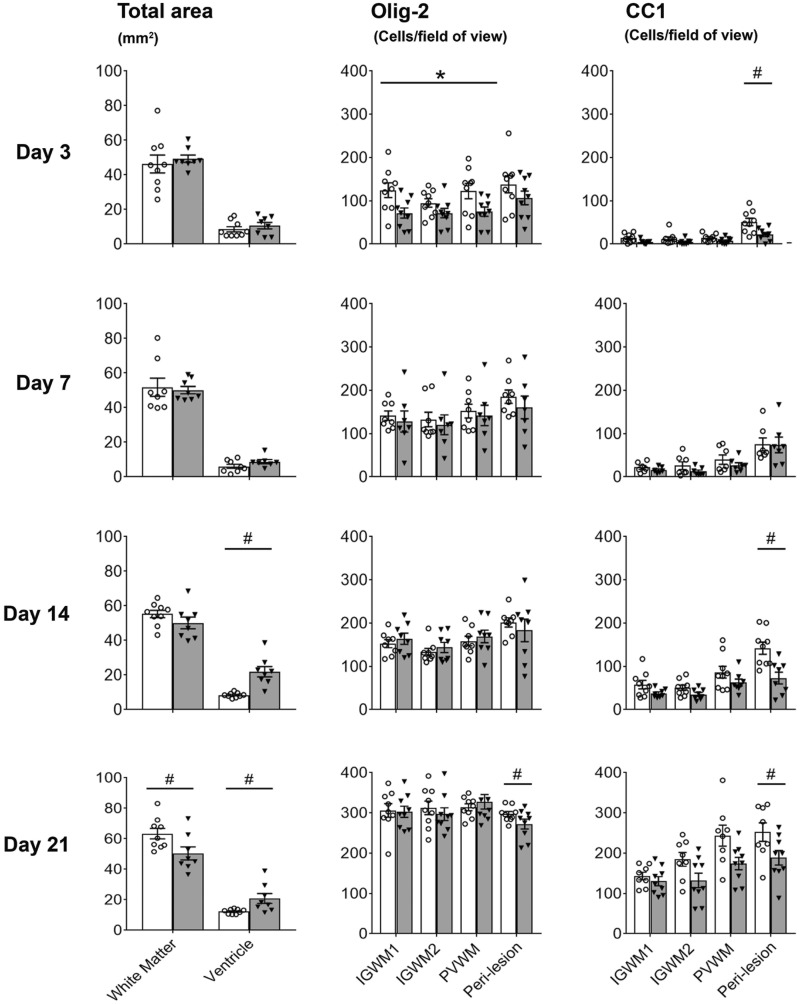
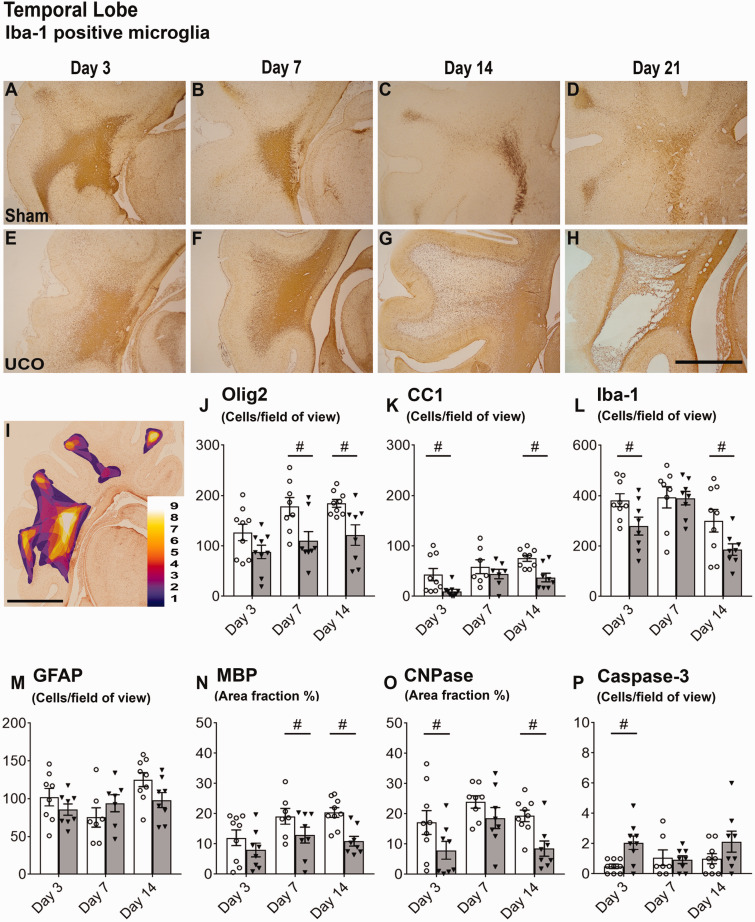
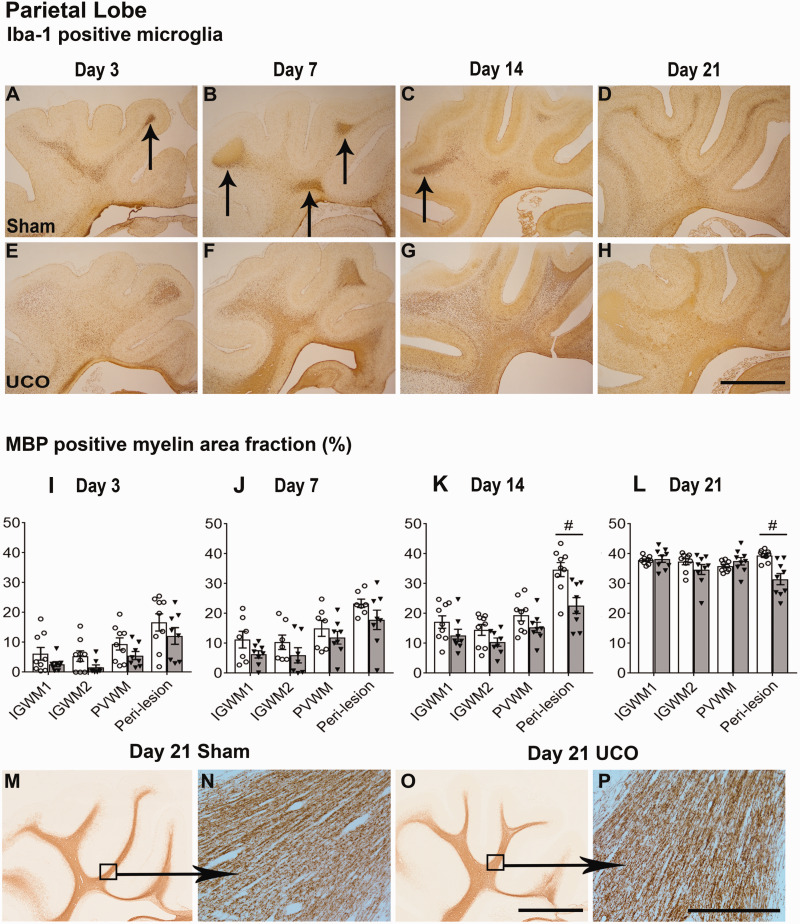
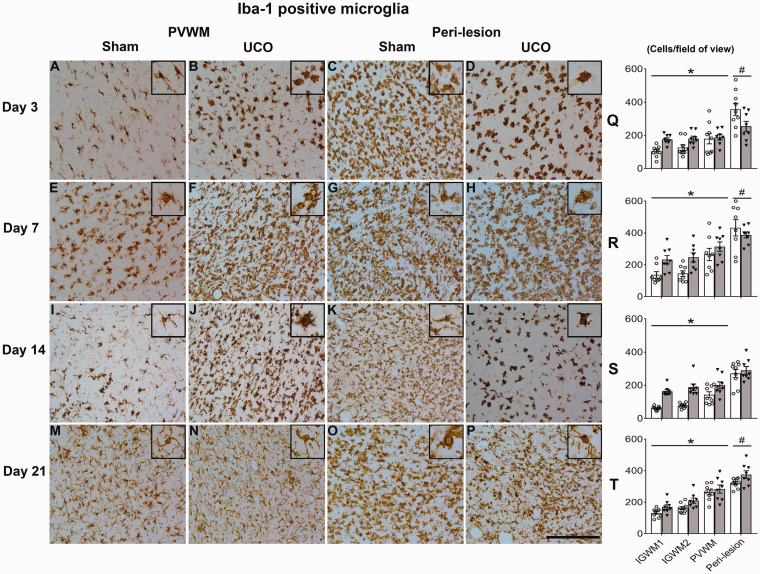
White matter injury, including both diffuse and cystic elements, remains highly associated with neurodevelopmental disability and cerebral palsy in preterm infants, yet its pathogenesis and evolution are still poorly understood and there is no established treatment. We examined the long-term evolution of white matter injury in chronically instrumented preterm fetal sheep (0.7 gestation) after 25 min of complete umbilical cord occlusion or sham occlusion. Fetal brains were processed for histology after 3 days ( = 9, sham = 9), 7 days ( = 8, sham = 8), 14 days ( = 9, sham = 8) and 21 days ( = 9, sham = 9) of recovery. At 3 and 7 days recovery, umbilical cord occlusion was associated with diffuse white matter injury, with loss of total and mature oligodendrocytes and reduced myelination in both the parietal and temporal lobes. At 14 days after umbilical cord occlusion, extensive microglial and astrocytic activation were observed in the temporal lobe. At 21 days recovery a spectrum of severe white matter degeneration was observed, including white matter atrophy, ventriculomegaly and overt cystic white matter lesions. The most severe injury was observed in the temporal lobe after 21 days recovery, including the majority of cystic lesions, persistent oligodendrocyte maturational arrest and impaired myelination. The spatial distribution of delayed white matter degeneration at 21 days recovery was closely related to the location of dense microglial aggregates at earlier time-points, implicating a role for exuberant inflammation originating from microglial aggregates in the pathogenesis of cystic white matter injury. The delayed appearance of cystic injury is consistent with continuing tertiary evolution of necrotic cell death. This slow evolution raises the tantalizing possibility that there may a relatively long therapeutic window to mitigate the development of cystic white matter injury. Delayed anti-inflammatory treatments may therefore represent a promising strategy to reduce neurodevelopmental disability in the preterm infants.
白质损伤,包括弥漫性和囊性成分,在早产儿中仍与神经发育障碍和脑瘫高度相关,但其发病机制和演变仍知之甚少,且尚无既定的治疗方法。我们研究了在慢性植入仪器的早产胎羊(妊娠0.7期)中,完全脐带闭塞或假闭塞25分钟后白质损伤的长期演变。在恢复3天(闭塞组=9只,假闭塞组=9只)、7天(闭塞组=8只,假闭塞组=8只)、14天(闭塞组=9只,假闭塞组=8只)和21天(闭塞组=9只,假闭塞组=9只)后,对胎羊大脑进行组织学处理。在恢复3天和7天时,脐带闭塞与弥漫性白质损伤相关,顶叶和颞叶的少突胶质细胞总数和成熟少突胶质细胞减少,髓鞘形成减少。在脐带闭塞后14天,在颞叶观察到广泛的小胶质细胞和星形胶质细胞活化。在恢复21天时,观察到一系列严重的白质变性,包括白质萎缩、脑室扩大和明显的囊性白质病变。在恢复21天后,颞叶观察到最严重的损伤,包括大多数囊性病变、持续的少突胶质细胞成熟停滞和髓鞘形成受损。恢复21天时延迟性白质变性的空间分布与早期时间点密集的小胶质细胞聚集位置密切相关,提示小胶质细胞聚集引发的过度炎症在囊性白质损伤发病机制中起作用。囊性损伤的延迟出现与坏死性细胞死亡的持续三期演变一致。这种缓慢的演变增加了一种诱人的可能性,即可能存在一个相对较长的治疗窗口来减轻囊性白质损伤的发展。因此,延迟抗炎治疗可能是减少早产儿神经发育障碍的一种有前景的策略。