Department of Neurology, University of Kansas Medical Center, Kansas City, KS, USA.
University of Kansas Alzheimer's Disease Center, Kansas City, KS, USA.
Aging Cell. 2021 May;20(5):e13356. doi: 10.1111/acel.13356. Epub 2021 May 3.
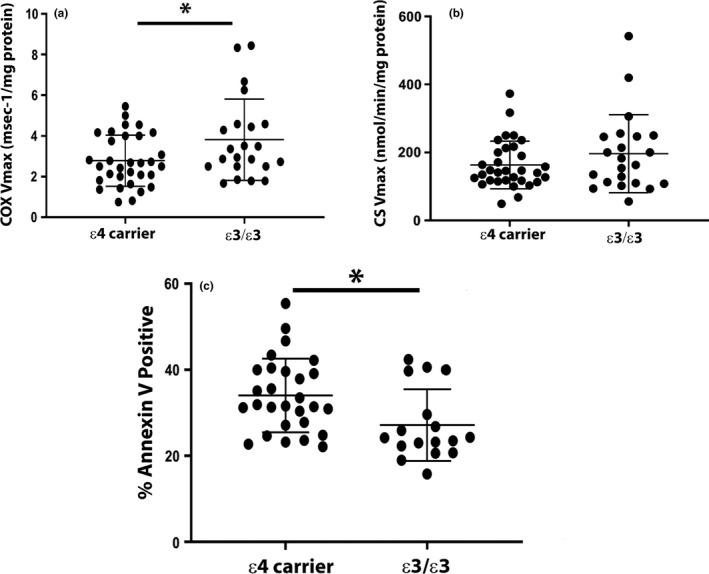
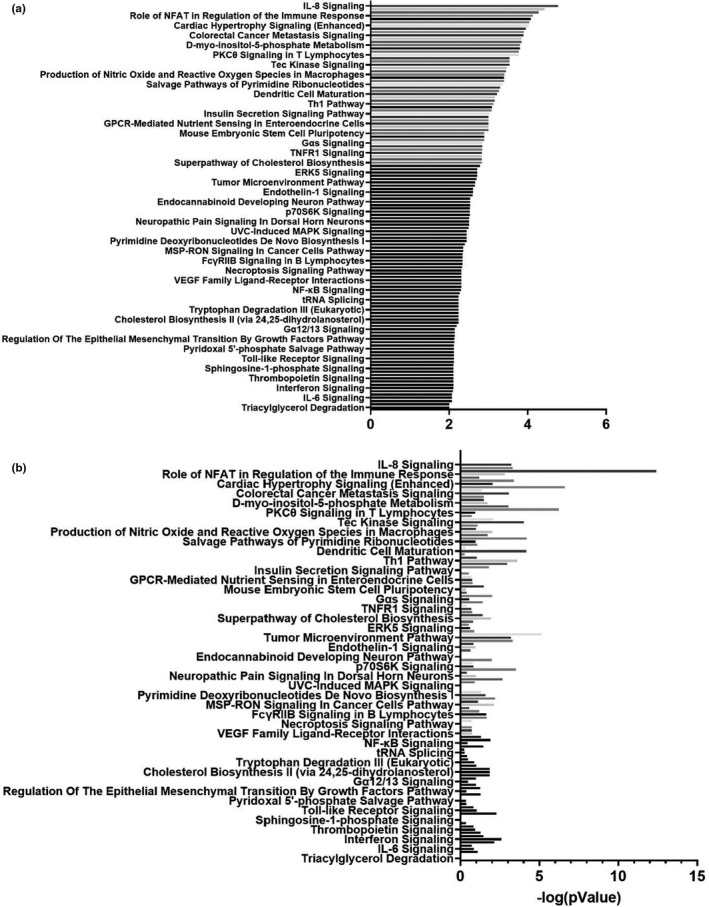
We examined the impact of an APOE ε4 genotype on Alzheimer's disease (AD) subject platelet and lymphocyte metabolism. Mean platelet mitochondrial cytochrome oxidase Vmax activity was lower in APOE ε4 carriers and lymphocyte Annexin V, a marker of apoptosis, was significantly higher. Proteins that mediate mitophagy and energy sensing were higher in APOE ε4 lymphocytes which could represent compensatory changes and recapitulate phenomena observed in post-mortem AD brains. Analysis of the lipid synthesis pathway found higher AceCSI, ATP CL, and phosphorylated ACC levels in APOE ε4 lymphocytes. Lymphocyte ACC changes were also observed in post-mortem brain tissue. Lymphocyte RNAseq showed lower APOE ε4 carrier sphingolipid Transporter 3 (SPNS3) and integrin Subunit Alpha 1 (ITGA1) expression. RNAseq pathway analysis revealed APOE ε4 alleles activated inflammatory pathways and modulated bioenergetic signaling. These findings support a relationship between APOE genotype and bioenergetic pathways and indicate platelets and lymphocytes from APOE ε4 carriers exist in a state of bioenergetic stress. Neither medication use nor brain-localized AD histopathology can account for these findings, which define an APOE ε4-determined molecular and systemic phenotype that informs AD etiology.
我们研究了载脂蛋白 E ε4 基因型对阿尔茨海默病 (AD) 患者血小板和淋巴细胞代谢的影响。APOE ε4 携带者的血小板线粒体细胞色素氧化酶 Vmax 活性较低,淋巴细胞 Annexin V(凋亡的标志物)显著升高。介导线粒体自噬和能量感应的蛋白质在 APOE ε4 淋巴细胞中较高,这可能代表代偿性变化,并再现 AD 患者死后大脑中观察到的现象。对脂质合成途径的分析发现,APOE ε4 淋巴细胞中的 AceCSI、ATP CL 和磷酸化 ACC 水平较高。在死后脑组织中也观察到淋巴细胞 ACC 的变化。淋巴细胞 RNAseq 显示 APOE ε4 携带者鞘磷脂转运蛋白 3 (SPNS3) 和整合素亚基α 1 (ITGA1) 的表达水平较低。RNAseq 途径分析显示 APOE ε4 等位基因激活了炎症途径并调节了生物能量信号。这些发现支持 APOE 基因型与生物能量途径之间的关系,并表明 APOE ε4 携带者的血小板和淋巴细胞处于生物能量应激状态。这些发现既不能用药物使用也不能用大脑局部 AD 组织病理学来解释,它们定义了一种由 APOE ε4 决定的分子和全身表型,为 AD 的病因学提供了信息。