Centre for Ophthalmology and Visual Science (Incorporating Lions Eye Institute), The University of Western Australia, Nedlands, Australia.
Department of Ophthalmology, Royal Perth Hospital, Perth, Australia.
Ophthalmic Genet. 2021 Aug;42(4):431-439. doi: 10.1080/13816810.2021.1913610. Epub 2021 May 3.
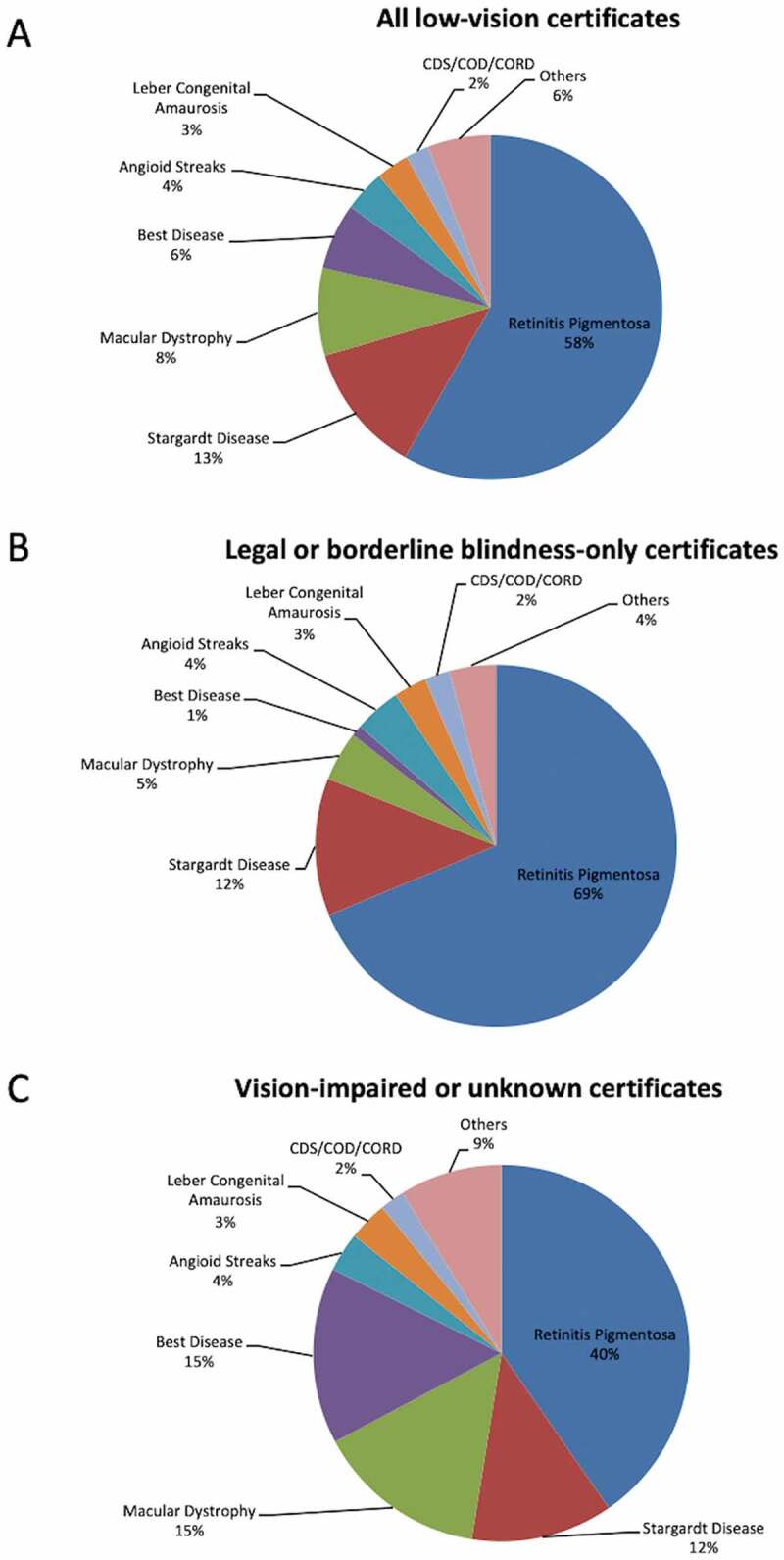
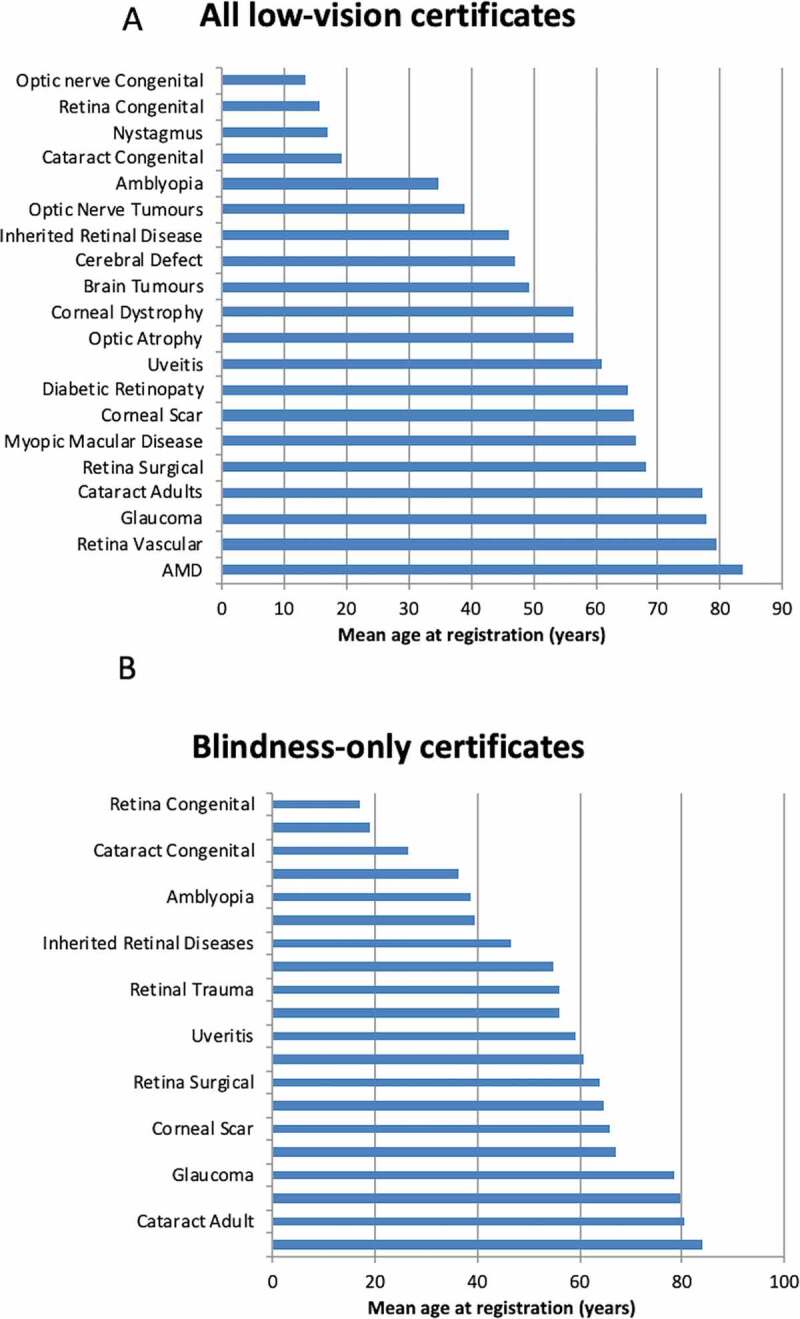
This study examined the frequency of inherited retinal diseases (IRDs) as the reason for blindness registrations over the last two decades and the demographic and clinical phenotypes of inherited retinal disease (IRD)-related registrations. Retrospective, observational study of individuals registered with a state-wide blind and vision-impaired registry. Low-vision or blindness-only (≤20/200 or ≤20°) certificates issued to children (0-15 years), working-age (16-64 years) and older-age (65 and older) adults were assessed. Sex and age distributions were examined for the top 20 reasons for certification. Demographic and clinical features of specific phenotypes of IRDs listed in the registry were examined. Amongst 11824 low-vision certificates issued between July 1995 and January 2017, 679 (5.7%) listed an IRD as the reason for registration. In individuals with blindness-only certification (N=4919), IRDs was the second most common diagnosis (8.3%), overtaking glaucoma (8.1%) and diabetic retinopathy (5.4%). IRD was the second most common reason for low-vision certification amongst children (11.6%) and the most common reason amongst working-age population (23.3%). The mean±SD age for IRD-related blindness-only certification was 46±20 years. The top three phenotypes of IRD-related low-vision certification were non-syndromic retinitis pigmentosa (54%), Stargardt disease (12%) and macular dystrophy (8%). Our findings of IRDs as a common cause of blindness in all ages justify continued funding for providing low-vision services and developing treatments for these conditions.
本研究调查了过去二十年中遗传性视网膜疾病(IRDs)作为失明登记的原因的频率,以及与遗传性视网膜疾病(IRD)相关的登记的人口统计学和临床表型。对在全州盲人和视力障碍登记处登记的个人进行回顾性观察研究。评估了发给儿童(0-15 岁)、工作年龄(16-64 岁)和老年(65 岁及以上)成年人的低视力或失明证书(≤20/200 或≤20°)。对前 20 个认证原因的性别和年龄分布进行了检查。检查了登记册中列出的特定 IRD 表型的人口统计学和临床特征。在 1995 年 7 月至 2017 年 1 月期间颁发的 11824 份低视力证书中,有 679 份(5.7%)将 IRD 列为登记的原因。在仅有失明认证的人群中(N=4919),IRD 是第二常见的诊断(8.3%),超过了青光眼(8.1%)和糖尿病视网膜病变(5.4%)。在儿童中(11.6%),IRD 是低视力认证的第二常见原因,在工作年龄人群中(23.3%),IRD 是最常见的原因。IRD 相关的仅有失明认证的平均年龄±SD 为 46±20 岁。IRD 相关的低视力认证的前三个表型是非综合征性视网膜色素变性(54%)、斯塔加特病(12%)和黄斑营养不良(8%)。我们发现 IRD 在所有年龄段都是失明的常见原因,这证明继续为这些疾病提供低视力服务和开发治疗方法是合理的。