Huang Zihe, Gao Shangbing, Cai Chuangxin, Zheng Hao, Pan Zhigeng, Li Wenting
Faculty of Computer and Software Engineering, Huaiyin Institute of Technology, Huaian, 223003, People's Republic of China.
Key Laboratory of Intelligent Information Processing, Nanjing Xiaozhuang University, Nanjing, 211171, People's Republic of China.
Sci Rep. 2021 May 3;11(1):9420. doi: 10.1038/s41598-021-88822-3.
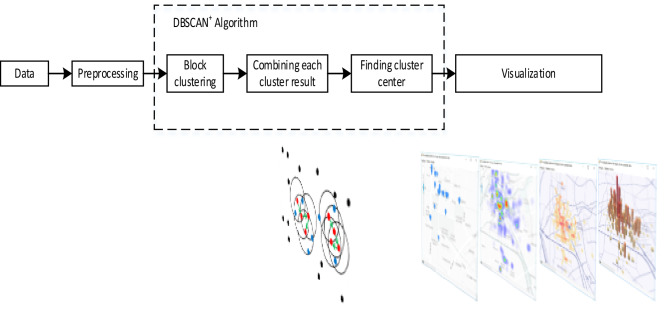
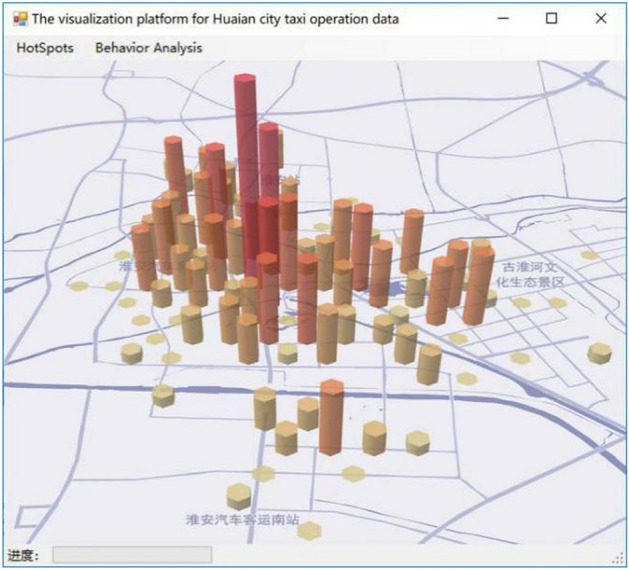
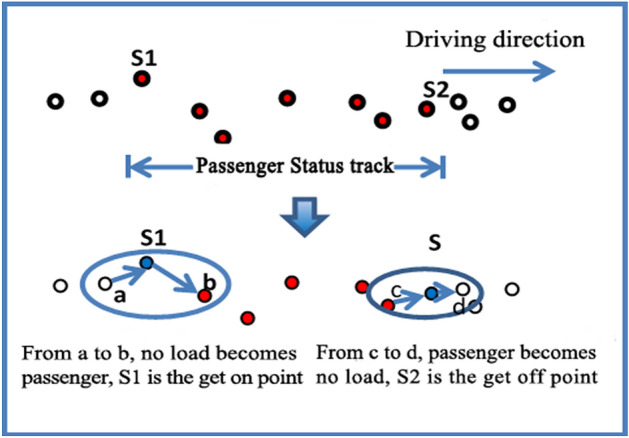
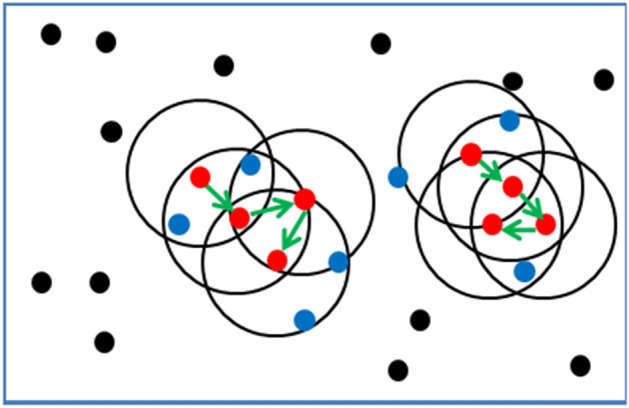
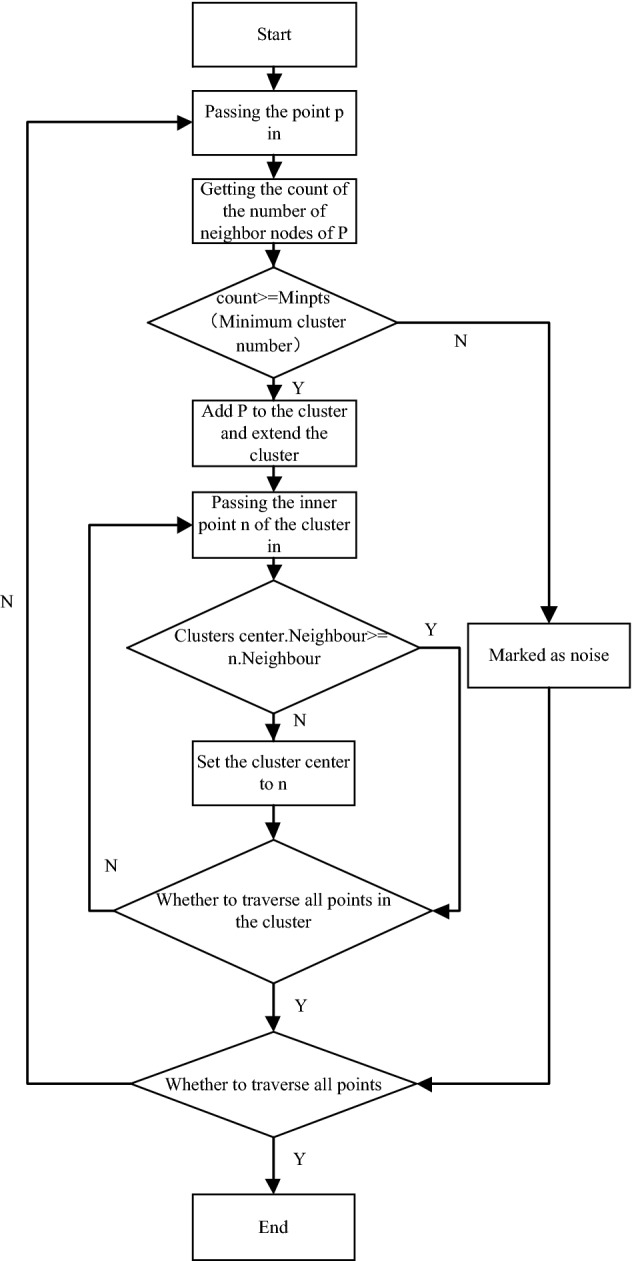
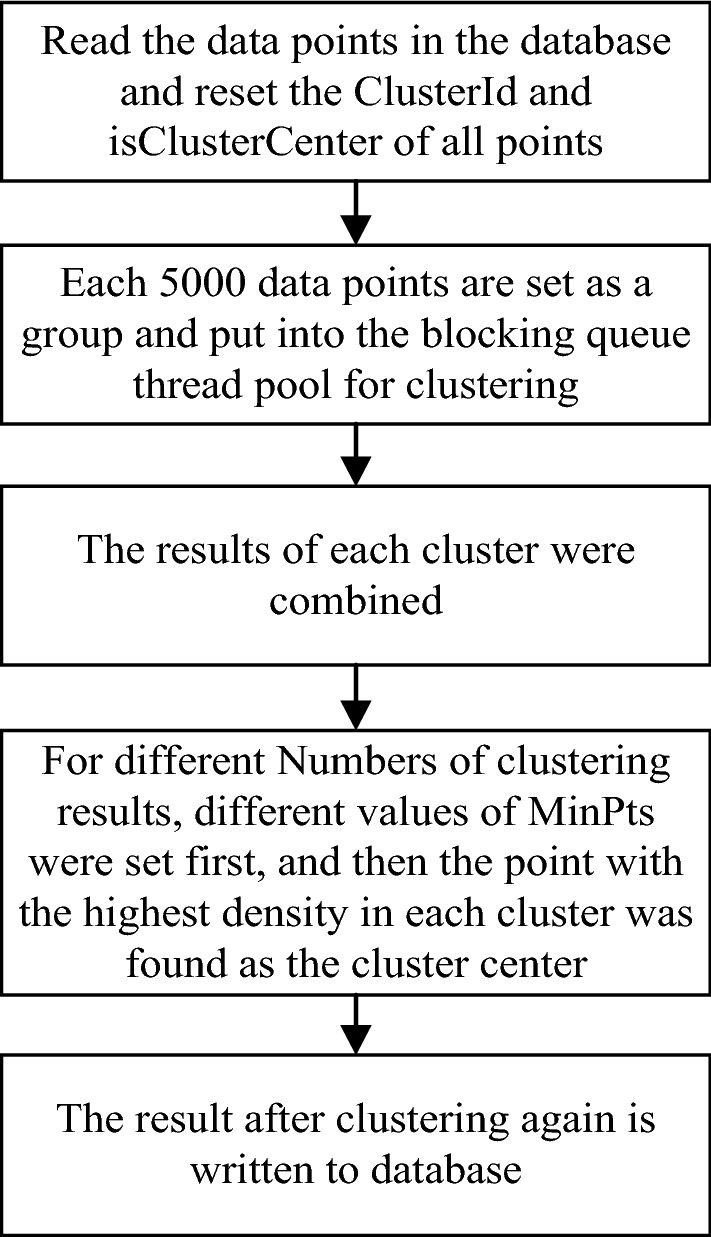
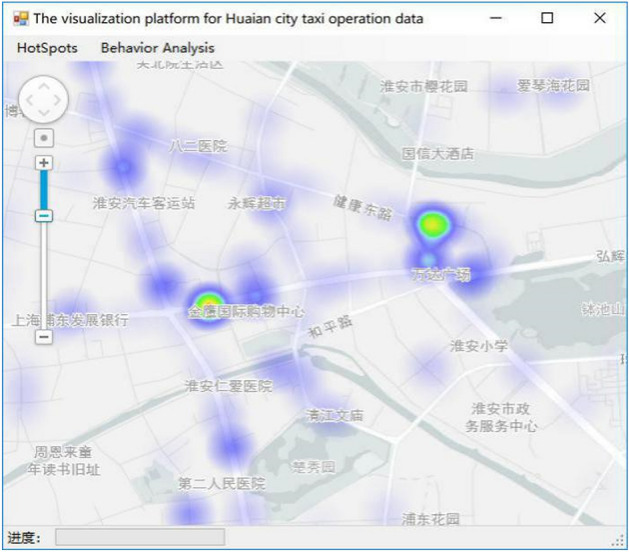
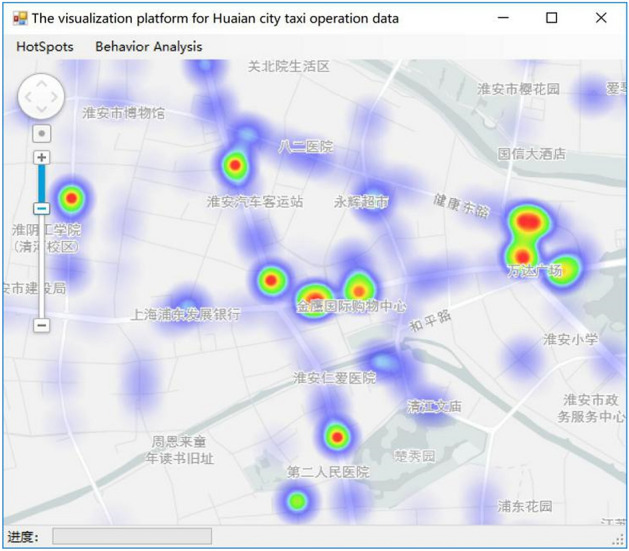
With the development of city size and vehicle interconnection, visual analysis technology is playing a very important role in the course of city calculation and city perception. A Reasonable visual model can effectively present the feature of city. In order to solve the problem of traditional density algorithm that cluster the large scale data slowly and cannot find cluster centers to adapt taxi track data. The DBSCAN (density-based spatial clustering of applications with noise plus) algorithm that can split data and extract maximum density clusters under the large scale data was proposed in the paper. The passenger points should be cleaned from the original point of the passenger trajectory data firstly, and then the massive passenger points are sliced and clustered cyclically. In the clustering process, the cluster centers can be extracted based on maximum density, and finally the clustering results are visualized according to the results. The experimental results show that compared with other popular methods, the proposed method has significant advantages in clustering speed, precision and visualization for large-scale city passenger hotspots. Moreover, it provides important decisions for further urban planning and promotes the traffic efficiency.
随着城市规模的发展和车辆互联,视觉分析技术在城市计算和城市感知过程中发挥着非常重要的作用。合理的视觉模型可以有效地呈现城市特征。为了解决传统密度算法对大规模数据聚类缓慢且无法找到聚类中心以适应出租车轨迹数据的问题。本文提出了DBSCAN(基于密度的带有噪声的空间聚类应用)算法,该算法可以在大规模数据下分割数据并提取最大密度聚类。首先应从乘客轨迹数据的原始点中清理乘客点,然后对大量乘客点进行循环切片和聚类。在聚类过程中,可以基于最大密度提取聚类中心,最后根据结果对聚类结果进行可视化。实验结果表明,与其他流行方法相比,该方法在大规模城市乘客热点的聚类速度、精度和可视化方面具有显著优势。此外,它为进一步的城市规划提供了重要决策,提高了交通效率。