Department of Experimental Neuroendocrinology, Maj Institute of Pharmacology Polish Academy of Sciences, Kraków, Poland.
Department of Psychiatry, Faculty of Medicine, King Chulalongkorn Memorial Hospital, Bangkok, Thailand.
Neurotox Res. 2021 Aug;39(4):1211-1226. doi: 10.1007/s12640-021-00367-5. Epub 2021 May 4.
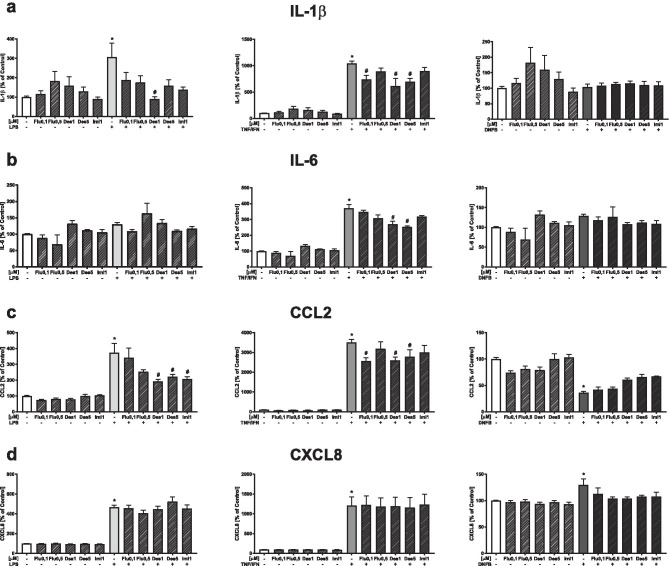
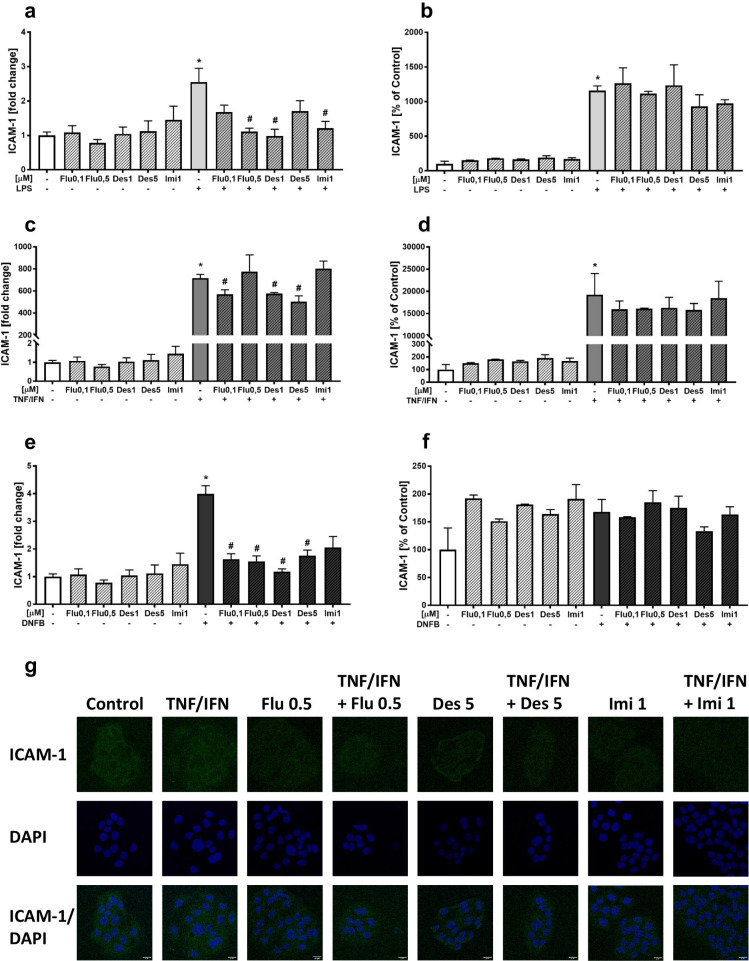
Allergic contact dermatitis (ACD) is a T cell-mediated type of skin inflammation resulting from contact hypersensitivity (CHS) to antigens. There is strong comorbidity between ACD and major depression. Keratinocytes release immunomodulatory mediators including pro-inflammatory cytokines and chemokines, which modulate skin inflammation and are crucial cell type for the development of CHS. Our previous studies showed that fluoxetine and desipramine were effective in suppressing CHS in different mouse strains. However, the immune and molecular mechanisms underlying this effect remain to be explored. The aim of the current study was to determine the immune and molecular mechanisms of action of antidepressant drugs engaged in the inhibition of CHS response in the stimulated keratinocyte HaCaT cell line. The results show that LPS, TNF-α/IFN-γ, and DNFB stimulate HaCaT cells to produce large amounts of pro-inflammatory factors including IL-1β, IL-6, CCL2, and CXCL8. HaCaT stimulation was associated with increased expression of ICAM-1, a cell adhesion molecule, and decreased expression of E-cadherin. Imipramine, desipramine, and fluoxetine suppress the production of IL-1β, CCL2, as well as the expression of ICAM-1. LPS and TNF-α/IFN-γ activate p-38 kinase, but antidepressants do not regulate this pathway. LPS decreases E-cadherin protein expression and fluoxetine normalizes these effects. In summary, the antidepressant drugs examined in this study attenuate the stimulated secretion of pro-inflammatory cytokines, chemokines, and modulate adhesion molecule expression by the HaCaT cell line. Therefore, antidepressants may have some clinical efficacy in patients with ACD and patients with comorbid depression and contact allergy.
变应性接触性皮炎(ACD)是一种 T 细胞介导的皮肤炎症,由对抗原的接触超敏反应(CHS)引起。ACD 与重度抑郁症之间存在很强的共病关系。角质形成细胞释放免疫调节介质,包括促炎细胞因子和趋化因子,这些介质调节皮肤炎症,是 CHS 发展的关键细胞类型。我们之前的研究表明,氟西汀和去甲丙咪嗪在不同的小鼠品系中抑制 CHS 是有效的。然而,这种作用的免疫和分子机制仍有待探索。本研究的目的是确定抗抑郁药在刺激的角质形成细胞 HaCaT 细胞系中抑制 CHS 反应的作用的免疫和分子机制。结果表明,LPS、TNF-α/IFN-γ 和 DNFB 刺激 HaCaT 细胞产生大量促炎因子,包括 IL-1β、IL-6、CCL2 和 CXCL8。HaCaT 刺激与细胞黏附分子 ICAM-1 的表达增加和 E-钙黏蛋白的表达减少有关。丙咪嗪、去甲丙咪嗪和氟西汀抑制 IL-1β、CCL2 的产生以及 ICAM-1 的表达。LPS 和 TNF-α/IFN-γ 激活 p38 激酶,但抗抑郁药不调节该途径。LPS 降低 E-钙黏蛋白蛋白表达,氟西汀使这些作用正常化。总之,本研究中检查的抗抑郁药通过 HaCaT 细胞系减轻了促炎细胞因子、趋化因子的刺激分泌,并调节黏附分子的表达。因此,抗抑郁药在 ACD 患者和合并抑郁和接触过敏的患者中可能具有一定的临床疗效。