• 文献检索
  • 文档翻译
  • 深度研究
  • 学术资讯
  • Suppr Zotero 插件Zotero 插件
  • 邀请有礼
  • 套餐&价格
  • 历史记录
应用&插件
Suppr Zotero 插件Zotero 插件浏览器插件Mac 客户端Windows 客户端微信小程序
定价
高级版会员购买积分包购买API积分包
服务
文献检索文档翻译深度研究API 文档MCP 服务
关于我们
关于 Suppr公司介绍联系我们用户协议隐私条款
关注我们

Suppr 超能文献

核心技术专利:CN118964589B侵权必究
粤ICP备2023148730 号-1Suppr @ 2026

文献检索

告别复杂PubMed语法,用中文像聊天一样搜索,搜遍4000万医学文献。AI智能推荐,让科研检索更轻松。

立即免费搜索

文件翻译

保留排版,准确专业,支持PDF/Word/PPT等文件格式,支持 12+语言互译。

免费翻译文档

深度研究

AI帮你快速写综述,25分钟生成高质量综述,智能提取关键信息,辅助科研写作。

立即免费体验

表皮蜡化合物在棉粉虱互作中的生化证据。

Biochemical evidence of epicuticular wax compounds involved in cotton-whitefly interaction.

机构信息

Center of Excellence in Molecular Biology (CEMB), University of the Punjab, Lahore, Pakistan.

Department of Biochemistry and Biotechnology, University of Gujrat, Gujrat, Pakistan.

出版信息

PLoS One. 2021 May 4;16(5):e0250902. doi: 10.1371/journal.pone.0250902. eCollection 2021.

DOI:10.1371/journal.pone.0250902
PMID:33945542
原文链接:https://pmc.ncbi.nlm.nih.gov/articles/PMC8096116/
Abstract

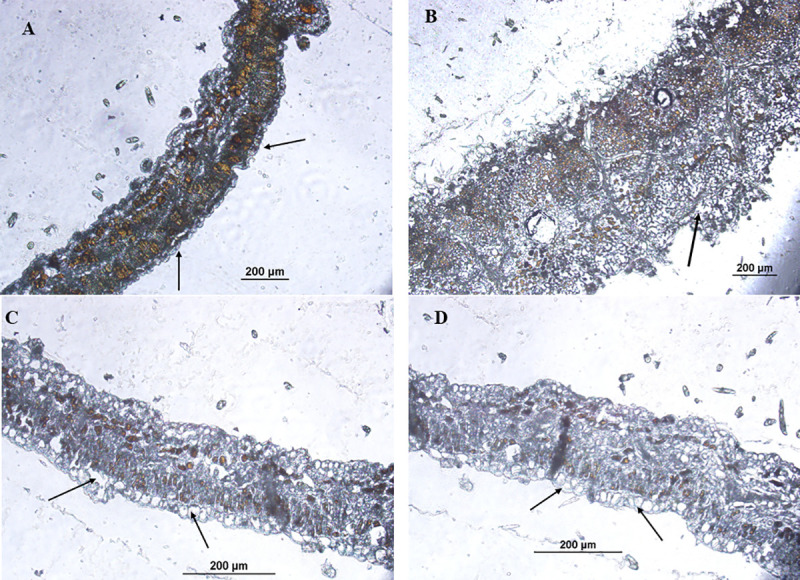
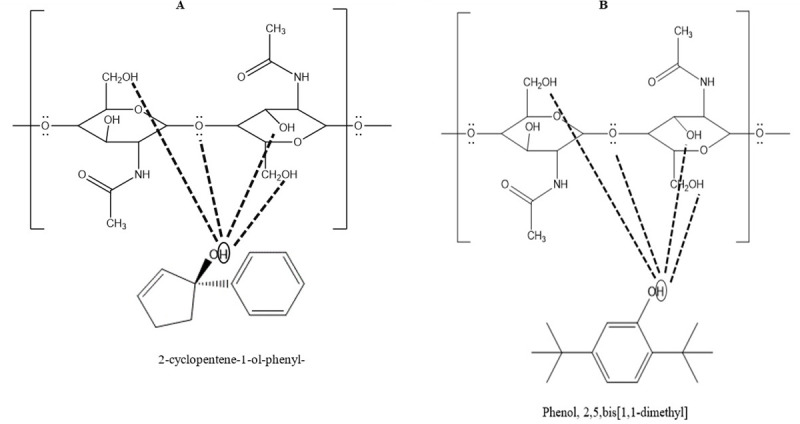
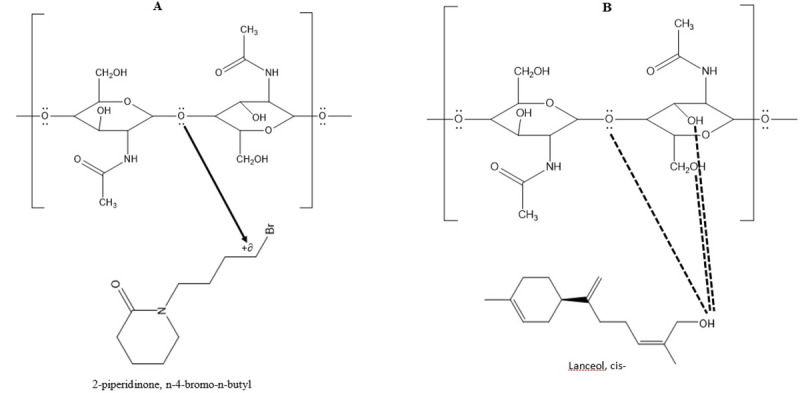
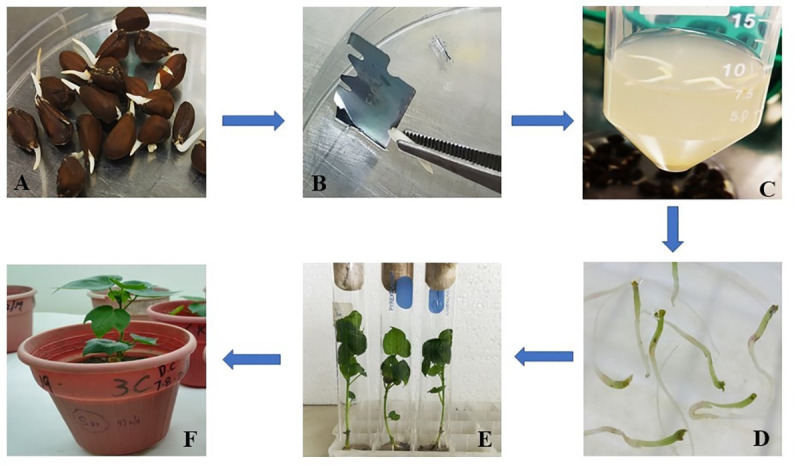
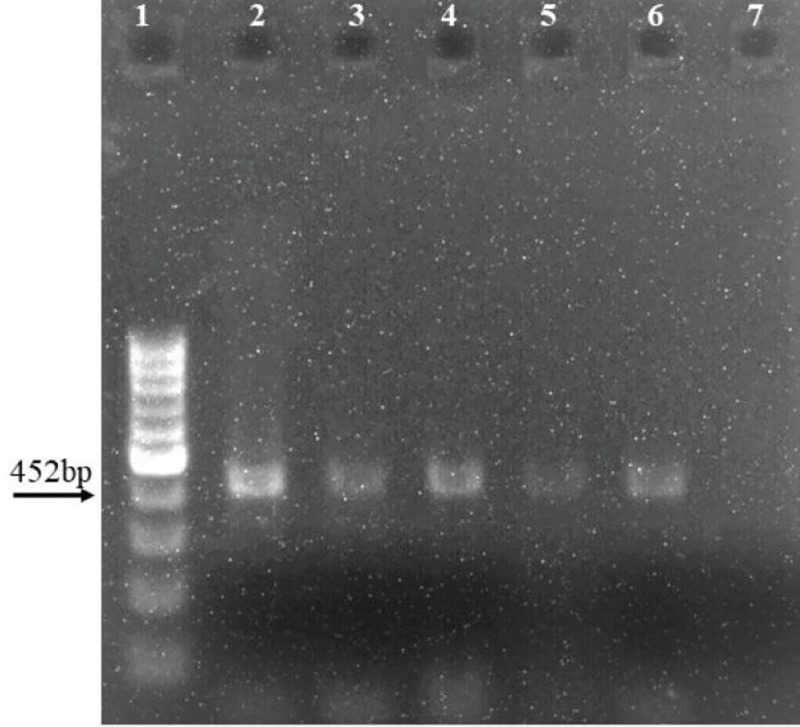
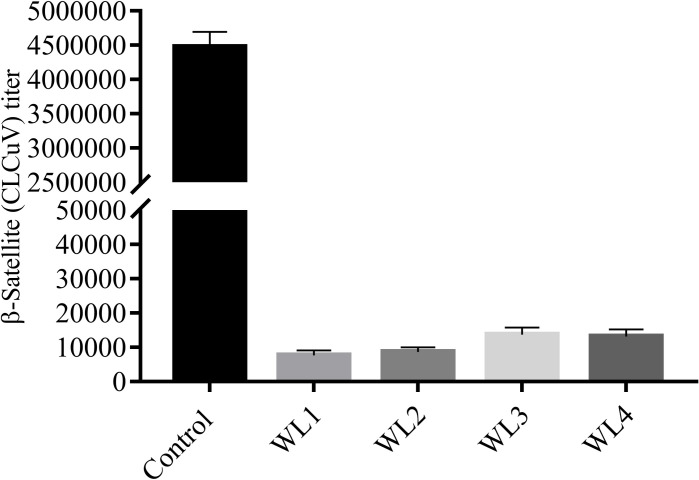
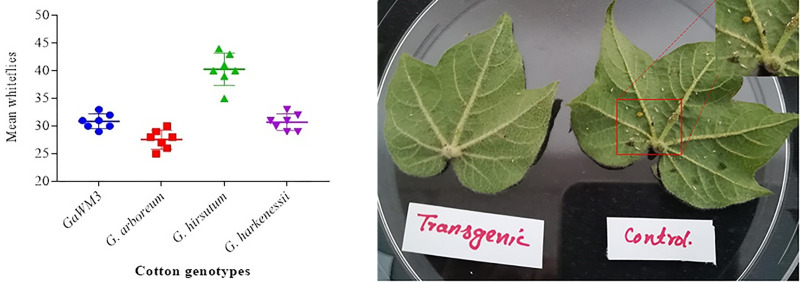
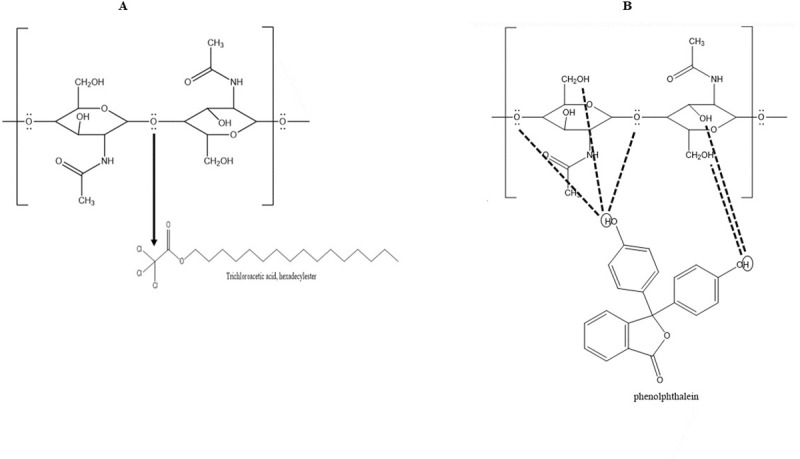
Sucking insects require a surface of plants on which the legs and the eggs of insects will adhere and to which insect mouthparts will access. The primary plant protection against insects is their surface property, which hinders the attachment of the insect's legs and eggs. The epicuticular waxes chemistry influences the fine structure of the cuticular surface. In current study, an attempt was made to investigate the variation of chemical compounds in epicuticular waxes of four cotton species that classify them resistant or susceptible i.e., Gossypium abroreum, G. hirsutum, G. arboreum wax deficient mutant (GaWM3) and G. harknessi which were evaluated for their interaction with whitefly and CLCuV transmission. Gossypium hirsutum an insect and CLCuV susceptible cotton variety, was found to have four compounds namely Trichloroacetic acid, hexadecylester, P-xylenolpthalein, 2-cyclopentene-1-ol, 1-phenyl-and Phenol, 2,5-bis [1,1- dimethyl] which could interact with chitin of whitefly while only two compounds in Gossypium arboreum an insect and CLCuV resistant cotton variety could interact with chitin of whitefly. Similarly, GaWM3 and Gossypium harkasnessi were found to have only a single compound. Number of whiteflies found on leaves of G. hirsutum was much higher as compared to other cotton species. Keeping this fact in mind a wax biosynthetic gene CER3, from Arabidopsis thaliana was transformed into G. hirsutum and the plants were evaluated for their resistance against whitefly and CLCuV transmission. In microscopic analysis transgenic plants clearly showed higher amounts of leaf waxes as compared to non-transgenics. The least whitefly population and CLCuV titer of <10,000 units was found in transgenic plants compared to non-transgenic cotton where it was ≈4.5X10⁶ units that confirmed the role of wax in insect interaction and ultimately to CLCuV transmission. This study provides novel insight on wax related compounds involved in cotton-whitefly interaction, which potentially can help in developing more efficient control strategies for this destructive pest.

摘要

刺吸式昆虫需要一个植物表面,昆虫的腿和卵将附着在该表面上,昆虫的口器也可以接触到该表面。植物防止昆虫侵害的主要方法是其表面特性,这会阻碍昆虫腿和卵的附着。表皮蜡的化学成分影响表皮表面的精细结构。在当前的研究中,尝试研究了四种棉花物种的表皮蜡中化学化合物的变化,这些物种被归类为抗虫或感虫,即 Gossypium abroreum、G. hirsutum、G. arboreum wax deficient mutant (GaWM3) 和 G. harknessi,它们被评估与粉虱和 CLCuV 传播的相互作用。发现对粉虱和 CLCuV 敏感的棉花品种 Gossypium hirsutum 有四种化合物,即三氯乙酸、十六酸酯、对二甲苯酚酞、2-环戊烯-1-醇、1-苯基-和苯酚、2,5-双[1,1-二甲基],这些化合物可以与粉虱的几丁质相互作用,而对粉虱的几丁质具有相互作用的棉花品种 Gossypium arboreum 只有两种化合物。同样,GaWM3 和 Gossypium harkasnessi 只发现了一种化合物。在 G. hirsutum 叶片上发现的粉虱数量明显高于其他棉花物种。考虑到这一事实,从拟南芥中转化了蜡生物合成基因 CER3 到 G. hirsutum,并评估了这些植物对粉虱和 CLCuV 传播的抗性。在显微镜分析中,转基因植物与非转基因植物相比,明显显示出更高量的叶片蜡。与非转基因棉花相比,转基因植物中的粉虱种群最少,CLCuV 滴度<10,000 单位,这证实了蜡在昆虫相互作用中的作用,最终影响 CLCuV 的传播。这项研究提供了关于参与棉花-粉虱相互作用的蜡相关化合物的新见解,这可能有助于为这种具有破坏性的害虫开发更有效的控制策略。
https://cdn.ncbi.nlm.nih.gov/pmc/blobs/ab7b/8096116/89b99646d10e/pone.0250902.g008.jpg
https://cdn.ncbi.nlm.nih.gov/pmc/blobs/ab7b/8096116/79a8c804833f/pone.0250902.g001.jpg
https://cdn.ncbi.nlm.nih.gov/pmc/blobs/ab7b/8096116/1b60b9f6060a/pone.0250902.g002.jpg
https://cdn.ncbi.nlm.nih.gov/pmc/blobs/ab7b/8096116/3b6cb911a135/pone.0250902.g003.jpg
https://cdn.ncbi.nlm.nih.gov/pmc/blobs/ab7b/8096116/677b84eedbbe/pone.0250902.g004.jpg
https://cdn.ncbi.nlm.nih.gov/pmc/blobs/ab7b/8096116/2dad0f0984f9/pone.0250902.g005.jpg
https://cdn.ncbi.nlm.nih.gov/pmc/blobs/ab7b/8096116/ad03514d05d2/pone.0250902.g006.jpg
https://cdn.ncbi.nlm.nih.gov/pmc/blobs/ab7b/8096116/b96cf5cd2e66/pone.0250902.g007.jpg
https://cdn.ncbi.nlm.nih.gov/pmc/blobs/ab7b/8096116/89b99646d10e/pone.0250902.g008.jpg
https://cdn.ncbi.nlm.nih.gov/pmc/blobs/ab7b/8096116/79a8c804833f/pone.0250902.g001.jpg
https://cdn.ncbi.nlm.nih.gov/pmc/blobs/ab7b/8096116/1b60b9f6060a/pone.0250902.g002.jpg
https://cdn.ncbi.nlm.nih.gov/pmc/blobs/ab7b/8096116/3b6cb911a135/pone.0250902.g003.jpg
https://cdn.ncbi.nlm.nih.gov/pmc/blobs/ab7b/8096116/677b84eedbbe/pone.0250902.g004.jpg
https://cdn.ncbi.nlm.nih.gov/pmc/blobs/ab7b/8096116/2dad0f0984f9/pone.0250902.g005.jpg
https://cdn.ncbi.nlm.nih.gov/pmc/blobs/ab7b/8096116/ad03514d05d2/pone.0250902.g006.jpg
https://cdn.ncbi.nlm.nih.gov/pmc/blobs/ab7b/8096116/b96cf5cd2e66/pone.0250902.g007.jpg
https://cdn.ncbi.nlm.nih.gov/pmc/blobs/ab7b/8096116/89b99646d10e/pone.0250902.g008.jpg

相似文献

1
Biochemical evidence of epicuticular wax compounds involved in cotton-whitefly interaction.表皮蜡化合物在棉粉虱互作中的生化证据。
PLoS One. 2021 May 4;16(5):e0250902. doi: 10.1371/journal.pone.0250902. eCollection 2021.
2
Molecular and Biochemical Characterization of Cotton Epicuticular Wax in Defense Against Cotton Leaf Curl Disease.棉花表皮蜡质在抵御棉花卷叶病中的分子与生化特性
Iran J Biotechnol. 2015 Dec;13(4):3-9. doi: 10.15171/ijb.1234.
3
Constitutive expression of Asparaginase in Gossypium hirsutum triggers insecticidal activity against Bemisia tabaci.在棉属植物中组成性表达天冬酰胺酶可引发对烟粉虱的杀虫活性。
Sci Rep. 2020 Jun 2;10(1):8958. doi: 10.1038/s41598-020-65249-w.
4
Transcriptomic analysis of cultivated cotton Gossypium hirsutum provides insights into host responses upon whitefly-mediated transmission of cotton leaf curl disease.栽培棉种 Gossypium hirsutum 的转录组分析为研究烟粉虱介导的棉花曲叶病的传播过程中宿主的反应提供了线索。
PLoS One. 2019 Feb 7;14(2):e0210011. doi: 10.1371/journal.pone.0210011. eCollection 2019.
5
Isolation of biotic stress resistance genes from cotton (Gossypium arboreum) and their analysis in model plant tobacco (Nicotiana tabacum) for resistance against cotton leaf curl disease complex.从棉花(Gossypium arboreum)中分离生物胁迫抗性基因,并在模式植物烟草(Nicotiana tabacum)中分析其对棉花卷叶病复合的抗性。
J Virol Methods. 2020 Feb;276:113760. doi: 10.1016/j.jviromet.2019.113760. Epub 2019 Nov 9.
6
Enhanced expression of plasma membrane intrinsic protein 2 improves cotton fiber length in Gossypium arboreum.质膜内在蛋白 2 的增强表达可提高陆地棉纤维长度。
Mol Biol Rep. 2022 Jun;49(6):5419-5426. doi: 10.1007/s11033-022-07138-1. Epub 2022 Jan 21.
7
Engineering cotton (Gossypium hirsutum L.) for resistance to cotton leaf curl disease using viral truncated AC1 DNA sequences.利用病毒截短的AC1 DNA序列培育抗棉花曲叶病的棉花(陆地棉)。
Virus Genes. 2011 Apr;42(2):286-96. doi: 10.1007/s11262-011-0569-9. Epub 2011 Feb 15.
8
Comparative transcriptome analysis of Gossypium hirsutum L. in response to sap sucking insects: aphid and whitefly.棉花对刺吸式昆虫(蚜虫和粉虱)响应的比较转录组分析。
BMC Genomics. 2013 Apr 11;14:241. doi: 10.1186/1471-2164-14-241.
9
Introgression of cotton leaf curl virus-resistant genes from Asiatic cotton (Gossypium arboreum) into upland cotton (G. hirsutum).将亚洲棉(草棉)的抗棉花卷叶病毒基因渐渗到陆地棉(陆地棉)中。
Genet Mol Res. 2011 Oct 7;10(4):2404-14. doi: 10.4238/2011.October.7.2.
10
Suppression of cotton leaf curl disease symptoms in Gossypium hirsutum through over expression of host-encoded miRNAs.通过过表达宿主编码的 miRNA 抑制棉花曲叶病症状。
J Biotechnol. 2017 Dec 10;263:21-29. doi: 10.1016/j.jbiotec.2017.10.003. Epub 2017 Oct 7.

引用本文的文献

1
Mutations in BrMYB31 lead to a glossy phenotype caused by a deficiency in epidermal wax crystals in Chinese cabbage.大白菜中BrMYB31基因的突变导致了由表皮蜡质晶体缺乏引起的叶片光泽表型。
Theor Appl Genet. 2025 Sep 3;138(9):239. doi: 10.1007/s00122-025-05031-6.
2
Gas Chromatography-Mass Spectrometry Metabolite Analysis Combined with Transcriptomics Reveals Genes Involved in Wax Biosynthesis in L.气相色谱-质谱联用代谢组学分析联合转录组学揭示蜡生物合成相关基因在 L. 中的作用
Int J Mol Sci. 2024 Jun 1;25(11):6106. doi: 10.3390/ijms25116106.
3
Wheat transcriptomic responses to extended feeding by wheat curl mites.

本文引用的文献

1
Wax biosynthesis in response to danger: its regulation upon abiotic and biotic stress.应对危险时的蜡质生物合成:其在非生物和生物胁迫下的调控
New Phytol. 2020 Aug;227(3):698-713. doi: 10.1111/nph.16571. Epub 2020 May 3.
2
Transcriptomic analysis of cultivated cotton Gossypium hirsutum provides insights into host responses upon whitefly-mediated transmission of cotton leaf curl disease.栽培棉种 Gossypium hirsutum 的转录组分析为研究烟粉虱介导的棉花曲叶病的传播过程中宿主的反应提供了线索。
PLoS One. 2019 Feb 7;14(2):e0210011. doi: 10.1371/journal.pone.0210011. eCollection 2019.
3
Exploration of cotton leaf curl virus resistance genes and their screening in by targeting resistance gene analogues.
小麦对麦红吸浆虫持续取食的转录组响应。
Sci Rep. 2022 Jul 22;12(1):12535. doi: 10.1038/s41598-022-16792-1.
4
Plant Responses to Herbivory, Wounding, and Infection.植物对草食、创伤和感染的反应。
Int J Mol Sci. 2022 Jun 24;23(13):7031. doi: 10.3390/ijms23137031.
通过靶向抗病基因类似物探索棉花曲叶病毒抗性基因及其筛选
AoB Plants. 2018 Oct 16;10(6):ply067. doi: 10.1093/aobpla/ply067. eCollection 2018 Dec.
4
In vitro antioxidant, antilipoxygenase and antimicrobial activities of extracts from seven climbing plants belonging to the Bignoniaceae.七种属于紫葳科攀援植物的提取物的体外抗氧化、抗脂氧合酶和抗菌活性。
J Integr Med. 2018 Jul;16(4):255-262. doi: 10.1016/j.joim.2018.04.009. Epub 2018 May 3.
5
Epicuticular wax on leaf cuticles does not establish the transpiration barrier, which is essentially formed by intracuticular wax.叶片角质层的表皮蜡并不构成蒸腾屏障,而蒸腾屏障主要由角质层内的蜡构成。
J Plant Physiol. 2018 Aug;227:66-74. doi: 10.1016/j.jplph.2018.03.018. Epub 2018 Mar 31.
6
GCN5 contributes to stem cuticular wax biosynthesis by histone acetylation of CER3 in Arabidopsis.GCN5 通过组蛋白乙酰化作用促进拟南芥干细胞角质层蜡生物合成中的 CER3。
J Exp Bot. 2018 May 25;69(12):2911-2922. doi: 10.1093/jxb/ery077.
7
Cotton functional genomics reveals global insight into genome evolution and fiber development.棉花功能基因组学揭示了对基因组进化和纤维发育的全面认识。
J Genet Genomics. 2017 Nov 20;44(11):511-518. doi: 10.1016/j.jgg.2017.09.009. Epub 2017 Nov 14.
8
The intimate talk between plants and microorganisms at the leaf surface.叶片表面植物与微生物间的亲密交谈。
J Exp Bot. 2017 Nov 9;68(19):5339-5350. doi: 10.1093/jxb/erx327.
9
Anti-adhesive effects of plant wax coverage on insect attachment.植物蜡覆盖对昆虫附着的防粘效果。
J Exp Bot. 2017 Nov 9;68(19):5323-5337. doi: 10.1093/jxb/erx271.
10
Molecular and Biochemical Characterization of Cotton Epicuticular Wax in Defense Against Cotton Leaf Curl Disease.棉花表皮蜡质在抵御棉花卷叶病中的分子与生化特性
Iran J Biotechnol. 2015 Dec;13(4):3-9. doi: 10.15171/ijb.1234.