Department of Molecular Biology, Instituto de Investigaciones Biológicas Clemente Estable (IIBCE), Montevideo, Uruguay.
Transgenic and Experimental Animal Unit, Institut Pasteur de Montevideo, Montevideo, Uruguay.
PLoS One. 2021 May 4;16(5):e0251028. doi: 10.1371/journal.pone.0251028. eCollection 2021.
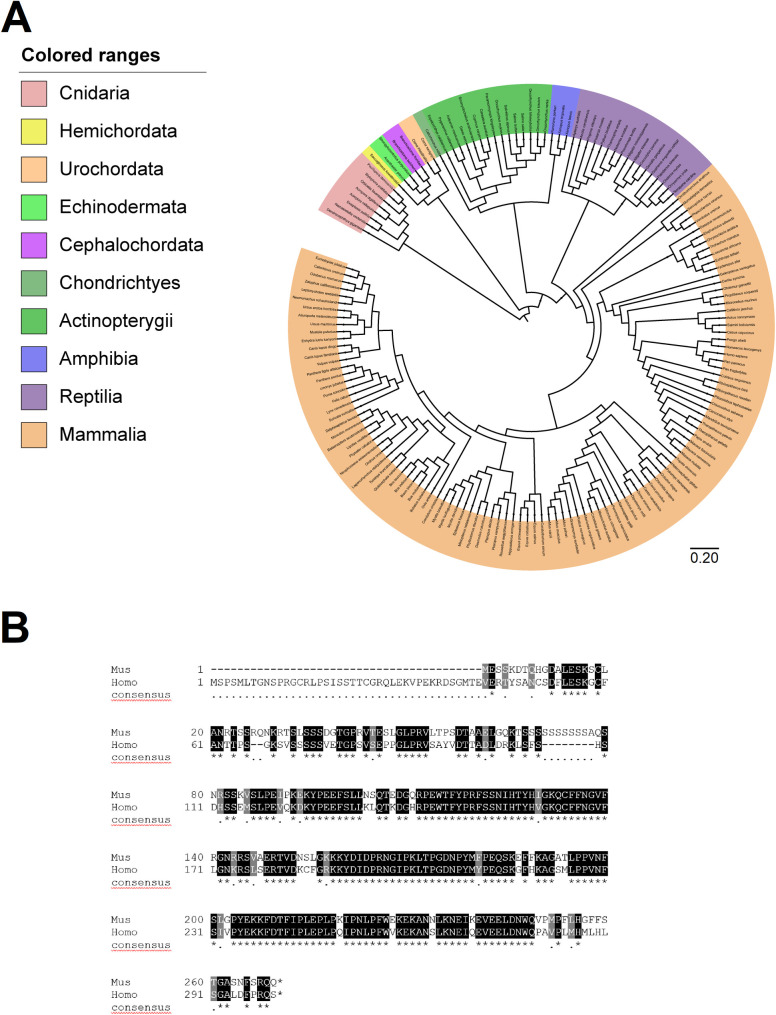
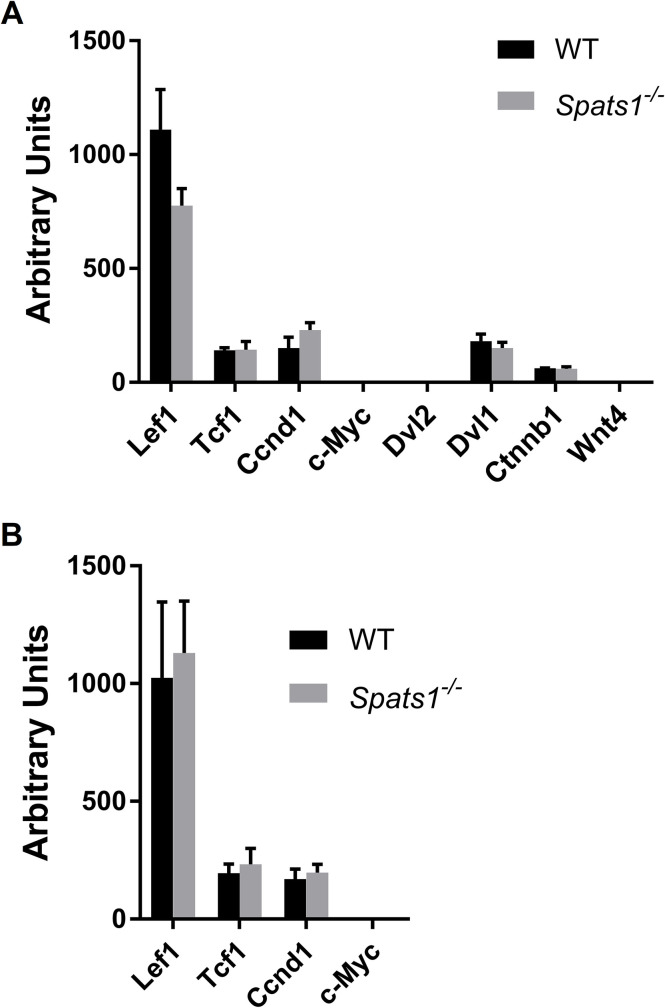
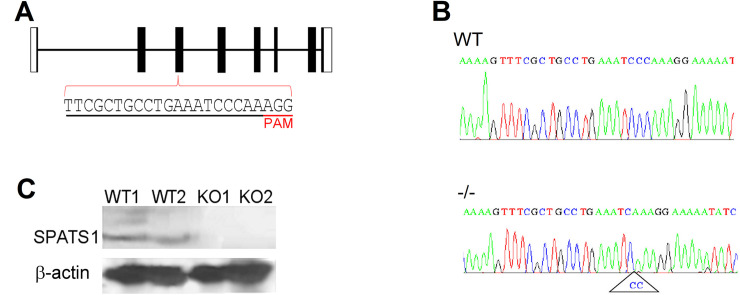
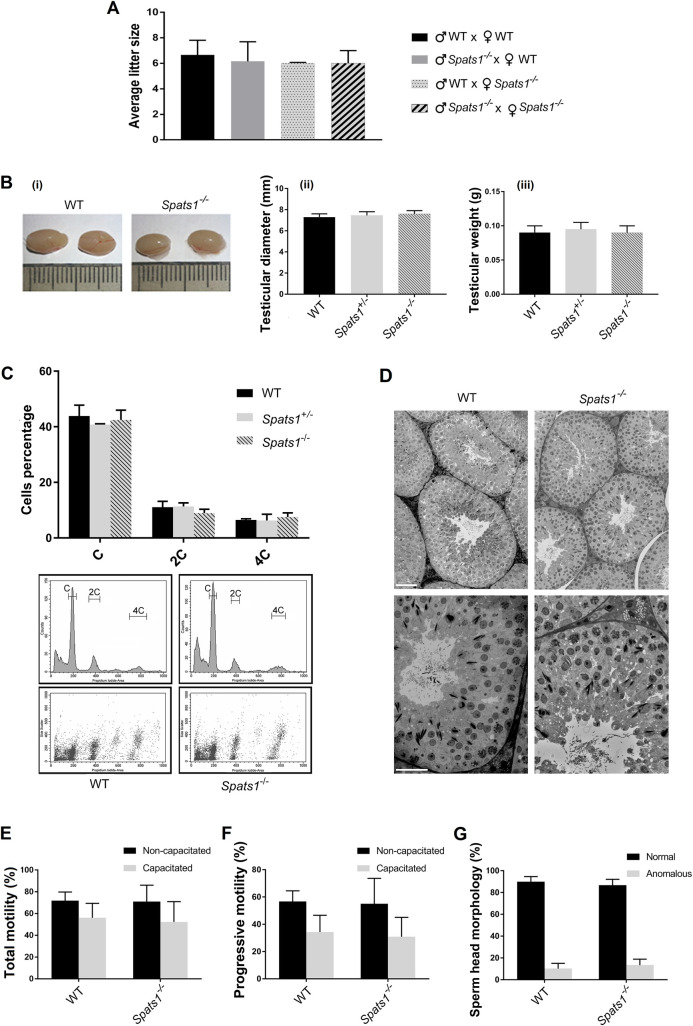
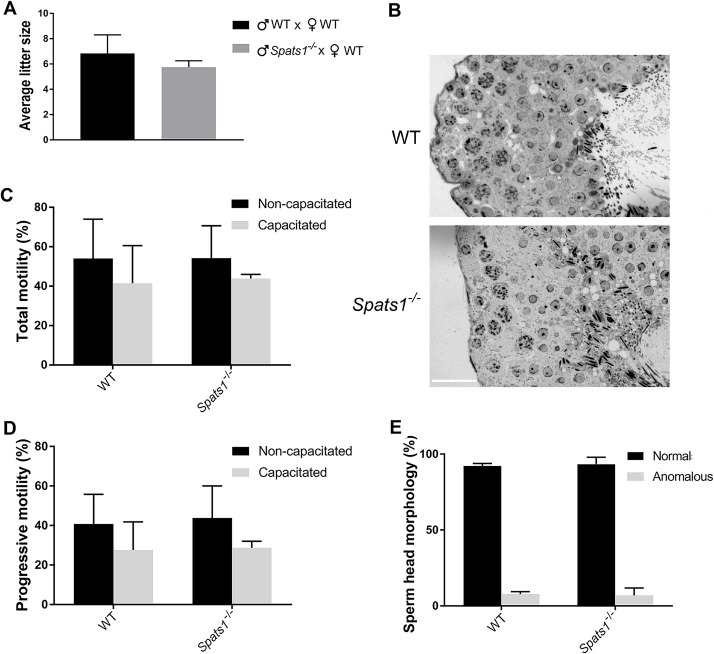
SPATS1 (spermatogenesis-associated, serine-rich 1) is an evolutionarily conserved, testis-specific protein that is differentially expressed during rat male meiotic prophase. Some reports have suggested a link between SPATS1 underexpression/mutation and human pathologies such as male infertility and testicular cancer. Given the absence of functional studies, we generated a Spats1 loss-of-function mouse model using CRISPR/Cas9 technology. The phenotypic analysis showed no overt phenotype in Spats1-/- mice, with both males and females being fertile. Flow cytometry and histological analyses did not show differences in the testicular content and histology between WT and knockout mice. Moreover, no significant differences in sperm concentration, motility, and morphology, were observed between WT and KO mice. These results were obtained both for young adults and for aged animals. Besides, although an involvement of SPATS1 in the Wnt signaling pathway has been suggested, we did not detect changes in the expression levels of typical Wnt pathway-target genes in mutant individuals. Thus, albeit Spats1 alteration might be a risk factor for male testicular health, we hereby show that this gene is not individually essential for male fertility and spermatogenesis in mouse.
SPATS1(生精相关富含丝氨酸蛋白 1)是一种进化上保守的、睾丸特异性蛋白,在大鼠雄性减数分裂前期呈差异表达。一些报告表明,SPATS1 表达不足/突变与男性不育症和睾丸癌等人类疾病之间存在关联。鉴于缺乏功能研究,我们使用 CRISPR/Cas9 技术生成了 Spats1 功能缺失型小鼠模型。表型分析显示 Spats1-/- 小鼠没有明显表型,雄性和雌性均具有生育能力。流式细胞术和组织学分析显示 WT 和敲除小鼠的睾丸内容物和组织学无差异。此外,WT 和 KO 小鼠的精子浓度、活力和形态也没有显著差异。这些结果在年轻成年动物和老年动物中均得到了验证。此外,尽管已经表明 SPATS1 参与了 Wnt 信号通路,但我们并未在突变个体中检测到典型 Wnt 通路靶基因的表达水平发生变化。因此,尽管 Spats1 改变可能是男性睾丸健康的一个风险因素,但我们在此表明,该基因对于小鼠的雄性生育力和精子发生并非不可或缺。