Kupczyk Daria, Studzińska Renata, Baumgart Szymon, Bilski Rafał, Kosmalski Tomasz, Kołodziejska Renata, Woźniak Alina
Department of Medical Biology and Biochemistry, Faculty of Medicine, Collegium Medicum in Bydgoszcz, Nicolaus Copernicus University in Toruń, Karłowicza 24, 85-092 Bydgoszcz, Poland.
Department of Organic Chemistry, Faculty of Pharmacy, Collegium Medicum in Bydgoszcz, Nicolaus Copernicus University in Toruń, Jurasza 2, 85-089 Bydgoszcz, Poland.
Molecules. 2021 Apr 29;26(9):2612. doi: 10.3390/molecules26092612.
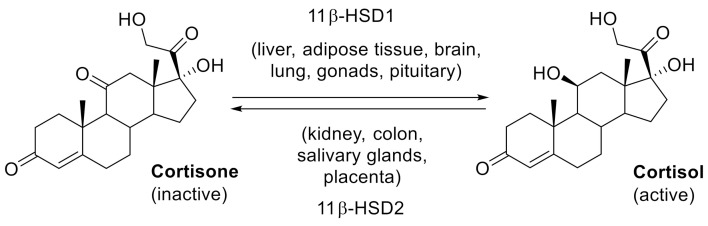
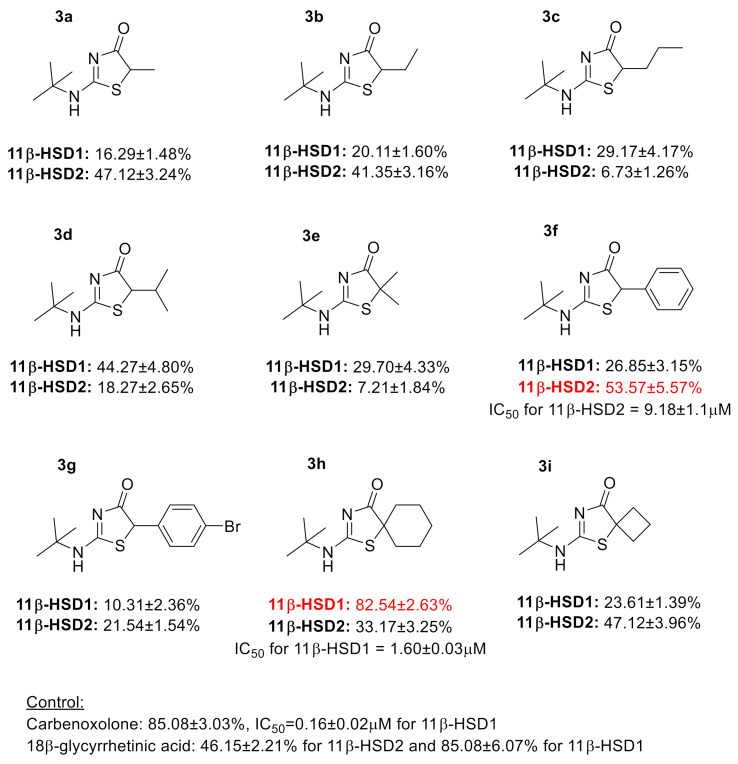
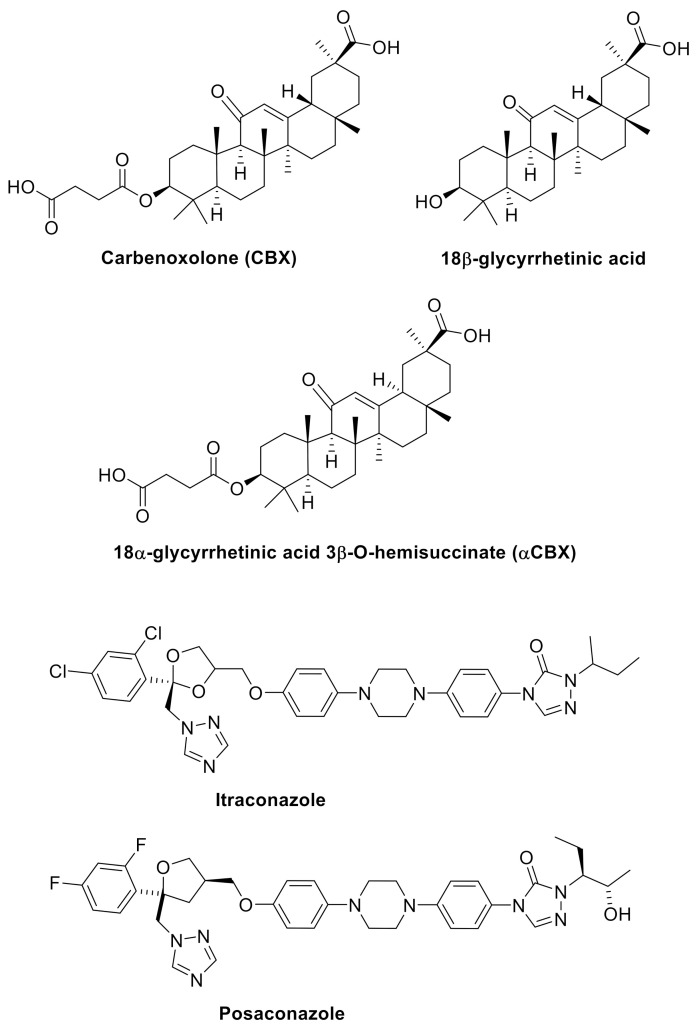
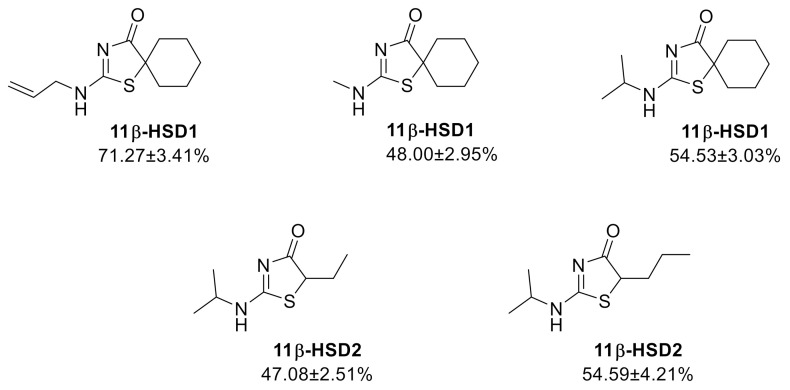
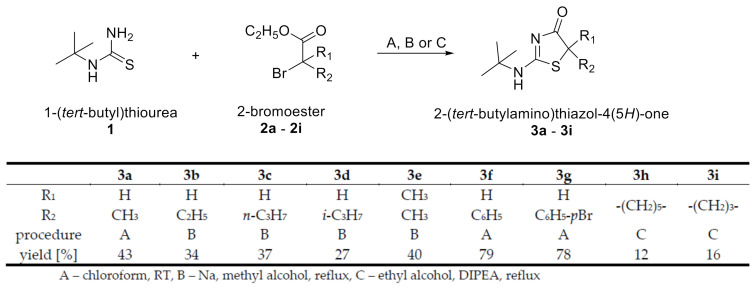
Tumors are currently more and more common all over the world; hence, attempts are being made to explain the biochemical processes underlying their development. The search for new therapeutic pathways, with particular emphasis on enzymatic activity and its modulation regulating the level of glucocorticosteroids, may contribute to the development and implementation of new therapeutic options in the treatment process. Our research focuses on understanding the role of 11β-HSD1 and 11β-HSD2 as factors involved in the differentiation and proliferation of neoplastic cells. In this work, we obtained the 9 novel --butyl substituted 2-aminothiazol-4(5)-one (pseudothiohydantoin) derivatives, differing in the substituents at C-5 of the thiazole ring. The inhibitory activity and selectivity of the obtained derivatives in relation to two isoforms of 11β-HSD were evaluated. The highest inhibitory activity for 11β-HSD1 showed compound , containing the cyclohexane substituent at the 5-position of the thiazole ring in the system (82.5% at a conc. 10 µM). On the other hand, the derivative with the phenyl substituent at C-5 showed the highest inhibition of 11β-HSD2 (53.57% at a conc. of 10 µM). A low selectivity in the inhibition of 11β-HSD2 was observed but, unlike 18β-glycyrrhetinic acid, these compounds were found to inhibit the activity of 11β-HSD2 to a greater extent than 11β-HSD1, which makes them attractive for further research on their anti-cancer activity.
目前,肿瘤在全球越来越普遍;因此,人们试图解释其发生发展背后的生化过程。寻找新的治疗途径,特别是强调酶活性及其对糖皮质激素水平的调节,可能有助于在治疗过程中开发和实施新的治疗方案。我们的研究重点是了解11β-羟基类固醇脱氢酶1(11β-HSD1)和11β-羟基类固醇脱氢酶2(11β-HSD2)作为参与肿瘤细胞分化和增殖的因素所起的作用。在这项工作中,我们获得了9种新型的丁基取代的2-氨基噻唑-4(5)-酮(假硫代乙内酰脲)衍生物,它们在噻唑环C-5位的取代基不同。评估了所得衍生物对11β-HSD两种同工型的抑制活性和选择性。对于11β-HSD1,抑制活性最高的化合物是在系统中噻唑环5位含有环己烷取代基的化合物(浓度为10μM时为82.5%)。另一方面,C-5位带有苯基取代基的衍生物对11β-HSD2的抑制作用最强(浓度为10μM时为53.57%)。观察到对11β-HSD2的抑制选择性较低,但与18β-甘草次酸不同的是,这些化合物对11β-HSD2活性的抑制程度大于对11β-HSD1的抑制程度,这使得它们在抗癌活性方面具有进一步研究的吸引力。