Department of Head and Neck Surgery, The University of Texas MD Anderson Cancer Center, Houston, Texas.
Department of Laboratory Medicine, The University of Texas MD Anderson Cancer Center, Houston, Texas.
Mol Cancer Ther. 2021 Jul;20(7):1257-1269. doi: 10.1158/1535-7163.MCT-20-0252. Epub 2021 May 4.
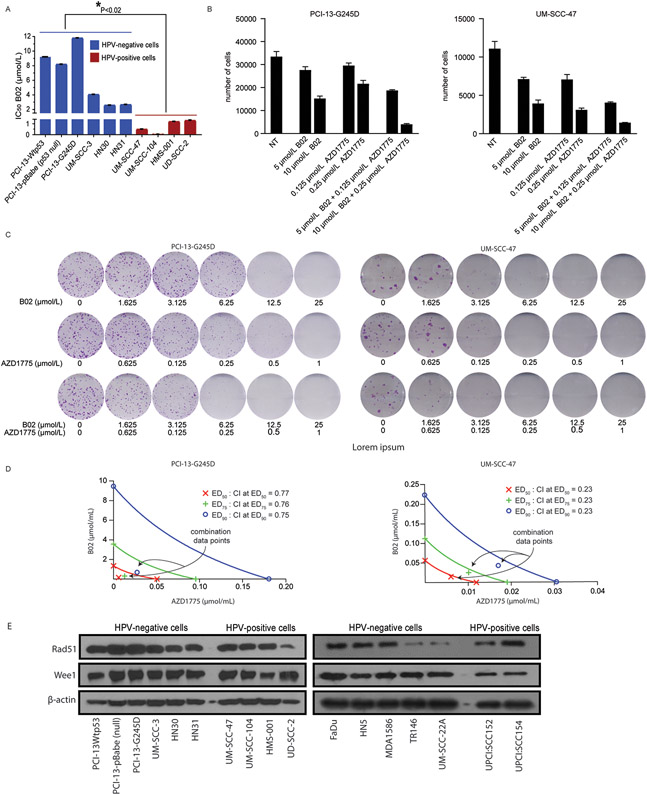
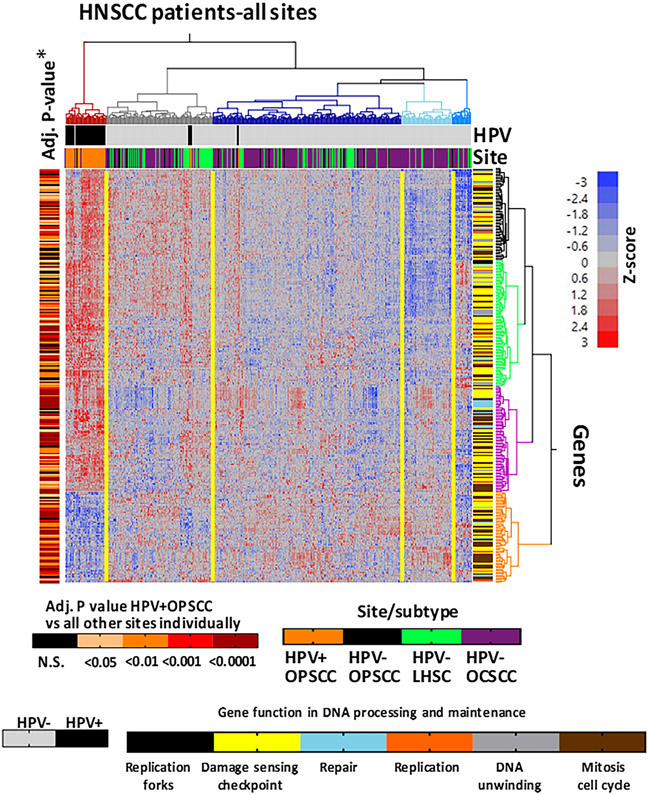
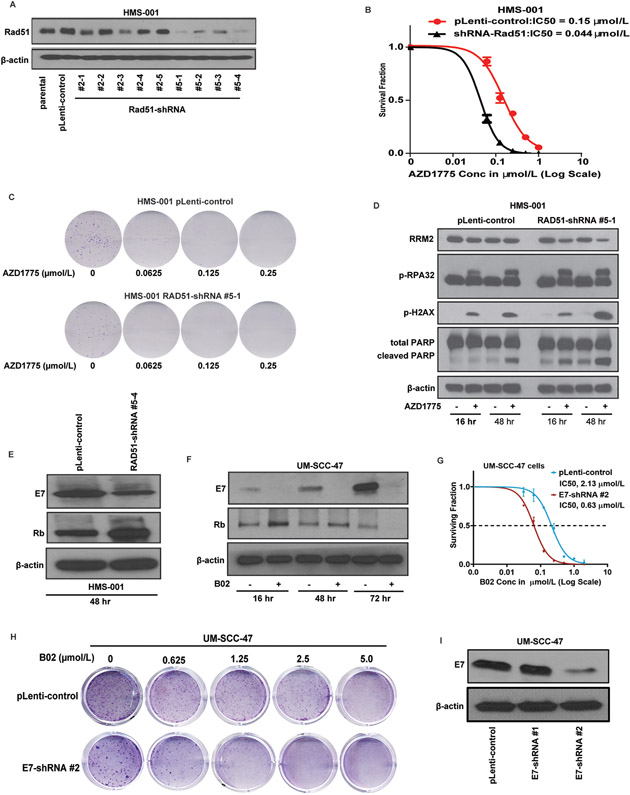
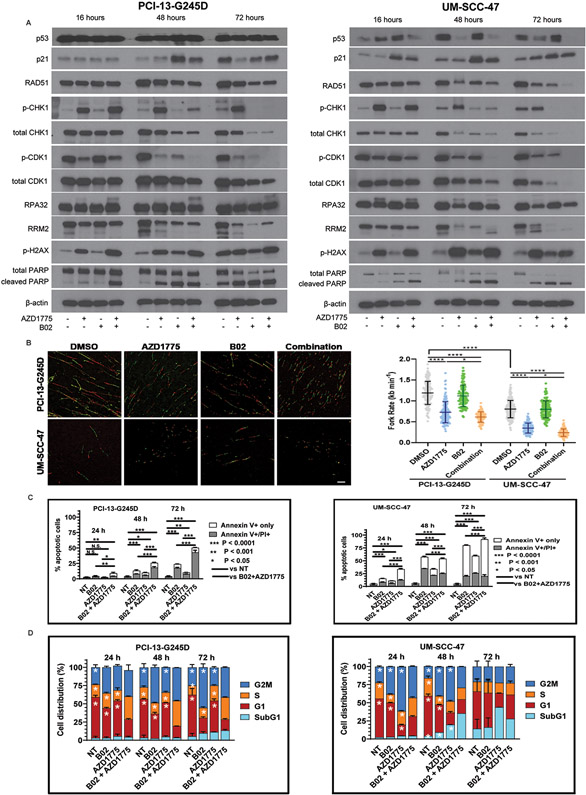
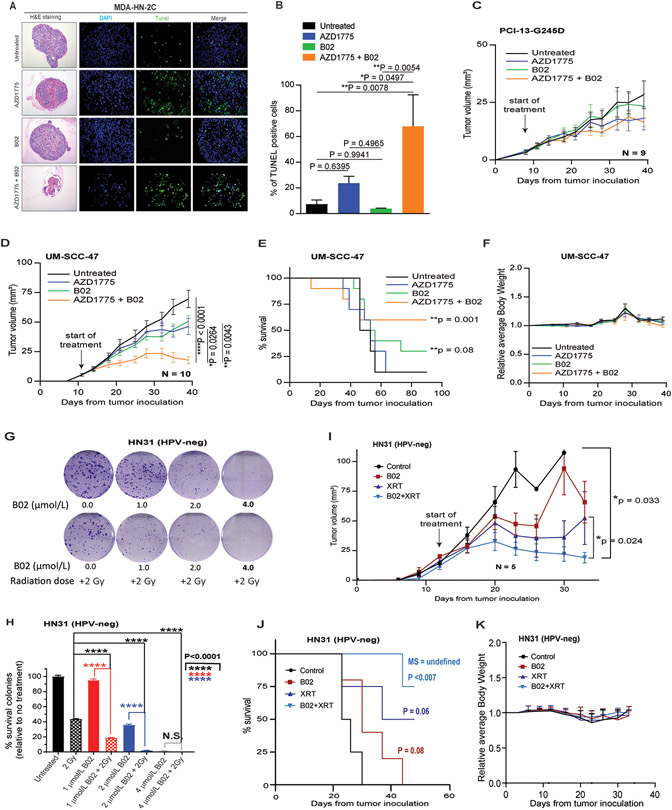
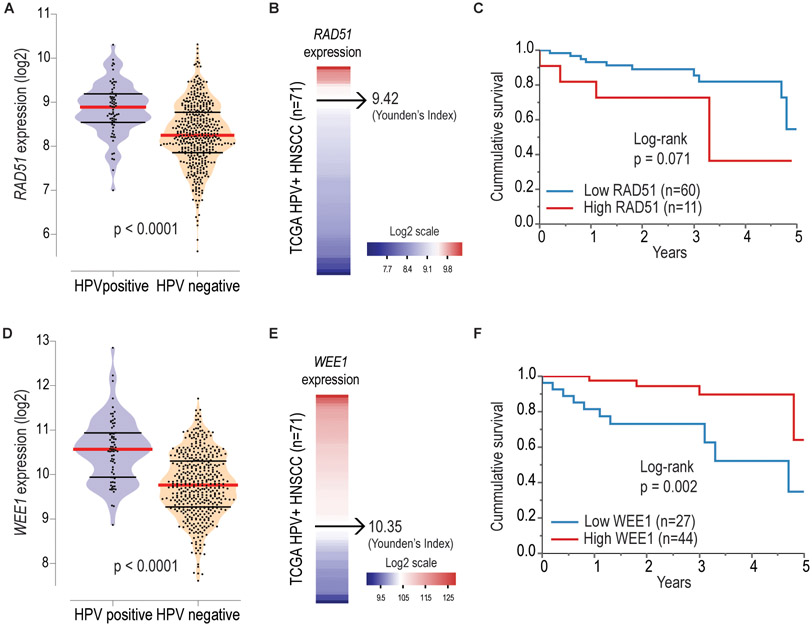
Despite advances in surgery, chemotherapy, and radiation, there are limited treatment options for advanced head and neck squamous cell carcinoma (HNSCC) and survival remains very poor. Therefore, effective therapies are desperately needed. Recently, selective exploitation of DNA damage and replication stress responses has become a novel approach for cancer treatment. Wee1 kinase and Rad51 recombinase are two proteins involved in regulating replication stress and homologous recombination repair in cancer cells. In this study, we investigated the combined effect of Rad51 inhibitor (B02) and Wee1 inhibitor (AZD1775) and in various HNSCC cell lines. Clonogenic survival assays demonstrated that B02 synergized with AZD1775 in all HNSCC cell lines tested. The synergy between these drugs was associated with forced CDK1 activation and reduced Chk1 phosphorylation leading to induction of excessive DNA damage and replication stress, culminating in aberrant mitosis and apoptosis. Our results showed that elevated Rad51 mRNA expression correlated with worse survival in HNSCC patients with HPV-positive tumors. The combination of B02 and AZD1775 significantly inhibited tumor growth in mice bearing HPV-positive HNSCC tumors as compared to HPV-negative HNSCC. This differential sensitivity appears to be linked to HPV-positive tumors having more endogenous replication stress owing to transformation by E6 and E7 oncogenes. Furthermore, addition of B02 radiosensitized the HPV-negative HNSCC tumors and In conclusion, our data implicate that a novel rational combination with Rad51 and Wee1 inhibitors holds promise as synthetic lethal therapy, particularly in high-risk HPV-positive HNSCC.
尽管手术、化疗和放疗取得了进展,但晚期头颈部鳞状细胞癌(HNSCC)的治疗选择仍然有限,生存状况仍然很差。因此,迫切需要有效的治疗方法。最近,选择性利用 DNA 损伤和复制应激反应已成为癌症治疗的一种新方法。Wee1 激酶和 Rad51 重组酶是两种参与调节癌细胞中复制应激和同源重组修复的蛋白质。在这项研究中,我们研究了 Rad51 抑制剂(B02)和 Wee1 抑制剂(AZD1775)联合应用于各种 HNSCC 细胞系的效果。集落形成实验表明,B02 与 AZD1775 在所有测试的 HNSCC 细胞系中均具有协同作用。这些药物之间的协同作用与 CDK1 的强制激活和 Chk1 磷酸化的减少有关,导致过度的 DNA 损伤和复制应激,最终导致异常有丝分裂和细胞凋亡。我们的研究结果表明,HPV 阳性肿瘤患者中 Rad51mRNA 表达水平升高与生存状况较差相关。与 HPV 阴性 HNSCC 相比,B02 和 AZD1775 的联合应用显著抑制了携带 HPV 阳性 HNSCC 肿瘤的小鼠的肿瘤生长。这种差异敏感性似乎与 HPV 阳性肿瘤由于 E6 和 E7 致癌基因的转化而具有更多的内源性复制应激有关。此外,B02 的添加还增强了 HPV 阴性 HNSCC 肿瘤的放射敏感性。综上所述,我们的数据表明,Rad51 和 Wee1 抑制剂的联合应用具有作为合成致死疗法的潜力,特别是在高危 HPV 阳性 HNSCC 中。