Department of Anesthesiology, Centre for Anesthesiology and Intensive Care Medicine, University Medical Center Hamburg-Eppendorf, Martinistr. 52, 20246, Hamburg, Germany.
Department of Medical Biometry and Epidemiology, University Medical Center Hamburg-Eppendorf, Hamburg, Germany.
J Anesth. 2021 Aug;35(4):488-494. doi: 10.1007/s00540-021-02937-5. Epub 2021 May 5.
Dynamic indicators of preload currently only do reflect preload requirements of the left ventricle. To date, no dynamic indicators of right ventricular preload have been established. The aim of this study was to calculate dynamic indicators of right ventricular preload and assess their ability to predict ventricular volume responsiveness.
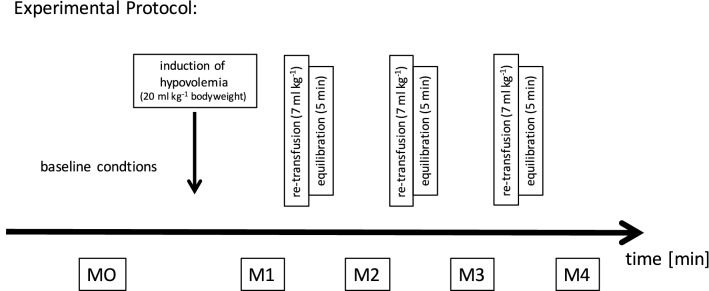
The study was designed as experimental trial in 20 anaesthetized pigs. Micro-tip catheters and ultrasonic flow probes were used as experimental reference to enable measurement of right ventricular stroke volume and pulse pressure. Hypovolemia was induced (withdrawal of blood 20 ml/kg) and thereafter three volume-loading steps were performed. ROC analysis was performed to assess the ability of dynamic right ventricular parameters to predict volume response.
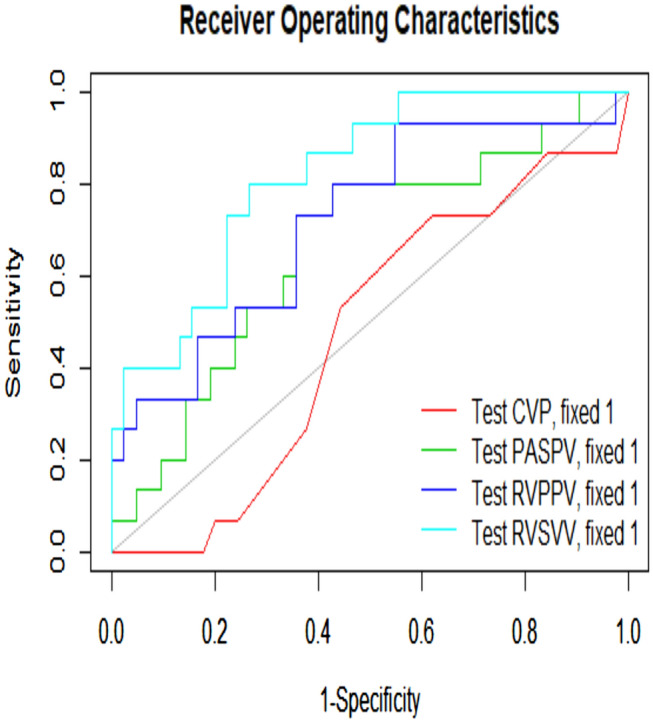
ROC analysis revealed an area under the curve (AUC) of 0.82 (CI 95% 0.73-0.89; p < 0.001) for right ventricular stroke volume variation (SVV), an AUC of 0.72 (CI 95% 0.53-0.85; p = 0.02) for pulmonary artery pulse pressure variation (PPV) and an AUC of 0.66 (CI 95% 0.51-0.79; p = 0.04) for pulmonary artery systolic pressure variation (SPV).
In our experimental animal setting, calculating dynamic indicators of right ventricular preload is possible and appears promising in predicting volume responsiveness.
目前,动态的前负荷指标仅能反映左心室的前负荷需求。迄今为止,尚未建立右心室前负荷的动态指标。本研究旨在计算右心室前负荷的动态指标,并评估其预测心室容量反应性的能力。
该研究设计为 20 头麻醉猪的实验性试验。微导管和超声流量探头被用作实验参考,以实现右心室每搏量和脉搏压的测量。进行了低血容量诱导(采血 20ml/kg),然后进行了三个容量加载步骤。进行 ROC 分析以评估动态右心室参数预测容量反应的能力。
ROC 分析显示右心室每搏量变化(SVV)的曲线下面积(AUC)为 0.82(95%CI 0.73-0.89;p<0.001),肺动脉脉搏压变化(PPV)的 AUC 为 0.72(95%CI 0.53-0.85;p=0.02),肺动脉收缩压变化(SPV)的 AUC 为 0.66(95%CI 0.51-0.79;p=0.04)。
在我们的实验动物模型中,计算右心室前负荷的动态指标是可行的,并且在预测容量反应性方面具有很大的潜力。