Department of Immunology, Tufts University School of Medicine, Boston, MA, USA.
Department of Microbiology and Immunology, Geisel School of Medicine at Dartmouth, Lebanon, NH, USA.
Aging Cell. 2021 May;20(5):e13361. doi: 10.1111/acel.13361. Epub 2021 May 5.
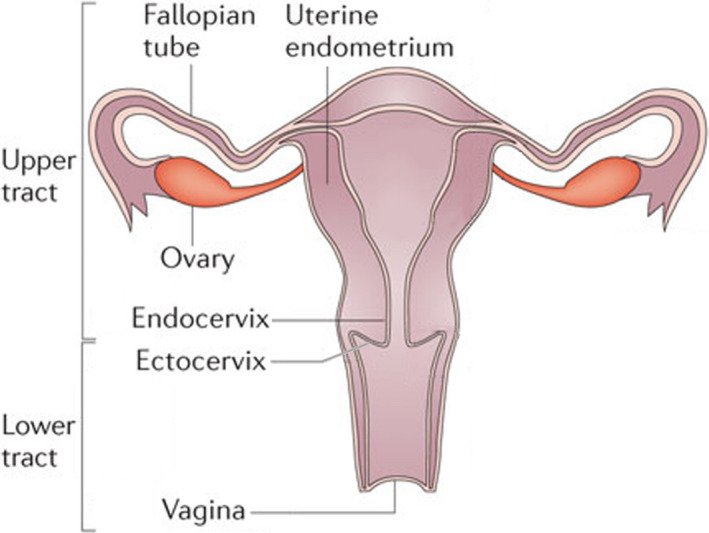
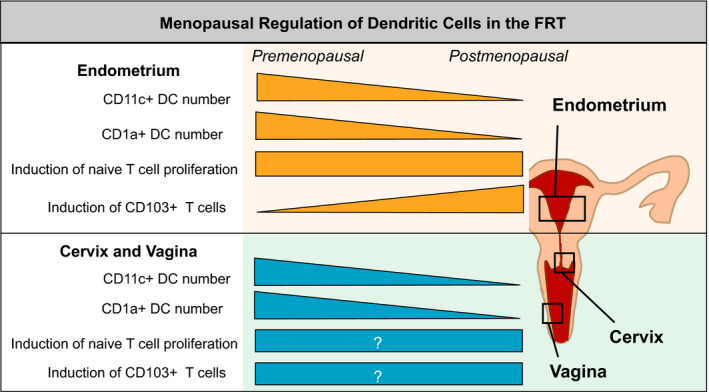
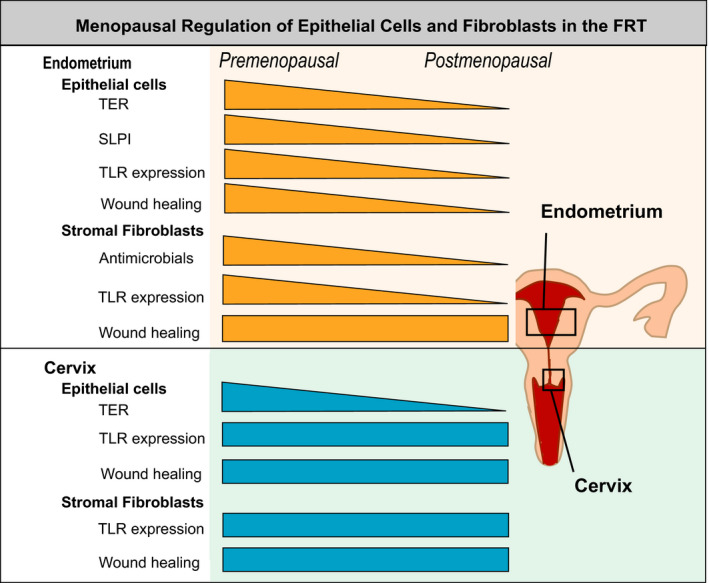
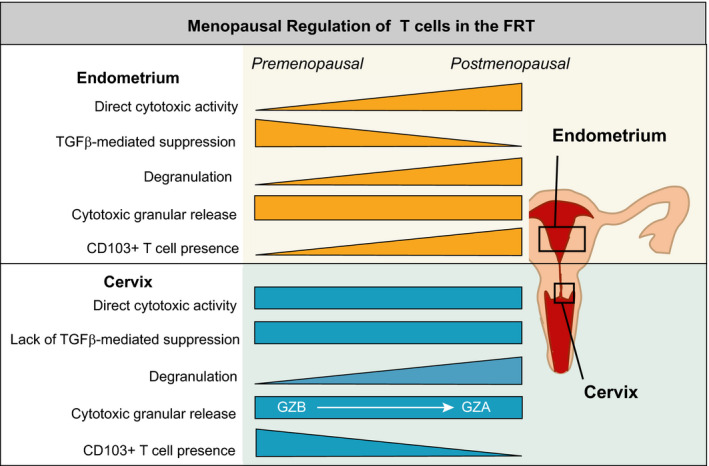
Mucosal tissues in the human female reproductive tract (FRT) are primary sites for both gynecological cancers and infections by a spectrum of sexually transmitted pathogens, including human immunodeficiency virus (HIV), that compromise women's health. While the regulation of innate and adaptive immune protection in the FRT by hormonal cyclic changes across the menstrual cycle and pregnancy are being intensely studied, little to nothing is known about the alterations in mucosal immune protection that occur throughout the FRT as women age following menopause. The immune system in the FRT has two key functions: defense against pathogens and reproduction. After menopause, natural reproductive function ends, and therefore, two overlapping processes contribute to alterations in immune protection in aging women: menopause and immunosenescence. The goal of this review is to summarize the multiple immune changes that occur in the FRT with aging, including the impact on the function of epithelial cells, immune cells, and stromal fibroblasts. These studies indicate that major aspects of innate and adaptive immunity in the FRT are compromised in a site-specific manner in the FRT as women age. Further, at some FRT sites, immunological compensation occurs. Overall, alterations in mucosal immune protection contribute to the increased risk of sexually transmitted infections (STI), urogenital infections, and gynecological cancers. Further studies are essential to provide a foundation for the development of novel therapeutic interventions to restore immune protection and reverse conditions that threaten women's lives as they age.
女性生殖道(FRT)的黏膜组织是妇科癌症和一系列性传播病原体(包括人类免疫缺陷病毒(HIV))感染的主要部位,这些病原体损害了女性的健康。尽管人们正在深入研究激素周期性变化在月经周期和妊娠过程中对 FRT 固有和适应性免疫保护的调节,但对于绝经后女性随着年龄增长生殖道黏膜免疫保护的改变却知之甚少。FRT 中的免疫系统有两个关键功能:抵御病原体和生殖。绝经后,自然生殖功能结束,因此,两个重叠的过程导致衰老女性免疫保护的改变:绝经和免疫衰老。本综述的目的是总结 FRT 随年龄增长而发生的多种免疫变化,包括对上皮细胞、免疫细胞和基质成纤维细胞功能的影响。这些研究表明,FRT 中固有和适应性免疫的主要方面以特定于部位的方式在 FRT 中受到损害。此外,在某些 FRT 部位,免疫发生了代偿。总之,黏膜免疫保护的改变增加了性传播感染(STI)、泌尿生殖道感染和妇科癌症的风险。进一步的研究对于为开发新型治疗干预措施提供基础至关重要,这些干预措施可以恢复免疫保护并逆转随着年龄增长威胁女性生命的状况。