Department of Psychology, University of California, Los Angeles, Los Angeles, United States.
Department of Electrical and Computer Engineering, University of California, Los Angeles, Los Angeles, United States.
Elife. 2021 May 6;10:e64934. doi: 10.7554/eLife.64934.
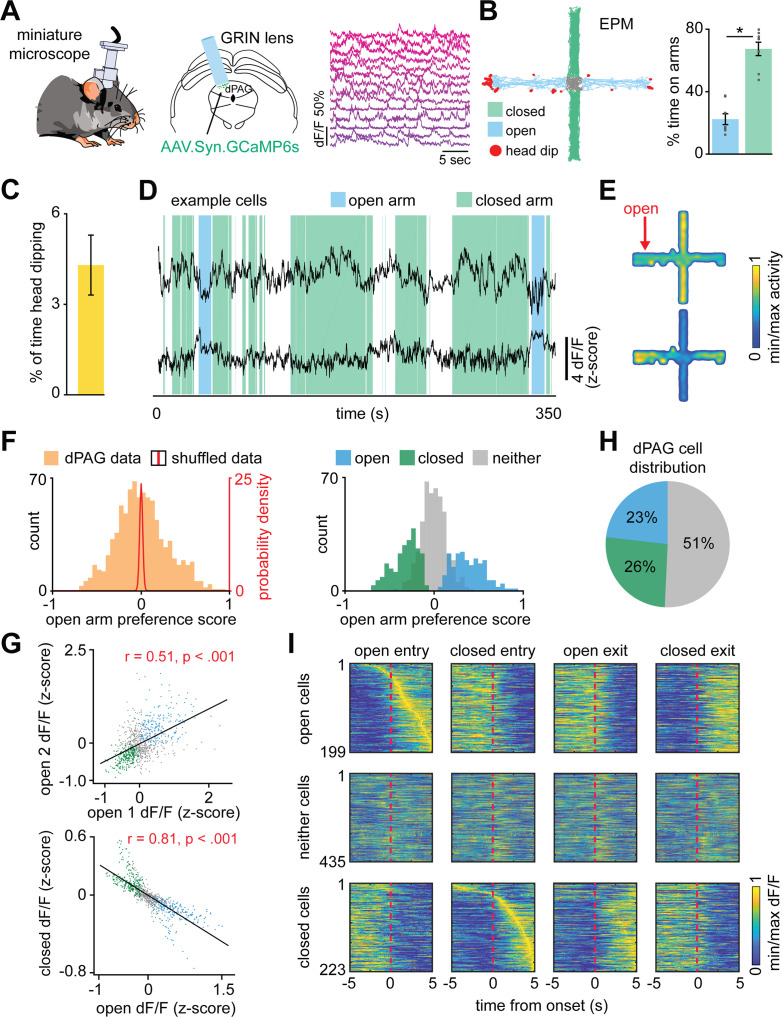
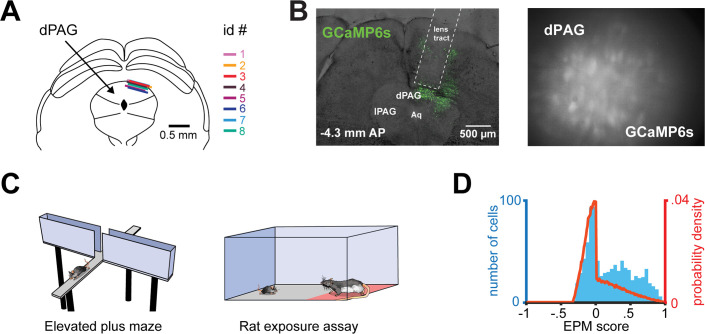
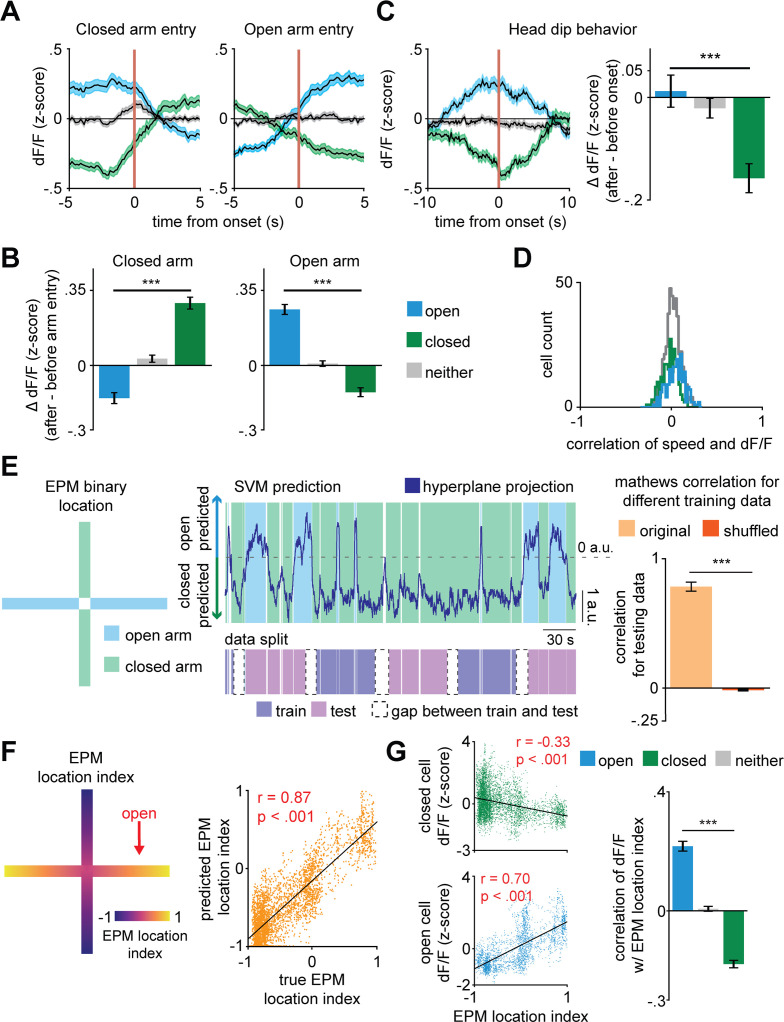
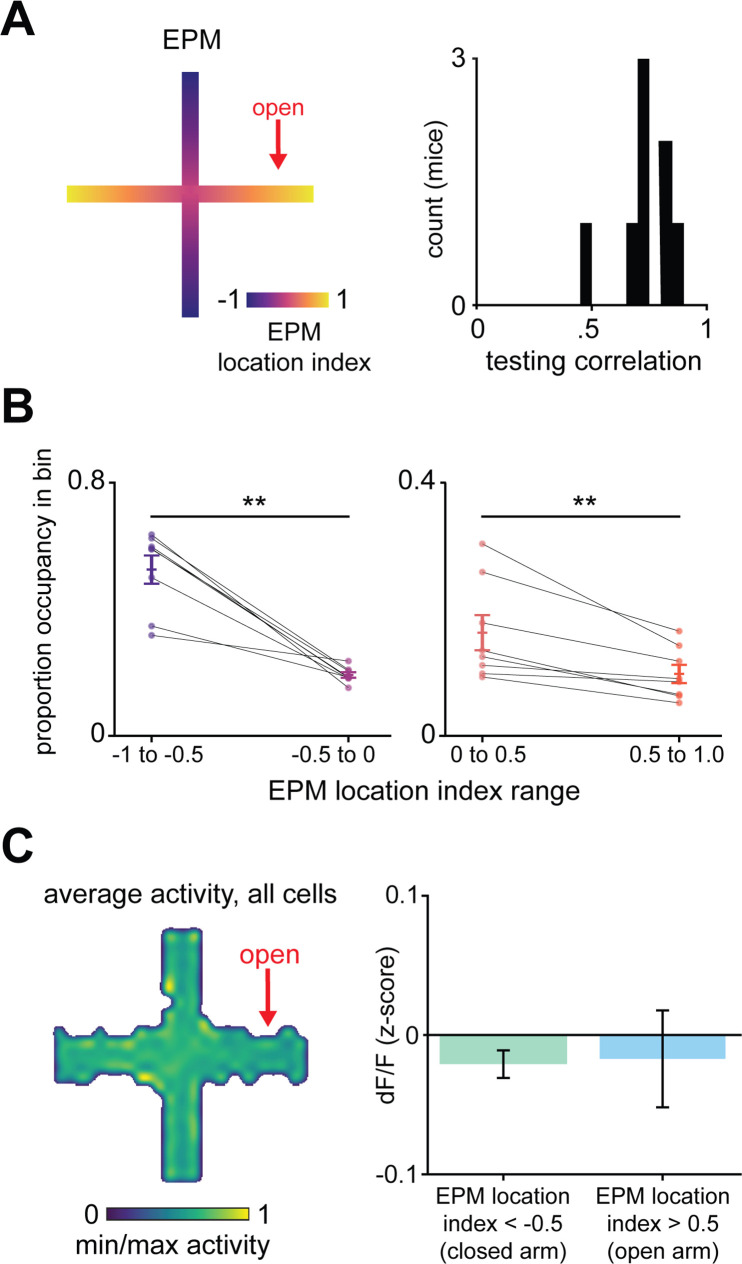
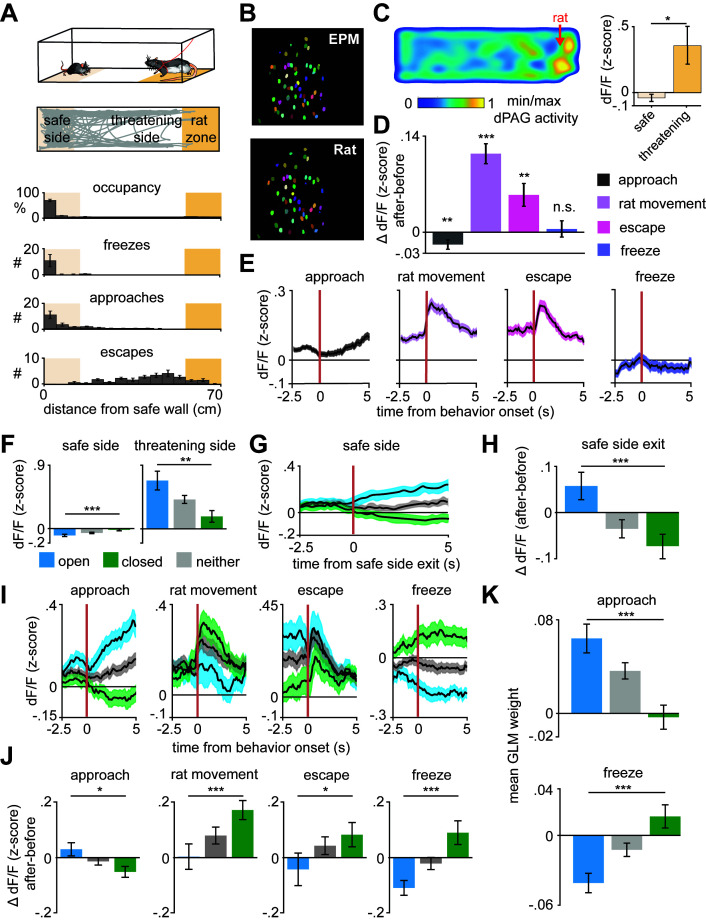
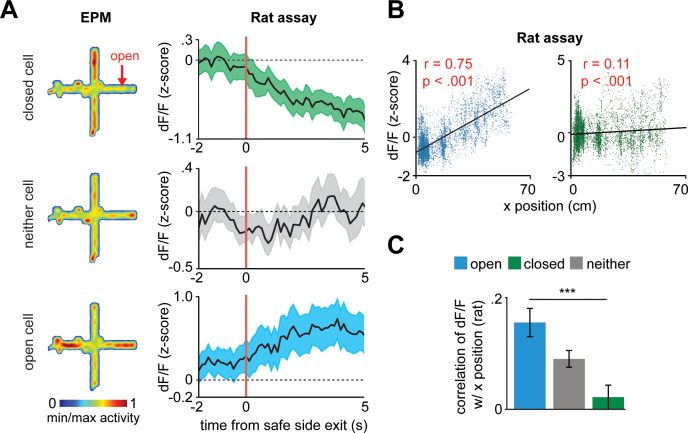
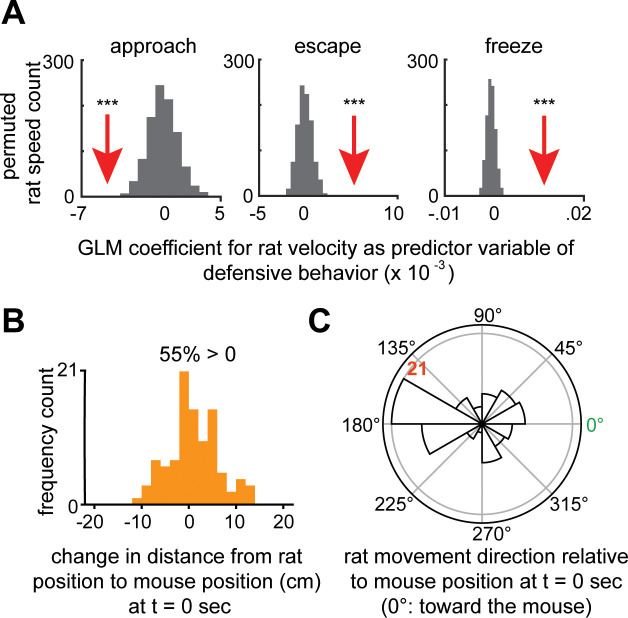
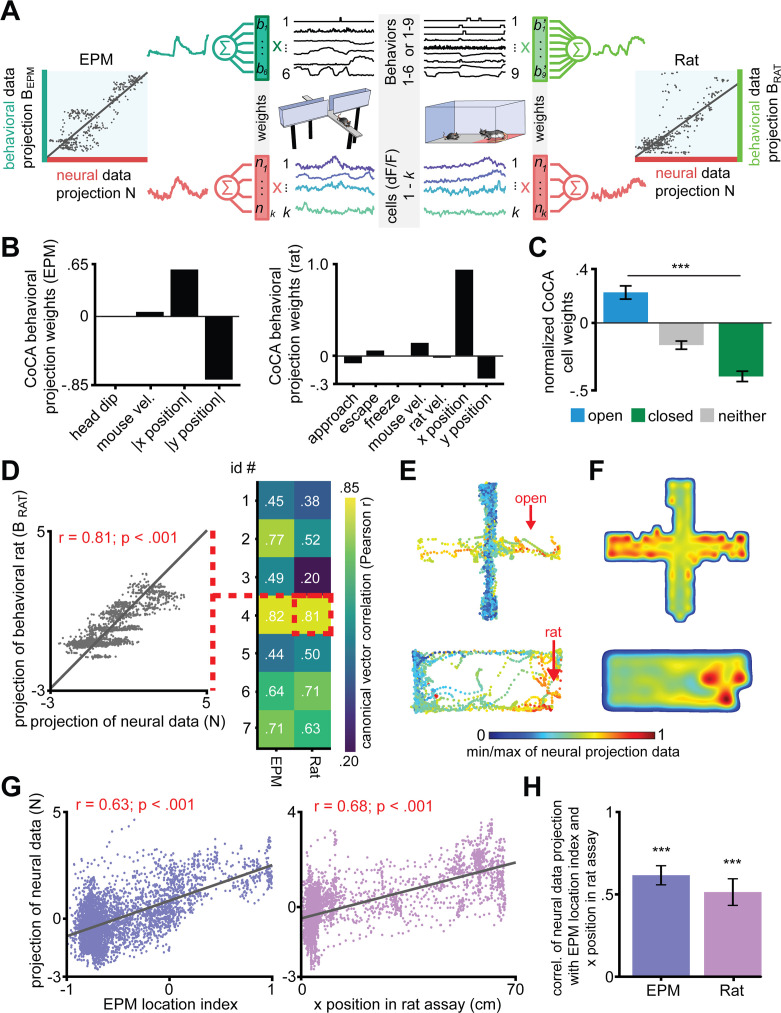
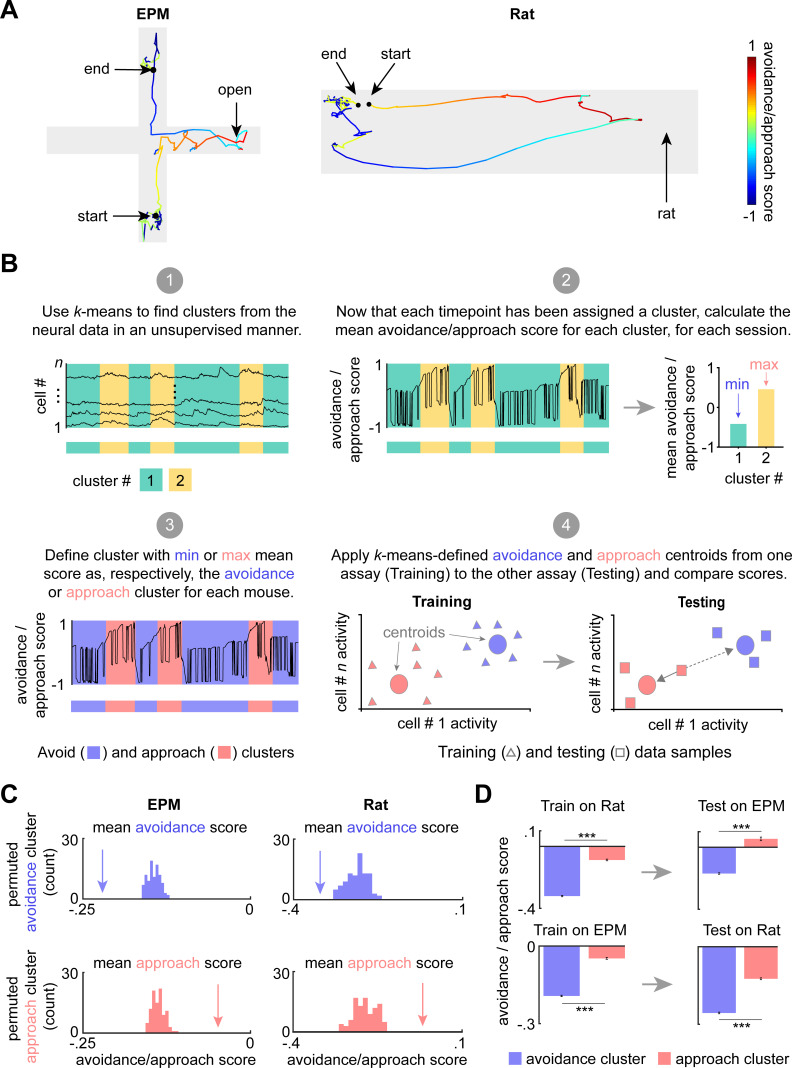
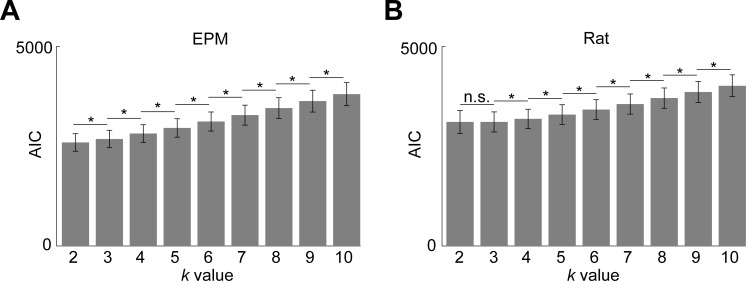
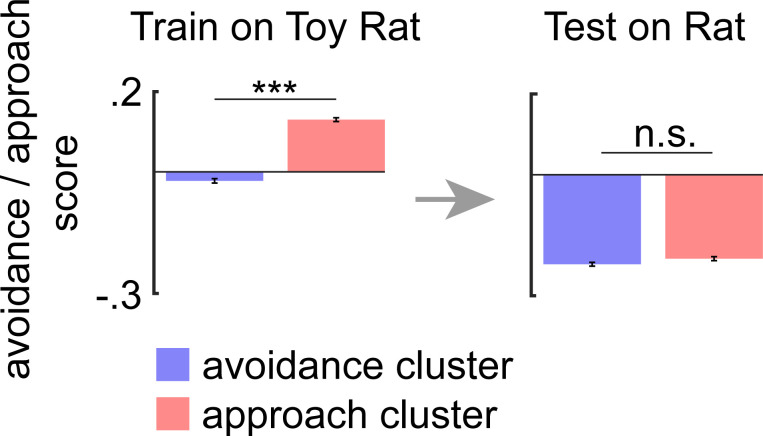
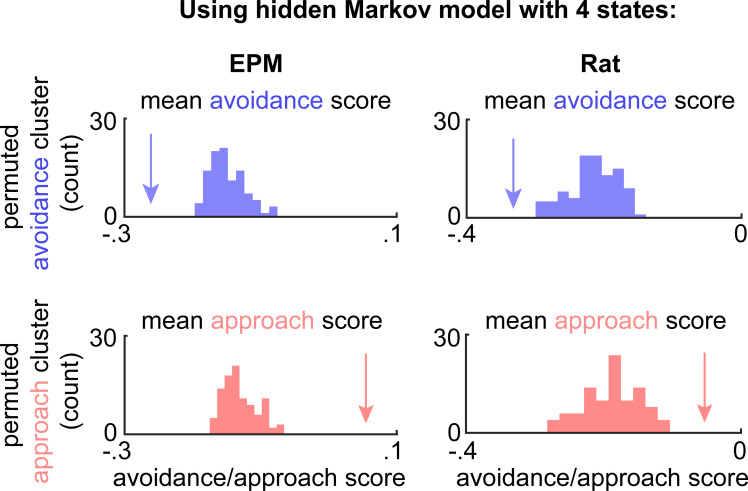
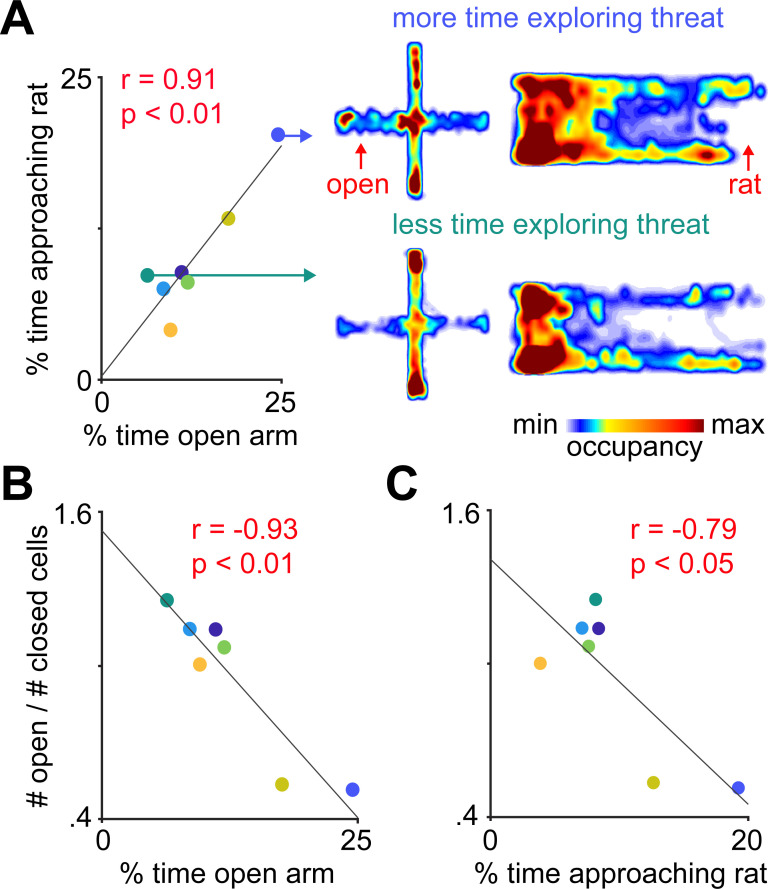
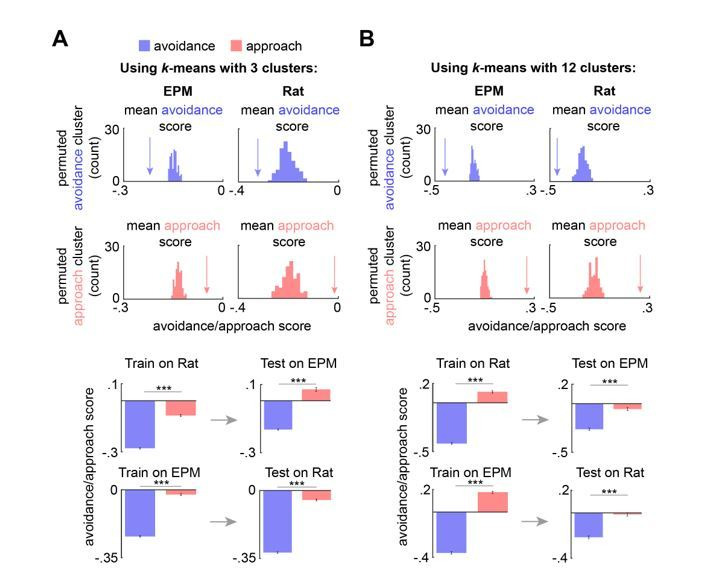
Animals must balance needs to approach threats for risk assessment and to avoid danger. The dorsal periaqueductal gray (dPAG) controls defensive behaviors, but it is unknown how it represents states associated with threat approach and avoidance. We identified a dPAG threatavoidance ensemble in mice that showed higher activity farther from threats such as the open arms of the elevated plus maze and a predator. These cells were also more active during threat avoidance behaviors such as escape and freezing, even though these behaviors have antagonistic motor output. Conversely, the threat approach ensemble was more active during risk assessment behaviors and near threats. Furthermore, unsupervised methods showed that avoidance/approach states were encoded with shared activity patterns across threats. Lastly, the relative number of cells in each ensemble predicted threat avoidance across mice. Thus, dPAG ensembles dynamically encode threat approach and avoidance states, providing a flexible mechanism to balance risk assessment and danger avoidance.
动物必须平衡接近威胁以进行风险评估和避免危险的需求。背侧periaqueductal 灰色(dPAG)控制防御行为,但尚不清楚它如何表示与威胁接近和回避相关的状态。我们在小鼠中确定了一个 dPAG 威胁回避单元,该单元在远离威胁(如高架十字迷宫和捕食者的开放臂)时表现出更高的活动。这些细胞在威胁回避行为(如逃避和冻结)期间也更加活跃,尽管这些行为具有拮抗的运动输出。相反,威胁接近单元在风险评估行为和接近威胁时更加活跃。此外,无监督方法表明,回避/接近状态是通过跨威胁的共享活动模式进行编码的。最后,每个单元中的细胞数量相对预测了小鼠之间的威胁回避。因此,dPAG 单元动态地编码威胁接近和回避状态,为平衡风险评估和危险回避提供了一种灵活的机制。