Health Management and Informatics, School of Medicine, University of Missouri, Columbia, MO, United States of America.
Division of Medical Informatics, Department of Internal Medicine, University of Kansas Medical Center, Kansas City, KS, United States of America.
PLoS One. 2021 May 6;16(5):e0250923. doi: 10.1371/journal.pone.0250923. eCollection 2021.
To understand what clinical presenting features of sepsis patients are historically associated with rapid treatment involving antibiotics and fluids, as appropriate.
This was a retrospective, observational cohort study using a machine-learning model with an embedded feature selection mechanism (gradient boosting machine).
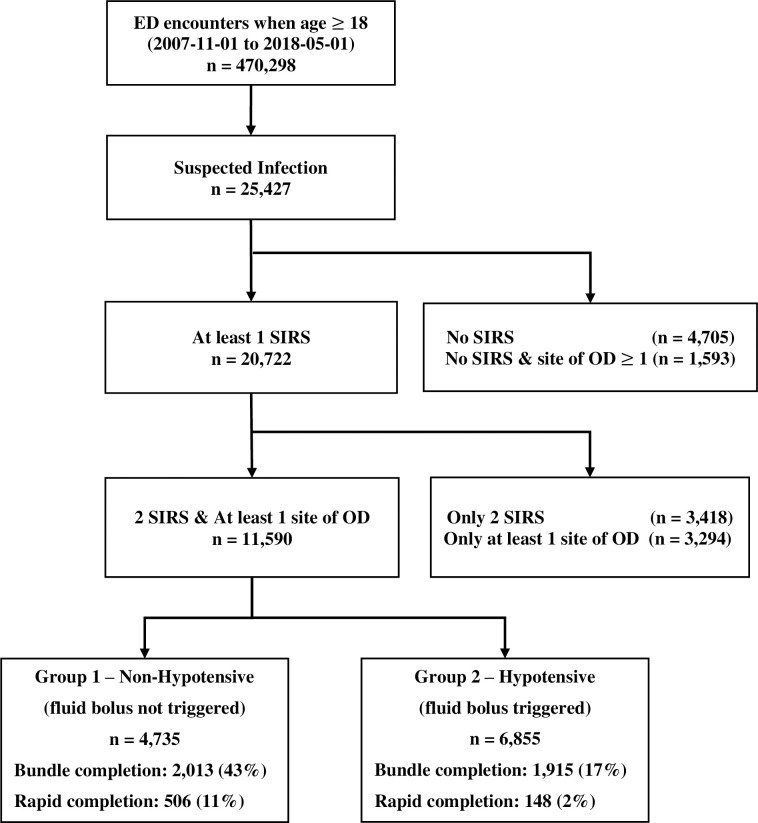
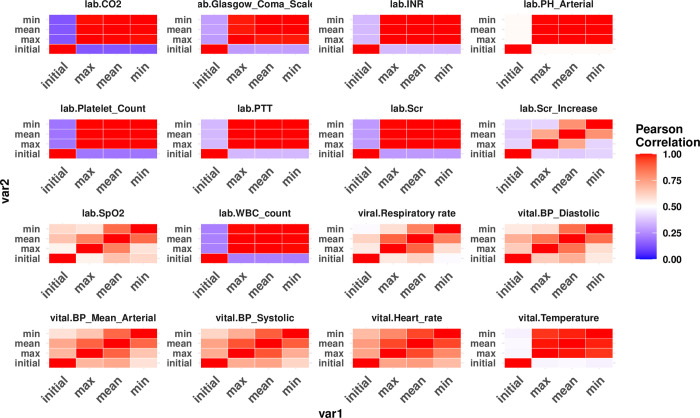
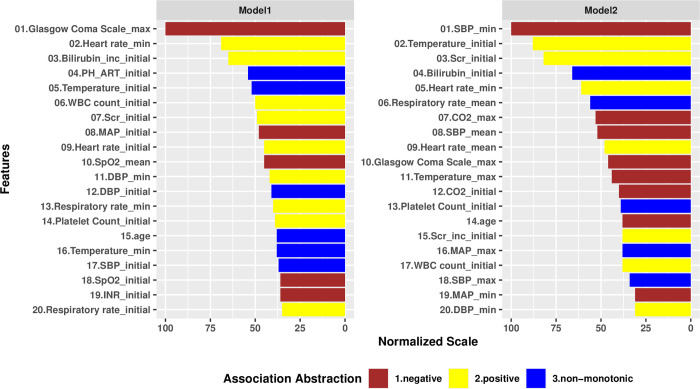
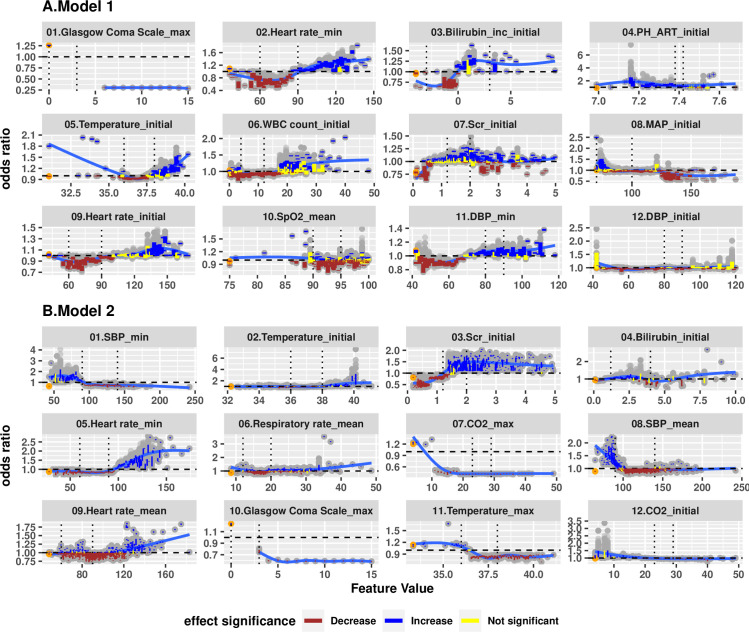
For adult patients (age ≥ 18 years) who were admitted through Emergency Department (ED) meeting clinical criteria of severe sepsis from 11/2007 to 05/2018 at an urban tertiary academic medical center, we developed gradient boosting models (GBMs) using a total of 760 original and derived variables, including demographic variables, laboratory values, vital signs, infection diagnosis present on admission, and historical comorbidities. We identified the most impactful factors having strong association with rapid treatment, and further applied the Shapley Additive exPlanation (SHAP) values to examine the marginal effects for each factor.
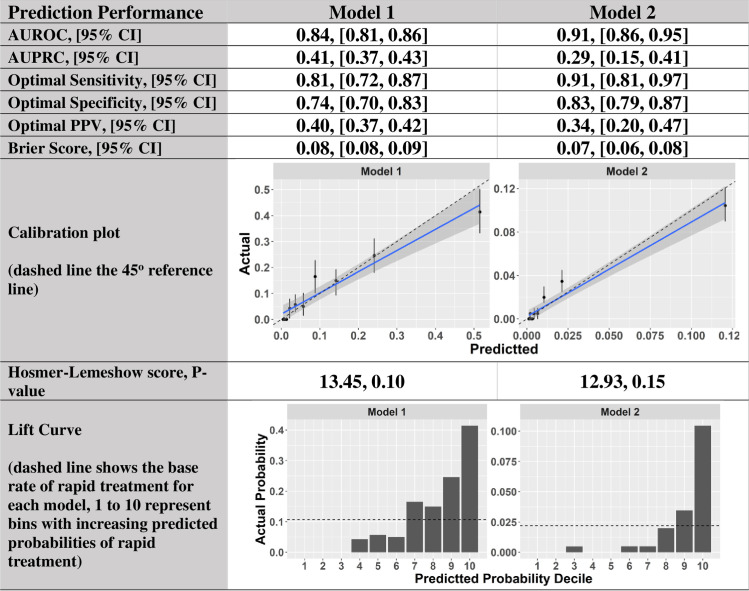
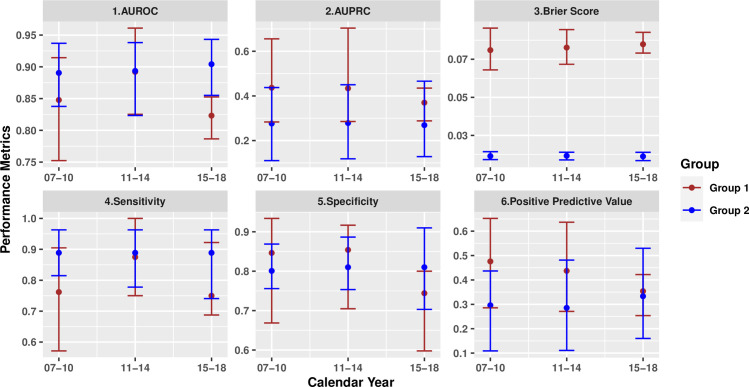
For the subgroups with or without fluid bolus treatment component, the models achieved high accuracy of area-under-receiver-operating-curve of 0.91 [95% CI, 0.86-0.95] and 0.84 [95% CI, 0.81-0.86], and sensitivity of 0.81[95% CI, 0.72-0.87] and 0.91 [95% CI, 0.81-0.97], respectively. We identified the 20 most impactful factors associated with rapid treatment for each subgroup. In the non-hypotensive subgroup, initial physiological values were the most impactful to the model, while in the fluid bolus subgroup, value minima and maxima tended to be the most impactful.
These machine learning methods identified factors associated with rapid treatment of severe sepsis patients from a large volume of high-dimensional clinical data. The results provide insight into differences in the rapid provision of treatment among patients with sepsis.
了解历史上哪些脓毒症患者的临床特征与快速给予抗生素和液体等治疗有关。
这是一项回顾性观察队列研究,采用具有嵌入式特征选择机制(梯度提升机)的机器学习模型。
对 2007 年 11 月至 2018 年 5 月期间在城市三级学术医疗中心通过急诊(ED)就诊且符合严重脓毒症临床标准的成年患者(年龄≥18 岁),我们使用总共 760 个原始和派生变量(包括人口统计学变量、实验室值、生命体征、入院时的感染诊断和既往合并症)建立了梯度提升模型(GBM)。我们确定了与快速治疗有强关联的最具影响力的因素,并进一步应用 Shapley Additive exPlanation(SHAP)值来检查每个因素的边际效应。
对于有或没有液体冲击治疗的亚组,模型的曲线下面积(AUC)的准确性高达 0.91[95%CI,0.86-0.95]和 0.84[95%CI,0.81-0.86],灵敏度为 0.81[95%CI,0.72-0.87]和 0.91[95%CI,0.81-0.97]。我们确定了每个亚组中与快速治疗相关的 20 个最具影响力的因素。在非低血压亚组中,初始生理值对模型的影响最大,而在液体冲击亚组中,值的最小值和最大值往往是最具影响力的。
这些机器学习方法从大量高维临床数据中确定了与严重脓毒症患者快速治疗相关的因素。结果为脓毒症患者快速治疗的差异提供了深入了解。