Department of Pathology, Medical Metagenomics Laboratory, Texas Children's Microbiome Center, Texas Children's Hospital, Houston, Texas, United States of America.
Department of Pathology and Immunology, Baylor College of Medicine, Houston, Texas, United States of America.
PLoS One. 2021 May 6;16(5):e0251231. doi: 10.1371/journal.pone.0251231. eCollection 2021.
Gastrointestinal problems affect the health and quality of life of individuals with Rett syndrome (RTT) and pose a medical hardship for their caregivers. We hypothesized that the variability in the RTT phenotype contributes to the dysbiosis of the gut microbiome and metabolome in RTT, predisposing these individuals to gastrointestinal dysfunction.
We characterized the gut bacterial microbiome and metabolome in girls and young women with RTT (n = 44) and unaffected controls (n = 21), and examined the relation between the composition of the microbiome and variations in the RTT phenotype.
Demographics and clinical information, including growth and anthropometric measurements, pubertal status, symptoms, clinical severity score, bowel movement, medication use, and dietary intakes were collected from the participants. Fecal samples were collected for analysis of the gut microbiome using Illumina MiSeq-based next-generation sequencing of the 16S rRNA gene followed by bioinformatics analysis of microbial composition, diversity, and community structure. Selected end-products of microbial protein metabolism were characterized by liquid chromatography-mass spectrometry.
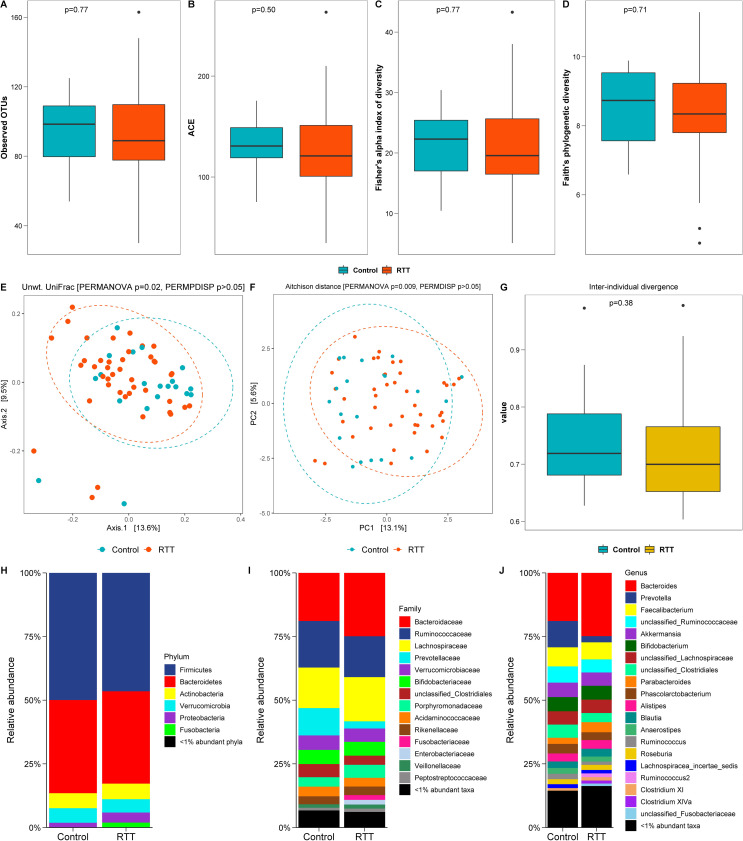
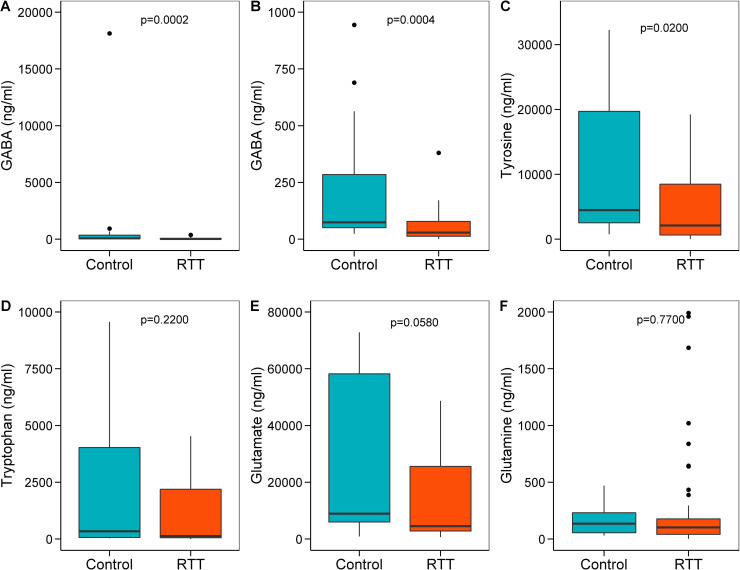
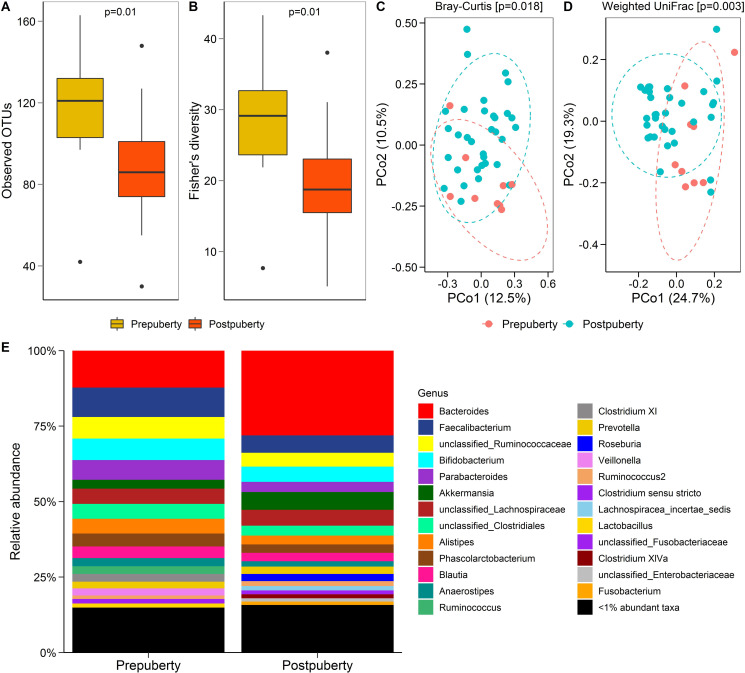
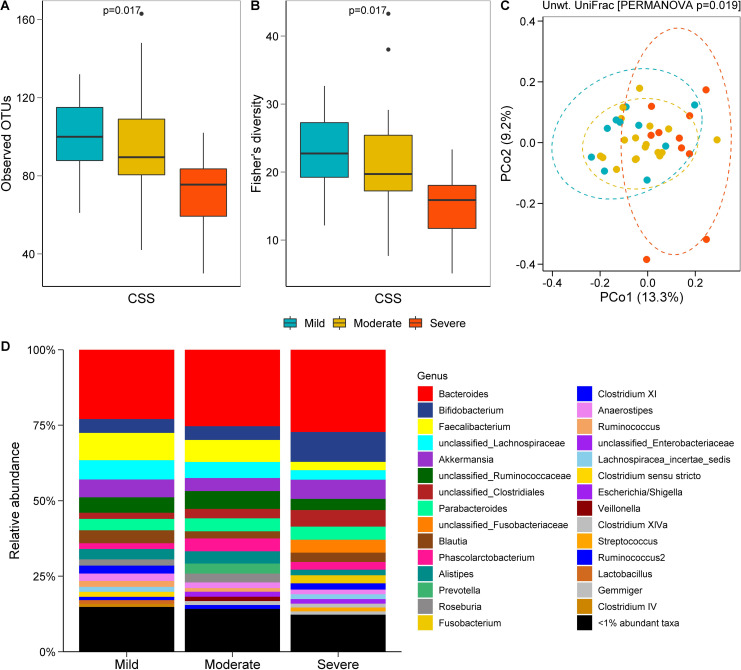
The gut bacterial microbiome differed within the RTT cohort based on pubertal status (p<0.02) and clinical severity scores (p<0.02) of the individuals and the type of diet (p<0.01) consumed. Although the composition of the gut microbiome did not differ between RTT and unaffected individuals, concentrations of protein end-products of the gut bacterial metabolome, including γ-aminobutyric acid (GABA) (p<0.001), tyrosine (p<0.02), and glutamate (p<0.06), were lower in the RTT cohort. Differences in the microbiome within RTT groups, based on symptomatic anxiety, hyperventilation, abdominal distention, or changes in stool frequency and consistency, were not detected.
Although variability in the RTT phenotype contributes to the dysbiosis of the gut microbiome, we presently cannot infer causality between gut bacterial dysbiosis and gastrointestinal dysfunction. Nevertheless, alterations in the gut metabolome may provide clues to the pathophysiology of gastrointestinal problems in RTT.
胃肠道问题影响雷特综合征(RTT)患者的健康和生活质量,并给他们的照顾者带来医疗负担。我们假设 RTT 表型的变异性导致 RTT 患者肠道微生物组和代谢组的失调,使这些个体易发生胃肠道功能障碍。
我们对 44 名 RTT 女孩和年轻女性(RTT 组)和 21 名无影响对照者(对照组)的肠道细菌微生物组和代谢组进行了特征描述,并检查了微生物组组成与 RTT 表型变化之间的关系。
从参与者中收集人口统计学和临床信息,包括生长和人体测量学测量、青春期状态、症状、临床严重程度评分、排便、药物使用和饮食摄入。收集粪便样本,用于通过 Illumina MiSeq 下一代测序对 16S rRNA 基因进行肠道微生物组分析,然后对微生物组成、多样性和群落结构进行生物信息学分析。通过液相色谱-质谱法对微生物蛋白代谢的选定终产物进行特征描述。
根据个体的青春期状态(p<0.02)和临床严重程度评分(p<0.02)以及所摄入的饮食类型(p<0.01),RTT 队列中的肠道细菌微生物组存在差异。尽管 RTT 和无影响个体的肠道微生物组组成没有差异,但肠道细菌代谢组的蛋白质终产物浓度,包括γ-氨基丁酸(GABA)(p<0.001)、酪氨酸(p<0.02)和谷氨酸(p<0.06),在 RTT 队列中较低。在基于有症状的焦虑、过度通气、腹胀或粪便频率和稠度变化的 RTT 组内,未检测到微生物组的差异。
尽管 RTT 表型的变异性导致肠道微生物组的失调,但我们目前无法推断肠道细菌失调与胃肠道功能障碍之间的因果关系。然而,肠道代谢组的改变可能为 RTT 胃肠道问题的病理生理学提供线索。