Tsai Shih-Yen, Schreiber Jennifer A, Adamczyk Natalie S, Wu Joanna Y, Ton Son T, Hofler Ryan C, Walter James S, O'Brien Timothy E, Kartje Gwendolyn L, Nockels Russ P
Edward Hines Jr. Veteran Affairs Hospital, Hines, IL, United States.
Department of Neurological Surgery, Loyola University Medical Center, Maywood, IL, United States.
Front Neurol. 2021 Apr 20;12:610434. doi: 10.3389/fneur.2021.610434. eCollection 2021.
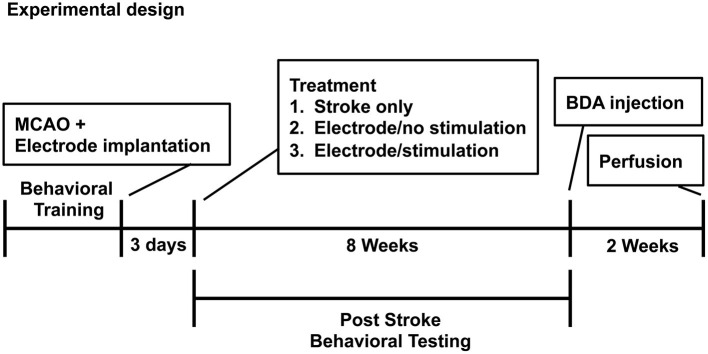
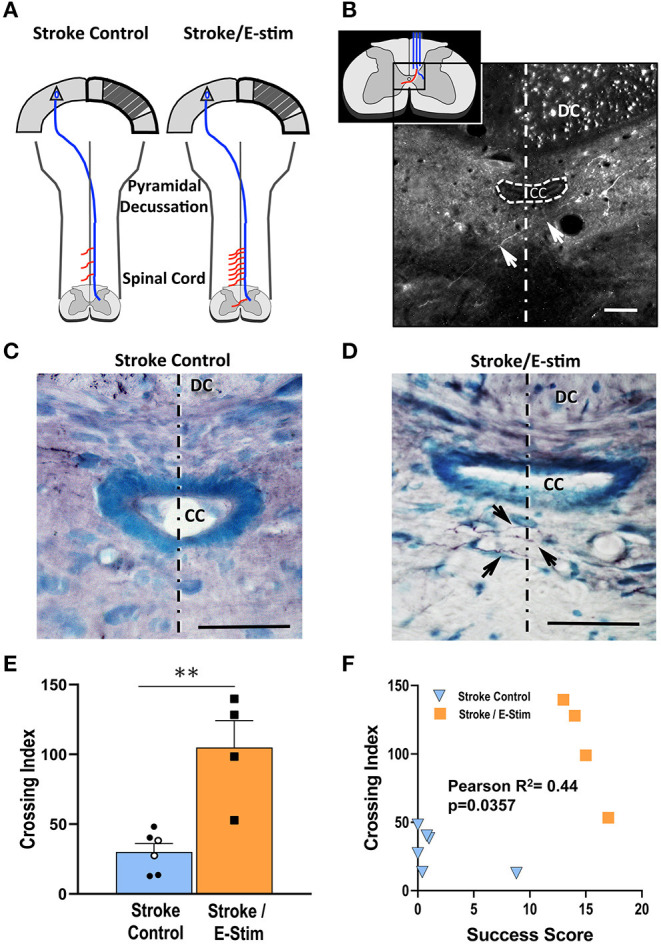
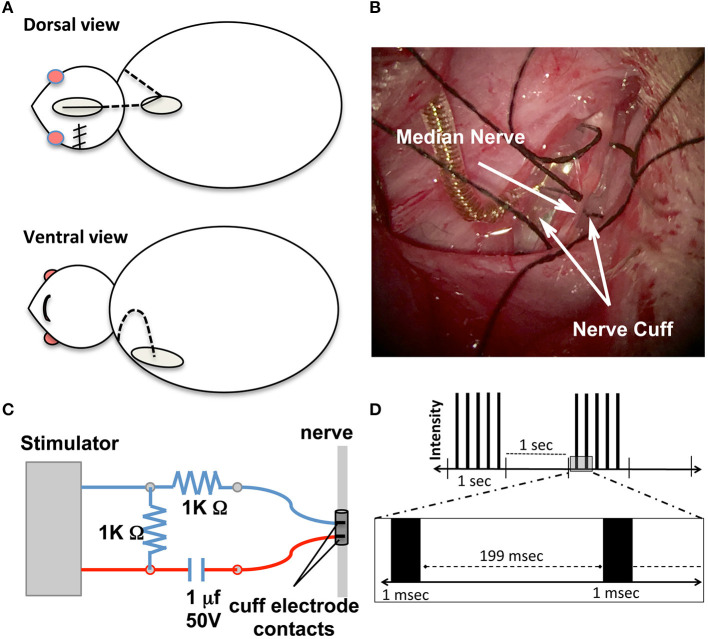
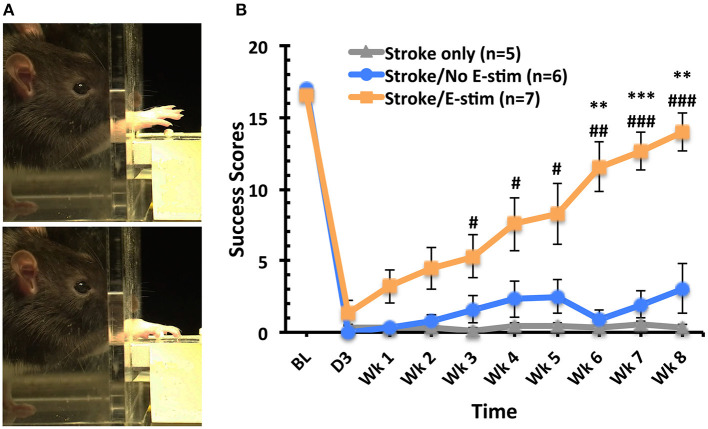
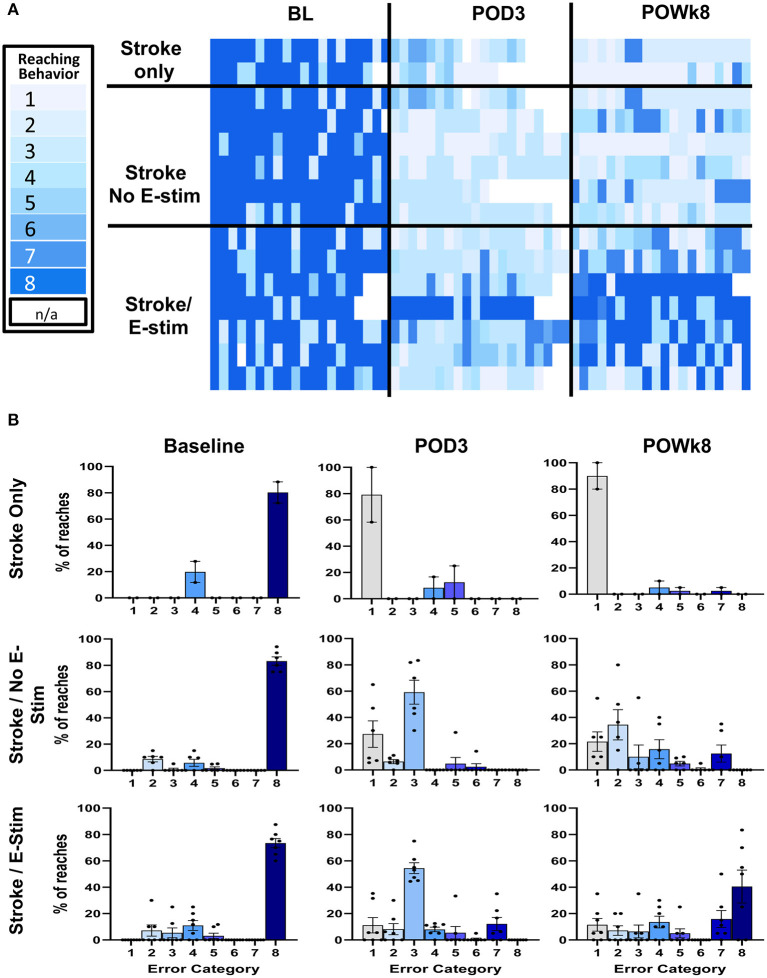
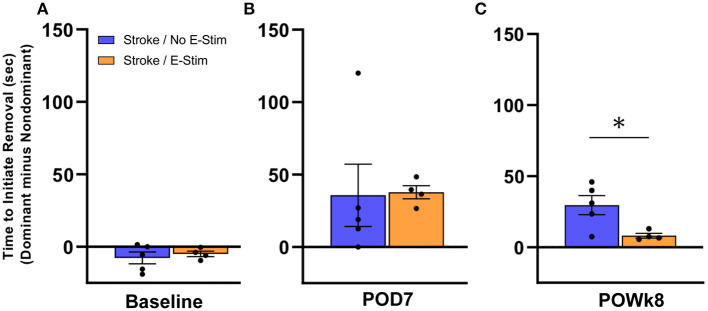
Lack of blood flow to the brain, i.e., ischemic stroke, results in loss of nerve cells and therefore loss of function in the effected brain regions. There is no effective treatment to improve lost function except restoring blood flow within the first several hours. Rehabilitation strategies are widely used with limited success. The purpose of this study was to examine the effect of electrical stimulation on the impaired upper extremity to improve functional recovery after stroke. We developed a rodent model using an electrode cuff implant onto a single peripheral nerve (median nerve) of the paretic forelimb and applied daily electrical stimulation. The skilled forelimb reaching test was used to evaluate functional outcome after stroke and electrical stimulation. Anterograde axonal tracing from layer V pyramidal neurons with biotinylated dextran amine was done to evaluate the formation of new neuronal connections from the contralesional cortex to the deafferented spinal cord. Rats receiving electrical stimulation on the median nerve showed significant improvement in the skilled forelimb reaching test in comparison with stroke only and stroke with sham stimulation. Rats that received electrical stimulation also exhibited significant improvement in the latency to initiate adhesive removal from the impaired forelimb, indicating better sensory recovery. Furthermore, axonal tracing analysis showed a significant higher midline fiber crossing index in the cervical spinal cord of rats receiving electrical stimulation. Our results indicate that direct peripheral nerve stimulation leads to improved sensorimotor recovery in the stroke-impaired forelimb, and may be a useful approach to improve post-stroke deficits in human patients.
大脑血流不足,即缺血性中风,会导致神经细胞丧失,进而导致受影响脑区的功能丧失。除了在最初几个小时内恢复血流外,没有有效的治疗方法来改善丧失的功能。康复策略被广泛使用,但效果有限。本研究的目的是研究电刺激对中风后受损上肢的影响,以改善功能恢复。我们开发了一种啮齿动物模型,将电极套植入瘫痪前肢的单一周围神经(正中神经),并每天进行电刺激。使用熟练前肢伸展测试来评估中风和电刺激后的功能结果。用生物素化葡聚糖胺对V层锥体神经元进行顺行轴突追踪,以评估从对侧皮质到去传入脊髓的新神经元连接的形成。与仅中风组和中风加假刺激组相比,接受正中神经电刺激的大鼠在熟练前肢伸展测试中表现出显著改善。接受电刺激的大鼠在开始从受损前肢去除粘连的潜伏期方面也表现出显著改善,表明感觉恢复更好。此外,轴突追踪分析显示,接受电刺激的大鼠颈脊髓中线纤维交叉指数显著更高。我们的结果表明,直接外周神经刺激可改善中风受损前肢的感觉运动恢复,可能是改善人类中风患者后遗症的一种有用方法。