Department of Anatomy and Cell Biology, College of Medicine, University of Illinois at Chicago, Chicago, IL, United States.
Departments of Pathology and Pediatrics, School of Medicine, Stanford University, Stanford, CA, United States.
Front Immunol. 2021 Apr 22;12:650427. doi: 10.3389/fimmu.2021.650427. eCollection 2021.
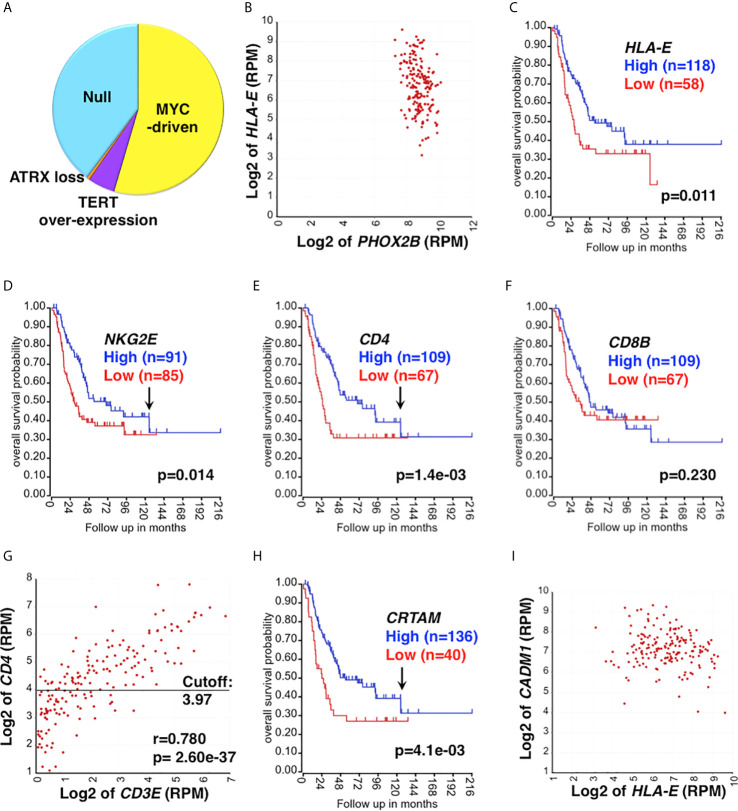
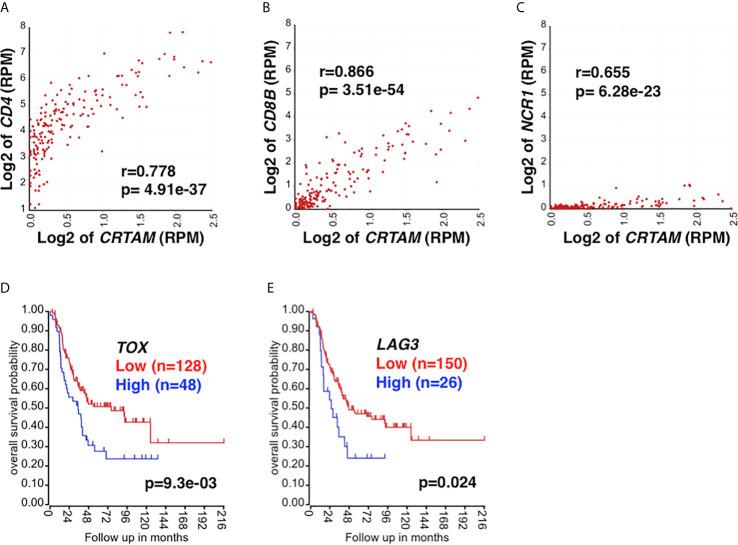
Neuroblastoma is the most common extracranial childhood solid tumor. The majority of high-risk neuroblastoma is resistant/refractory to the current high intensity therapy, and the survival of these patients remains poor for the last three decades. To effectively treat these extremely unfavorable neuroblastomas, innovative immunotherapy approaches would be the most promising. In this article, we discuss the identity of tumor-infiltrating effector cells and immunosuppressive cells in high-risk neuroblastoma. Neuroblastoma is unique in that it expresses little or no classical HLA Class I and II. In contrast, high-risk neuroblastomas express the stress-responsive non-classical Class I, HLA-E molecule. HLA-E is the ligand of activating receptors NKG2C/E that are expressed on memory NK cells, CD8+T cells and CD4 CTLs. By examining a comprehensive RNA-seq gene expression dataset, we detected relatively high levels of expression in high-risk neuroblastoma tissues. The majority of CD4+ cells were CD3+, and thus they were likely tumor-associated CD4+T cells. In addition, high-level of both CD4 and NKG2C/E expression was associated with prolonged survival of the high-risk neuroblastoma patients, but CD8 levels were not, further suggesting that the CD4+ NKG2C/E+ T cells or CD4 CTL conferred cytotoxicity against the neuroblastoma cells. However, this T cell mediated- "protective effect" declined over time, in part due to the progressive formation of immunosuppressive tumor microenvironment. These observations suggest that to improve survival of high-risk neuroblastoma patients, it is essential to gain insights into how to enhance CD4 CTL cytotoxicity and control the immunosuppressive tumor microenvironment during the course of the disease.
神经母细胞瘤是最常见的儿童颅外实体瘤。大多数高危神经母细胞瘤对目前高强度的治疗具有耐药性/难治性,这些患者的存活率在过去三十年仍然很差。为了有效治疗这些极其不利的神经母细胞瘤,创新的免疫疗法将是最有前途的方法。在本文中,我们讨论了高危神经母细胞瘤中肿瘤浸润效应细胞和免疫抑制细胞的特征。神经母细胞瘤的独特之处在于它表达很少或没有经典的 HLA Ⅰ类和Ⅱ类分子。相比之下,高危神经母细胞瘤表达应激反应性非经典 HLA-E 分子。HLA-E 是激活受体 NKG2C/E 的配体,这些受体表达在记忆 NK 细胞、CD8+T 细胞和 CD4 CTL 上。通过检查全面的 RNA-seq 基因表达数据集,我们在高危神经母细胞瘤组织中检测到相对高水平的表达。大多数 CD4+细胞是 CD3+,因此它们可能是肿瘤相关的 CD4+T 细胞。此外,高水平的 CD4 和 NKG2C/E 表达与高危神经母细胞瘤患者的生存延长相关,但 CD8 水平不相关,这进一步表明 CD4+NKG2C/E+T 细胞或 CD4 CTL 对神经母细胞瘤细胞具有细胞毒性。然而,这种 T 细胞介导的“保护作用”随着时间的推移而下降,部分原因是免疫抑制性肿瘤微环境的逐渐形成。这些观察结果表明,为了提高高危神经母细胞瘤患者的生存率,必须深入了解如何增强 CD4 CTL 的细胞毒性并在疾病过程中控制免疫抑制性肿瘤微环境。