Bi Fangfang, Zhang Yiyong, Liu Wenbo, Xie Keliang
Department of Medicine, Xi'an Peihua University, Xi'an, Shaanxi 710125, P.R. China.
Department of Neurosurgery, Jinan Jiyang District People's Hospital, Jinan, Shandong 251401, P.R. China.
Exp Ther Med. 2021 Jun;21(6):647. doi: 10.3892/etm.2021.10079. Epub 2021 Apr 18.
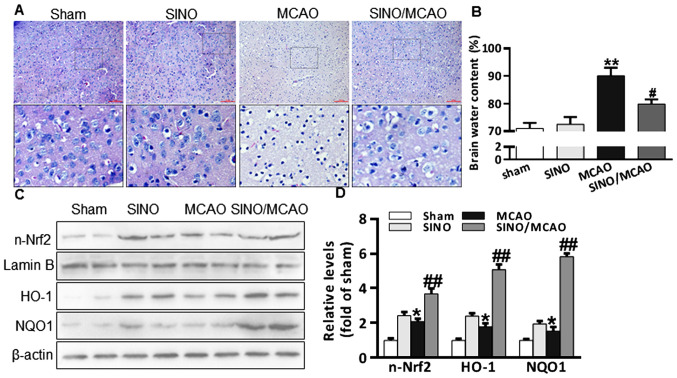
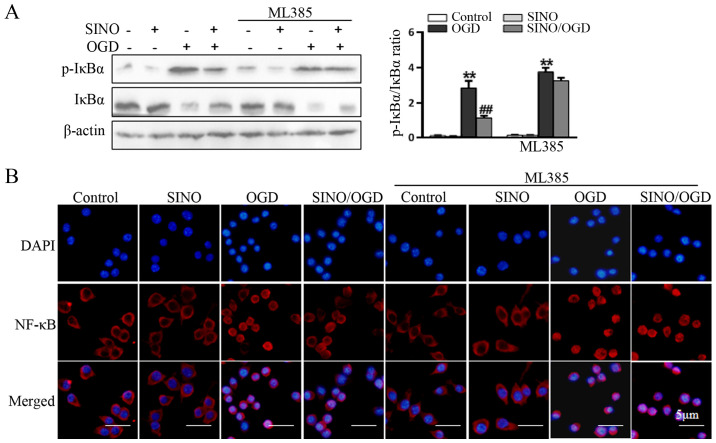
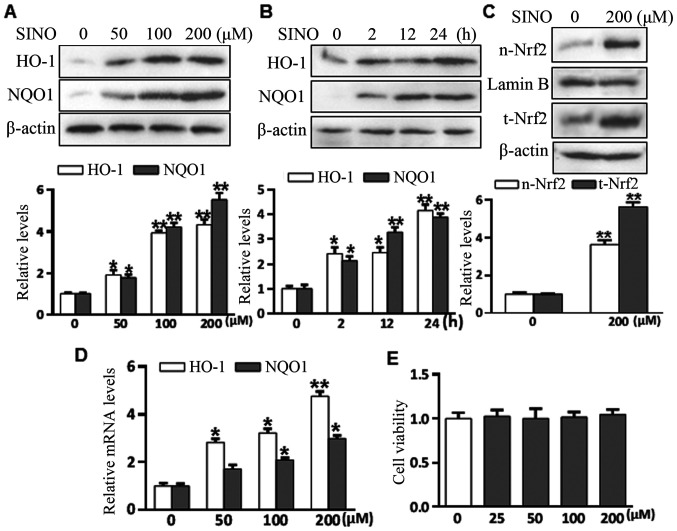
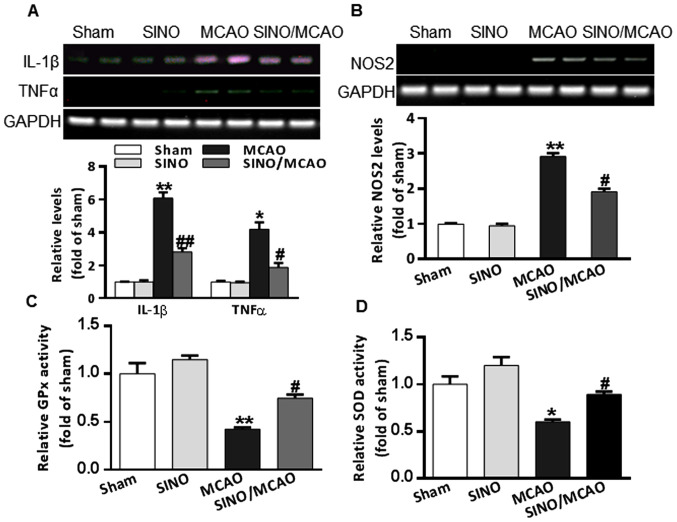
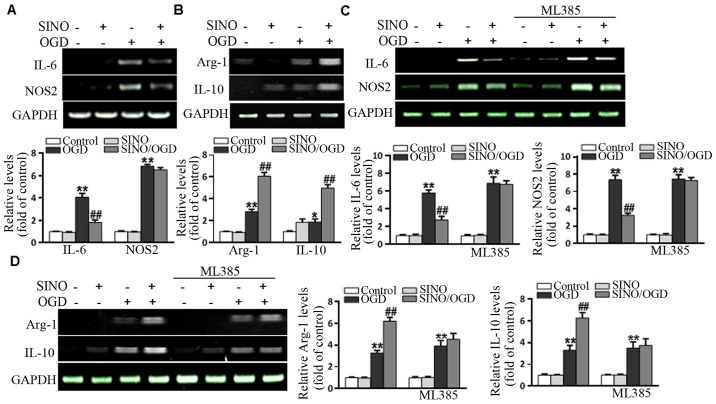
Sinomenine (SINO), which is used clinically to treat rheumatoid arthritis and neuralgia, is derived from the root and stems of . SINO has been reported to exert analgesic, sedative and anti-inflammatory effects, and provides a protective role against shock and organ damage. Studies have suggested that SINO primarily exerts it anti-inflammatory function by inhibiting NF-κB signaling. There is also evidence to indicate that SINO may regulate inflammation Nuclear factor (erythroid-derived 2)-like 2 (Nrf2) signaling. The present study aimed to investigate whether the anti-inflammatory and cerebral protective effects of SINO were induced through Nrf2 both and . The results revealed that SINO significantly upregulated Nrf2 protein expression levels, increased Nrf2 nuclear translocation and the upregulated the protein expression levels of downstream factors. The treatment of a middle cerebral artery occlusion model mice with SINO effectively reduced cerebral damage and inflammation, and restored the balance in cerebral oxidative stress. In addition, SINO treatment also promoted Nrf2-dependent microglia M1/M2 polarization and inhibited the phosphorylation of IκBα as well as NF-κB nuclear translocation. This revealed an important upstream event that contributed to its anti-inflammatory and cerebral tissue protective effects. In conclusion, the findings of the present study identified a novel pathway through which SINO may exert its anti-inflammatory and cerebral protective functions, and provided a molecular basis for the potential applications of SINO in the treatment of cerebral inflammatory disorders.
青藤碱(SINO)临床用于治疗类风湿性关节炎和神经痛,它来源于[植物名称]的根和茎。据报道,青藤碱具有镇痛、镇静和抗炎作用,并对休克和器官损伤起到保护作用。研究表明,青藤碱主要通过抑制核因子κB(NF-κB)信号传导发挥其抗炎功能。也有证据表明,青藤碱可能调节炎症相关的核因子(红系衍生2)样2(Nrf2)信号传导。本研究旨在探讨青藤碱的抗炎和脑保护作用是否通过Nrf2在[具体条件1]和[具体条件2]下诱导产生。结果显示,青藤碱显著上调Nrf2蛋白表达水平,增加Nrf2核转位,并上调下游因子的蛋白表达水平。用青藤碱治疗大脑中动脉闭塞模型小鼠可有效减轻脑损伤和炎症,并恢复脑氧化应激平衡。此外,青藤碱治疗还促进了Nrf2依赖的小胶质细胞M1/M2极化,并抑制IκBα的磷酸化以及NF-κB核转位。这揭示了一个导致其抗炎和脑组织保护作用的重要上游事件。总之,本研究结果确定了青藤碱发挥其抗炎和脑保护功能的一条新途径,并为青藤碱在治疗脑部炎症性疾病中的潜在应用提供了分子基础。