Hwang Jae Yeon, Nawaz Shoaib, Choi Jungmin, Wang Huafeng, Hussain Shabir, Nawaz Mehboob, Lopez-Giraldez Francesc, Jeong Kyungjo, Dong Weilai, Oh Jong-Nam, Bilguvar Kaya, Mane Shrikant, Lee Chang-Kyu, Bystroff Christopher, Lifton Richard P, Ahmad Wasim, Chung Jean-Ju
Department of Cellular and Molecular Physiology, Yale School of Medicine, Yale University, New Haven, CT, United States.
Department of Biotechnology, Faculty of Biological Sciences, Quaid-i-Azam University, Islamabad, Pakistan.
Front Cell Dev Biol. 2021 Apr 23;9:662903. doi: 10.3389/fcell.2021.662903. eCollection 2021.
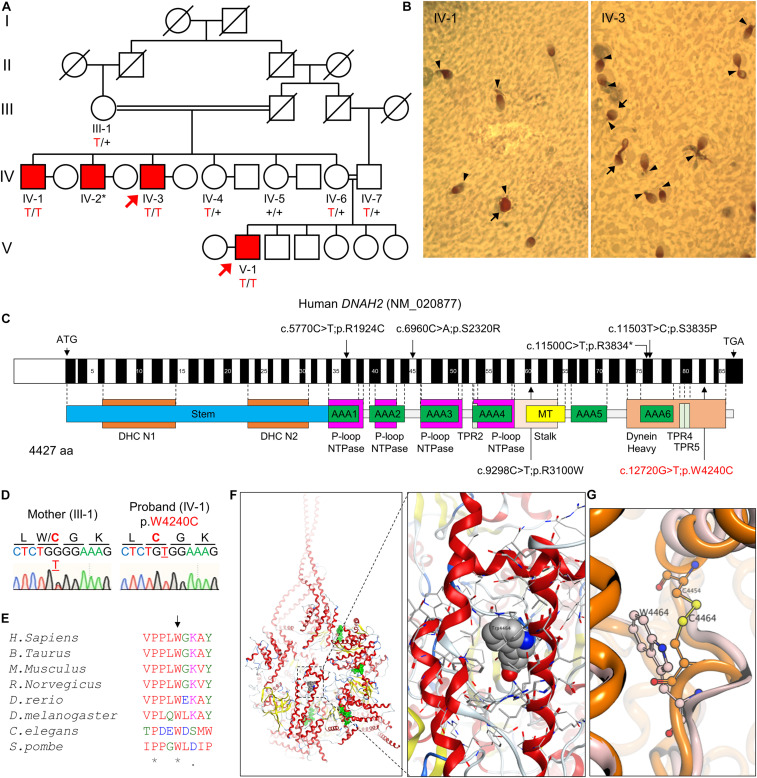
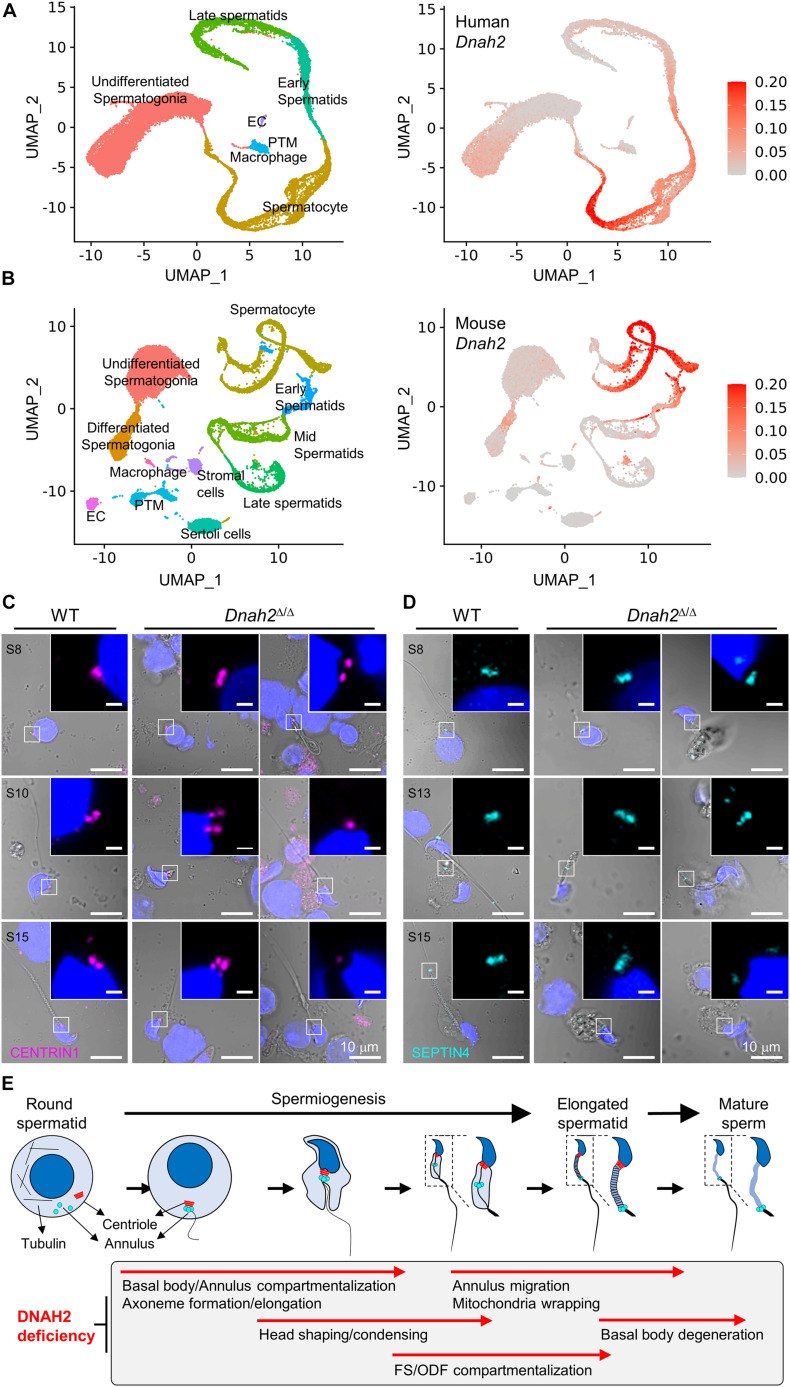
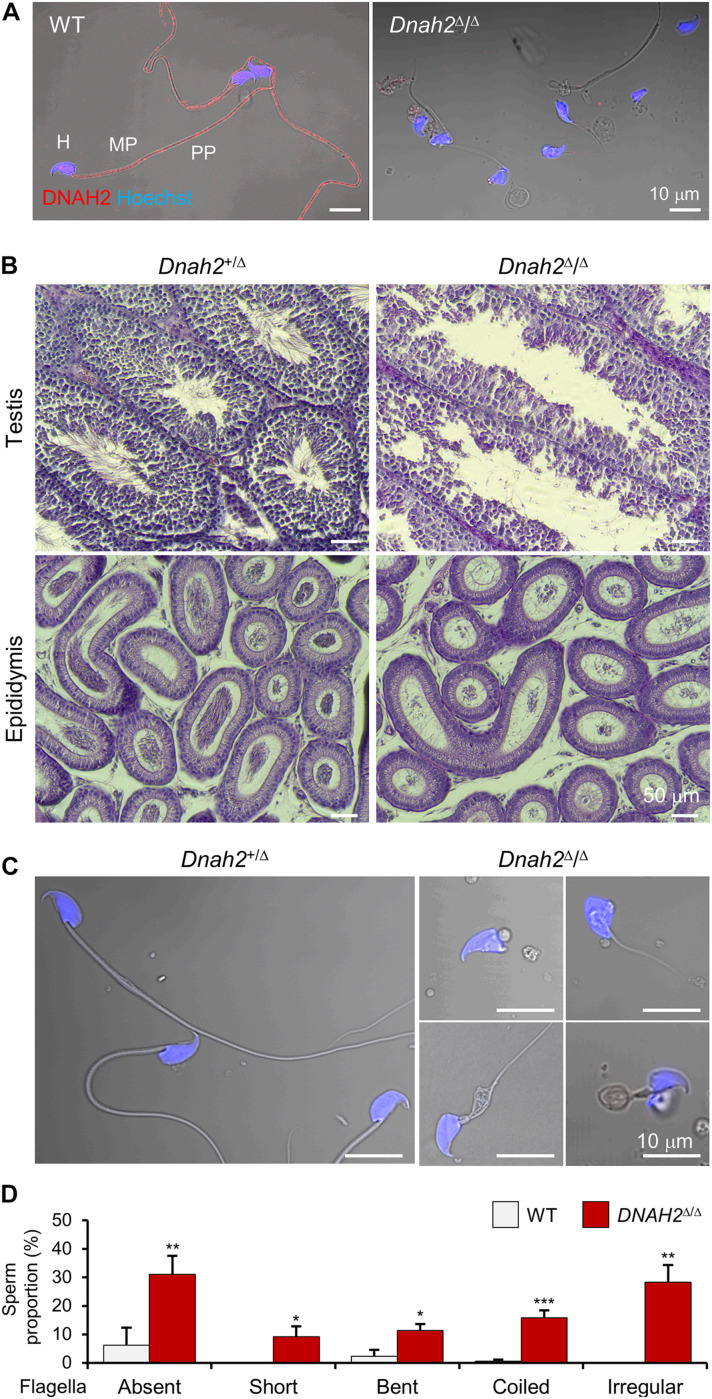
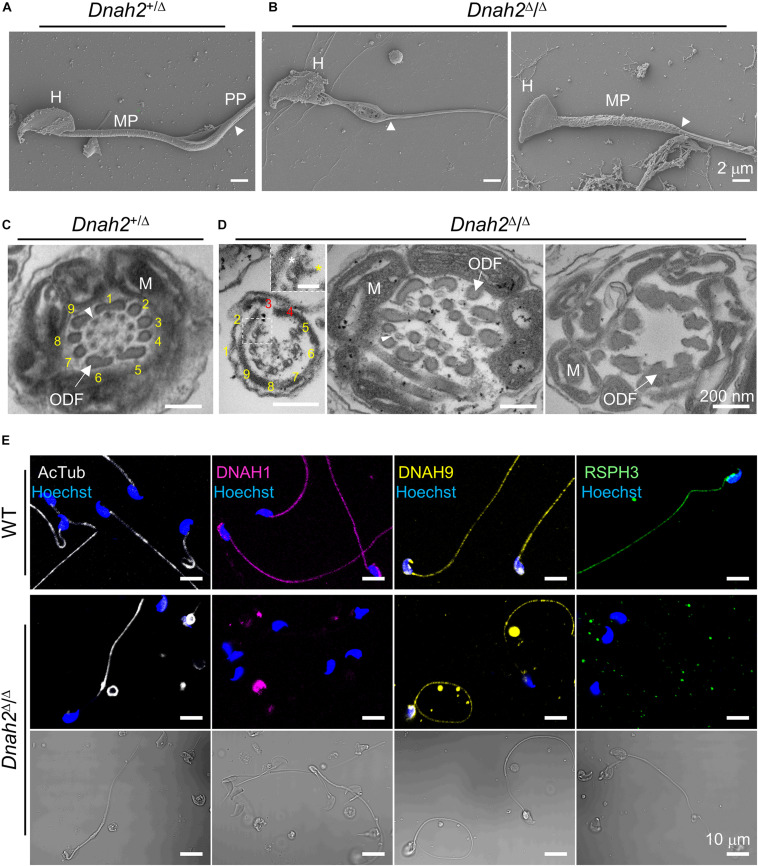
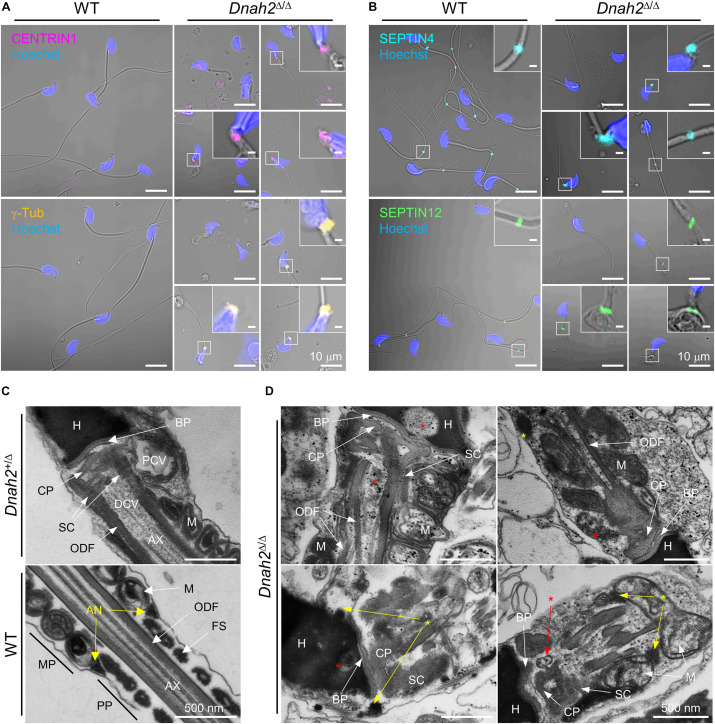
Asthenozoospermia accounts for over 80% of primary male infertility cases. Reduced sperm motility in asthenozoospermic patients are often accompanied by teratozoospermia, or defective sperm morphology, with varying severity. Multiple morphological abnormalities of the flagella (MMAF) is one of the most severe forms of asthenoteratozoospermia, characterized by heterogeneous flagellar abnormalities. Among various genetic factors known to cause MMAF, multiple variants in the gene are reported to underlie MMAF in humans. However, the pathogenicity by DNAH2 mutations remains largely unknown. In this study, we identified a novel recessive variant (NM_020877:c.12720G > T;p.W4240C) in by whole-exome sequencing, which fully co-segregated with the infertile male members in a consanguineous Pakistani family diagnosed with asthenozoospermia. 80-90% of the sperm from the patients are morphologically abnormal, and analysis models reveal that the non-synonymous variant substitutes a residue in dynein heavy chain domain and destabilizes DNAH2. To better understand the pathogenicity of various variants underlying MMAF in general, we functionally characterized -mutant mice generated by CRISPR/Cas9 genome editing. -null males, but not females, are infertile. -null sperm cells display absent, short, bent, coiled, and/or irregular flagella consistent with the MMAF phenotype. We found misexpression of centriolar proteins and delocalization of annulus proteins in -null spermatids and sperm, suggesting dysregulated flagella development in spermiogenesis. Scanning and transmission electron microscopy analyses revealed that flagella ultrastructure is severely disorganized in -null sperm. Absence of DNAH2 compromises the expression of other axonemal components such as DNAH1 and RSPH3. Our results demonstrate that DNAH2 is essential for multiple steps in sperm flagella formation and provide insights into molecular and cellular mechanisms of MMAF pathogenesis.
弱精子症占原发性男性不育病例的80%以上。弱精子症患者精子活力降低常伴有畸形精子症,即精子形态缺陷,严重程度各异。鞭毛多发形态异常(MMAF)是弱畸精子症最严重的形式之一,其特征是鞭毛存在异质性异常。在已知导致MMAF的各种遗传因素中,该基因的多个变体据报道是人类MMAF的基础。然而,DNAH2突变的致病性在很大程度上仍不清楚。在本研究中,我们通过全外显子组测序在该基因中鉴定出一个新的隐性变体(NM_020877:c.12720G>T;p.W4240C),其与一个被诊断为弱精子症的巴基斯坦近亲家庭中的不育男性成员完全共分离。患者80 - 90%的精子形态异常,分析模型显示该非同义变体替代了动力蛋白重链结构域中的一个残基并使DNAH2不稳定。为了更好地理解一般情况下MMAF潜在的各种该基因变体的致病性,我们对通过CRISPR/Cas9基因组编辑产生的该基因突变小鼠进行了功能表征。该基因敲除的雄性小鼠不育,而雌性小鼠正常。该基因敲除的精子细胞显示出与MMAF表型一致的缺失、短小、弯曲、卷曲和/或不规则的鞭毛。我们发现在该基因敲除的精子细胞和精子中中心粒蛋白表达错误以及环状蛋白定位异常,提示精子发生过程中鞭毛发育失调。扫描和透射电子显微镜分析显示该基因敲除的精子中鞭毛超微结构严重紊乱。DNAH2的缺失损害了其他轴丝成分如DNAH1和RSPH3的表达。我们的结果表明DNAH2对于精子鞭毛形成的多个步骤至关重要,并为MMAF发病机制的分子和细胞机制提供了见解。