Wang Chang-Song, Gao Yang, Kang Kai, Fei Dong-Sheng, Meng Xiang-Lin, Liu Hai-Tao, Luo Yun-Peng, Yang Wei, Dai Qing-Qing, Gao Yan, Zhao Ming-Yan, Yu Kai-Jiang
Department of Critical Care Medicine, Harbin Medical University Cancer Hospital, Harbin 150081, Heilongjiang Province, China.
Department of Critical Care Medicine, The First Affiliated Hospital of Harbin Medical University, Harbin 150001, Heilongjiang Province, China.
World J Clin Cases. 2021 Apr 26;9(12):2696-2702. doi: 10.12998/wjcc.v9.i12.2696.
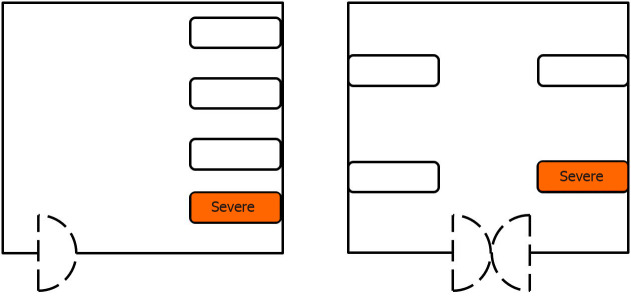
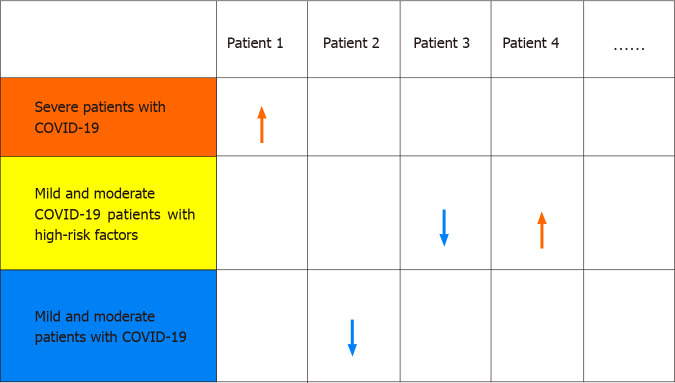
The large global outbreak of coronavirus disease 2019 (COVID-19) has seriously endangered the health care system in China and globally. The sudden surge of patients with severe acute respiratory syndrome coronavirus 2 infection has revealed the shortage of critical care medicine resources and intensivists. Currently, the management of non-critically ill patients with COVID-19 is performed mostly by non-intensive care unit (ICU) physicians, who lack the required professional knowledge, training, and practice in critical care medicine, especially in terms of continuous monitoring of the respiratory function, intervention, and feedback on treatment effects. This clinical problem needs an urgent solution. Therefore, here, we propose a series of clinical strategies for non-ICU physicians aimed at the standardization of the management of non-critically ill patients with COVID-19 from the perspective of critical care medicine. Isolation management is performed to facilitate the implementation of hierarchical monitoring and intervention to ensure the reasonable distribution of scarce critical care medical resources and intensivists, highlight the key patients, timely detection of disease progression, and early and appropriate intervention and organ function support, and thus improve the prognosis. Different management objectives are also set based on the high-risk factors and the severity of patients with COVID-19. The approaches suggested herein will facilitate the timely detection of disease progression, and thus ensure the provision of early and appropriate intervention and organ function support, which will eventually improve the prognosis.
2019年冠状病毒病(COVID-19)在全球范围内的大爆发严重危及了中国乃至全球的医疗体系。严重急性呼吸综合征冠状病毒2感染患者的突然激增暴露了重症医学资源和重症医学专家的短缺。目前,COVID-19非危重症患者的管理主要由非重症监护病房(ICU)医生进行,他们缺乏重症医学所需的专业知识、培训和实践经验,尤其是在呼吸功能的持续监测、干预以及对治疗效果的反馈方面。这一临床问题亟待解决。因此,在此我们从重症医学的角度为非ICU医生提出一系列针对COVID-19非危重症患者管理标准化的临床策略。实施隔离管理有助于进行分级监测和干预,以确保稀缺的重症医学资源和重症医学专家的合理分配,突出重点患者,及时发现疾病进展,并进行早期适当的干预和器官功能支持,从而改善预后。还根据COVID-19患者的高危因素和严重程度设定了不同的管理目标。本文建议的方法将有助于及时发现疾病进展,从而确保提供早期适当的干预和器官功能支持,最终改善预后。