Department of Epidemiology and Statistics, School of Public Health, Guangxi Medical University, Nanning, China.
Department of Epidemiology and Statistics, School of Public Health, Guangxi Medical University, Nanning, China; Department of Epidemiology and Statistics, School of Public Health, Guilin Medical University, Guilin, China.
Bosn J Basic Med Sci. 2021 Dec 1;21(6):712-723. doi: 10.17305/bjbms.2021.5690.
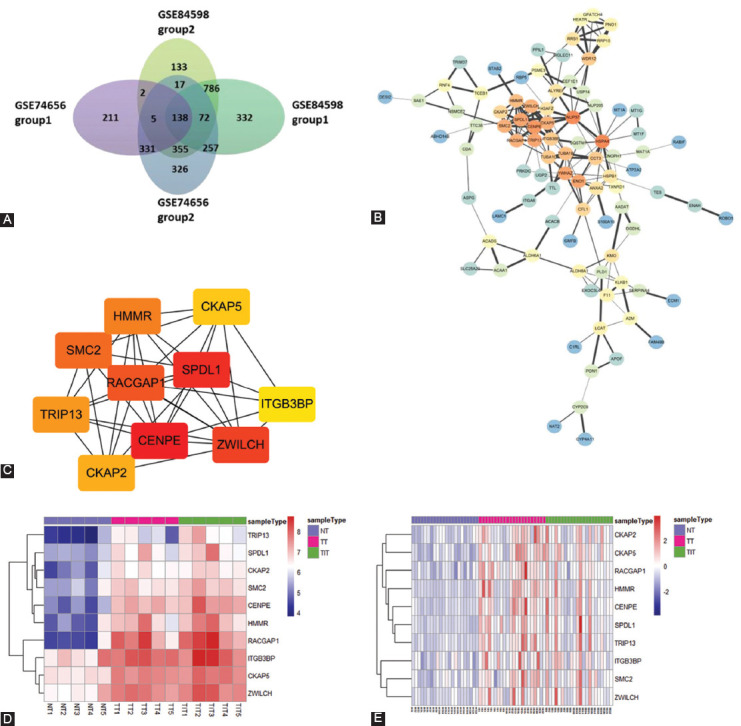
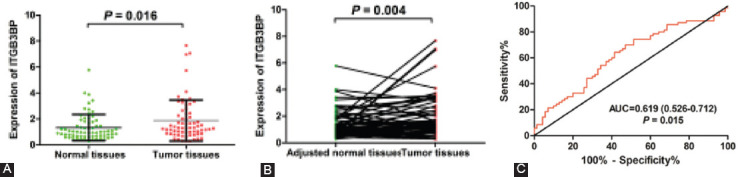
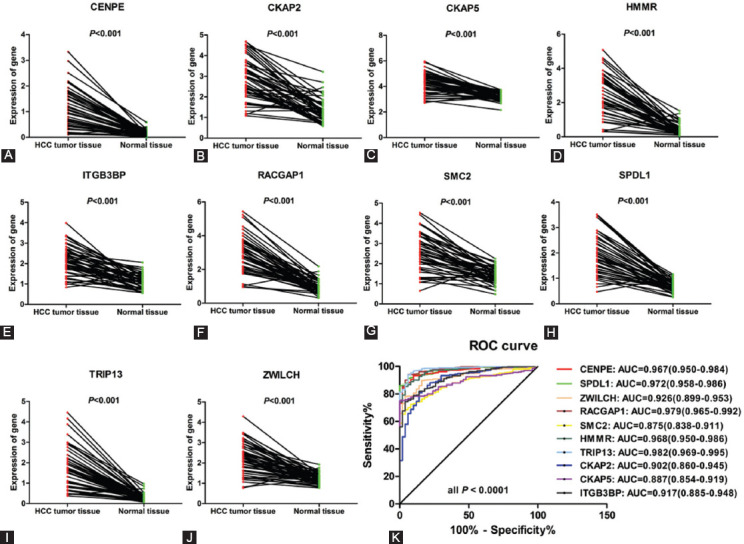
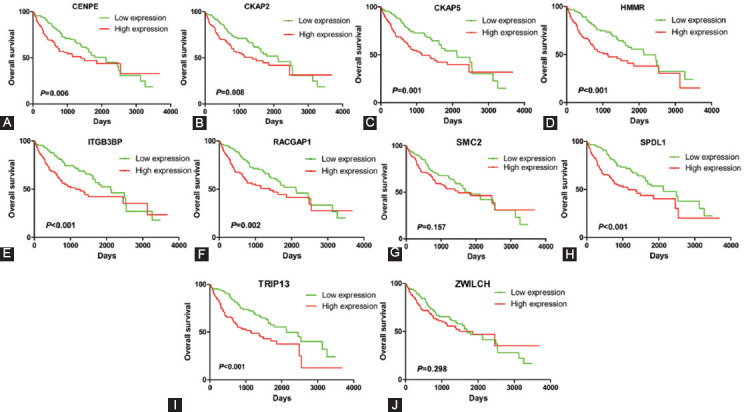
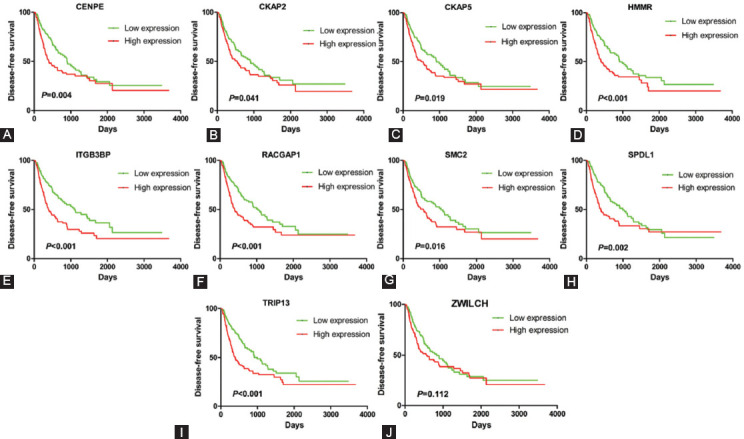
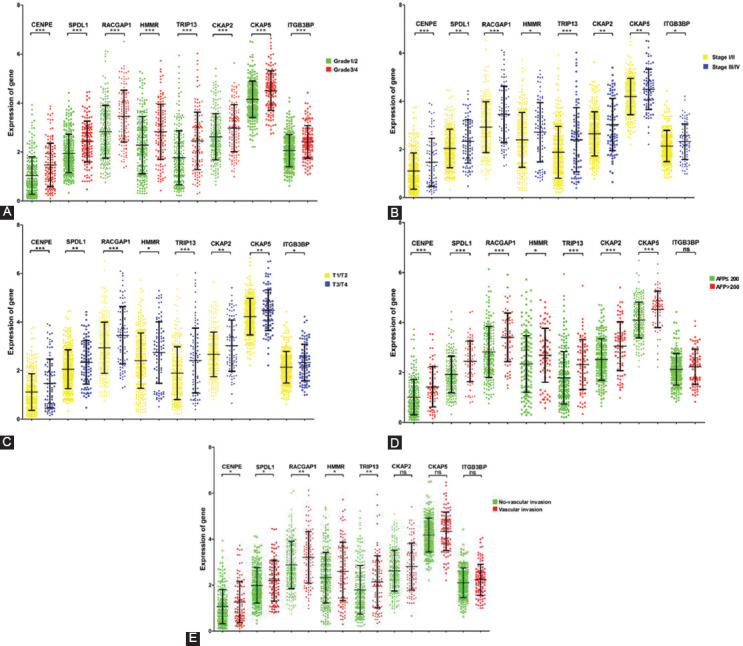
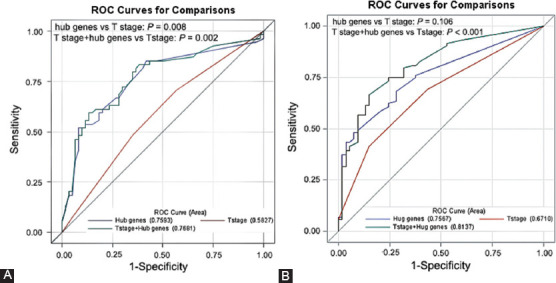
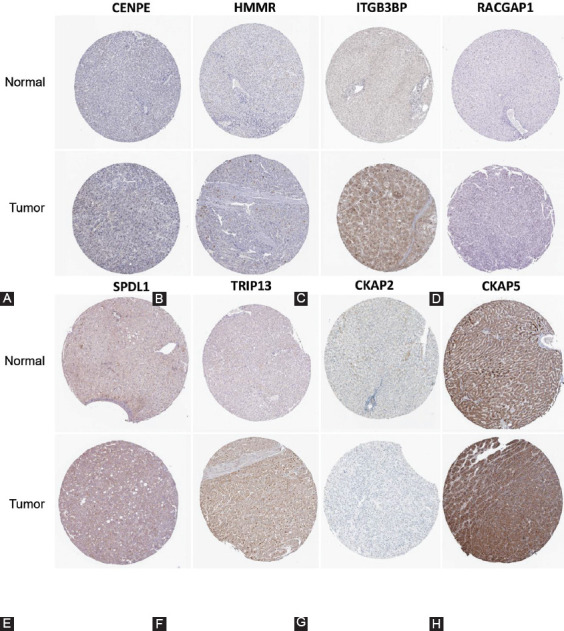
Hepatocellular carcinoma (HCC) is a highly malignant tumor. In this study, we sought to identify a novel biomarker for HCC by analyzing transcriptome and clinical data. The R software was used to analyze the differentially expressed genes (DEGs) in the datasets GSE74656 and GSE84598 downloaded from the Gene Expression Omnibus database, followed by a functional annotation. A total of 138 shared DEGs were screened from two datasets. They were mainly enriched in the "Metabolic pathways" pathway (Padj = 8.21E-08) and involved in the carboxylic acid metabolic process (Padj = 0.0004). The top 10 hub genes were found by protein-protein interaction analysis and were upregulated in HCC tissues compared to normal tissues in The Cancer Genome Atlas database. Survival analysis distinguished 8 hub genes CENPE, SPDL1, Hyaluronan-mediated motility receptor, Rac GTPase activating protein 1, Thyroid hormone receptor interactor 13, cytoskeleton-associated protein (CKAP) 2, CKAP5, and Integrin subunit beta 3 binding protein (ITGB3BP) were considered as prognostic hub genes. Multivariate cox regression analysis indicated that all the prognostic hub genes were independent prognostic factors for HCC. Furthermore, the receiver operating characteristic curve revealed that the 8-hub genes model had better prediction performance for overall survival compared to the T stage (p = 0.008) and significantly improved the prediction value of the T stage (p = 0.002). The Human Protein Atlas showed that the protein expression of ITGB3BP was upregulated in HCC, so the expression of ITGB3BP was further verified in our cohort. The results showed that ITGB3BP was upregulated in HCC tissues and was significantly associated with lymph node metastasis.
肝细胞癌(HCC)是一种高度恶性肿瘤。在本研究中,我们通过分析转录组和临床数据,试图鉴定 HCC 的新型生物标志物。使用 R 软件分析从基因表达综合数据库下载的数据集 GSE74656 和 GSE84598 中的差异表达基因(DEGs),并进行功能注释。从两个数据集中筛选出 138 个共享 DEGs,它们主要富集在“代谢途径”途径(Padj=8.21E-08)中,参与羧酸代谢过程(Padj=0.0004)。通过蛋白质-蛋白质相互作用分析发现前 10 个枢纽基因,这些基因在癌症基因组图谱数据库中 HCC 组织中上调,而在正常组织中下调。生存分析区分了 8 个枢纽基因 CENPE、SPDL1、透明质酸介导的运动受体、Rac GTP 酶激活蛋白 1、甲状腺激素受体相互作用蛋白 13、细胞骨架相关蛋白(CKAP)2、CKAP5 和整合素亚基β 3 结合蛋白(ITGB3BP),被认为是预后枢纽基因。多变量 Cox 回归分析表明,所有预后枢纽基因均为 HCC 的独立预后因素。此外,接收器操作特征曲线表明,8 个枢纽基因模型对总生存期的预测性能优于 T 分期(p=0.008),并且显著提高了 T 分期的预测值(p=0.002)。人类蛋白质图谱显示 ITGB3BP 在 HCC 中的蛋白表达上调,因此在我们的队列中进一步验证了 ITGB3BP 的表达。结果表明,ITGB3BP 在 HCC 组织中上调,与淋巴结转移显著相关。