Fritz-Haber-Institut der Max-Planck-Gesellschaft, Faradayweg 4-6, 14195 Berlin, Germany.
Institut für Chemie und Biochemie, Freie Universität Berlin, Arnimallee 22, 14195 Berlin, Germany.
J Phys Chem A. 2021 May 27;125(20):4373-4379. doi: 10.1021/acs.jpca.1c02463. Epub 2021 May 12.
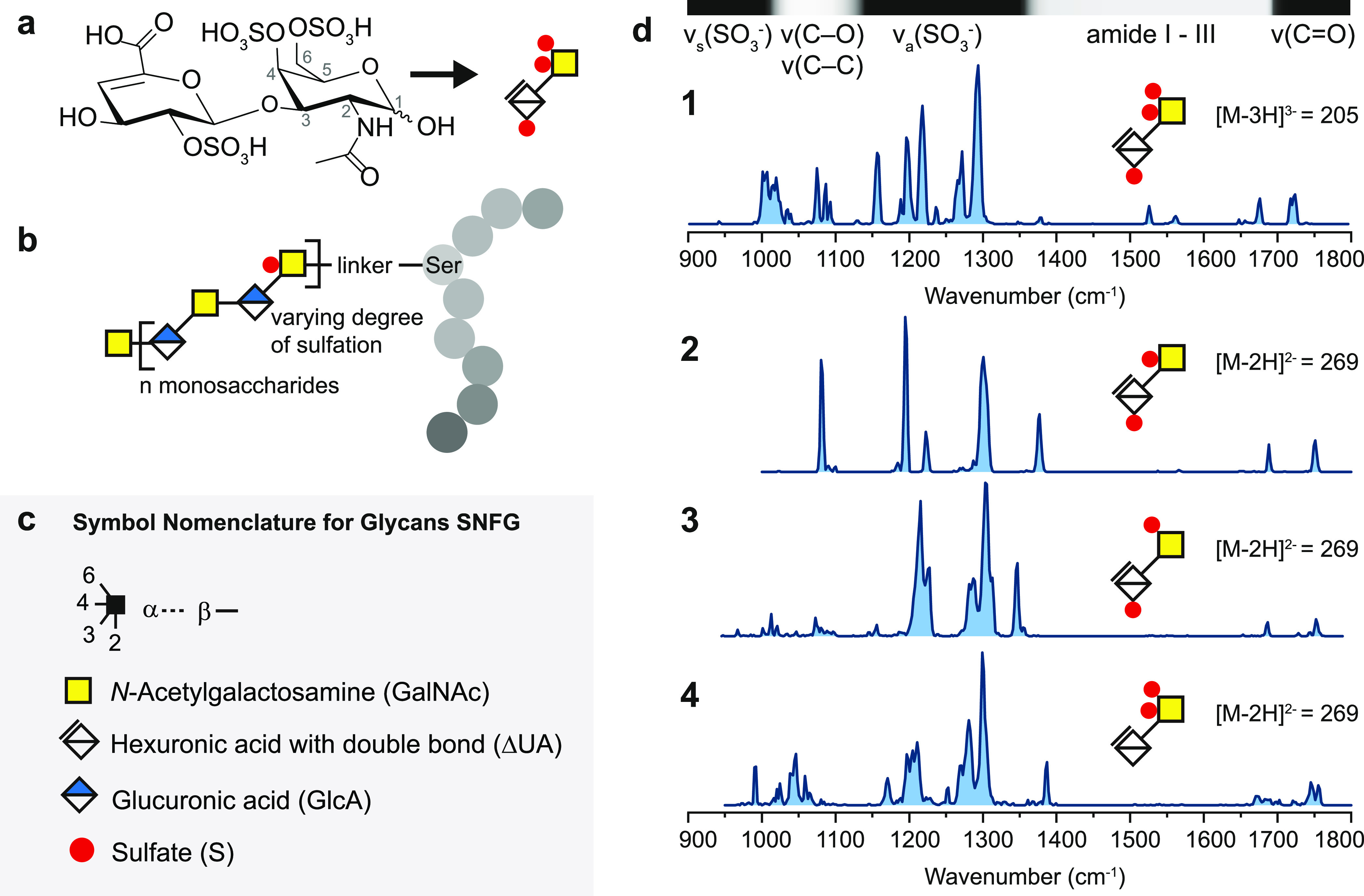
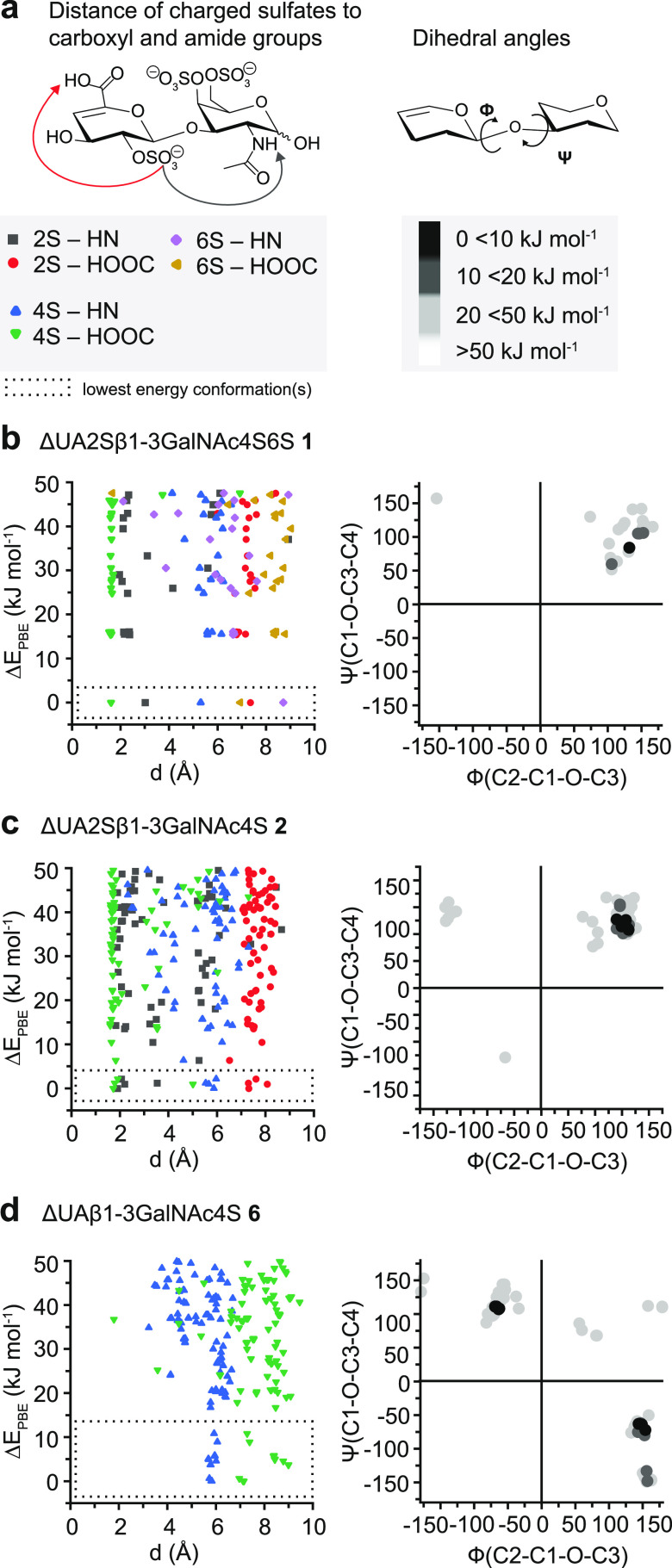
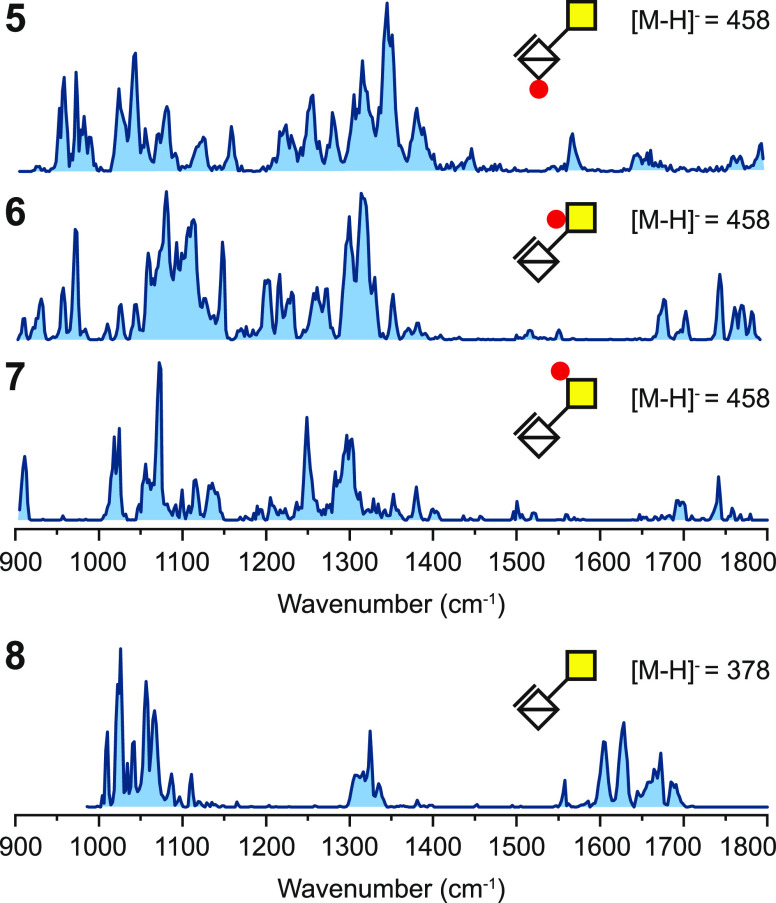
Glycosaminoglycans (GAGs) are a family of complex carbohydrates vital to all mammalian organisms and involved in numerous biological processes. Chondroitin and dermatan sulfate, an important class of GAGs, are linear macromolecules consisting of disaccharide building blocks of -acetylgalactosamine and two different uronic acids. The varying degree and the site of sulfation render their characterization challenging. Here, we combine mass spectrometry with cryogenic infrared spectroscopy in the wavenumber range from 1000 to 1800 cm. Fingerprint spectra were recorded for a comprehensive set of disaccharides bearing all known motifs of sulfation. In addition, state-of-the-art quantum chemical calculations were performed to aid the understanding of the differences in the experimental fingerprint spectra. The results show that the degree and position of charged sulfate groups define the size of the conformational landscape in the gas phase. The detailed understanding of cryogenic infrared spectroscopy for acidic and often highly sulfated glycans may pave the way to utilize the technique in fragment-based sequencing approaches.
糖胺聚糖(GAGs)是一类复杂的碳水化合物,对所有哺乳动物组织都至关重要,并参与众多生物过程。软骨素和硫酸皮肤素是 GAGs 的一个重要类别,它们是由二糖构建块组成的线性大分子,包含 -乙酰半乳糖胺和两种不同的糖醛酸。硫酸化的程度和位置使它们的表征具有挑战性。在这里,我们结合了质谱和低温红外光谱技术,波数范围为 1000 到 1800cm。我们记录了一组全面的带有所有已知硫酸化模体的二糖的指纹谱。此外,还进行了最先进的量子化学计算,以帮助理解实验指纹谱之间的差异。结果表明,带电荷的硫酸根基团的程度和位置决定了气相中构象景观的大小。对酸性且常常高度硫酸化聚糖的低温红外光谱的详细了解可能为利用该技术在基于片段的测序方法中铺平道路。