Institute of Physical Medicine and Rehabilitation, University of Sao Paulo School of Medicine, São Paulo, São Paulo, Brazil.
Clinical Research Center, Institute of Physical Medicine and Rehabilitation, University of Sao Paulo School of Medicine, Rua Domingo de Soto 100, Vila Mariana, São Paulo, SP, 04116-030, Brazil.
Sci Rep. 2021 May 12;11(1):10106. doi: 10.1038/s41598-021-89543-3.
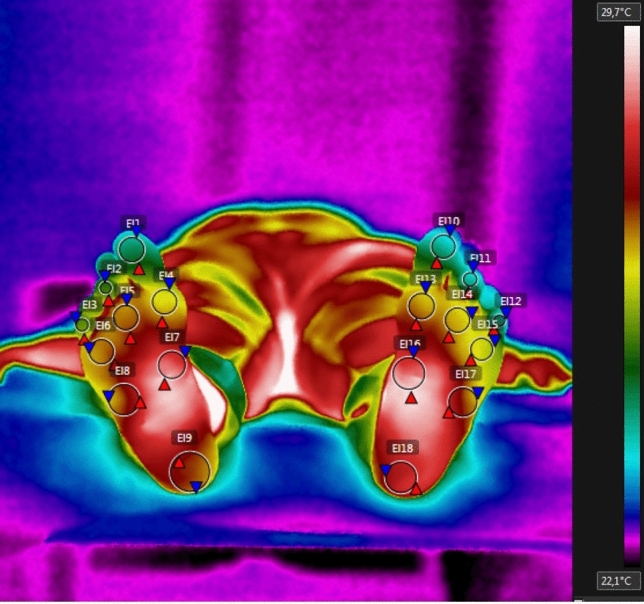
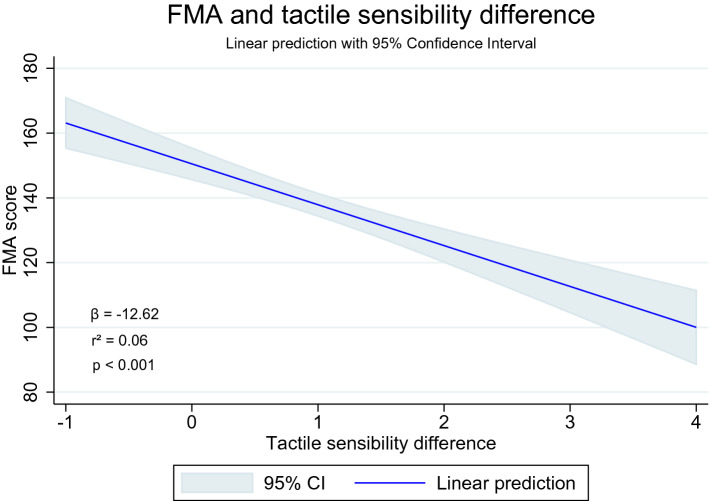
Patients with sequelae of stroke commonly report somatosensory losses. It is believed that body temperature may be associated with tactile sensibility and sensorimotor recovery of these patients. Demonstrate the associations among tactile sensibility, cutaneous temperature, subjective temperature perception, and sensorimotor recovery of patients with stroke sequelae. 86 patients with stroke sequelae were included. Patients had standardized regions of interest (ROIs) assessed with infrared thermography (FLIR T650SC) and monofilaments esthesiometry, and global motor recovery was evaluated with Fugl-Meyer Assessment (FMA). The presence of self-reported perception of temperature difference was used to divide the participants into two groups of 43 patients, and correlation tests were applied to establish correlations among variables. There is no clinically relevant association between tactile sensibility and cutaneous temperature of the foot, regardless of the subjective sensation of temperature changes. Sensorimotor recovery evaluated by FMA is associated with the difference of sensibility between both sides of the body (p < 0.001), as well as with the difference of tactile sensibility (p < 0.001). A clinically significant association between the difference of cutaneous temperature and tactile sensibility was not found, regardless of the presence or absence of subjective perception of such temperature difference. However, sensorimotor recovery is correlated with cutaneous temperature differences and tactile sensibility.
脑卒中后遗症患者常报告存在感觉丧失。据信,体温可能与这些患者的触觉感知和运动感觉恢复有关。本研究旨在展示脑卒中后遗症患者的触觉感知、皮肤温度、主观温度感知和运动感觉恢复之间的关系。纳入 86 例脑卒中后遗症患者。使用红外热成像仪(FLIR T650SC)和单丝触诊觉评估患者的标准化感兴趣区域(ROI),并使用 Fugl-Meyer 评估(FMA)评估整体运动恢复情况。根据是否报告存在温度差异感知,将参与者分为两组,每组 43 例,然后应用相关分析来确定变量之间的相关性。无论是否存在温度变化的主观感觉,触觉感知和足部皮肤温度之间均无临床相关关联。FMA 评估的运动感觉恢复与身体两侧的感觉差异(p < 0.001)以及触觉感知差异(p < 0.001)相关。无论是否存在主观温度差异感知,均未发现皮肤温度和触觉感知差异之间存在临床显著关联。然而,运动感觉恢复与皮肤温度差异和触觉感知相关。