Chan Tommy Lik Hang, Vuong Kiven, Chugh Tara, Carroll Ian
Department of Clinical Neurological Sciences, Western University, Ontario, Canada.
Western University, Ontario, Canada.
Heliyon. 2021 Apr 19;7(4):e06795. doi: 10.1016/j.heliyon.2021.e06795. eCollection 2021 Apr.
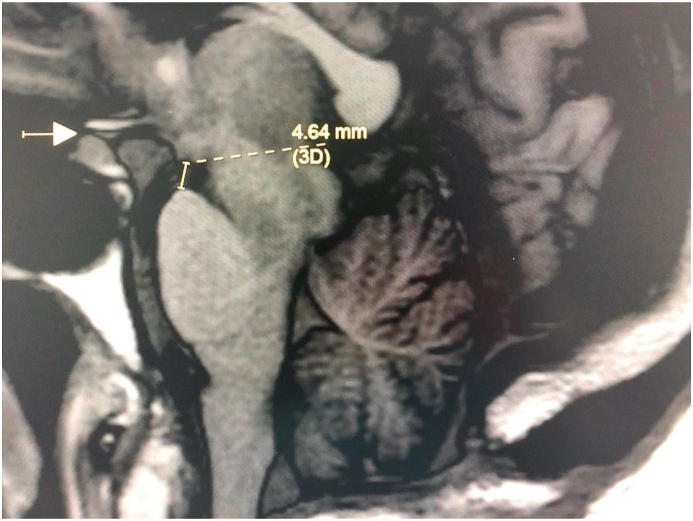
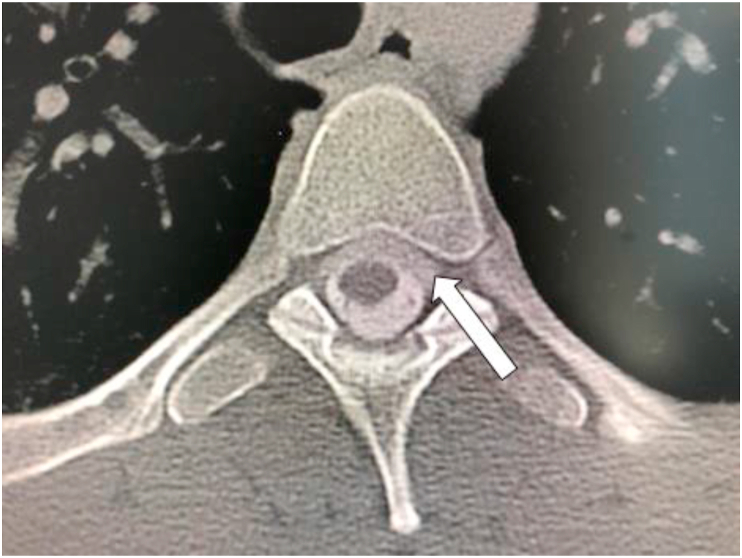
Cerebellar tonsillar descent can be seen on head magnetic resonance imaging in both Chiari malformation type 1 and spinal cerebrospinal fluid leak creating the potential for misdiagnosis. We report five cases of spinal cerebrospinal fluid leak at Stanford University initially misdiagnosed and treated as Chiari malformation type 1 based on cerebellar tonsillar descent demonstrated on imaging. All five cases had sustained relief at the 6-month follow up visit from epidural blood patches for the treatment of spinal cerebrospinal leak after unsuccessful suboccipital decompression surgeries. A misdiagnosis of Chiari malformation type 1 in patients with spinal cerebrospinal fluid leak may lead to unnecessary surgeries instead of the less invasive treatment, such as epidural blood patches. It is imperative to consider a spinal cerebrospinal fluid leak in the differential based on clinical-radiological correlation and not solely on cerebellar tonsillar descent demonstrated on imaging.
在1型Chiari畸形和脊髓脑脊液漏患者的头部磁共振成像中均可看到小脑扁桃体下疝,这可能导致误诊。我们报告了斯坦福大学的5例脊髓脑脊液漏病例,最初基于影像学显示的小脑扁桃体下疝被误诊为1型Chiari畸形并进行了治疗。所有5例患者在枕下减压手术失败后,接受了硬膜外血贴治疗脊髓脑脊液漏,在6个月的随访中均持续缓解。脊髓脑脊液漏患者被误诊为1型Chiari畸形可能导致不必要的手术,而不是采用侵入性较小的治疗方法,如硬膜外血贴。必须根据临床-放射学相关性,而不仅仅基于影像学显示的小脑扁桃体下疝,在鉴别诊断中考虑脊髓脑脊液漏。