Department of Otolaryngology, Johns Hopkins School of Medicine, Baltimore, MD, USA.
Department of Environmental Health and Engineering, Johns Hopkins Bloomberg School of Public Health, Baltimore, MD, USA.
Allergy. 2022 Jan;77(1):207-217. doi: 10.1111/all.14898. Epub 2021 May 31.
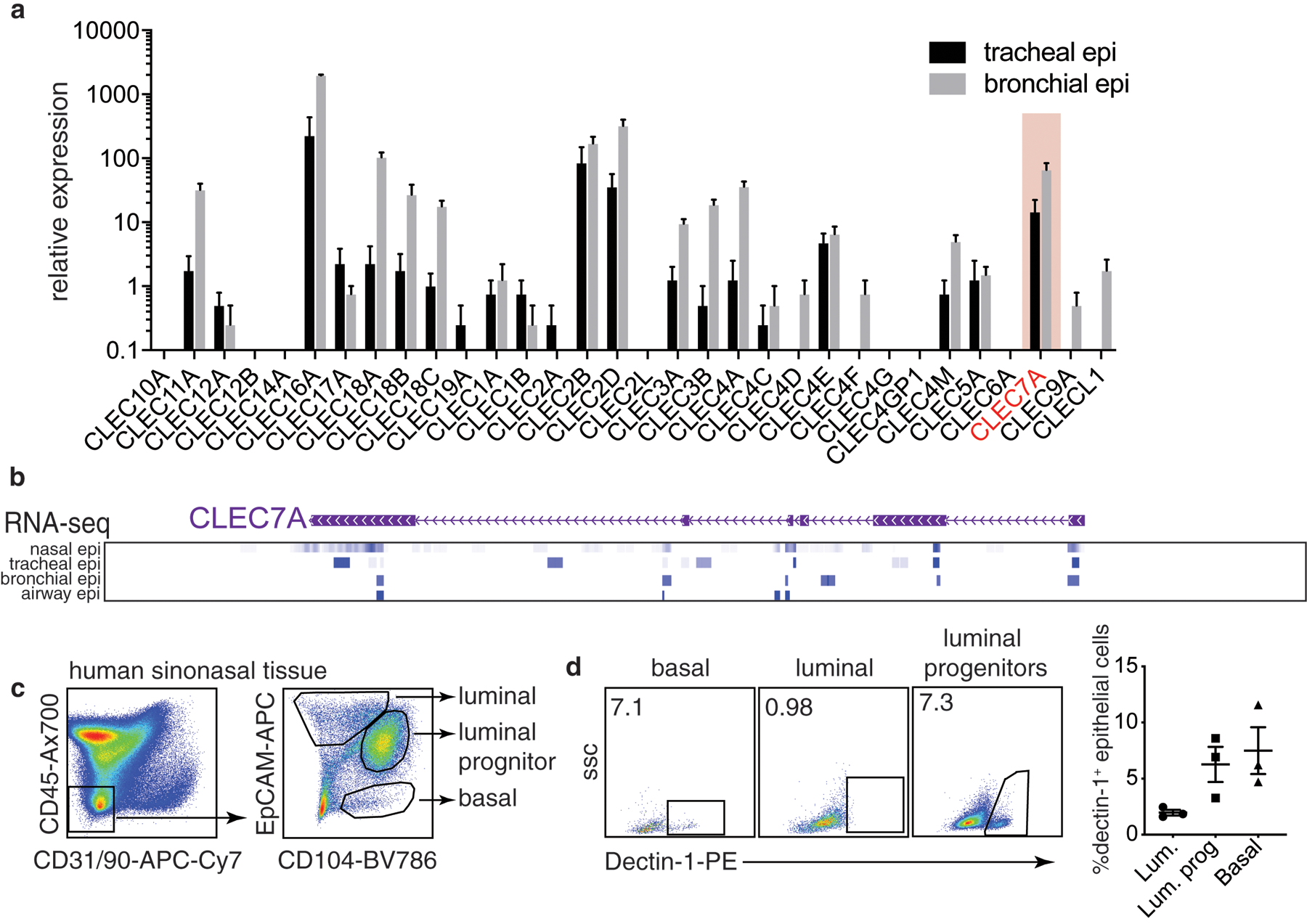
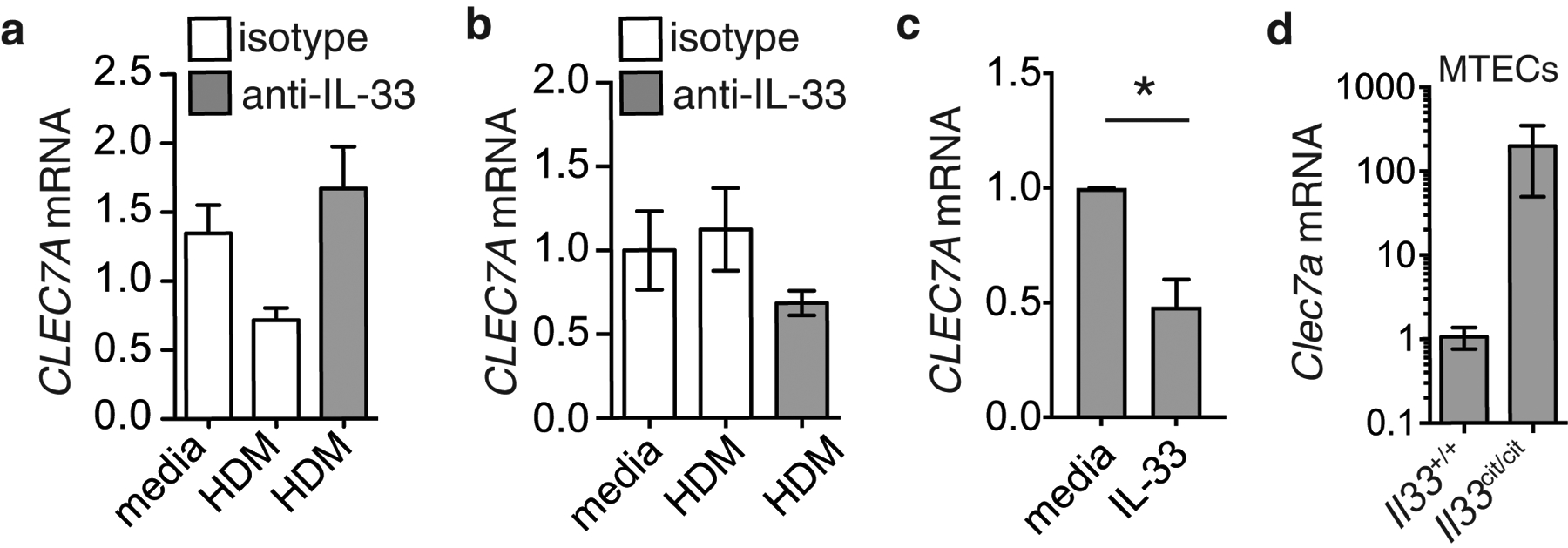
Allergic diseases arise in susceptible individuals in part because of decrements in protective pathways. The mechanism by which these anti-inflammatory molecules become repressed remains unclear. We have previously reported that epithelial dectin-1 prevents aberrant type 2 responses and is downregulated in the epithelium of allergic patients. Here, we report that dectin-1 is constitutively expressed by the respiratory epithelium in humans and that IL-33 specifically acts as a repressor of dectin-1. Mechanistically, this occurs via IL-33-dependent STAT3 activation and the subsequent repression of the dectin-1 gene, CLEC7A. We have identified a novel enhancer region upstream of the proximal promoter of CLEC7A that is only accessible in epithelial cells, but not in hematopoietic cells. Epigenetic repression of CLEC7A through this newly identified locus, downstream of an aberrant IL-33-STAT3 axis, occurs in the epithelium of allergic individuals. Collectively, our data identify a mechanism of epigenetic fine-tuning of dectin-1 expression in epithelial cells that may participate in allergenicity.
过敏疾病在部分易感个体中发生,部分原因是保护途径的减少。这些抗炎分子被抑制的机制尚不清楚。我们之前曾报道过上皮细胞中的 dectin-1 可防止异常的 2 型反应,并且在过敏患者的上皮细胞中下调。在这里,我们报告说,人类的呼吸道上皮细胞持续表达 dectin-1,而 IL-33 特异性地作为 dectin-1 的抑制剂。从机制上讲,这是通过 IL-33 依赖性 STAT3 激活以及随后的 dectin-1 基因(CLEC7A)的抑制而发生的。我们已经鉴定出 CLEC7A 近端启动子上游的一个新的增强子区域,该区域仅在上皮细胞中可访问,而在造血细胞中不可访问。在过敏个体的上皮细胞中,通过这种新鉴定的 IL-33-STAT3 轴下游的异位,通过表观遗传抑制 CLEC7A。总的来说,我们的数据确定了上皮细胞中 dectin-1 表达的表观遗传精细调控的机制,该机制可能参与变应原性。