Yan Fang, Hao Yanyan, Gong Xinji, Sun Hu, Ding Jianbing, Wang Jing
School of Public Health, Xinjiang Medical University, Urumqi, Xinjiang Uyghur Autonomous Region 830011, P.R. China.
State Key Laboratory of Pathogenesis, Prevention and Treatment of High Incidence Diseases in Central Asia, Department of Respiratory Medicine, The First Affiliated Hospital of Xinjiang Medical University, Urumqi, Xinjiang Uyghur Autonomous Region 830054, P.R. China.
Mol Med Rep. 2021 Jul;24(1). doi: 10.3892/mmr.2021.12141. Epub 2021 May 13.
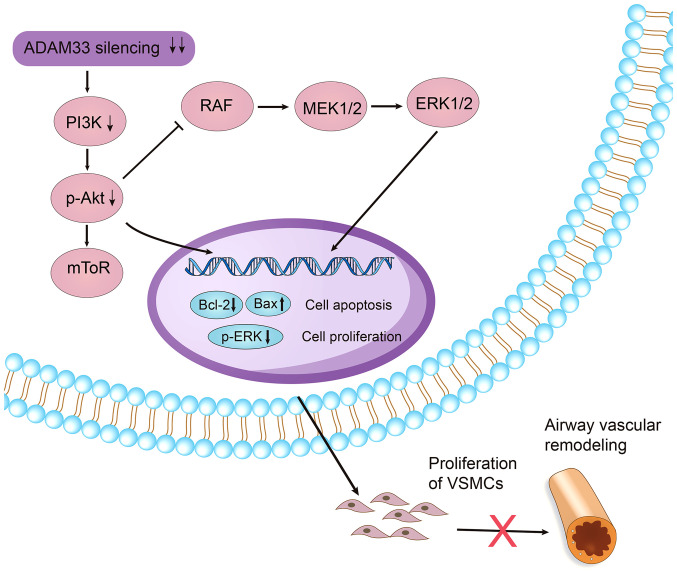
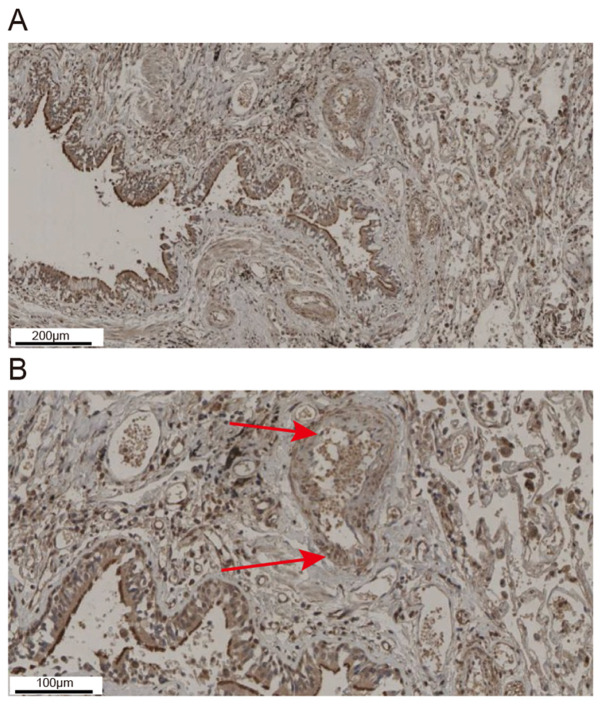
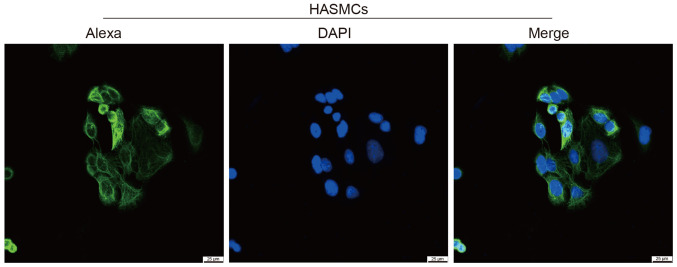
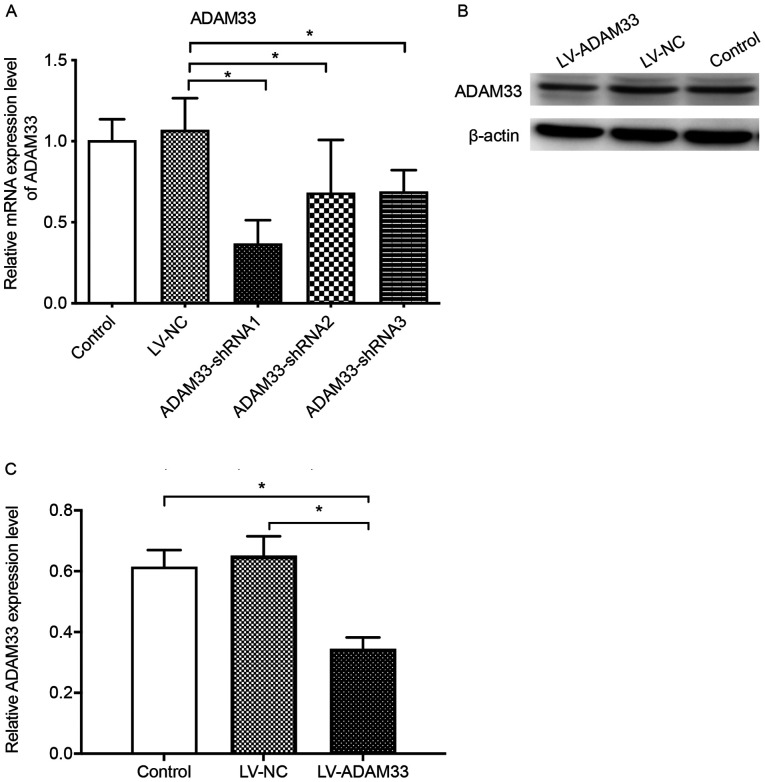
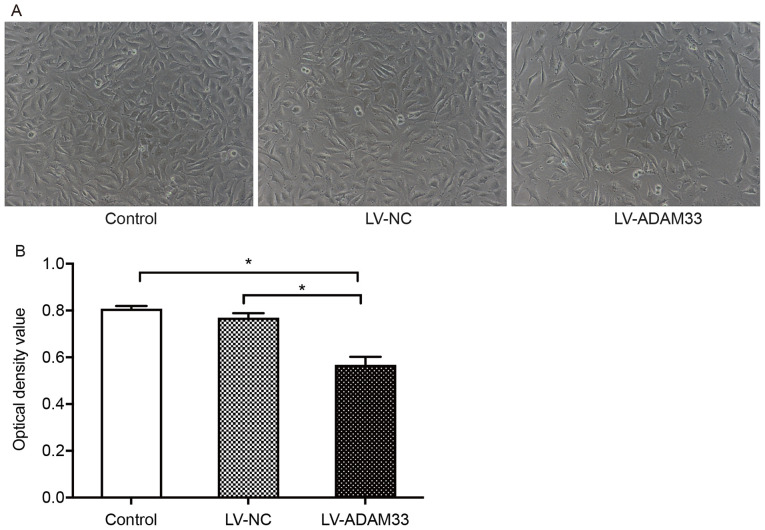
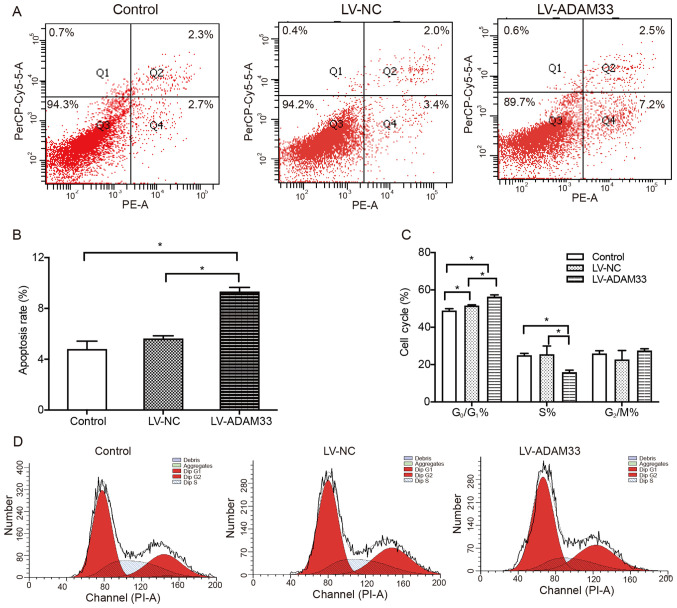
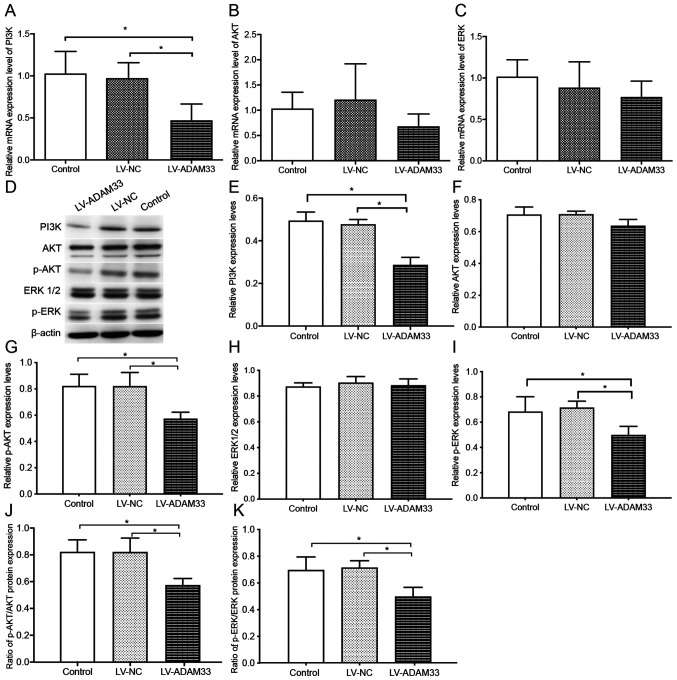
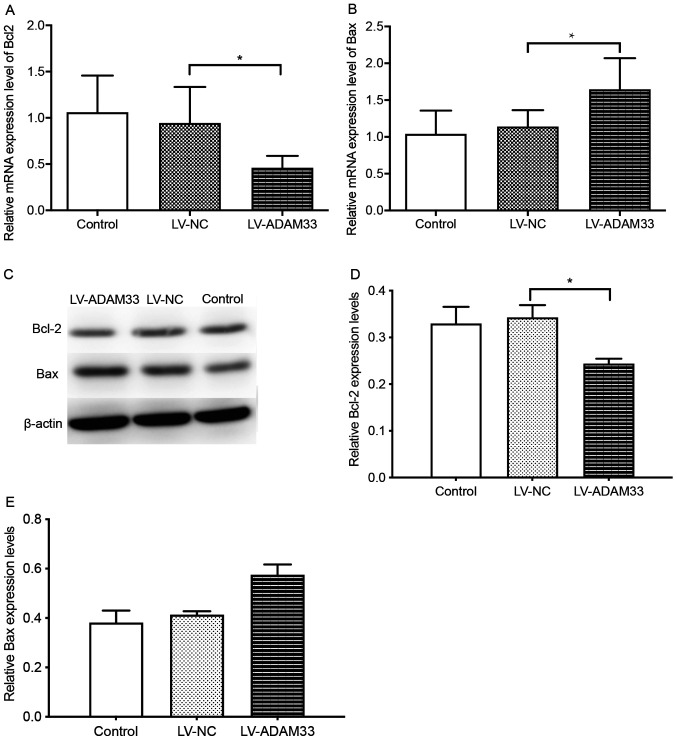
Accumulating evidence suggests that pulmonary expression of a disintegrin and metalloproteinase‑33 (ADAM33) serves a key role in the pathogenesis of airway remodeling‑related diseases, including asthma. Airway vascular proliferation has been recognized as a key feature of airway remodeling. Our previous study showed that ADAM33 is constitutively expressed in airway vascular smooth muscle cells in patients with asthma, suggesting a potential role of ADAM33 in regulating airway vascular remodeling. Using human aortic smooth muscle cells (HASMCs) and lentiviral vector carrying short hairpin RNA for ADAM33, the present study aimed to evaluate the influence of ADAM33 silencing on the proliferation and apoptosis of HASMCs and the underlying molecular pathways. Cellular proliferation was observed using the Cell Counting Kit‑8 method. Cellular apoptosis was evaluated with Annexin V‑PE/7‑AAD staining and flow cytometry. Reverse transcription‑quantitative PCR and western blotting were used to evaluate the changes in mRNA and protein levels of involved signaling molecules. It was found that silencing of ADAM33 expression in HASMCs significantly inhibited proliferation, but induced the apoptosis of HASMCs. These changes were accompanied by inhibition of the PI3K/AKT/ERK pathway and Bcl‑2, but an increase in Bax expression. These results suggested that constitutive expression of ADAM33 may be important to maintain a proliferative phenotype in HASMCs. The influences of ADAM33 on proliferation and apoptosis of HASMCs may involve regulation of PI3K/AKT/ERK and Bax/Bcl‑2 pathways. These findings suggested an important role of ADAM33 in airway vascular remodeling and potential therapeutic significance of ADAM33 inhibition in airway remodeling‑related diseases.
越来越多的证据表明,去整合素和金属蛋白酶33(ADAM33)在肺部的表达在包括哮喘在内的气道重塑相关疾病的发病机制中起关键作用。气道血管增殖已被认为是气道重塑的一个关键特征。我们之前的研究表明,ADAM33在哮喘患者的气道血管平滑肌细胞中持续表达,提示ADAM33在调节气道血管重塑中可能发挥作用。本研究使用人主动脉平滑肌细胞(HASMCs)和携带针对ADAM33的短发夹RNA的慢病毒载体,旨在评估ADAM33沉默对HASMCs增殖和凋亡的影响以及潜在的分子途径。使用细胞计数试剂盒-8法观察细胞增殖。用膜联蛋白V-PE/7-AAD染色和流式细胞术评估细胞凋亡。采用逆转录定量PCR和蛋白质印迹法评估相关信号分子的mRNA和蛋白质水平变化。结果发现,沉默HASMCs中的ADAM33表达可显著抑制其增殖,但诱导HASMCs凋亡。这些变化伴随着PI3K/AKT/ERK通路和Bcl-2的抑制,但Bax表达增加。这些结果表明,ADAM33的组成性表达可能对维持HASMCs的增殖表型很重要。ADAM33对HASMCs增殖和凋亡的影响可能涉及PI3K/AKT/ERK和Bax/Bcl-2通路的调节。这些发现提示ADAM33在气道血管重塑中起重要作用,以及抑制ADAM33在气道重塑相关疾病中的潜在治疗意义。