ARC Centre of Excellence for Nanoscale BioPhotonics, Institute of Photonics and Advanced Sensing, School of Physical Sciences, The University of Adelaide, Adelaide, South Australia, Australia.
Institute of Photonics and Advanced Sensing, School of Biological Sciences, The University of Adelaide, Adelaide, South Australia, Australia.
J Biol Chem. 2021 Jan-Jun;296:100773. doi: 10.1016/j.jbc.2021.100773. Epub 2021 May 11.
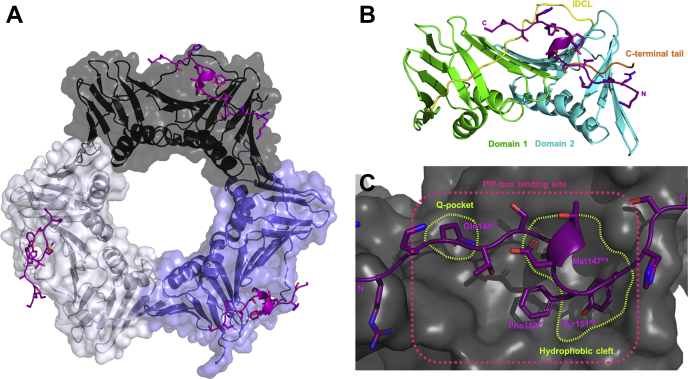
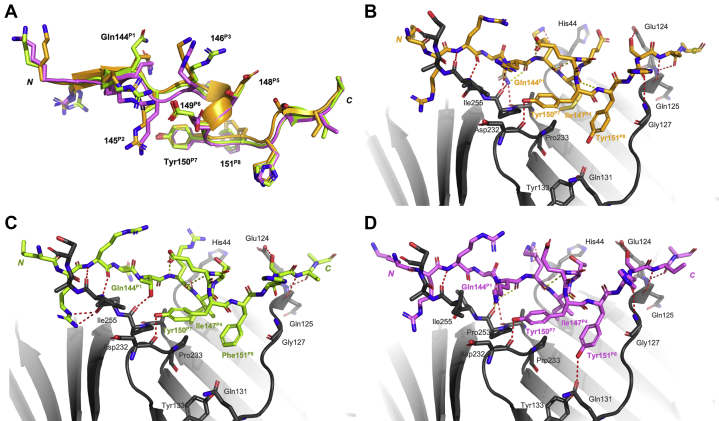
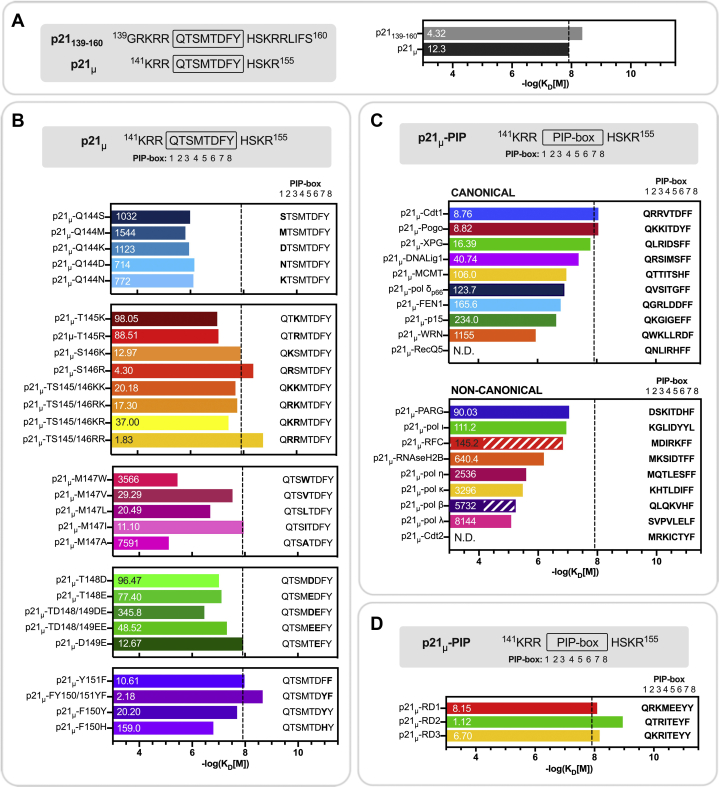
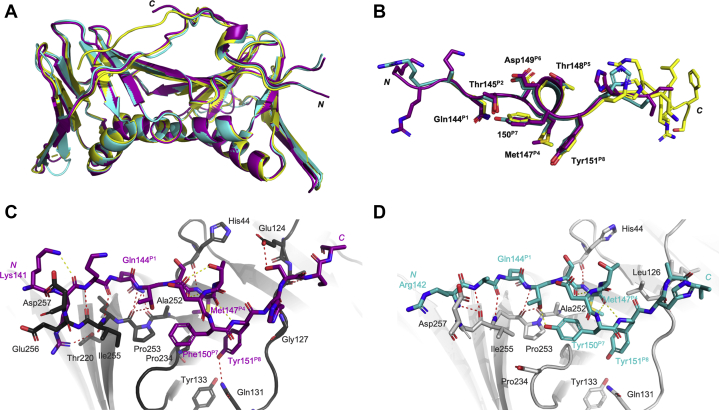
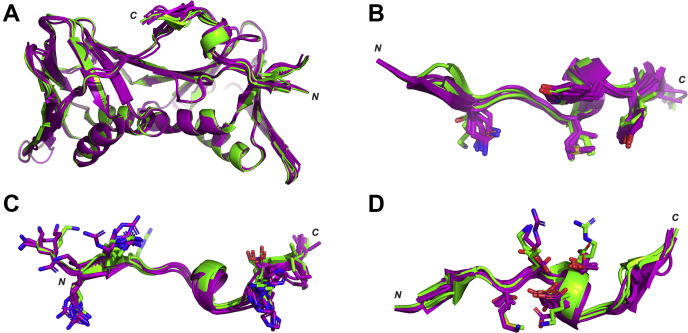
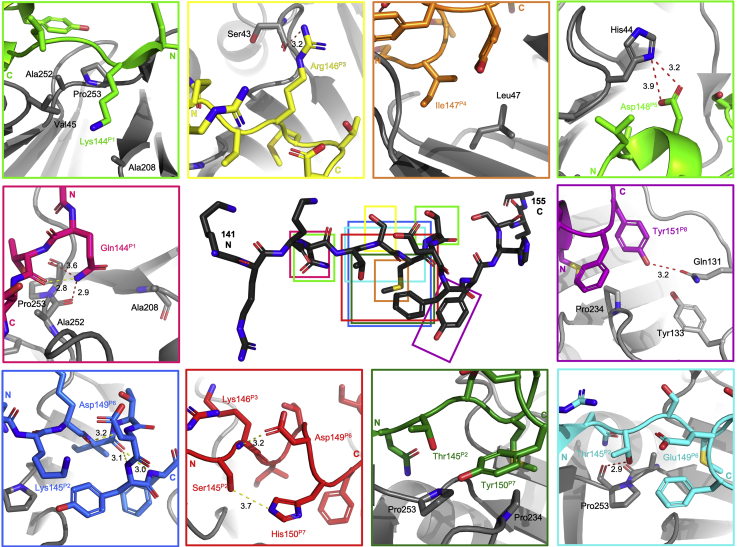
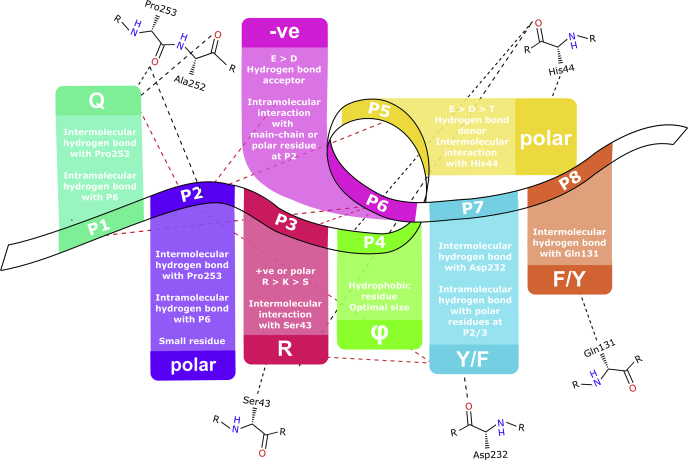
The human sliding clamp, Proliferating Cell Nuclear Antigen (hPCNA), interacts with over 200 proteins through a conserved binding motif, the PIP-box, to orchestrate DNA replication and repair. It is not clear how changes to the features of a PIP-box modulate protein binding and thus how they fine-tune downstream processes. Here, we present a systematic study of each position within the PIP-box to reveal how hPCNA-interacting peptides bind with drastically varied affinities. We synthesized a series of 27 peptides derived from the native protein p21 with small PIP-box modifications and another series of 19 peptides containing PIP-box binding motifs from other proteins. The hPCNA-binding affinity of all peptides, characterized as K values determined by surface plasmon resonance, spanned a 4000-fold range, from 1.83 nM to 7.59 μM. The hPCNA-bound peptide structures determined by X-ray crystallography and modeled computationally revealed intermolecular and intramolecular interaction networks that correlate with high hPCNA affinity. These data informed rational design of three new PIP-box sequences, testing of which revealed the highest affinity hPCNA-binding partner to date, with a K value of 1.12 nM, from a peptide with PIP-box QTRITEYF. This work showcases the sequence-specific nuances within the PIP-box that are responsible for high-affinity hPCNA binding, which underpins our understanding of how nature tunes hPCNA affinity to regulate DNA replication and repair processes. In addition, these insights will be useful to future design of hPCNA inhibitors.
人类滑动夹,增殖细胞核抗原(hPCNA),通过保守的结合基序,即 PIP 盒,与超过 200 种蛋白质相互作用,以协调 DNA 复制和修复。目前尚不清楚 PIP 盒特征的变化如何调节蛋白质结合,以及它们如何微调下游过程。在这里,我们对 PIP 盒中的每个位置进行了系统研究,以揭示 hPCNA 相互作用肽如何以截然不同的亲和力结合。我们合成了一系列具有小 PIP 盒修饰的来自天然蛋白 p21 的 27 个肽,以及一系列含有来自其他蛋白质的 PIP 盒结合基序的 19 个肽。所有肽的 hPCNA 结合亲和力,通过表面等离子体共振确定为 K 值,跨越了 4000 倍的范围,从 1.83 nM 到 7.59 μM。通过 X 射线晶体学确定的 hPCNA 结合肽结构和计算建模揭示了与高 hPCNA 亲和力相关的分子间和分子内相互作用网络。这些数据为三个新的 PIP 盒序列的合理设计提供了信息,测试结果表明,来自具有 PIP 盒 QTRITEYF 的肽的最高亲和力 hPCNA 结合伙伴,K 值为 1.12 nM。这项工作展示了 PIP 盒中负责高亲和力 hPCNA 结合的序列特异性细微差别,这为我们理解自然如何调节 hPCNA 亲和力以调节 DNA 复制和修复过程提供了依据。此外,这些见解将对未来 hPCNA 抑制剂的设计有用。