• 文献检索
  • 文档翻译
  • 深度研究
  • 学术资讯
  • Suppr Zotero 插件Zotero 插件
  • 邀请有礼
  • 套餐&价格
  • 历史记录
应用&插件
Suppr Zotero 插件Zotero 插件浏览器插件Mac 客户端Windows 客户端微信小程序
定价
高级版会员购买积分包购买API积分包
服务
文献检索文档翻译深度研究API 文档MCP 服务
关于我们
关于 Suppr公司介绍联系我们用户协议隐私条款
关注我们

Suppr 超能文献

核心技术专利:CN118964589B侵权必究
粤ICP备2023148730 号-1Suppr @ 2026

文献检索

告别复杂PubMed语法,用中文像聊天一样搜索,搜遍4000万医学文献。AI智能推荐,让科研检索更轻松。

立即免费搜索

文件翻译

保留排版,准确专业,支持PDF/Word/PPT等文件格式,支持 12+语言互译。

免费翻译文档

深度研究

AI帮你快速写综述,25分钟生成高质量综述,智能提取关键信息,辅助科研写作。

立即免费体验

采用圆窗入路的人工耳蜗植入术后前庭功能保留

Vestibular Preservation After Cochlear Implantation Using the Round Window Approach.

作者信息

Tsukada Keita, Usami Shin-Ichi

机构信息

Department of Otolaryngology, Shinshu University School of Medicine, Matsumoto, Japan.

Department of Hearing Implant Sciences, Shinshu University School of Medicine, Matsumoto, Japan.

出版信息

Front Neurol. 2021 Apr 27;12:656592. doi: 10.3389/fneur.2021.656592. eCollection 2021.

DOI:10.3389/fneur.2021.656592
PMID:33986720
原文链接:https://pmc.ncbi.nlm.nih.gov/articles/PMC8110830/
Abstract

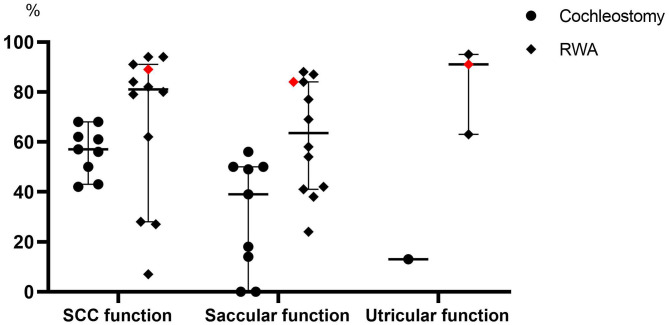
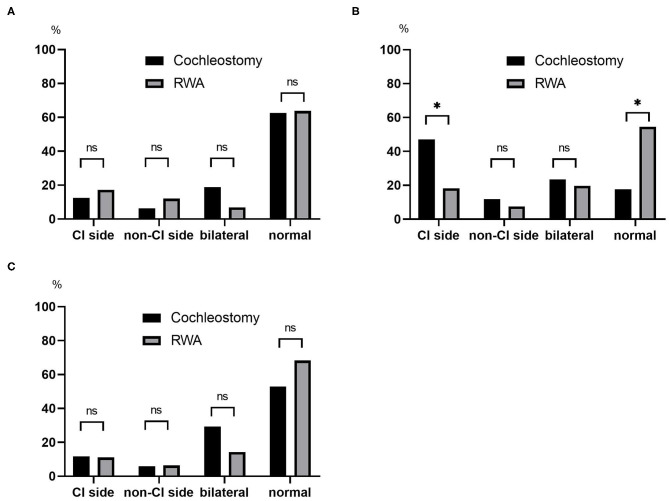
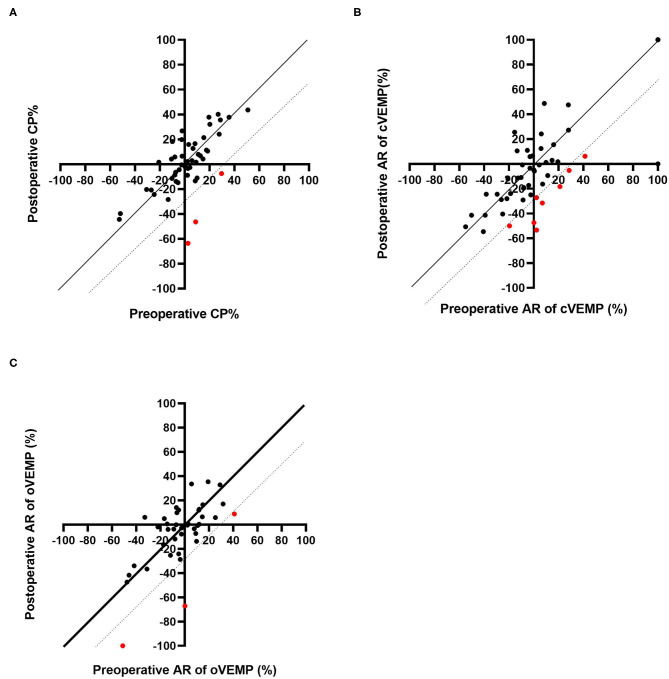
The development of less traumatic surgical techniques, such as the round window approach (RWA), as well as the use of flexible electrodes and post-operative steroid administration have enabled the preservation of residual hearing after cochlear implantation (CI) surgery. However, consideration must still be given to the complications that can accompany CI. One such potential complication is the impairment of vestibular function with resulting vertigo symptoms. The aim of our current study was to examine the changes in vestibular function after implantation in patients who received CI using less traumatic surgery, particularly the RWA technique. Sixty-six patients who received CI in our center were examined by caloric testing, cervical vestibular evoked myogenic potential (cVEMP) and ocular VEMP (oVEMP) before or after implantation, or both, to obtain data on semicircular canal, saccular and utricular function, respectively. Less traumatic CI surgery was performed by the use of the RWA and insertion of flexible electrodes such as MED-EL FLEX soft, FLEX 28, and FLEX 24 (Innsbruck, Austria). Caloric response and the asymmetry ratio of cVEMP and oVEMP were examined before and after implantation using less traumatic surgical techniques. Compared with before implantation, 93.9, 82.4, and 92.5% of the patients showed preserved vestibular function after implantation based on caloric testing, cVEMP and oVEMP results, respectively. We also examined the results for vestibular function by a comparison of the 66 patients using the RWA and flexible electrodes, and 17 patients who underwent cochleostomy and insertion of conventional or hard electrodes. We measured responses using caloric testing, cVEMP and oVEMP in patients after CI. There were no differences in the frequencies of abnormal caloric and oVEMP results in the implanted ears between the RWA and cochleostomy. On the other hand, the frequency of abnormal cVEMP responses in the implanted ears in the patients who received implantation by cochleostomy was significantly higher than that in the patients undergoing surgery using the RWA. Patients receiving CI using less traumatic surgical techniques such as RWA and flexible electrodes have reduced risk of damage to vestibular function.

摘要

创伤较小的手术技术的发展,如圆窗入路(RWA),以及柔性电极的使用和术后类固醇给药,使得人工耳蜗植入(CI)手术后能够保留残余听力。然而,仍必须考虑CI可能伴随的并发症。其中一种潜在并发症是前庭功能受损并导致眩晕症状。我们当前研究的目的是检查采用创伤较小的手术(特别是RWA技术)进行CI植入的患者术后前庭功能的变化。对在我们中心接受CI植入的66例患者在植入前或植入后或两者均进行了冷热试验、颈前庭诱发肌源性电位(cVEMP)和眼VEMP(oVEMP)检查,以分别获取关于半规管、球囊和椭圆囊功能的数据。采用RWA并插入诸如MED-EL FLEX soft、FLEX 28和FLEX 24(奥地利因斯布鲁克)等柔性电极进行创伤较小的CI手术。使用创伤较小的手术技术,在植入前后检查冷热反应以及cVEMP和oVEMP的不对称率。基于冷热试验、cVEMP和oVEMP结果,分别有93.9%、82.4%和92.5%的患者在植入后显示前庭功能得以保留。我们还通过比较66例采用RWA和柔性电极的患者以及17例接受蜗窗造口术并植入传统或硬电极的患者的前庭功能结果进行了研究。我们在CI植入后的患者中使用冷热试验、cVEMP和oVEMP测量反应。RWA组和蜗窗造口术组植入耳中冷热试验和oVEMP异常结果的频率没有差异。另一方面,接受蜗窗造口术植入的患者植入耳中cVEMP异常反应的频率显著高于采用RWA进行手术的患者。采用RWA和柔性电极等创伤较小的手术技术进行CI植入的患者,前庭功能受损的风险降低。
https://cdn.ncbi.nlm.nih.gov/pmc/blobs/42e5/8110830/fd17f47a785c/fneur-12-656592-g0003.jpg
https://cdn.ncbi.nlm.nih.gov/pmc/blobs/42e5/8110830/99aba58b56f8/fneur-12-656592-g0001.jpg
https://cdn.ncbi.nlm.nih.gov/pmc/blobs/42e5/8110830/2185cbf90181/fneur-12-656592-g0002.jpg
https://cdn.ncbi.nlm.nih.gov/pmc/blobs/42e5/8110830/fd17f47a785c/fneur-12-656592-g0003.jpg
https://cdn.ncbi.nlm.nih.gov/pmc/blobs/42e5/8110830/99aba58b56f8/fneur-12-656592-g0001.jpg
https://cdn.ncbi.nlm.nih.gov/pmc/blobs/42e5/8110830/2185cbf90181/fneur-12-656592-g0002.jpg
https://cdn.ncbi.nlm.nih.gov/pmc/blobs/42e5/8110830/fd17f47a785c/fneur-12-656592-g0003.jpg

相似文献

1
Vestibular Preservation After Cochlear Implantation Using the Round Window Approach.采用圆窗入路的人工耳蜗植入术后前庭功能保留
Front Neurol. 2021 Apr 27;12:656592. doi: 10.3389/fneur.2021.656592. eCollection 2021.
2
Effects of cochlear implants on otolith function as evaluated by vestibulo-ocular reflex and vestibular evoked myogenic potentials.通过前庭眼反射和前庭诱发肌源性电位评估人工耳蜗对耳石功能的影响。
Auris Nasus Larynx. 2019 Dec;46(6):836-843. doi: 10.1016/j.anl.2019.03.011. Epub 2019 Apr 19.
3
Minimally invasive surgical techniques in vestibular function preservation in patients with cochlear implants.人工耳蜗植入患者前庭功能保留中的微创外科技术
Front Neurosci. 2022 Sep 27;16:900879. doi: 10.3389/fnins.2022.900879. eCollection 2022.
4
[Effects of cochlear implantation on vestibular function in patients with large vestibular aqueduct syndrome].[人工耳蜗植入对大前庭导水管综合征患者前庭功能的影响]
Lin Chuang Er Bi Yan Hou Tou Jing Wai Ke Za Zhi. 2025 Jan;39(1):24-28. doi: 10.13201/j.issn.2096-7993.2025.01.006.
5
Deep round window insertion versus standard approach in cochlear implant surgery.人工耳蜗植入手术中圆窗深部插入与标准方法的比较
Eur Arch Otorhinolaryngol. 2016 Jan;273(1):43-50. doi: 10.1007/s00405-014-3451-2. Epub 2014 Dec 31.
6
Influence of Cochlear Implantation on Vestibular Function in Children With an Enlarged Vestibular Aqueduct.人工耳蜗植入对大前庭导水管综合征儿童前庭功能的影响。
Front Neurol. 2021 Apr 21;12:663123. doi: 10.3389/fneur.2021.663123. eCollection 2021.
7
Vestibular Function After Cochlear Implantation in Partial Deafness Treatment.部分耳聋治疗中人工耳蜗植入后的前庭功能
Front Neurol. 2021 May 21;12:667055. doi: 10.3389/fneur.2021.667055. eCollection 2021.
8
Early Assessment of Vestibular Function after Unilateral Cochlear Implant Surgery.单侧人工耳蜗植入术后前庭功能的早期评估
Audiol Neurootol. 2020;25(1-2):50-59. doi: 10.1159/000502252. Epub 2019 Sep 10.
9
Meta-analysis of subjective complaints of vertigo and vestibular tests after cochlear implantation.人工耳蜗植入术后眩晕主观症状及前庭测试的Meta分析
Laryngoscope. 2018 Sep;128(9):2110-2123. doi: 10.1002/lary.27071. Epub 2018 Jan 4.
10
Objective vestibular function changes in children following cochlear implantation.目的 探讨人工耳蜗植入后儿童前庭功能的变化。
J Vestib Res. 2022;32(1):29-37. doi: 10.3233/VES-190763.

引用本文的文献

1
Long-Term Follow-Up of Vestibular Function in Cochlear-Implanted Teenagers and Young Adults.青少年和年轻成人人工耳蜗植入者前庭功能的长期随访
Audiol Res. 2025 Apr 13;15(2):42. doi: 10.3390/audiolres15020042.
2
[A clinical study of electrocochleography monitoring for residual hearing retention during minimally invasive cochlear implant].[微创人工耳蜗植入术中电诱发听性脑干反应监测对残余听力保留的临床研究]
Lin Chuang Er Bi Yan Hou Tou Jing Wai Ke Za Zhi. 2025 May;39(5):425-432. doi: 10.13201/j.issn.2096-7993.2025.05.006.
3
Evaluating round window niche visibility in cochlear implantation: anatomical insights and electrode insertion strategies.

本文引用的文献

1
Preservation of Vestibular Function and Residual Hearing After Round Window Cochlear Implantation.圆窗耳蜗植入术后前庭功能和残余听力的保护。
Otol Neurotol. 2019 Aug;40(7):878-882. doi: 10.1097/MAO.0000000000002257.
2
Effect on vestibular function of cochlear implantation by partial deafness treatment-electro acoustic stimulation (PDT-EAS).电-声刺激(EAS)治疗部分聋对人工耳蜗植入患者前庭功能的影响。
Eur Arch Otorhinolaryngol. 2019 Jul;276(7):1951-1959. doi: 10.1007/s00405-019-05425-5. Epub 2019 May 3.
3
Feasibility of hearing preservation for residual hearing with longer cochlear implant electrodes.
评估人工耳蜗植入术中圆窗龛的可视性:解剖学见解与电极插入策略
Eur Arch Otorhinolaryngol. 2025 Jun;282(6):2927-2937. doi: 10.1007/s00405-024-09162-2. Epub 2025 Jan 3.
4
Effect of Cochlear Implantation on Air Conduction and Bone Conduction Elicited Vestibular Evoked Myogenic Potentials-A Scoping Review.人工耳蜗植入对气导和骨导诱发前庭肌源性电位的影响——一项范围综述
J Clin Med. 2024 Nov 20;13(22):6996. doi: 10.3390/jcm13226996.
5
Vestibular function and hearing preservation in children following a minimally invasive cochlear implantation.儿童微创耳蜗植入术后的前庭功能和听力保护。
Eur Arch Otorhinolaryngol. 2024 Aug;281(8):4029-4038. doi: 10.1007/s00405-024-08504-4. Epub 2024 Feb 11.
6
Minimally invasive surgical techniques in vestibular function preservation in patients with cochlear implants.人工耳蜗植入患者前庭功能保留中的微创外科技术
Front Neurosci. 2022 Sep 27;16:900879. doi: 10.3389/fnins.2022.900879. eCollection 2022.
7
The effect of cochlear implant surgery on vestibular function in adults: A meta-analysis study.成人人工耳蜗植入手术对前庭功能的影响:一项荟萃分析研究。
Front Neurol. 2022 Aug 10;13:947589. doi: 10.3389/fneur.2022.947589. eCollection 2022.
使用更长的人工耳蜗电极保留残余听力的可行性。
Acta Otolaryngol. 2018 Dec;138(12):1080-1085. doi: 10.1080/00016489.2018.1508888. Epub 2019 Jan 31.
4
How does cochlear implantation affect five vestibular end-organ functions and dizziness?人工耳蜗植入如何影响五种前庭终器功能及头晕?
Auris Nasus Larynx. 2019 Apr;46(2):178-185. doi: 10.1016/j.anl.2018.07.004. Epub 2018 Aug 9.
5
An overview of cochlear implant electrode array designs.人工耳蜗电极阵列设计概述。
Hear Res. 2017 Dec;356:93-103. doi: 10.1016/j.heares.2017.10.005. Epub 2017 Oct 18.
6
Post Hybrid Cochlear Implant Hearing Loss and Endolymphatic Hydrops.混合式人工耳蜗植入后听力损失与内淋巴积水
Otol Neurotol. 2016 Dec;37(10):1516-1521. doi: 10.1097/MAO.0000000000001199.
7
Influence of cochlear implantation on vestibular function.人工耳蜗植入对前庭功能的影响。
Acta Otolaryngol. 2016 Jul;136(7):655-9. doi: 10.3109/00016489.2016.1154186. Epub 2016 Mar 23.
8
Insertion Depth in Cochlear Implantation and Outcome in Residual Hearing and Vestibular Function.人工耳蜗植入的插入深度与残余听力及前庭功能的结果
Ear Hear. 2016 Mar-Apr;37(2):e129-37. doi: 10.1097/AUD.0000000000000241.
9
Vestibular function after cochlear implant surgery.人工耳蜗植入术后的前庭功能
Cochlear Implants Int. 2016 May;17(3):151-7. doi: 10.1179/1754762815Y.0000000014. Epub 2016 Apr 6.
10
Deep round window insertion versus standard approach in cochlear implant surgery.人工耳蜗植入手术中圆窗深部插入与标准方法的比较
Eur Arch Otorhinolaryngol. 2016 Jan;273(1):43-50. doi: 10.1007/s00405-014-3451-2. Epub 2014 Dec 31.