Wu Jinlong, Xu Chengfeng, Guan Xin, Ni Da, Yang Xuhui, Yang Zhiyin, Wang Mingsong
Department of Thoracic Surgery, Shanghai Ninth People's Hospital, Shanghai Jiaotong University School of Medicine, Shanghai, China.
Department of Pharmacy, Shidong Hospital of Shanghai Yangpu District, Shanghai, China.
Ann Transl Med. 2021 Apr;9(7):569. doi: 10.21037/atm-21-463.
Tumor mutation burden (TMB) and immune microenvironment are important determinants of prognosis and immunotherapeutic efficacy for cancer patients. The aim of the present study was to develop an immune signature to effectively predict prognosis and immunotherapeutic response in patients with lung squamous cell carcinoma (LUSC).
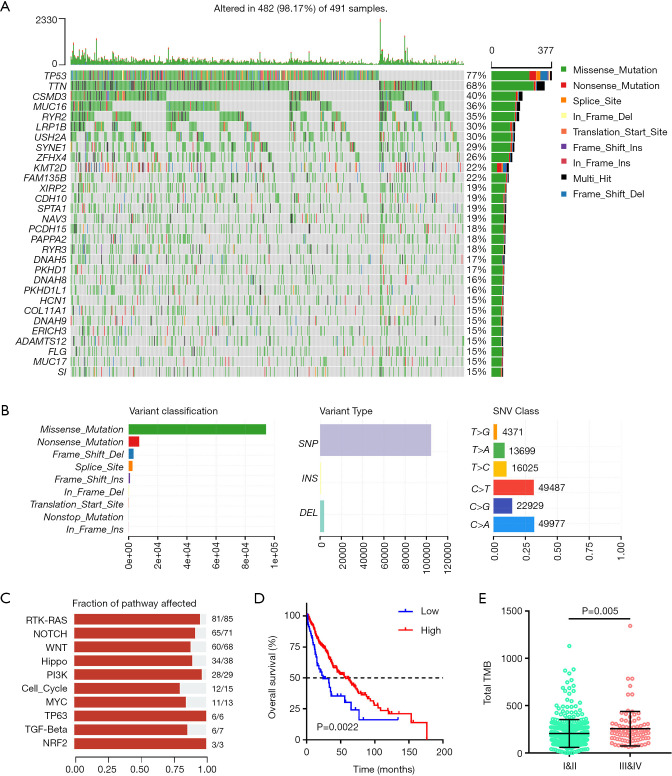
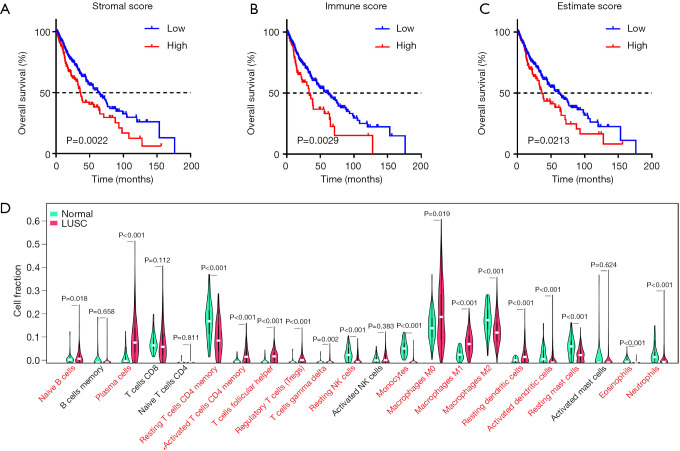
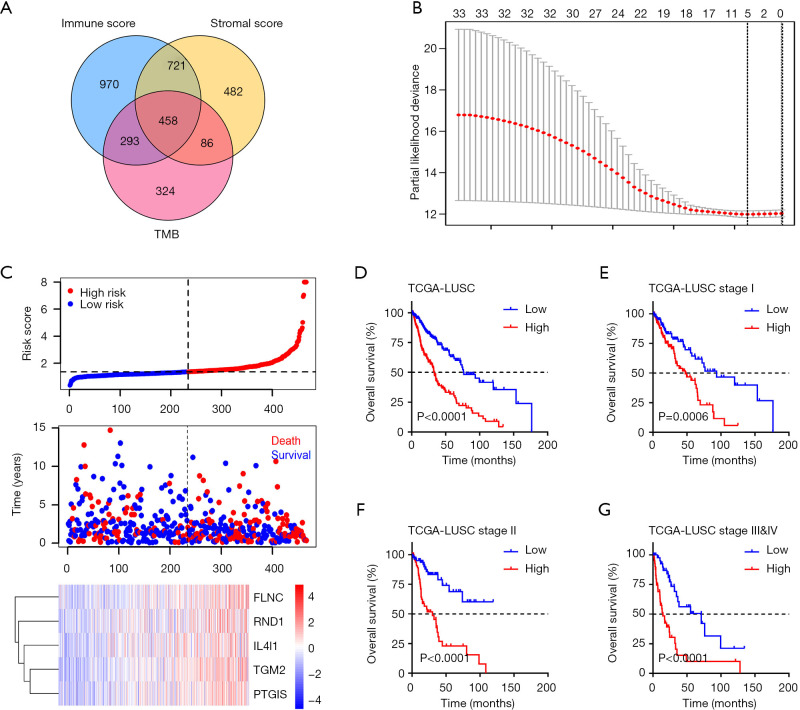
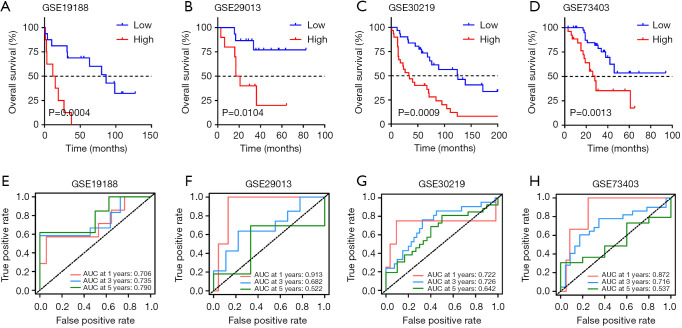
TMB and immune microenvironment characteristics were comprehensively analyzed by multi-omics data in LUSC. The immune signature was further constructed and validated in multiple independent datasets by LASSO Cox regression analysis. Next, the value of immune signature in predicting the response of immunotherapy was evaluated. Finally, the possible mechanism of immune signature was also investigated.
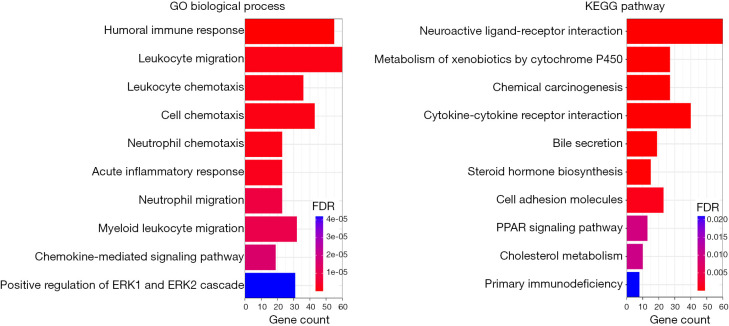
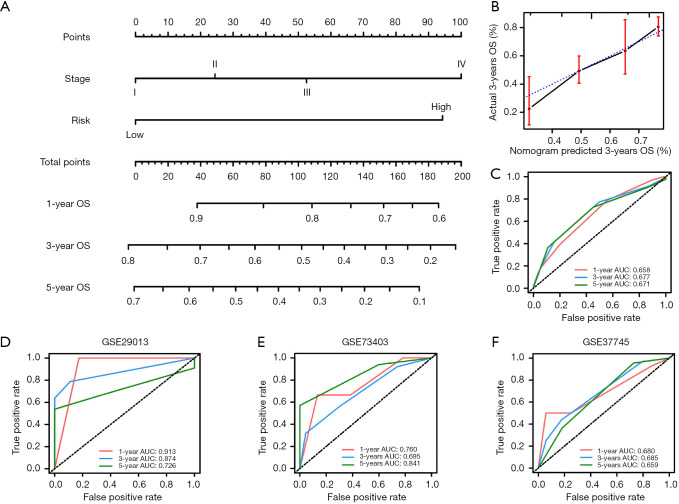
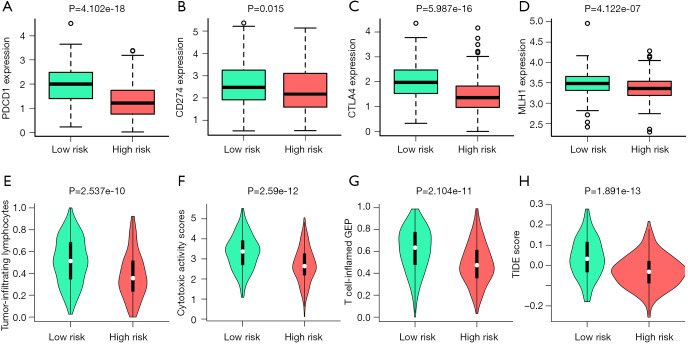
A novel immune signature based on 5 genes was constructed and validated to predict the prognosis of LUSC patients. These genes were filamin-C, Rho family GTPase 1, interleukin 4-induced gene-1, transglutaminase 2, and prostaglandin I2 synthase. High-risk patients had significantly poorer survival than low-risk patients. A nomogram was also developed based on the immune signature and tumor stage, which showed good application. Furthermore, we found that the immune signature had a significant correlation with immune checkpoint, microsatellite instability, tumor infiltrating lymphocytes, cytotoxic activity scores, and T-cell-inflamed score, suggesting low-risk patients are more likely to benefit from immunotherapy. Finally, functional enrichment and pathway analyses revealed several significantly enriched immune-related biological processes and metabolic pathways.
In the present study, we developed a novel immune signature that could predict prognosis and immunotherapeutic response in LUSC patients. The results not only help identify LUSC patients with poor survival, but also increase our understanding of the immune microenvironment and immunotherapy in LUSC.
肿瘤突变负荷(TMB)和免疫微环境是癌症患者预后和免疫治疗疗效的重要决定因素。本研究的目的是开发一种免疫特征,以有效预测肺鳞状细胞癌(LUSC)患者的预后和免疫治疗反应。
通过LUSC的多组学数据全面分析TMB和免疫微环境特征。通过LASSO Cox回归分析在多个独立数据集中进一步构建并验证免疫特征。接下来,评估免疫特征在预测免疫治疗反应中的价值。最后,还研究了免疫特征的可能机制。
构建并验证了一种基于5个基因的新型免疫特征,以预测LUSC患者的预后。这些基因是细丝蛋白-C、Rho家族GTP酶1、白细胞介素4诱导基因-1、转谷氨酰胺酶2和前列腺素I2合酶。高风险患者的生存率明显低于低风险患者。还基于免疫特征和肿瘤分期开发了列线图,显示出良好的应用效果。此外,我们发现免疫特征与免疫检查点、微卫星不稳定性、肿瘤浸润淋巴细胞、细胞毒性活性评分和T细胞炎症评分显著相关,表明低风险患者更有可能从免疫治疗中获益。最后,功能富集和通路分析揭示了几个显著富集的免疫相关生物学过程和代谢通路。
在本研究中,我们开发了一种新型免疫特征,可预测LUSC患者的预后和免疫治疗反应。结果不仅有助于识别生存预后较差的LUSC患者,还增加了我们对LUSC免疫微环境和免疫治疗的理解。