Sun Lejia, Su Si, Xiong Jianping, Hu Wenmo, Liu Lei, Xu Haifeng, Du Shunda, Zhao Haitao, Lu Xin, Sang Xinting, Zhong Shouxian, Yang Huayu, Mao Yilei
Department of Liver Surgery, Peking Union Medical College (PUMC) Hospital, PUMC & Chinese Academy of Medical Sciences, Beijing, China.
Peking Union Medical College (PUMC), PUMC & Chinese Academy of Medical Sciences, Beijing, China.
Ann Transl Med. 2021 Apr;9(8):644. doi: 10.21037/atm-20-6770.
The aim of our study was to explore the prognostic significance of the preoperative controlling nutritional status (CONUT) score and establish a nomogram to predict overall survival (OS) and to achieve a more accurate prognostic risk stratification.
Clinicopathological records of 371 patients who underwent surgical resection for biliary tract cancers (BTC) from December 2002 to December 2017 were reviewed retrospectively. The associations of the CONUT score with clinicopathological factors and OS were evaluated. Univariate and multivariable Cox regression analysis were used to screen out independent predictors. A nomogram was developed and validated to estimate OS.
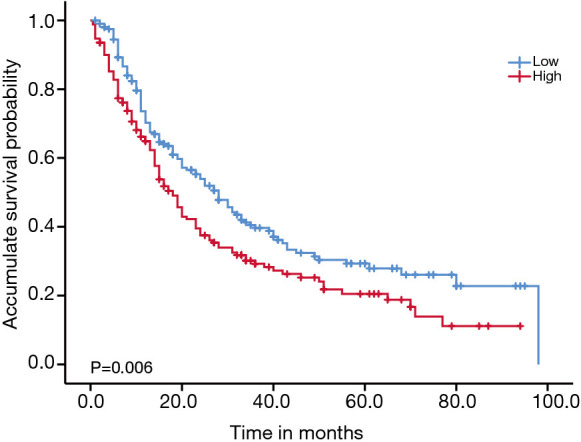
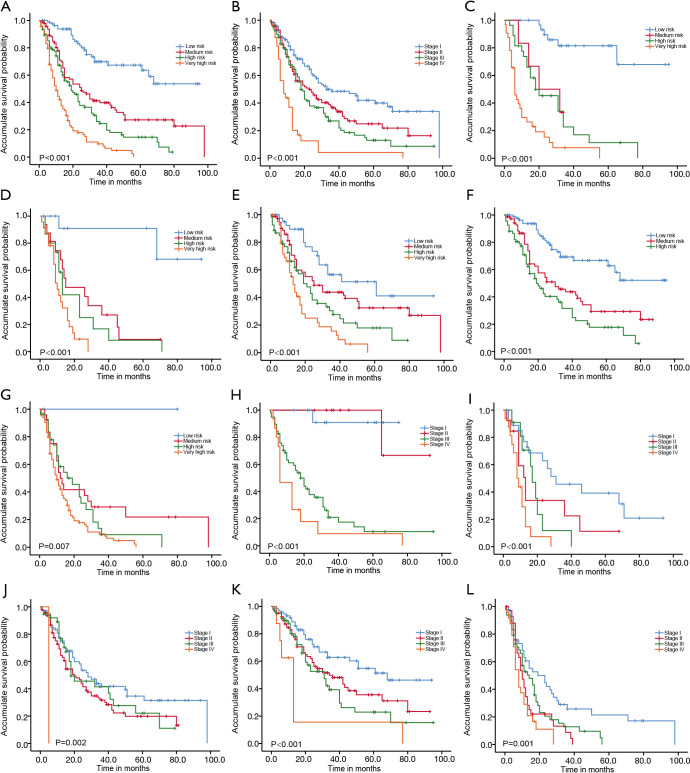
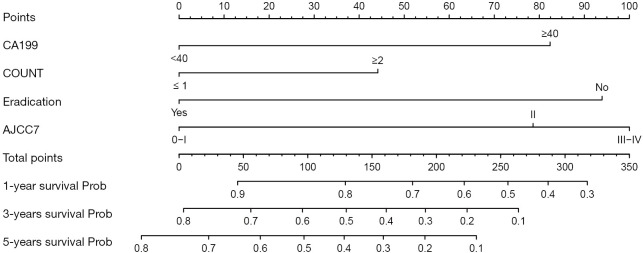
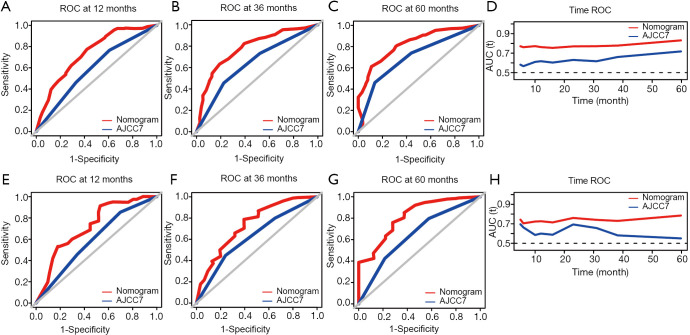
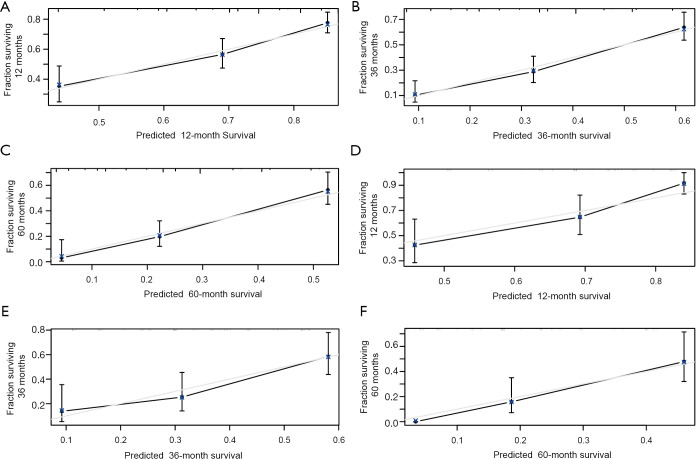
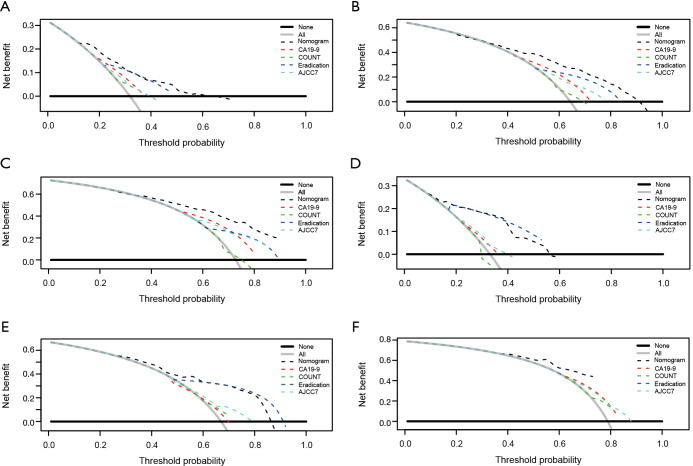
The CONUT score was an independent predictor of OS [hazard ratio 1.478, 95% confidence interval (CI), 1.078-2.025, P=0.015]. And patients with a high CONUT score tended to have a poor prognosis with poor differentiation (P=0.011) of tumor cells and longer hospital stays (P=0.046). Besides the CONUT score, carbohydrate antigen 19-9, surgical method, and the American Joint Committee on Cancer (AJCC; 7th edition) TNM stage were contained in the final prognostic model. An OS nomogram was generated to visually predict 1-, 3-, and 5-year OS. The C-index was 0.714 (95% CI, 0.673-0.755) and 0.679 (95% CI, 0.616-0.742) in the development and validation cohort respectively. The nomogram provided superior discriminative power than the AJCC TNM staging system. The nomogram also demonstrated good risk stratification power in the entire cohort of BTC patients as well as for both BTC and surgical method subgroups.
The nomogram based on the CONUT score can predict OS in patients with BTCs, and it performed better than the AJCC TNM staging system.
本研究旨在探讨术前控制营养状况(CONUT)评分的预后意义,建立预测总生存期(OS)的列线图,以实现更准确的预后风险分层。
回顾性分析2002年12月至2017年12月期间371例行手术切除胆管癌(BTC)患者的临床病理记录。评估CONUT评分与临床病理因素及OS的相关性。采用单因素和多因素Cox回归分析筛选出独立预测因素。开发并验证了用于估计OS的列线图。
CONUT评分是OS的独立预测因素[风险比1.478,95%置信区间(CI)为1.078 - 2.025,P = 0.015]。CONUT评分高的患者预后往往较差,肿瘤细胞分化差(P = 0.011)且住院时间长(P = 0.046)。最终的预后模型除了CONUT评分外,还纳入了糖类抗原19 - 9、手术方式和美国癌症联合委员会(AJCC;第7版)TNM分期。生成了一个OS列线图以直观预测1年、3年和5年OS。在开发队列和验证队列中,C指数分别为0.714(95%CI,0.673 - 0.755)和0.679(95%CI,0.616 - 0.742)。该列线图比AJCC TNM分期系统具有更好的鉴别能力。该列线图在整个BTC患者队列以及BTC和手术方式亚组中也显示出良好的风险分层能力。
基于CONUT评分的列线图可预测BTC患者的OS,且其表现优于AJCC TNM分期系统。