Ozturk Ismet, Sagdic Osman, Yetim Hasan
Istanbul Arel University, Faculty of Fine Arts, Department of Gastronomy and Culinary Arts, Istanbul 34537, Turkey.
Yildiz Technical University, Faculty of Chemical and Metallurgical Engineering, Department of Food Engineering, Istanbul 34210, Turkey.
Food Sci Anim Resour. 2021 Mar;41(2):196-213. doi: 10.5851/kosfa.2020.e89. Epub 2021 Mar 1.
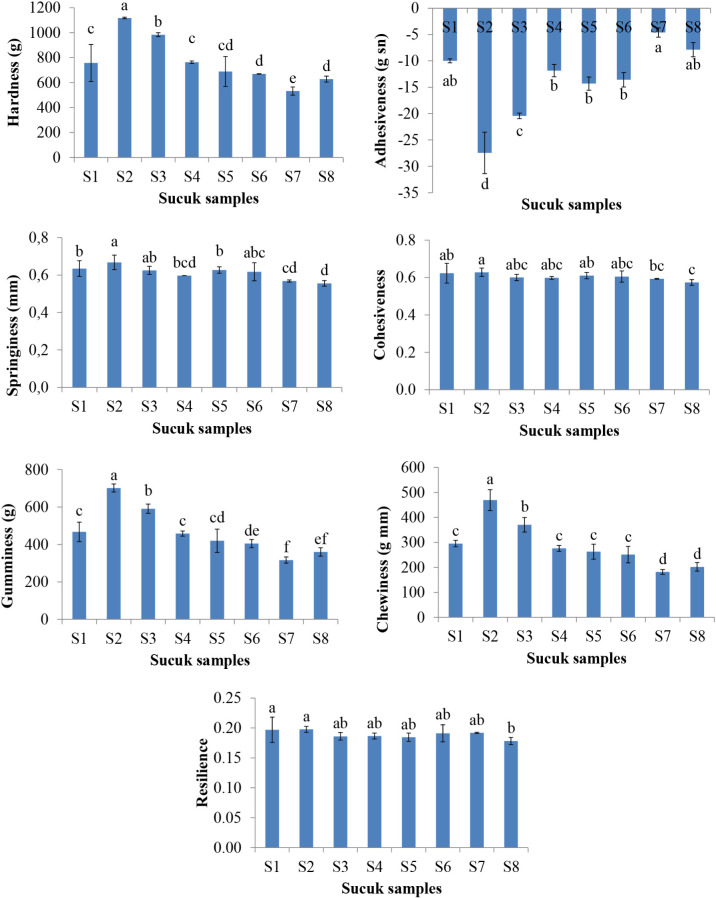
The objective of this study was to determine the effects of yeast cultures ( and ) isolated from traditionally dry fermented Turkish sucuks, on some physicochemical and microbiological properties of the product. Eight different batches of the sucuks were produced by the inoculation of yeast and lactic acid bacteria (LAB) cultures (, and ) in different combinations. The sucuks were ripened for 12 days and analyzed at 1, 6, and 12 days of ripening. Percent moisture content, pH, water activity (a) and residual nitrite values of the sucuk inoculated with the yeast cultures were higher at the end of the ripening. The use of yeast cultures decreased hardness, gumminess, and chewiness values of the sucuk while increased adhesiveness values. Major volatile groups were aldehydes, terpenes, and sulphur compounds in the sucuk samples. The most noticeable results were for sensory properties of the sucuk that were positively improved by the yeast cultures.
本研究的目的是确定从传统干发酵土耳其碎肉肠中分离出的酵母培养物对该产品某些理化和微生物特性的影响。通过以不同组合接种酵母和乳酸菌(LAB)培养物(、和)制备了八批不同的碎肉肠。碎肉肠成熟12天,并在成熟的第1、6和12天进行分析。接种酵母培养物的碎肉肠在成熟结束时的水分含量百分比、pH值、水分活度(a)和残留亚硝酸盐值较高。酵母培养物的使用降低了碎肉肠的硬度、胶黏性和咀嚼性值,同时增加了黏附性值。碎肉肠样品中的主要挥发性成分是醛类、萜类和硫化合物。最显著的结果是酵母培养物对碎肉肠的感官特性有积极改善。