Institute of Oceanology Polish Academy of Sciences, Sopot, Poland.
Takuvik Joint International Laboratory (CNRS and Université Laval), Québec, QC, Canada.
Nat Commun. 2021 May 14;12(1):2816. doi: 10.1038/s41467-021-22994-4.
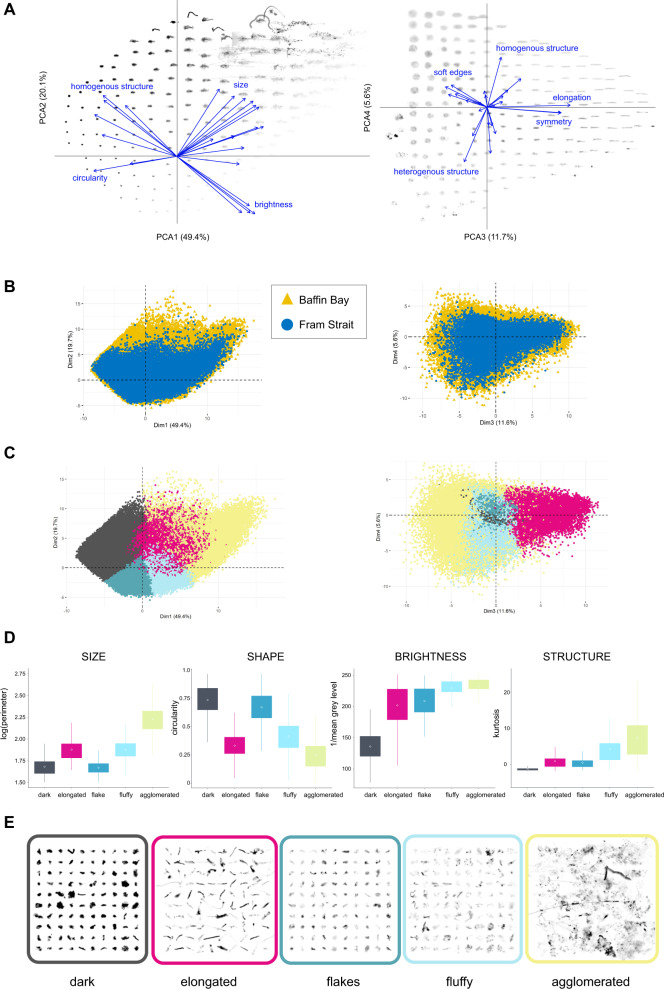
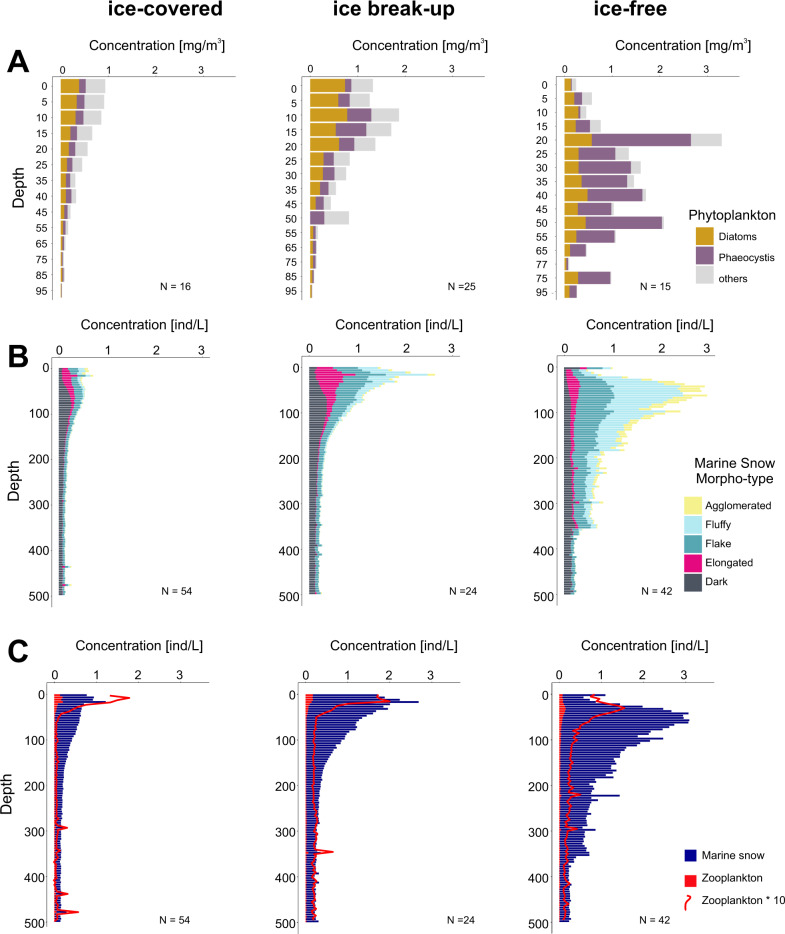
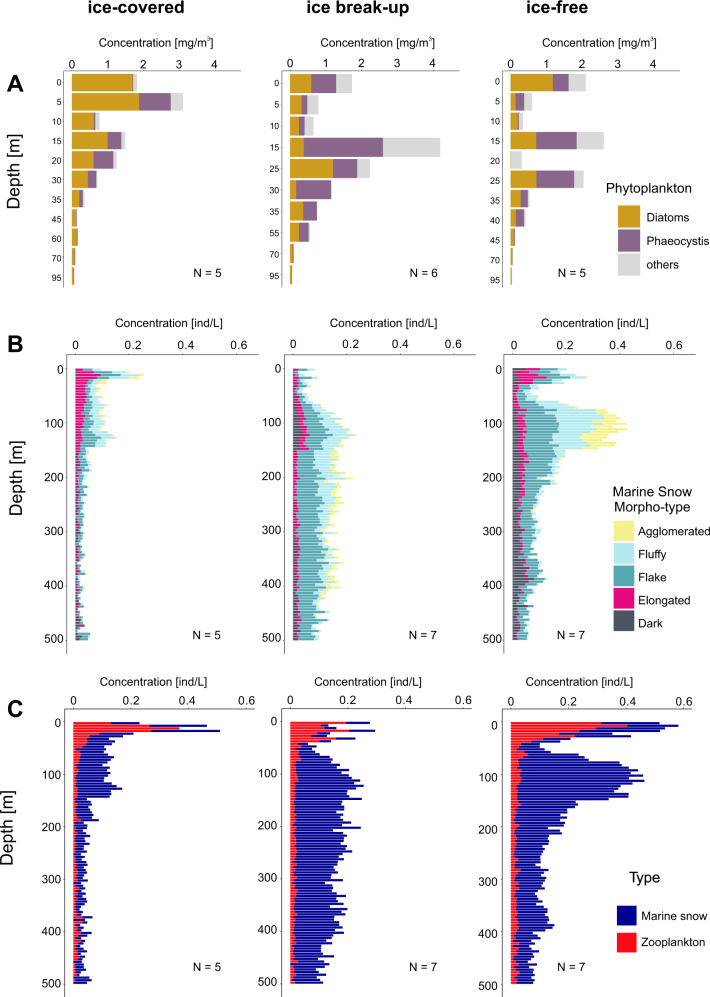
The organic carbon produced in the ocean's surface by phytoplankton is either passed through the food web or exported to the ocean interior as marine snow. The rate and efficiency of such vertical export strongly depend on the size, structure and shape of individual particles, but apart from size, other morphological properties are still not quantitatively monitored. With the growing number of in situ imaging technologies, there is now a great possibility to analyze the morphology of individual marine snow. Thus, automated methods for their classification are urgently needed. Consequently, here we present a simple, objective categorization method of marine snow into a few ecologically meaningful functional morphotypes using field data from successive phases of the Arctic phytoplankton bloom. The proposed approach is a promising tool for future studies aiming to integrate the diversity, composition and morphology of marine snow into our understanding of the biological carbon pump.
海洋表面的浮游植物产生的有机碳,要么通过食物网传递,要么作为海洋雪输出到海洋内部。这种垂直输出的速度和效率强烈依赖于单个颗粒的大小、结构和形状,但除了大小之外,其他形态特性仍然没有得到定量监测。随着原位成像技术的数量不断增加,现在有很大的可能性来分析单个海洋雪的形态。因此,迫切需要对其进行分类的自动化方法。因此,我们在这里提出了一种简单、客观的方法,根据北极浮游植物繁殖的不同阶段的现场数据,将海洋雪分为几种具有生态意义的功能形态型。该方法是未来研究的一种有前途的工具,旨在将海洋雪的多样性、组成和形态纳入我们对生物碳泵的理解。