
阿托伐他汀上调微小RNA-186并抑制TLR4介导的MAPKs/NF-κB通路以缓解类固醇诱导的股骨头缺血性坏死。
Atorvastatin Upregulates microRNA-186 and Inhibits the TLR4-Mediated MAPKs/NF-κB Pathway to Relieve Steroid-Induced Avascular Necrosis of the Femoral Head.
作者信息
Zhang Yusong, Ma Limin, Lu Erhai, Huang Wenhua
机构信息
Department of Orthopedics, Xinhui People's Hospital of Southern Medical University, Jiangmen, China.
Guangdong Engineering Research Center for Translation of Medical 3D Printing Application, Guangdong Provincial Key Laboratory of Medical Biomechanics, National Key Discipline of Human Anatomy, School of Basic Medical Sciences, Southern Medical University, Guangzhou, China.
出版信息
Front Pharmacol. 2021 Apr 16;12:583975. doi: 10.3389/fphar.2021.583975. eCollection 2021.
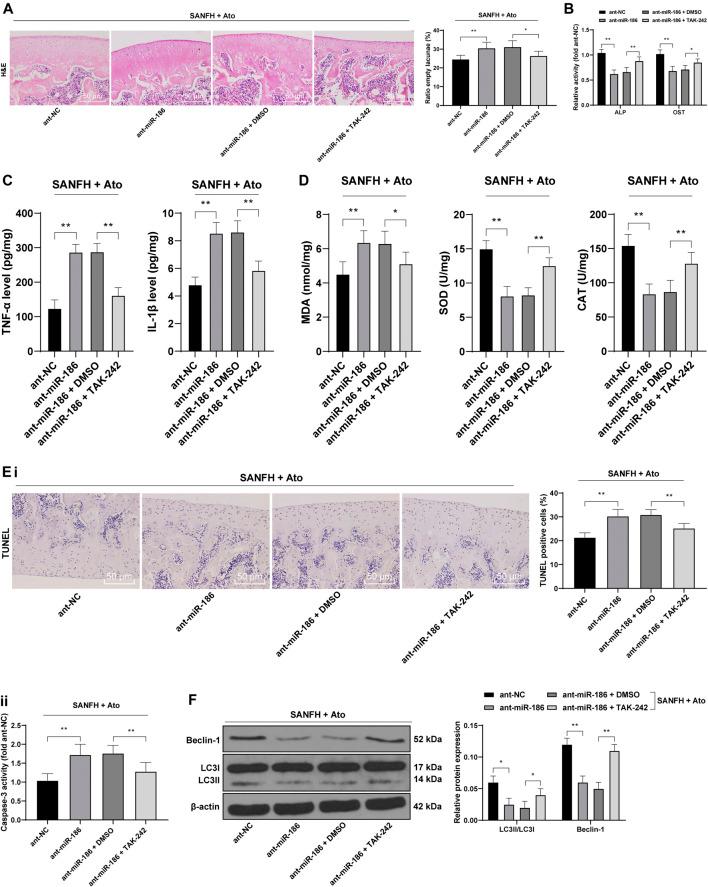
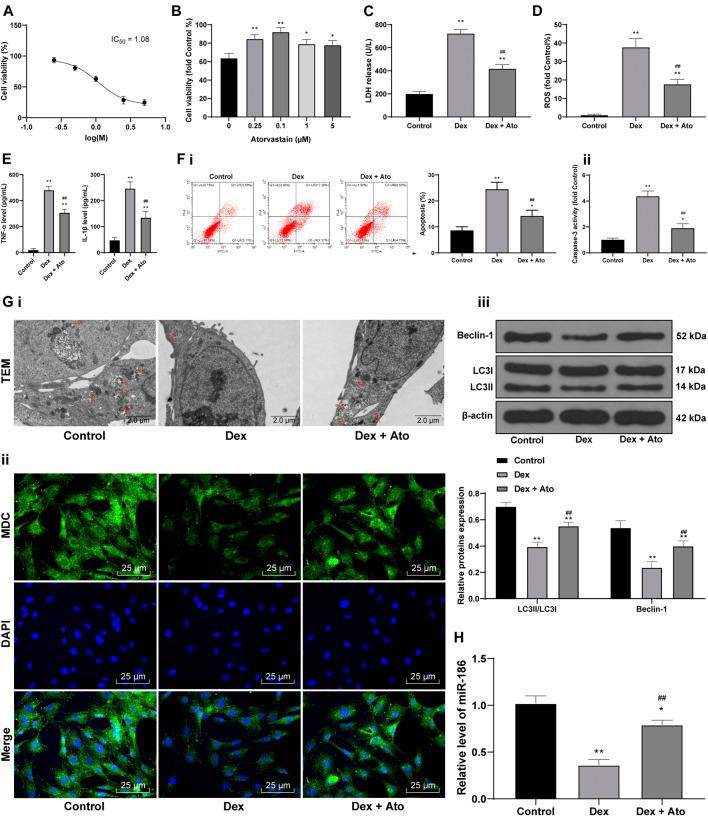
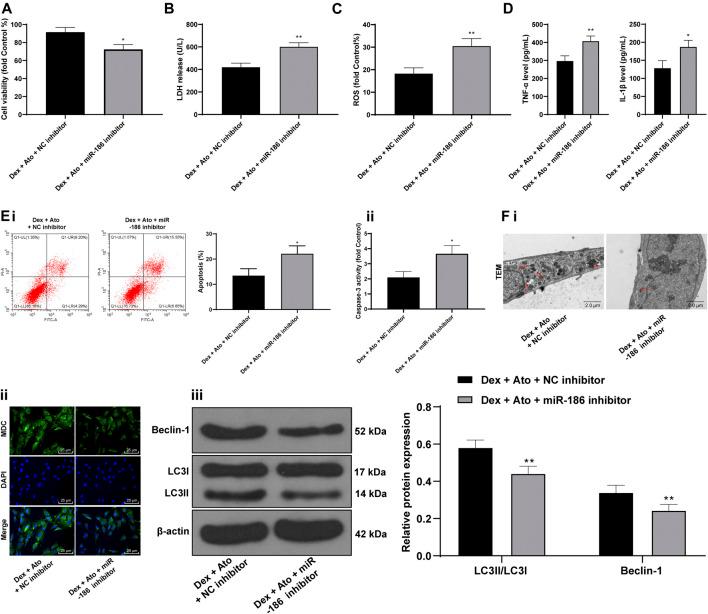
Steroid-induced avascular necrosis of the femoral head (SANFH) is caused by the death of active components of the femoral head owing to hormone overdoses. The use of lipid-lowering drugs to prevent SANFH in animals inspired us to identify the mechanisms involving Atorvastatin (Ato) in SANFH. However, it is still not well understood how and to what extent Ato affects SANFH. This study aimed to figure out the efficacy of Ato in SANFH and the underlying molecular mechanisms. After establishment of the SANFH model, histological evaluation, lipid metabolism, inflammatory cytokines, oxidative stress, apoptosis, and autophagy of the femoral head were evaluated. The differentially expressed microRNAs (miRs) after Ato treatment were screened out using microarray analysis. The downstream gene and pathway of miR-186 were predicted and their involvement in SANFH rats was analyzed. OB-6 cells were selected to simulate SANFH . Cell viability, cell damage, inflammation responses, apoptosis, and autophagy were assessed. Ato alleviated SANFH, inhibited apoptosis, and promoted autophagy. miR-186 was significantly upregulated after Ato treatment. miR-186 targeted TLR4 and inactivated the MAPKs/NF-κB pathway. Inhibition of miR-186 reversed the protection of Ato on SANFH rats, while inhibition of TLR4 restored the protective effect of Ato. Ato reduced apoptosis and promoted autophagy of OB-6 cells by upregulating miR-186 and inhibiting the TLR4/MAPKs/NF-κB pathway. In conclusion, Ato reduced apoptosis and promoted autophagy, thus alleviating SANFH via miR-186 and the TLR4-mediated MAPKs/NF-κB pathway.
类固醇诱导的股骨头缺血性坏死(SANFH)是由于激素过量导致股骨头活性成分死亡所致。使用降脂药物预防动物的SANFH启发我们去确定阿托伐他汀(Ato)在SANFH中的作用机制。然而,Ato如何以及在多大程度上影响SANFH仍未完全清楚。本研究旨在弄清楚Ato在SANFH中的疗效及潜在分子机制。建立SANFH模型后,对股骨头进行组织学评估、脂质代谢、炎性细胞因子、氧化应激、细胞凋亡和自噬评估。通过微阵列分析筛选出Ato处理后差异表达的微小RNA(miR)。预测miR-186的下游基因和通路,并分析它们在SANFH大鼠中的作用。选择OB-6细胞模拟SANFH。评估细胞活力、细胞损伤、炎症反应、细胞凋亡和自噬。Ato减轻了SANFH,抑制了细胞凋亡,并促进了自噬。Ato处理后miR-186显著上调。miR-186靶向TLR4并使MAPKs/NF-κB通路失活。抑制miR-186可逆转Ato对SANFH大鼠的保护作用,而抑制TLR4可恢复Ato的保护作用。Ato通过上调miR-186并抑制TLR4/MAPKs/NF-κB通路,减少了OB-6细胞的凋亡并促进了自噬。总之,Ato通过miR-186和TLR4介导的MAPKs/NF-κB通路减少细胞凋亡并促进自噬,从而减轻SANFH。



 Zotero 插件