Zhang Jianming, Zhang Chengcheng, Xin Xiaoting, Liu Daqun, Zhang Wenwu
Institute of Food Science, Zhejiang Academy of Agricultural Sciences, Hangzhou, China.
Hangzhou Trendbiotech Co., Ltd, Hangzhou, China.
Front Microbiol. 2021 Apr 29;12:631054. doi: 10.3389/fmicb.2021.631054. eCollection 2021.
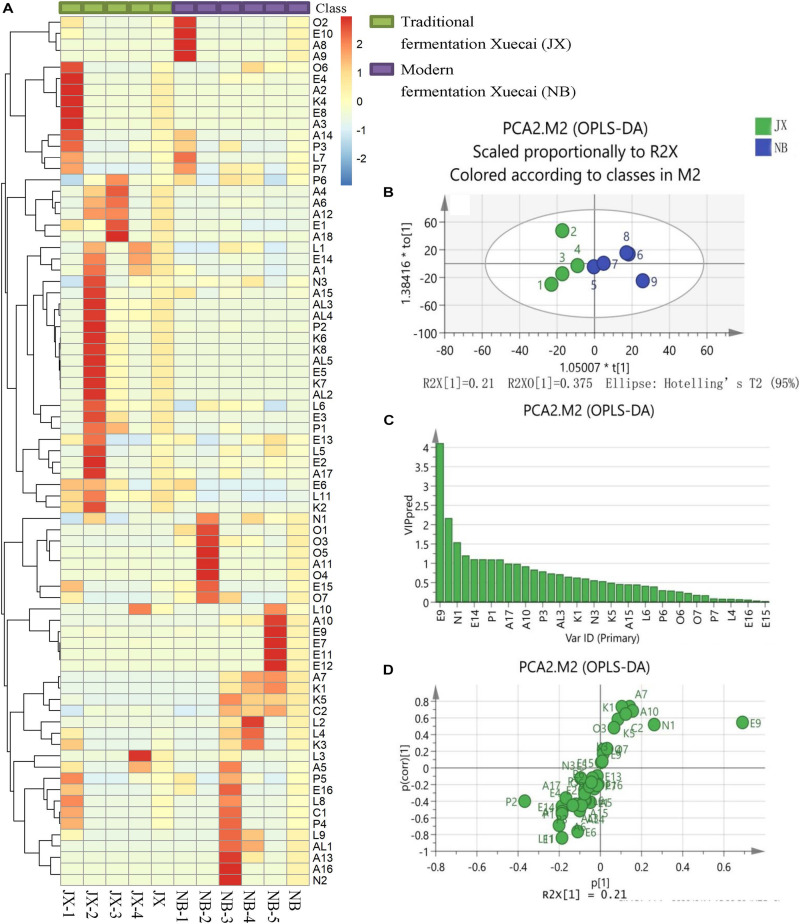
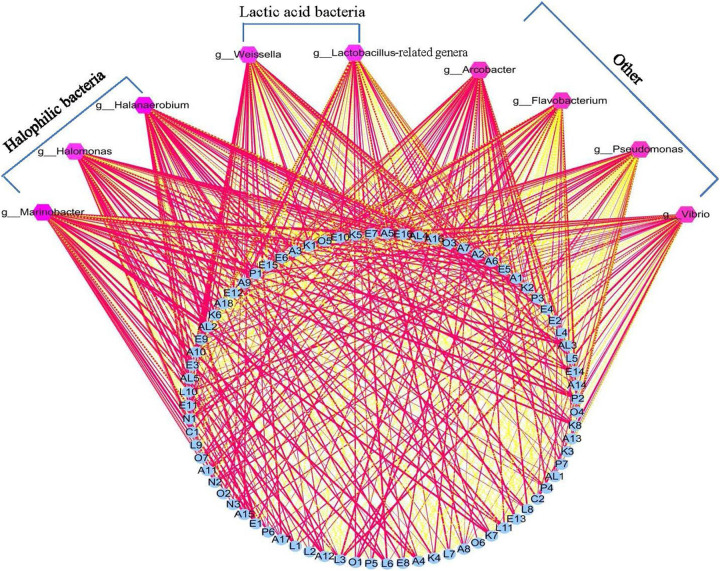
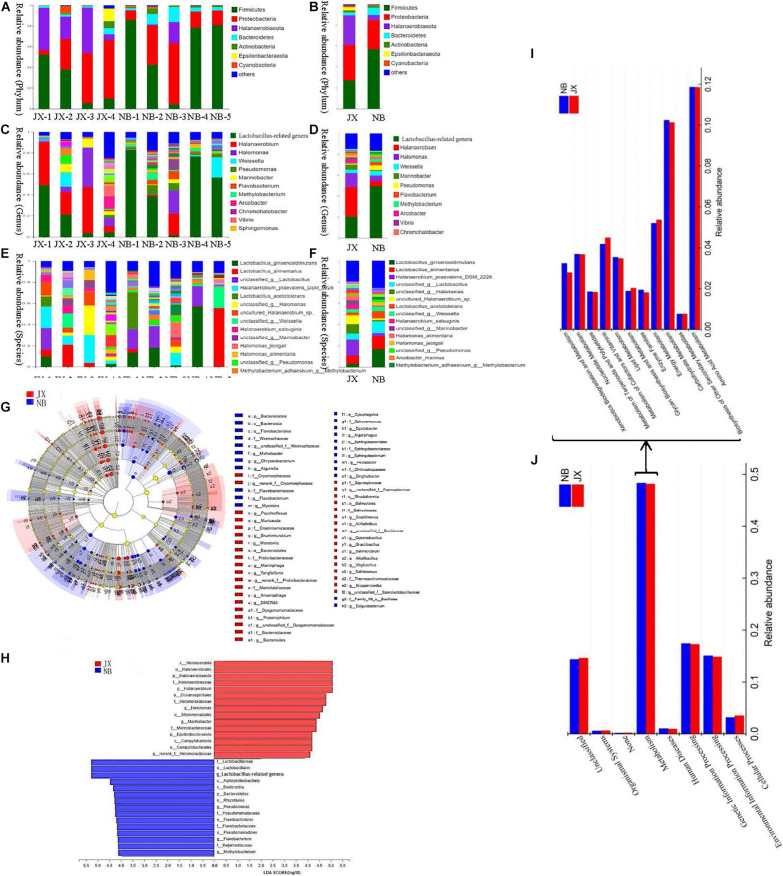
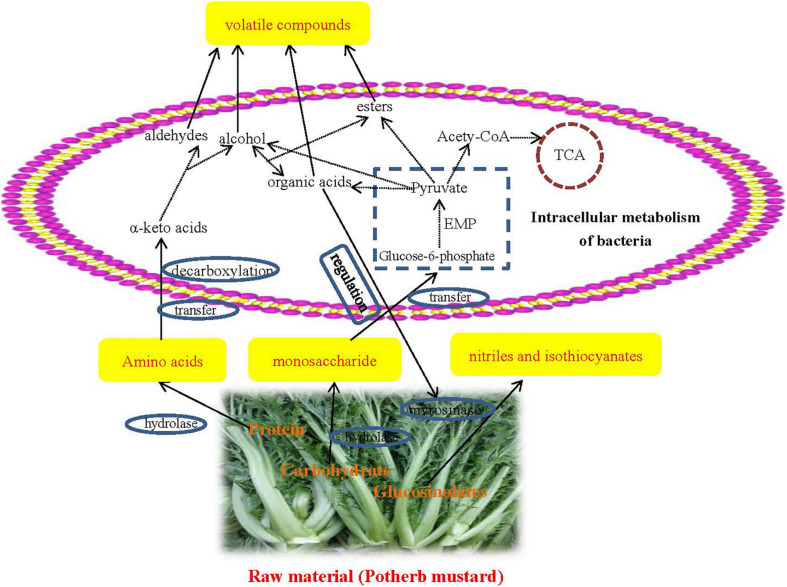
Differences in flavor compounds and bacterial communities of Xuecai by traditional and modern fermentation are poorly understood. Allyl isothiocyanate (E9), ethyl acetate (E1), 3-butenenitrile (N1), phenol (P1), ethanol (A1), and 3-(2,6,6-trimethyl-1-cyclohexen-1-yl) acrylaldehyde (L11) were the main flavor compounds that differed between Xuecai produced by traditional and modern fermentation. Among these compounds, the contents of N1 and E9 were higher in modern fermentation Xuecai. Traditional fermentation Xuecai possessed higher contents of A1, P1, E1, and L11. High-throughput sequencing showed that related genera was the most abundant genus (50%) in modern fermentation Xuecai. However, in traditional fermentation Xuecai, (29.06%) and (12.96%) were the dominant genera. Halophilic bacteria (HB) positively contribute to the flavor of Xuecai. Carbohydrate metabolism and amino acid metabolism were the most abundant pathways associated with the bacterial communities of the Xuecai. This indicated that Xuecai flavor formation is mainly dependent on protein and carbohydrate degradation. This study provides a novel insight that HB may be important for flavor formation of Xuecai.
传统发酵和现代发酵雪里蕻风味化合物及细菌群落的差异鲜为人知。异硫氰酸烯丙酯(E9)、乙酸乙酯(E1)、3-丁烯腈(N1)、苯酚(P1)、乙醇(A1)和3-(2,6,6-三甲基-1-环己烯-1-基)丙烯醛(L11)是传统发酵和现代发酵雪里蕻之间存在差异的主要风味化合物。在这些化合物中,现代发酵雪里蕻中N1和E9的含量较高。传统发酵雪里蕻中A1、P1、E1和L11的含量较高。高通量测序表明,相关属是现代发酵雪里蕻中最丰富的属(50%)。然而,在传统发酵雪里蕻中,(29.06%)和(12.96%)是优势属。嗜盐菌(HB)对雪里蕻的风味有积极贡献。碳水化合物代谢和氨基酸代谢是与雪里蕻细菌群落相关的最丰富的途径。这表明雪里蕻风味的形成主要依赖于蛋白质和碳水化合物的降解。本研究提供了一个新的见解,即嗜盐菌可能对雪里蕻风味的形成很重要。