Ye Jianwen, Qi Lei, Liang Jialu, Zong Ke, Liu Wentao, Li Renfeng, Feng Ruo, Zhai Wenlong
Department of Hepatobiliary and Pancreatic Surgery, The First Affiliated Hospital of Zhengzhou University, Zhengzhou, Henan 450052, P.R. China.
Key Lab of Digestive Organ Transplantation of Henan Province, Open and Key Laboratory of Hepatobiliary and Pancreatic Surgery and Digestive Organ Transplantation at Henan Universities, Zhengzhou Key Laboratory of Hepatobiliary and Pancreatic Disease and Organ Transplantation, Zhengzhou, Henan 450052, P.R. China.
J Cancer. 2021 Apr 24;12(12):3548-3557. doi: 10.7150/jca.50292. eCollection 2021.
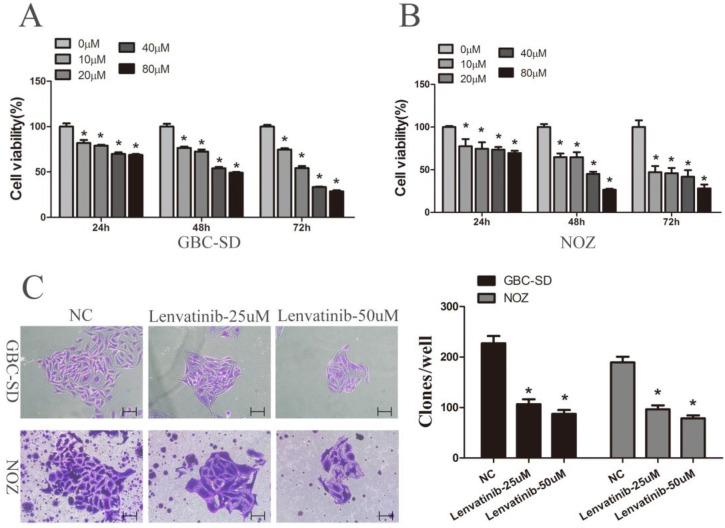
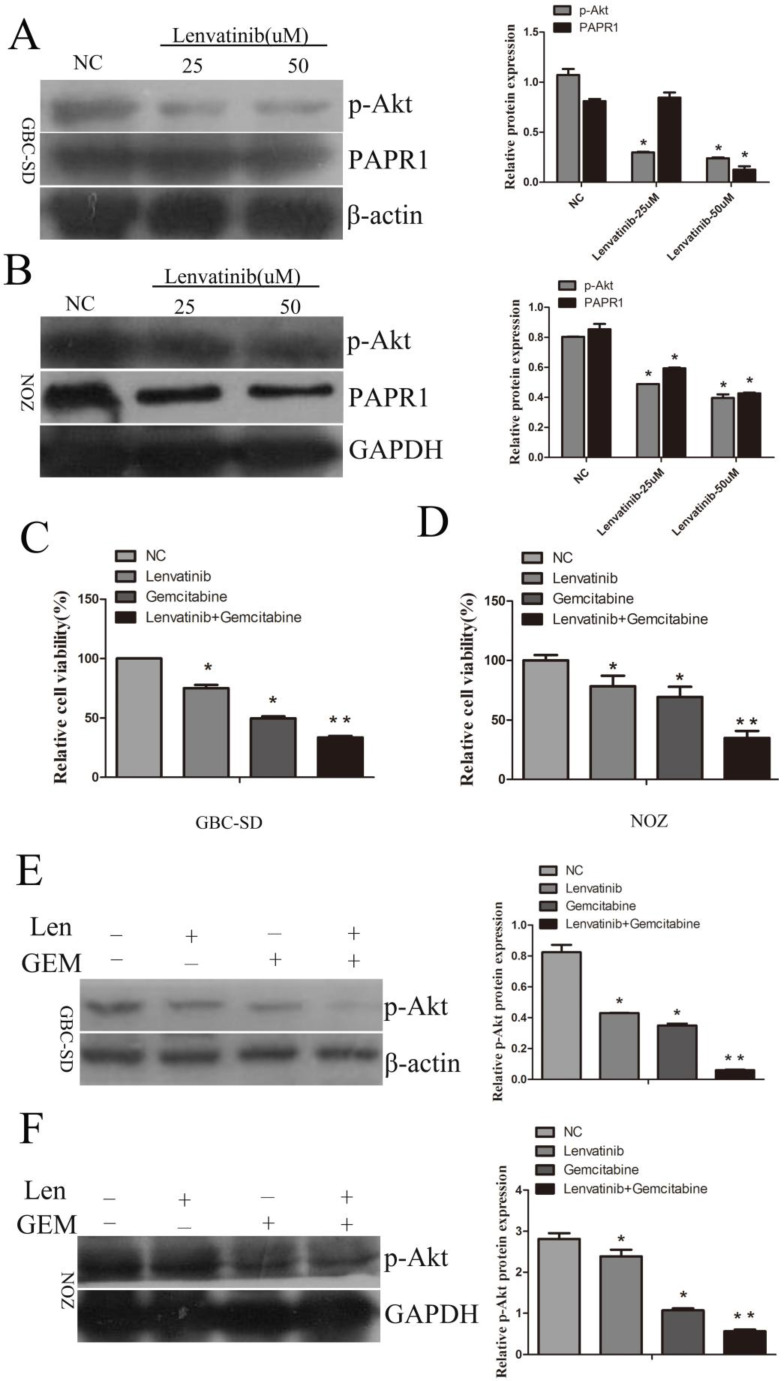
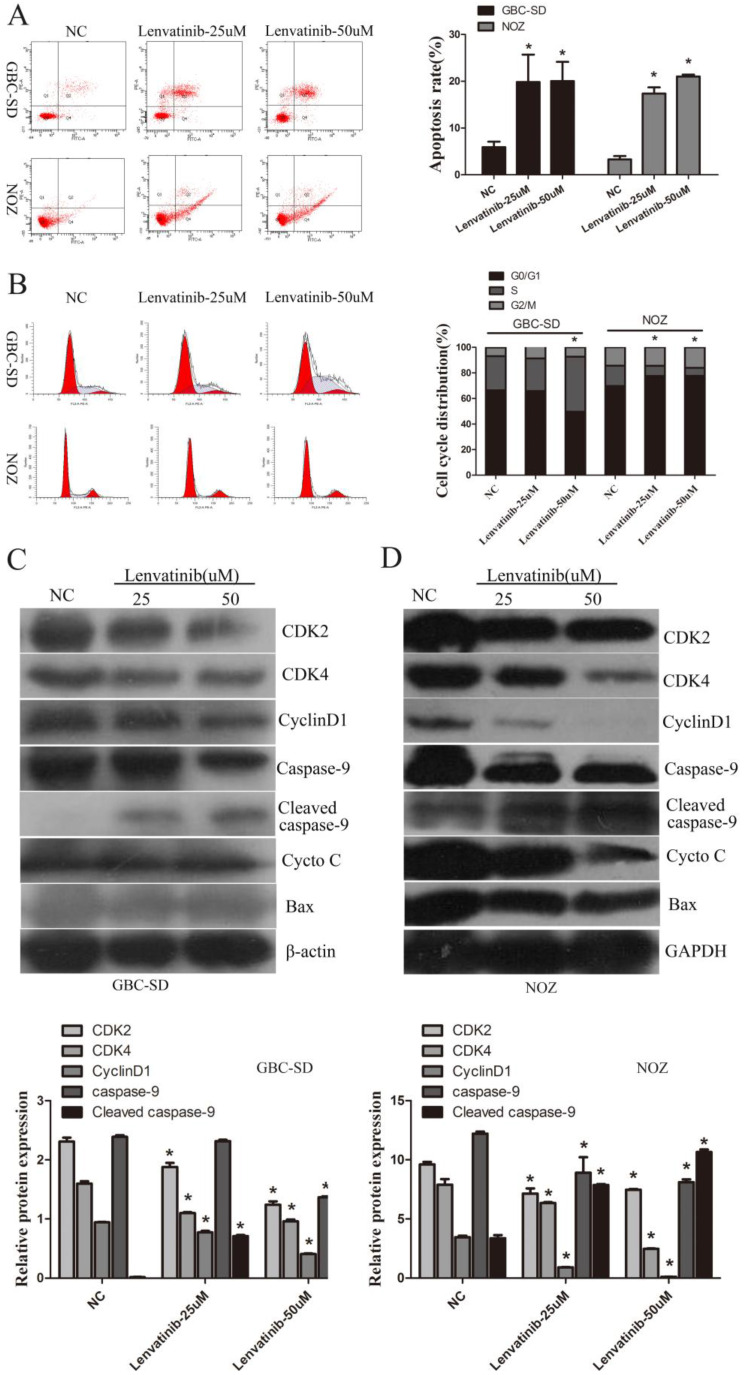
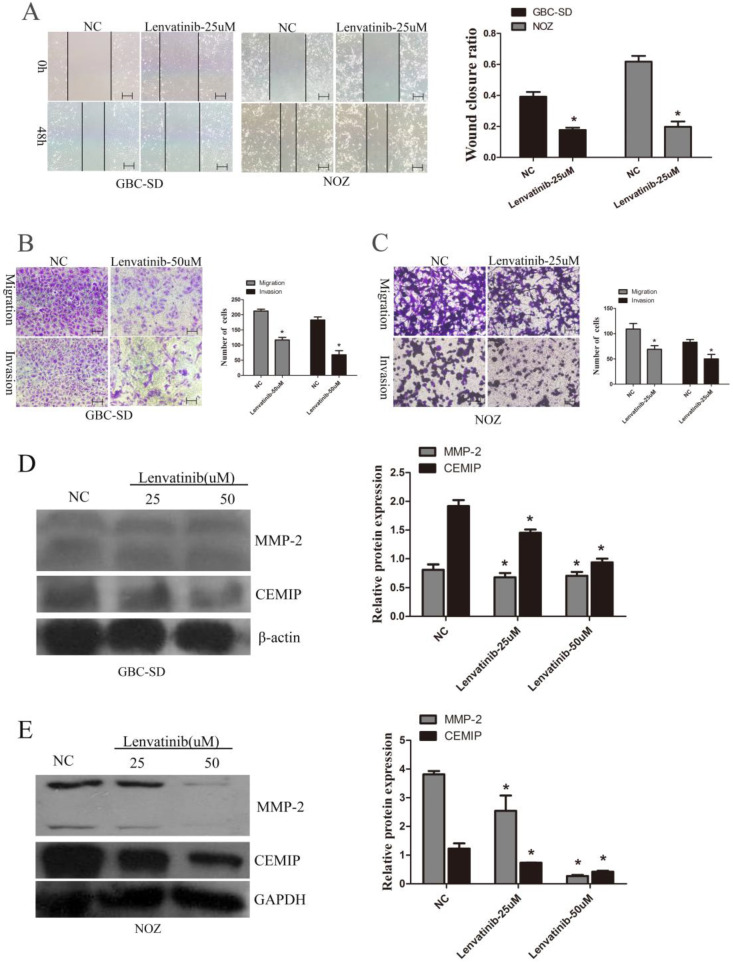
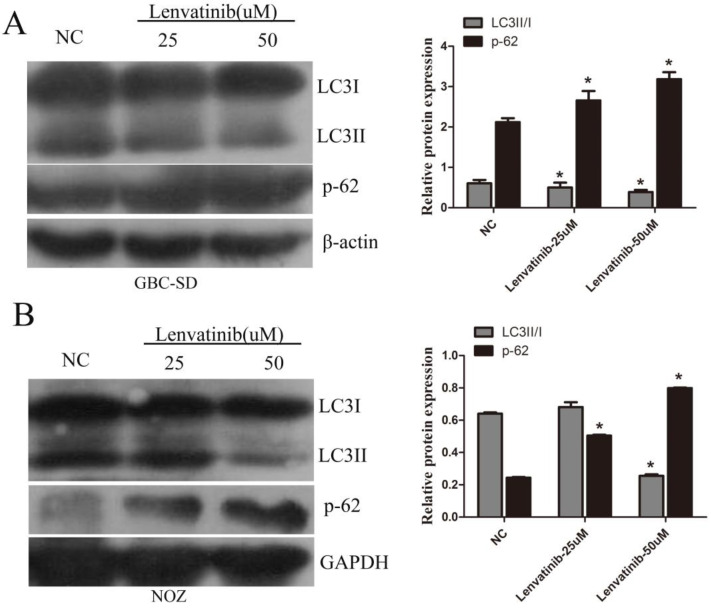
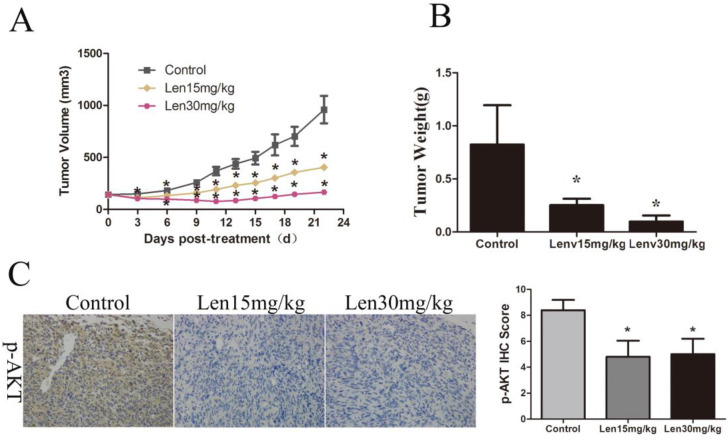
Gallbladder cancer (GBC) is characterized by poor prognosis, early metastasis, and high recurrence rates, which seriously threaten human health. The effect of lenvatinib, a widely used drug in anti-hepatocellular carcinoma in China, on GBC progress, as well as its underlying molecular mechanism, remains unclear. Therefore, the present study investigated the effect of lenvatinib on human GBC GBC-SD and NOZ cells and its underlying mechanisms. A series of experiments, including cell proliferation, clone formation, wound healing, and cell migration and invasion assays, as well as flow cytometry, were performed to investigate the anticancer effect of lenvatinib on GBC. Western blotting was used to detect alterations in protein expression of CKD2, CKD4, cyclin D1, caspase-9, matrix metalloproteinase (MMP)-2, cell migration-inducing protein (CEMIP) and phospho-AKT (p-AKT). In addition, the chemosensitivity of lenvatinib-treated GBC cells to gemcitabine (GEM) and whether the activation of phosphoinositide 3 kinase (PI3K)/AKT contributed to the chemoresistance were determined. Finally, the anticancer effect of lenvatinib was detected using a xenograft mouse model. These data showed that treatment with lenvatinib inhibited cell proliferation, colony formation ability, migration, induced apoptosis, regulated cell cycle and resulted in decreased resistance to GEM. Treatment with lenvatinib decreased the expression of MMP-2, CEMIP, CDK2, CDK4 and cyclin D1, and increased the expression of cleaved caspase-9, which was mediated by the inactivation of the PI3K/AKT pathway In addition, lenvatinib inhibited autophagy in GBC-SD and NOZ cells. Besides, Lenvatinib suppressed GBC cell growth by targeting p-AKT. In combination, the present data indicated that lenvatinib plays a potential anticancer role in GBC by downregulating the expression of p-AKT.
胆囊癌(GBC)具有预后差、早期转移和高复发率的特点,严重威胁人类健康。在中国广泛用于抗肝细胞癌的药物乐伐替尼对GBC进展的影响及其潜在分子机制尚不清楚。因此,本研究探讨了乐伐替尼对人GBC细胞GBC-SD和NOZ的影响及其潜在机制。进行了一系列实验,包括细胞增殖、克隆形成、伤口愈合、细胞迁移和侵袭试验以及流式细胞术,以研究乐伐替尼对GBC的抗癌作用。采用蛋白质印迹法检测CKD2、CKD4、细胞周期蛋白D1、半胱天冬酶-9、基质金属蛋白酶(MMP)-2、细胞迁移诱导蛋白(CEMIP)和磷酸化AKT(p-AKT)的蛋白表达变化。此外,还测定了乐伐替尼处理的GBC细胞对吉西他滨(GEM)的化疗敏感性,以及磷酸肌醇3激酶(PI3K)/AKT的激活是否导致化疗耐药。最后,使用异种移植小鼠模型检测乐伐替尼的抗癌作用。这些数据表明,乐伐替尼治疗可抑制细胞增殖、集落形成能力、迁移,诱导凋亡,调节细胞周期,并导致对GEM的耐药性降低。乐伐替尼治疗可降低MMP-2、CEMIP、CDK2、CDK4和细胞周期蛋白D1的表达,并增加裂解的半胱天冬酶-9的表达,这是由PI3K/AKT途径的失活介导的。此外,乐伐替尼抑制GBC-SD和NOZ细胞中的自噬。此外,乐伐替尼通过靶向p-AKT抑制GBC细胞生长。综上所述,本研究数据表明乐伐替尼通过下调p-AKT的表达在GBC中发挥潜在的抗癌作用。